 Warble
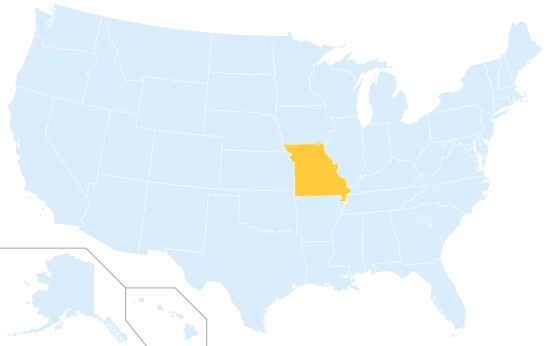
The state bird: Eastern Bluebird
Adopted in 1927, and shared with New York. A soft chur-wi from a fence post and a short warbled song, back from near collapse thanks to the nest-box trails that started in 1934.
Recording by Chase Harris, CC0, via iNaturalist.
Missouri is bigger and more varied than it gets credit for. The Missouri Birding Society had 437 species on the state list as of July 2021. North of the Missouri River the land was prairie and is now corn, with the loess hills along the western edge. South of it the Ozarks rise, a plateau of oak and hickory cut by clear, spring-fed rivers. The southeast corner, the Bootheel, is the top of the Mississippi Delta, flat and wet, with a swamp at Mingo that shows what the whole corner looked like before it was drained.
In a yard in Kansas City, Columbia or St. Louis, though, the state is cardinal, jay, robin, dove, Red-bellied Woodpecker and titmouse. Those six lead the album.
The Missouri album
These are the 100 birds people report most often in Missouri, ranked by how frequently they turn up. The common and uncommon ones are shown; the rare and legendary cards stay face down until you catch them in the game.
Common 25 cards
- #002
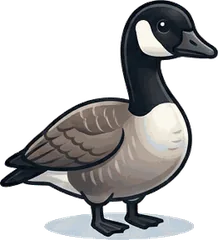 Canada Goose
Branta canadensis
Canada Goose
Branta canadensis - #011
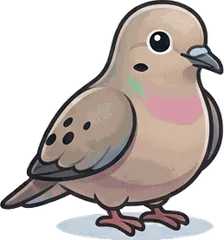 Mourning Dove
Zenaida macroura
Mourning Dove
Zenaida macroura - #021
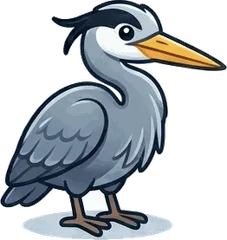 Great Blue Heron
Ardea herodias
Great Blue Heron
Ardea herodias - #023
 ?Catch it to find out
 - #027
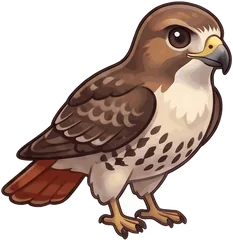 Red-tailed Hawk
Buteo jamaicensis
Red-tailed Hawk
Buteo jamaicensis - #031
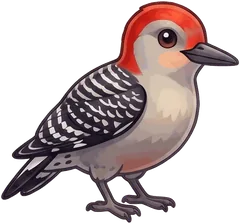 Red-bellied Woodpecker
Melanerpes carolinus
Red-bellied Woodpecker
Melanerpes carolinus - #032
 Downy Woodpecker
Dryobates pubescens
Downy Woodpecker
Dryobates pubescens - #034
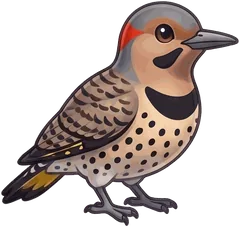 Northern Flicker
Colaptes auratus
Northern Flicker
Colaptes auratus - #044
 Blue Jay
Cyanocitta cristata
Blue Jay
Cyanocitta cristata - #045
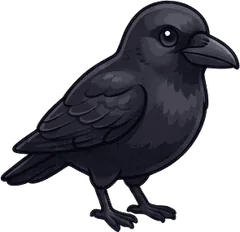 American Crow
Corvus brachyrhynchos
American Crow
Corvus brachyrhynchos - #047
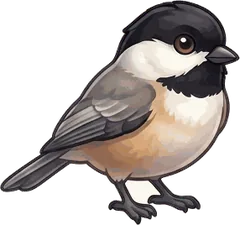 Carolina Chickadee
Poecile carolinensis
Carolina Chickadee
Poecile carolinensis - #048
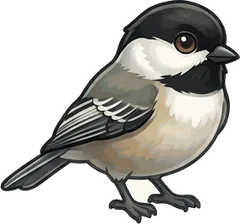 Black-capped Chickadee
Poecile atricapillus
Black-capped Chickadee
Poecile atricapillus - #049
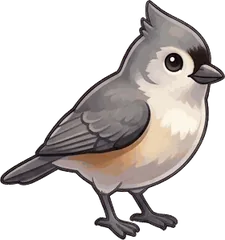 Tufted Titmouse
Baeolophus bicolor
Tufted Titmouse
Baeolophus bicolor - #056
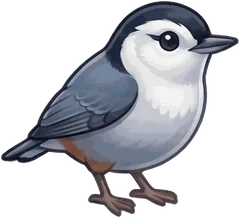 White-breasted Nuthatch
Sitta carolinensis
White-breasted Nuthatch
Sitta carolinensis - #059
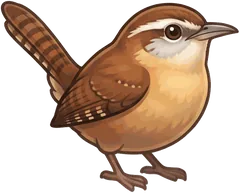 Carolina Wren
Thryothorus ludovicianus
Carolina Wren
Thryothorus ludovicianus - #060
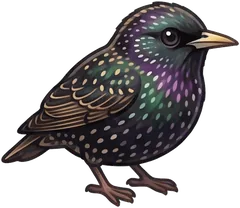 European Starling
Sturnus vulgaris
European Starling
Sturnus vulgaris - #064
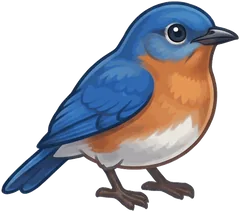 Eastern Bluebird
Sialia sialis
Eastern Bluebird
Sialia sialis - #066
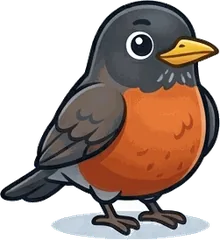 American Robin
Turdus migratorius
American Robin
Turdus migratorius - #068
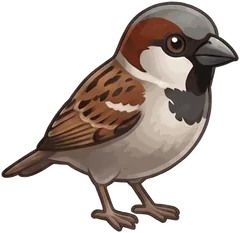 House Sparrow
Passer domesticus
House Sparrow
Passer domesticus - #070
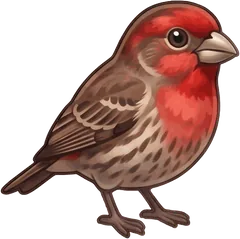 House Finch
Haemorhous mexicanus
House Finch
Haemorhous mexicanus - #071
 American Goldfinch
Spinus tristis
American Goldfinch
Spinus tristis - #075
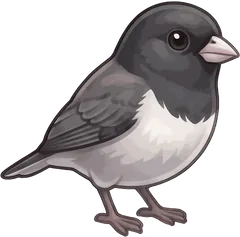 Dark-eyed Junco
Junco hyemalis
Dark-eyed Junco
Junco hyemalis - #077
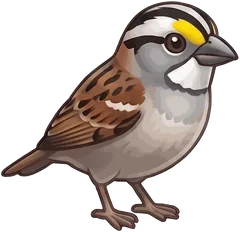 White-throated Sparrow
Zonotrichia albicollis
White-throated Sparrow
Zonotrichia albicollis - #086
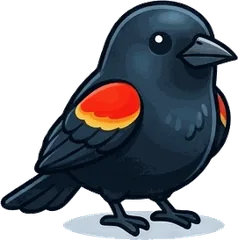 Red-winged Blackbird
Agelaius phoeniceus
Red-winged Blackbird
Agelaius phoeniceus - #097
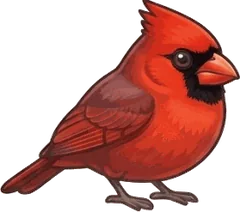 Northern Cardinal
Cardinalis cardinalis
Northern Cardinal
Cardinalis cardinalis
Uncommon 35 cards
- #007
 Mallard
Anas platyrhynchos
Mallard
Anas platyrhynchos - #013
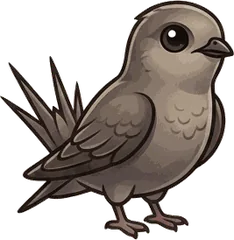 Chimney Swift
Chaetura pelagica
Chimney Swift
Chaetura pelagica - #014
 Ruby-throated Hummingbird
Archilochus colubris
Ruby-throated Hummingbird
Archilochus colubris - #016
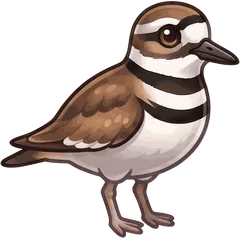 Killdeer
Charadrius vociferus
Killdeer
Charadrius vociferus - #017
 ?Catch it to find out
 - #025
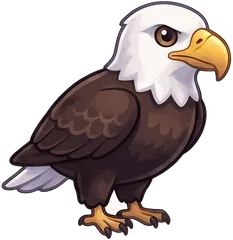 Bald Eagle
Haliaeetus leucocephalus
Bald Eagle
Haliaeetus leucocephalus - #026
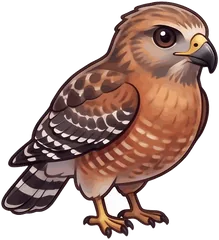 Red-shouldered Hawk
Buteo lineatus
Red-shouldered Hawk
Buteo lineatus - #029
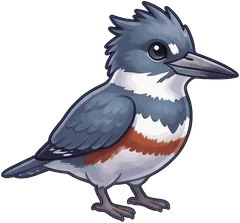 Belted Kingfisher
Megaceryle alcyon
Belted Kingfisher
Megaceryle alcyon - #030
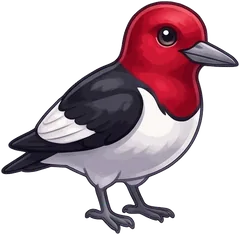 Red-headed Woodpecker
Melanerpes erythrocephalus
Red-headed Woodpecker
Melanerpes erythrocephalus - #033
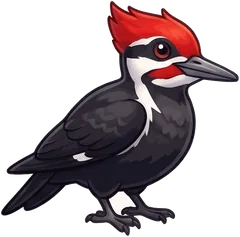 Pileated Woodpecker
Dryocopus pileatus
Pileated Woodpecker
Dryocopus pileatus - #035
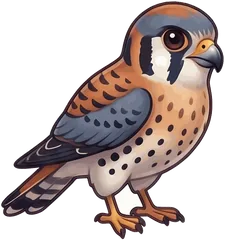 American Kestrel
Falco sparverius
American Kestrel
Falco sparverius - #036
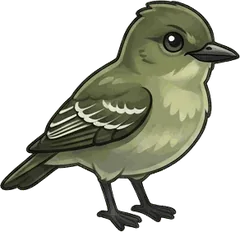 Eastern Wood-Pewee
Contopus virens
Eastern Wood-Pewee
Contopus virens - #037
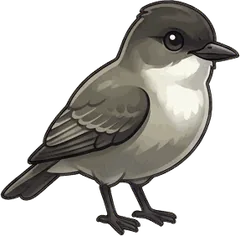 Eastern Phoebe
Sayornis phoebe
Eastern Phoebe
Sayornis phoebe - #038
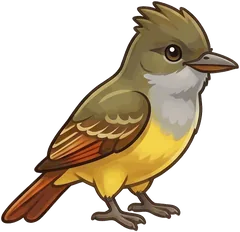 Great Crested Flycatcher
Myiarchus crinitus
Great Crested Flycatcher
Myiarchus crinitus - #039
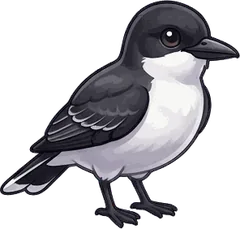 Eastern Kingbird
Tyrannus tyrannus
Eastern Kingbird
Tyrannus tyrannus - #043
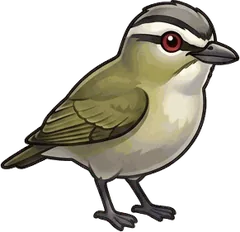 Red-eyed Vireo
Vireo olivaceus
Red-eyed Vireo
Vireo olivaceus - #051
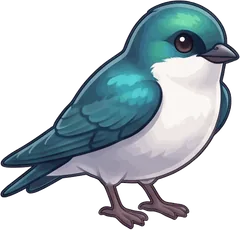 Tree Swallow
Tachycineta bicolor
Tree Swallow
Tachycineta bicolor - #054
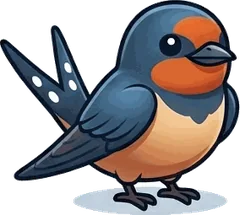 Barn Swallow
Hirundo rustica
Barn Swallow
Hirundo rustica - #057
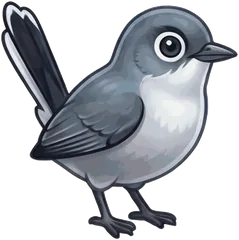 Blue-gray Gnatcatcher
Polioptila caerulea
Blue-gray Gnatcatcher
Polioptila caerulea - #061
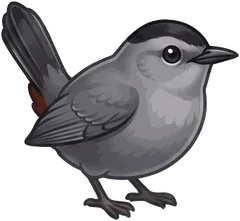 Gray Catbird
Dumetella carolinensis
Gray Catbird
Dumetella carolinensis - #062
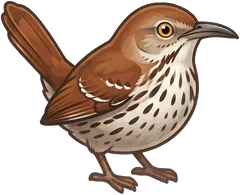 Brown Thrasher
Toxostoma rufum
Brown Thrasher
Toxostoma rufum - #063
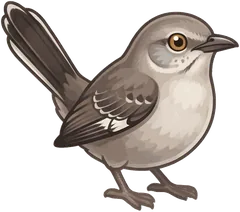 Northern Mockingbird
Mimus polyglottos
Northern Mockingbird
Mimus polyglottos - #072
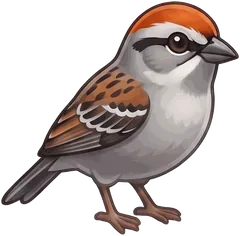 Chipping Sparrow
Spizella passerina
Chipping Sparrow
Spizella passerina - #073
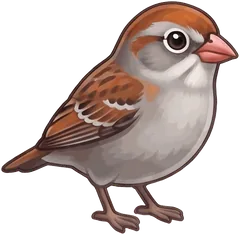 Field Sparrow
Spizella pusilla
Field Sparrow
Spizella pusilla - #076
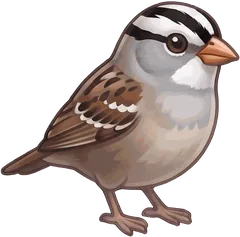 White-crowned Sparrow
Zonotrichia leucophrys
White-crowned Sparrow
Zonotrichia leucophrys - #079
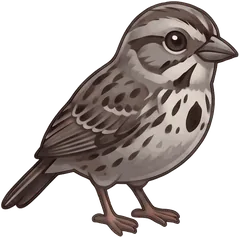 Song Sparrow
Melospiza melodia
Song Sparrow
Melospiza melodia - #081
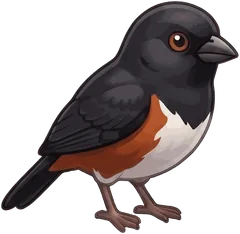 Eastern Towhee
Pipilo erythrophthalmus
Eastern Towhee
Pipilo erythrophthalmus - #083
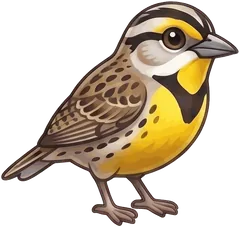 Eastern Meadowlark
Sturnella magna
Eastern Meadowlark
Sturnella magna - #087
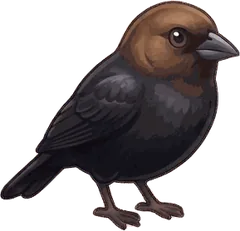 Brown-headed Cowbird
Molothrus ater
Brown-headed Cowbird
Molothrus ater - #088
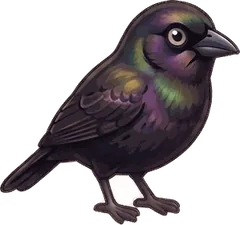 Common Grackle
Quiscalus quiscula
Common Grackle
Quiscalus quiscula - #092
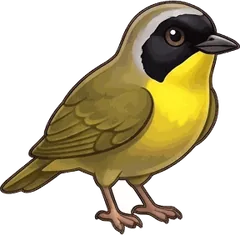 Common Yellowthroat
Geothlypis trichas
Common Yellowthroat
Geothlypis trichas - #094
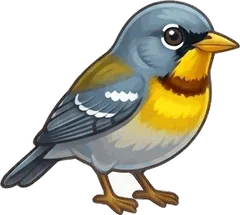 Northern Parula
Setophaga americana
Northern Parula
Setophaga americana - #095
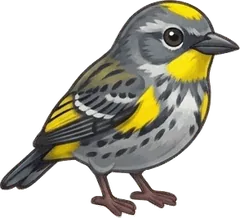 Yellow-rumped Warbler
Setophaga coronata
Yellow-rumped Warbler
Setophaga coronata - #096
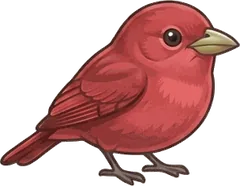 Summer Tanager
Piranga rubra
Summer Tanager
Piranga rubra - #099
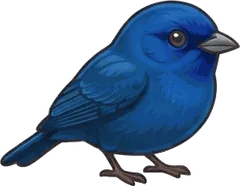 Indigo Bunting
Passerina cyanea
Indigo Bunting
Passerina cyanea
Rare 30 cards
- #003
 ?Catch it to reveal
 - #004
 ?Catch it to find out
 - #005
 ?Catch it to find out
 - #006
 ?Catch it to find out
 - #008
 ?Catch it to find out
 - #009?Catch it to reveal
- #010?Catch it to reveal
- #012
 ?Catch it to find out
 - #015
 ?Catch it to find out
 - #018
 ?Catch it to find out
 - #020
 ?Catch it to find out
 - #022
 ?Catch it to find out
 - #024
 ?Catch it to find out
 - #028?Catch it to reveal
- #040
 ?Catch it to find out
 - #042?Catch it to reveal
- #046?Catch it to reveal
- #050
 ?Catch it to find out
 - #052?Catch it to reveal
- #053
 ?Catch it to find out
 - #058?Catch it to reveal
- #067?Catch it to reveal
- #069
 ?Catch it to find out
 - #074
 ?Catch it to find out
 - #080
 ?Catch it to find out
 - #084
 ?Catch it to find out
 - #085?Catch it to reveal
- #093?Catch it to reveal
- #098?Catch it to reveal
- #100
 ?Catch it to find out
Legendary 10 cards
- #001
 ?Catch it to find out
 - #019
 ?Catch it to find out
 - #041
 ?Catch it to find out
 - #055
 ?Catch it to find out
 - #065?Catch it to reveal
- #078
 ?Catch it to find out
 - #082
 ?Catch it to find out
 - #089
 ?Catch it to find out
 - #090
 ?Catch it to find out
 - #091
 ?Catch it to find out
 58 of the 100 cards are shown here. The other 42, including all 30 rare and 10 legendary birds, are yours to discover. Get Warble and start with the common ones.
Backyard birds you will hear first
The Northern Cardinal leads the album, whistling from the top of a bare tree in February before anything else has started. The Blue Jay is second, yelling from the oaks and imitating the Red-shouldered Hawk that lives in the same woods. The American Robin runs the dawn chorus from March into July, the Mourning Dove coos from the wire, and the Red-bellied Woodpecker rolls a churr from the walnut and comes to the suet all winter.
The Tufted Titmouse whistles peter, peter, peter, the Carolina Wren shouts teakettle from the woodpile, and the Downy Woodpecker whinnies from the branches above. The Eastern Bluebird sits on the fence beside its box in every county, and the Turkey Vulture, tilts over the highway on warm afternoons.
The regions, by ear
The Ozarks
Oak and hickory ridges, glades and rivers. The Ozark National Scenic Riverways on the Current and Jacks Fork has nearly 200 bird species and more than 50 confirmed nesters, and it sits on the Mississippi Flyway, so spring and fall bring migrants down the river corridors. The canebrakes along the water hold the Swainson's Warbler, a shy singer at the edge of its range and endangered in the state. In June the ridges are Wood Thrush and Summer Tanager song, Ovenbirds and Whip-poor-wills, and Bald Eagles are fairly common along the rivers in winter.
The Bootheel and Mingo
The flat, wet southeast. Mingo refuge is 21,592 acres of bottomland hardwood forest, cypress-tupelo swamp, marsh and upland woods with 279 bird species, kept for migrating waterfowl and to protect the forest that once covered the whole corner. Prothonotary Warblers sing from the cypress in summer, and the Barred Owl asks who cooks for you from the swamp after dark.
The Missouri River and the northwest
Bottomland, bluffs and big water. Loess Bluffs refuge in the northwest corner has wetland, forest and grassland habitat with more than 310 bird species, and it is known for two things: lesser snow geese in numbers that lift off the pools in the afternoon, and Bald Eagles, both surveyed weekly from fall through spring. A ten-mile auto tour runs through the marsh.
Northern prairie and farm country
Corn, hedgerows and a few prairie remnants. Eastern Meadowlarks whistle from the posts, Dickcissels buzz from the roadsides in June, and Red-winged Blackbirds fill the ditches.
Best months to listen
Snow geese move through Loess Bluffs on both migrations, fall and again in late winter and early spring. Late April through May is the songbird peak, with warblers moving up the rivers and the residents on territory. June is the Ozark month: thrushes, tanagers and Whip-poor-wills from first light and again at dusk. Fall migration runs September and October, ducks and geese into November. Winter brings eagles to the big rivers and the reservoirs, and cardinals, titmice and woodpeckers to the feeder.
Places worth the drive
- Mingo National Wildlife Refuge, near Puxico: 21,592 acres of cypress swamp and bottomland forest, 279 species, auto tour March to November.
- Loess Bluffs National Wildlife Refuge, near Mound City: snow geese and eagles from fall through spring, more than 310 species, a ten-mile auto tour.
- Ozark National Scenic Riverways, Current and Jacks Fork rivers: nearly 200 species, Swainson's Warbler in the cane, eagles in winter.
- Any Ozark river at dawn in June: thrushes, tanagers and Whip-poor-wills.
None of it is required for the album. A yard with an oak and a bluebird box hands you the first 20 cards in Warble by April.
Listen before you go
Three of the common Missouri birds, so the first songs you hear outside already ring a bell.
Recording by Chase Harris, CC0, via iNaturalist.
Recording by Fionn Ó Marcaigh, CC BY 4.0, via iNaturalist.
Recording by Chase Harris, CC0, via iNaturalist.
Questions people ask
What is the most common bird in Missouri?
By the reports behind the album, the Northern Cardinal, then the Blue Jay, the American Robin, the Mourning Dove, the Red-bellied Woodpecker and the Tufted Titmouse.
What is the state bird of Missouri?
The Eastern Bluebird, adopted in 1927. New York has the same bird.
How many bird species are there in Missouri?
437 species as of July 2021, according to the Missouri Birding Society, of which 54 are accidental and 31 casual. The Warble album covers the 100 reported most often.
Nearby albums
Sources
- Wikipedia: List of birds of Missouri. en.wikipedia.org/wiki/List_of_birds_of_Missouri
- Wikipedia: Eastern bluebird. en.wikipedia.org/wiki/Eastern_bluebird
- U.S. Fish and Wildlife Service: Mingo National Wildlife Refuge. www.fws.gov/refuge/mingo
- National Park Service: Birds of Ozark National Scenic Riverways. www.nps.gov/ozar/learn/nature/birds.htm