 Warble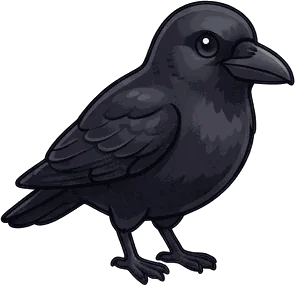
An American Crow sounds like caw, caw, caw: loud, short, hoarse notes in a quick series, usually with the bird pumping its head forward on each one. That is the sound everyone knows, but crows also rattle, coo, click and mutter, and some copy other animals, including the hooting of a Barred Owl. If the caw sounds nasal and stuffed up, like uh-uh, you may be hearing a Fish Crow or a begging young crow. If it is a deep, hollow croak, think raven.
The birder's mnemonic
“caw, caw, caw” There is nothing to memorize; the trick is noticing when a caw is not quite right, because that is when it is a different bird.
What it sounds like: the caw
Crows do not sing, but they talk constantly. The basic call is a loud, flat caw or caa, given in a short series, each note short and rough with a falling edge. The bird usually leans into it, thrusting its head and body forward with every caw as if the sound needed a shove. Volume, speed and spacing change with the message: slow, spaced caws from a treetop are routine, while a rapid, harsh volley from several crows at once means they have found a hawk, an owl or a cat and are mobbing it.
Listen longer and the range gets wider. Crows give dry rattles, soft coos and a variety of clicks, croaks and murmurs, especially between family members at close range. They are also mimics, and individuals have been recorded copying other animals, including the call of a Barred Owl. Young birds, out of the nest in early summer, follow their parents around with a whiny, nasal begging call that sounds so much like a Fish Crow that even experienced birders check twice.
The calls: rattles, coos and the roost
The loudest crow sound of the year is a crowd. Outside the nesting season crows gather at night in communal roosts that can hold thousands or even tens of thousands of birds in a single grove, often in a city park or a stand of trees on a river floodplain. Before dark, lines of crows stream in from every direction, cawing, and at first light they leave again in noisy groups to feed.
When and where you hear it
The American Crow lives from coast to coast, across Canada and the whole of the United States into northern Mexico, and is missing only from the treeless tundra. It wants a mix of trees and open ground: farmland, fields, river groves, shorelines, woodland edges and, increasingly, towns and suburbs, where they now nest in city parks. Across most of the United States they are present all year. Birds from Canada and the northern edge of the range move south for winter, which swells the roosts in the middle of the country.
You can hear crows on any day of the year, but the pattern shifts with the calendar. In spring and early summer, nesting pairs and their helpers, usually offspring from earlier years, stay in family groups that can number up to 15 birds, and the calling is quieter and more local. From late summer into winter the families merge into flocks and the roosts form. They are also remarkably smart: they use sticks to probe holes and can remember individual human faces. West Nile virus hit them hard after 1999, cutting populations by as much as 45 percent, though crows remain common almost everywhere.
In Warble the crow is one of the easiest cards in any state album, and one of the few you can catch from a downtown sidewalk.
What it looks like
Entirely black, from the heavy bill to the feet, with a purplish gloss in strong sun. A crow is 16 to 21 inches long with a wingspan of around three feet and weighs 11 to 22 ounces, and its tail is fairly short with a rounded or squared-off tip. That tail is the key to the raven question: a Common Raven is much larger, closer to a hawk, with a wedge-shaped tail, a thicker bill and shaggy throat feathers, and it soars for long stretches, while a crow flaps steadily and rarely glides more than a few seconds. Crows eat nearly anything, from insects and grain to eggs, roadkill and garbage, and will drop shellfish from a height to crack them open.
Birds that sound similar
 Fish Crow
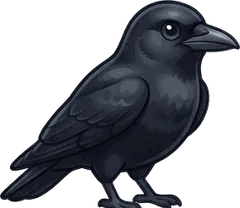
The Fish Crow gives a nasal kwok and a two-note, nasal uh-uh or ah-ah, hunching and fluffing its throat as it calls. It lives along the Atlantic and Gulf coasts and up the Mississippi Valley. Remember that young American Crows also sound nasal in summer.
 Common Raven
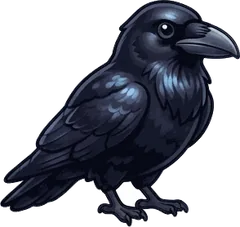
A Common Raven's voice is a deep, guttural croak or a hollow wonk-wonk, lower and rougher than any caw. It is much larger, with a wedge-shaped tail and a shaggy throat, and it soars where a crow flaps.
Where the American Crow card lives
In Warble the same bird can be an easy card in one state and a prized one in another, because each album ranks its birds by how often people really report them there. The American Crow appears in 49 state albums:
 Heard one? Open Warble, tap the green button while it sings, and the American Crow card flips into your album. Get the app free.
Questions people ask
How do I tell a crow from a raven by sound?
A crow says caw, short and hoarse. A raven croaks: deeper, more guttural, often a hollow wonk-wonk. If you can see the bird, a raven is much larger with a wedge-shaped tail and soars for long stretches, while a crow flaps almost constantly.
Why do hundreds of crows gather at dusk in winter?
They are heading to a communal roost. Outside the nesting season crows sleep together in groves that can hold thousands or tens of thousands of birds, often in a city park. They stream in noisily before dark and scatter again at dawn to feed.
Can crows mimic sounds?
Yes. Besides caws, crows produce rattles, coos and clicks, and individuals have been documented imitating other animals, including a Barred Owl's hooting. They are not as versatile as a mockingbird or a starling, but they are far from one-note.
Do crows migrate?
Some do. Crows that breed in Canada and along the northern edge of the range move south in fall, but across most of the United States they are present all year. Winter numbers in the middle of the country rise as northern birds arrive and join the big roosts.
Sources
- National Audubon Society, Guide to North American Birds: American Crow. www.audubon.org/field-guide/bird/american-crow
- Wikipedia: American crow (vocalizations, size, roosts, family groups, West Nile virus). en.wikipedia.org/wiki/American_crow
- Missouri Department of Conservation, Field Guide: American Crow. mdc.mo.gov/discover-nature/field-guide/american-crow
- National Audubon Society, Guide to North American Birds: Fish Crow. www.audubon.org/field-guide/bird/fish-crow