 Warble
The state bird: Northern Cardinal
Adopted in 1933. It stays all year, and by late February the male is already on the tallest bare tree in the yard whistling cheer, cheer, cheer at the snow.
Recording by Chase Harris, CC0, via iNaturalist.
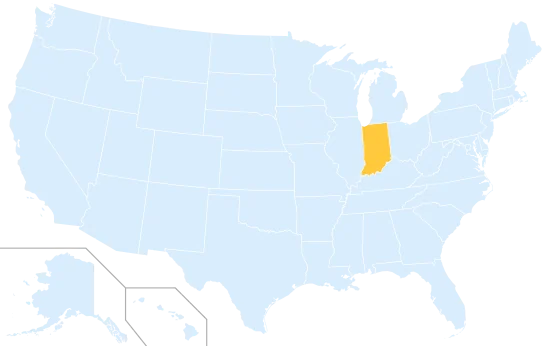
Indiana has no coast and no mountain, so people assume it has nothing to listen to. The list says otherwise: the Indiana Bird Records Committee counted 422 species on the state list as of January 2022. The north edge touches Lake Michigan, and the dunes there have recorded more than 350 species, which puts a small national park in the top five in the country. The northwest corner is old marsh country along the Kankakee, where more than 30,000 Sandhill Cranes gather in fall. The south is limestone hills and river bottoms that sound more like Kentucky than Chicago.
In between is corn, soybeans, small towns and a lot of maples, and the album leaders are the birds that live in that: cardinal, robin, jay, dove, goldfinch, two woodpeckers, crow, titmouse and nuthatch. Learn those ten and you understand an Indiana morning in any county.
The Indiana album
These are the 100 birds people report most often in Indiana, ranked by how frequently they turn up. The common and uncommon ones are shown; the rare and legendary cards stay face down until you catch them in the game.
Common 25 cards
- #001
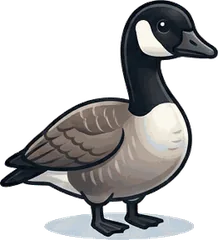 Canada Goose
Branta canadensis
Canada Goose
Branta canadensis - #007
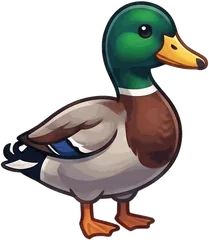 Mallard
Anas platyrhynchos
Mallard
Anas platyrhynchos - #013
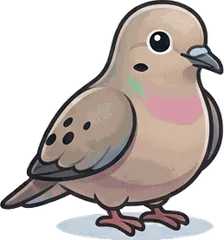 Mourning Dove
Zenaida macroura
Mourning Dove
Zenaida macroura - #017
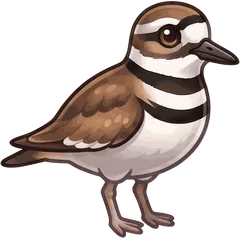 Killdeer
Charadrius vociferus
Killdeer
Charadrius vociferus - #023
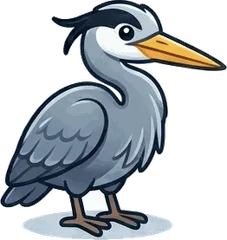 Great Blue Heron
Ardea herodias
Great Blue Heron
Ardea herodias - #024
 ?Catch it to find out
 - #031
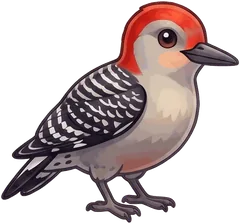 Red-bellied Woodpecker
Melanerpes carolinus
Red-bellied Woodpecker
Melanerpes carolinus - #032
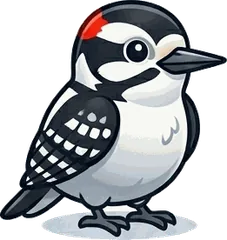 Downy Woodpecker
Dryobates pubescens
Downy Woodpecker
Dryobates pubescens - #034
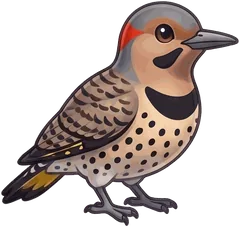 Northern Flicker
Colaptes auratus
Northern Flicker
Colaptes auratus - #045
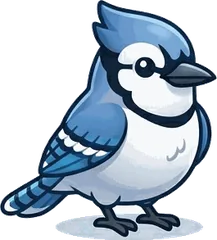 Blue Jay
Cyanocitta cristata
Blue Jay
Cyanocitta cristata - #046
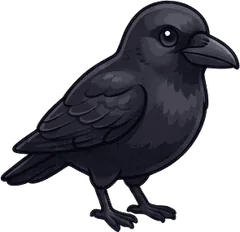 American Crow
Corvus brachyrhynchos
American Crow
Corvus brachyrhynchos - #047
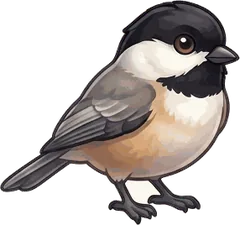 Carolina Chickadee
Poecile carolinensis
Carolina Chickadee
Poecile carolinensis - #049
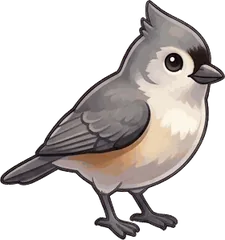 Tufted Titmouse
Baeolophus bicolor
Tufted Titmouse
Baeolophus bicolor - #055
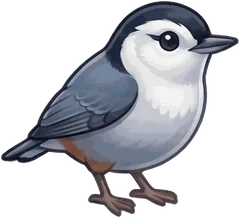 White-breasted Nuthatch
Sitta carolinensis
White-breasted Nuthatch
Sitta carolinensis - #060
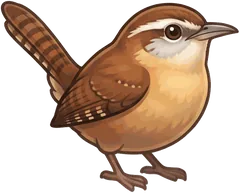 Carolina Wren
Thryothorus ludovicianus
Carolina Wren
Thryothorus ludovicianus - #061
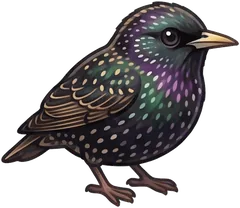 European Starling
Sturnus vulgaris
European Starling
Sturnus vulgaris - #065
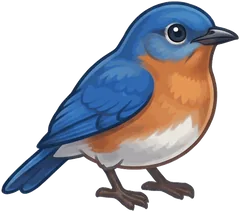 Eastern Bluebird
Sialia sialis
Eastern Bluebird
Sialia sialis - #068
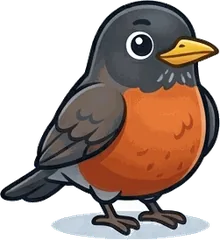 American Robin
Turdus migratorius
American Robin
Turdus migratorius - #070
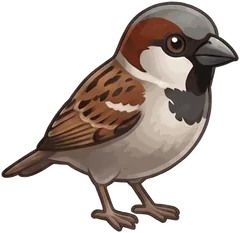 House Sparrow
Passer domesticus
House Sparrow
Passer domesticus - #071
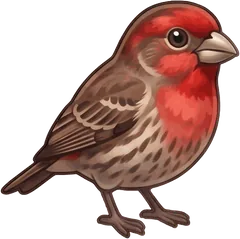 House Finch
Haemorhous mexicanus
House Finch
Haemorhous mexicanus - #072
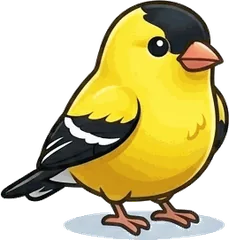 American Goldfinch
Spinus tristis
American Goldfinch
Spinus tristis - #076
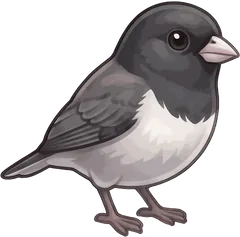 Dark-eyed Junco
Junco hyemalis
Dark-eyed Junco
Junco hyemalis - #079
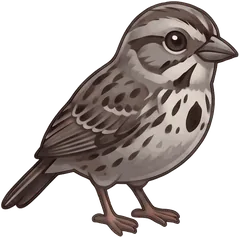 Song Sparrow
Melospiza melodia
Song Sparrow
Melospiza melodia - #084
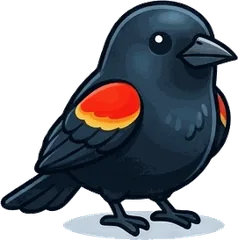 Red-winged Blackbird
Agelaius phoeniceus
Red-winged Blackbird
Agelaius phoeniceus - #098
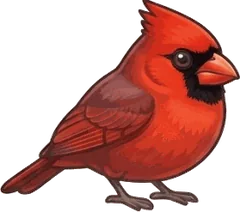 Northern Cardinal
Cardinalis cardinalis
Northern Cardinal
Cardinalis cardinalis
Uncommon 35 cards
- #003
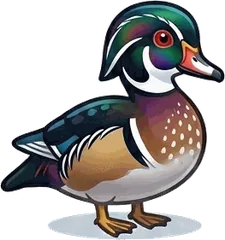 Wood Duck
Aix sponsa
Wood Duck
Aix sponsa - #014
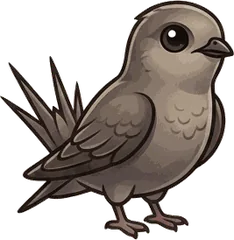 Chimney Swift
Chaetura pelagica
Chimney Swift
Chaetura pelagica - #015
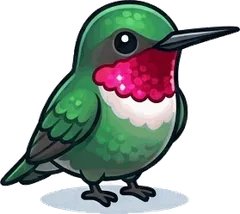 Ruby-throated Hummingbird
Archilochus colubris
Ruby-throated Hummingbird
Archilochus colubris - #016
 ?Catch it to find out
 - #019
 ?Catch it to find out
 - #026
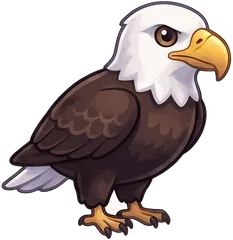 Bald Eagle
Haliaeetus leucocephalus
Bald Eagle
Haliaeetus leucocephalus - #027
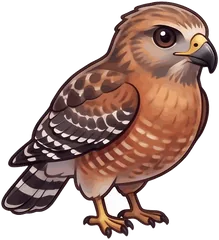 Red-shouldered Hawk
Buteo lineatus
Red-shouldered Hawk
Buteo lineatus - #028
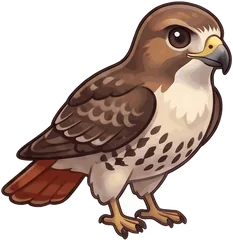 Red-tailed Hawk
Buteo jamaicensis
Red-tailed Hawk
Buteo jamaicensis - #029
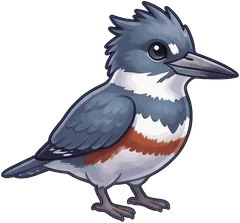 Belted Kingfisher
Megaceryle alcyon
Belted Kingfisher
Megaceryle alcyon - #030
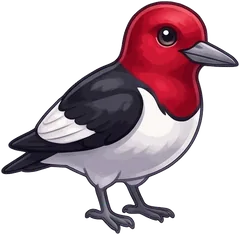 Red-headed Woodpecker
Melanerpes erythrocephalus
Red-headed Woodpecker
Melanerpes erythrocephalus - #033
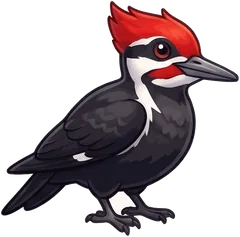 Pileated Woodpecker
Dryocopus pileatus
Pileated Woodpecker
Dryocopus pileatus - #036
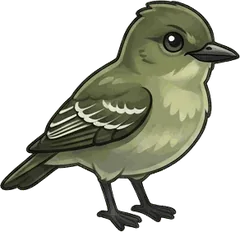 Eastern Wood-Pewee
Contopus virens
Eastern Wood-Pewee
Contopus virens - #038
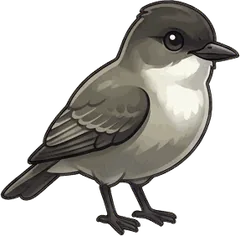 Eastern Phoebe
Sayornis phoebe
Eastern Phoebe
Sayornis phoebe - #040
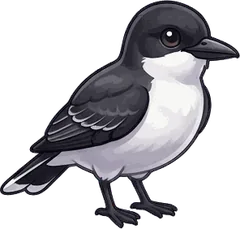 Eastern Kingbird
Tyrannus tyrannus
Eastern Kingbird
Tyrannus tyrannus - #043
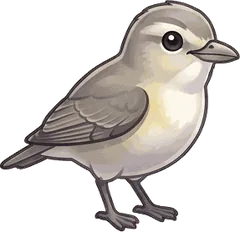 Warbling Vireo
Vireo gilvus
Warbling Vireo
Vireo gilvus - #044
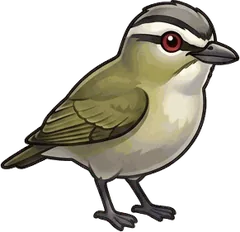 Red-eyed Vireo
Vireo olivaceus
Red-eyed Vireo
Vireo olivaceus - #048
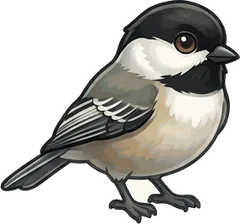 Black-capped Chickadee
Poecile atricapillus
Black-capped Chickadee
Poecile atricapillus - #051
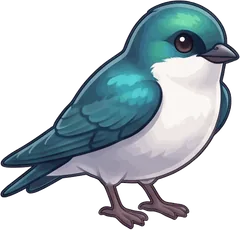 Tree Swallow
Tachycineta bicolor
Tree Swallow
Tachycineta bicolor - #053
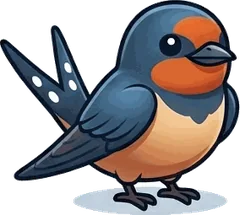 Barn Swallow
Hirundo rustica
Barn Swallow
Hirundo rustica - #058
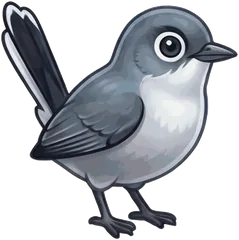 Blue-gray Gnatcatcher
Polioptila caerulea
Blue-gray Gnatcatcher
Polioptila caerulea - #059
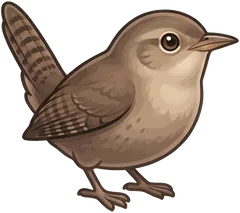 House Wren
Troglodytes aedon
House Wren
Troglodytes aedon - #062
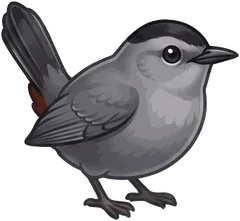 Gray Catbird
Dumetella carolinensis
Gray Catbird
Dumetella carolinensis - #063
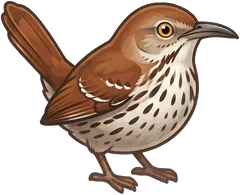 Brown Thrasher
Toxostoma rufum
Brown Thrasher
Toxostoma rufum - #069
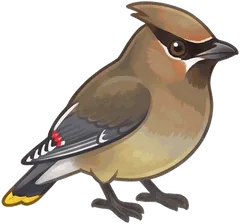 Cedar Waxwing
Bombycilla cedrorum
Cedar Waxwing
Bombycilla cedrorum - #073
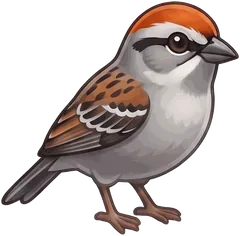 Chipping Sparrow
Spizella passerina
Chipping Sparrow
Spizella passerina - #074
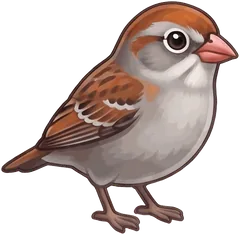 Field Sparrow
Spizella pusilla
Field Sparrow
Spizella pusilla - #078
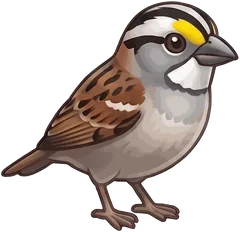 White-throated Sparrow
Zonotrichia albicollis
White-throated Sparrow
Zonotrichia albicollis - #081
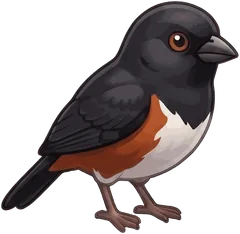 Eastern Towhee
Pipilo erythrophthalmus
Eastern Towhee
Pipilo erythrophthalmus - #083
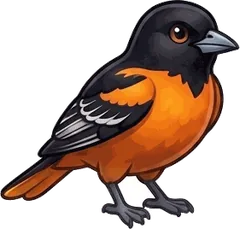 Baltimore Oriole
Icterus galbula
Baltimore Oriole
Icterus galbula - #085
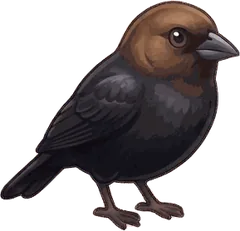 Brown-headed Cowbird
Molothrus ater
Brown-headed Cowbird
Molothrus ater - #086
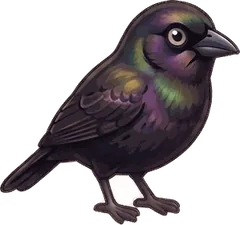 Common Grackle
Quiscalus quiscula
Common Grackle
Quiscalus quiscula - #089
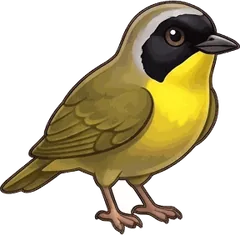 Common Yellowthroat
Geothlypis trichas
Common Yellowthroat
Geothlypis trichas - #092
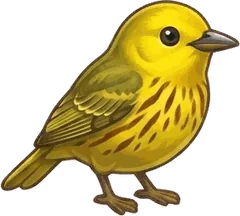 Yellow Warbler
Setophaga petechia
Yellow Warbler
Setophaga petechia - #094
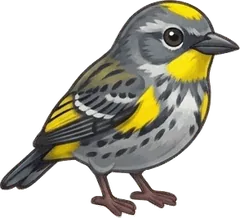 Yellow-rumped Warbler
Setophaga coronata
Yellow-rumped Warbler
Setophaga coronata - #100
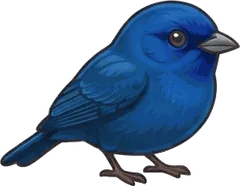 Indigo Bunting
Passerina cyanea
Indigo Bunting
Passerina cyanea
Rare 30 cards
- #002
 ?Catch it to find out
 - #004
 ?Catch it to find out
 - #005
 ?Catch it to find out
 - #006
 ?Catch it to find out
 - #008
 ?Catch it to find out
 - #009
 ?Catch it to find out
 - #011
 ?Catch it to reveal
 - #012?Catch it to reveal
- #020
 ?Catch it to find out
 - #021
 ?Catch it to find out
 - #022
 ?Catch it to find out
 - #025
 ?Catch it to find out
 - #035?Catch it to reveal
- #039?Catch it to reveal
- #041
 ?Catch it to find out
 - #050
 ?Catch it to find out
 - #052
 ?Catch it to find out
 - #054?Catch it to reveal
- #064?Catch it to reveal
- #066?Catch it to reveal
- #067?Catch it to reveal
- #075
 ?Catch it to find out
 - #077?Catch it to reveal
- #080
 ?Catch it to find out
 - #082?Catch it to reveal
- #087
 ?Catch it to find out
 - #090?Catch it to reveal
- #091?Catch it to reveal
- #095
 ?Catch it to find out
 - #099?Catch it to reveal
Legendary 10 cards
- #010
 ?Catch it to find out
 - #018
 ?Catch it to find out
 - #037
 ?Catch it to find out
 - #042
 ?Catch it to find out
 - #056?Catch it to reveal
- #057?Catch it to reveal
- #088
 ?Catch it to find out
 - #093
 ?Catch it to find out
 - #096
 ?Catch it to find out
 - #097?Catch it to reveal
 57 of the 100 cards are shown here. The other 43, including all 30 rare and 10 legendary birds, are yours to discover. Get Warble and start with the common ones.
Backyard birds you will hear first
The Northern Cardinal is the most reported bird in the state and the easiest to learn: loud slurred whistles, cheer, cheer and birdy, birdy, birdy, plus a sharp metallic chip from the hedge at dusk. The American Robin takes over before dawn from March to July, and the Blue Jay screams from the oaks.
The American Goldfinch is the fifth most reported bird, and you usually hear it before you see it: a bouncy po-ta-to-chip as it dips over the driveway in July, when it finally nests. At the feeder, the Downy Woodpecker whinnies, the Red-bellied Woodpecker rolls a churr, the Tufted Titmouse whistles peter, peter, peter, and the White-breasted Nuthatch honks like a tiny tin horn. The Song Sparrow sings from the same fence post all summer.
The regions, by ear
Lake Michigan and the dunes
Indiana Dunes National Park is a strip of beach, foredune, oak woods and remnant Great Marsh squeezed between steel mills, with more than 350 confirmed species. In fall, southbound birds follow the shoreline and get funneled into the dunes, and hawk watchers count them from the foredunes. In summer the oak woods are towhee and yellowthroat country, a drink-your-tea, witchety-witchety kind of morning, and in winter the open lake holds ducks and gulls.
The Kankakee marsh country
The northwest was once one huge marsh, and Jasper-Pulaski Fish and Wildlife Area near Medaryville, about 8,000 acres of wetland, upland and woods, is where the Sandhill Cranes remember it. More than 30,000 stop there on fall migration, and from the viewing platform at dusk the sound is a rattling roar that carries for a mile.
The central till plain
Flat fields, fencerows, ditches and county roads. Eastern Meadowlarks whistle from the wires, Killdeer cry over gravel, Horned Larks tinkle above bare ground in March, and every retention pond has a Canada Goose on it.
The southern hills and bottoms
Below Indianapolis the ground folds into wooded ridges and river bottoms. Muscatatuck National Wildlife Refuge near Seymour, a Continentally Important Bird Area of marshes and moist-soil units, has Sandhill Cranes on the wet fields and woods full of song in May. The Wood Thrush flutes from the ravines at dusk, and the Barred Owl asks who cooks for you after dark.
Best months to listen
Late April through May is the peak, when residents are singing for territory and warblers are moving through the dunes and the river woods. June is still loud at dawn. Fall is quieter for songbirds, and November is crane month at Jasper-Pulaski. Winter is feeder birds, crows going to roost, and ducks and gulls on the open lake. In any month, the first two hours after sunrise carry the song.
Places worth the drive
- Indiana Dunes National Park, between Gary and Michigan City: more than 350 species, warblers in May, hawks and funneled migrants along the shore in fall.
- Jasper-Pulaski Fish and Wildlife Area, near Medaryville: more than 30,000 Sandhill Cranes in fall, best at dusk from the platform.
- Muscatatuck National Wildlife Refuge, east of Seymour: marshes, moist-soil units and woods, cranes in the wetlands and river otters in the ditches.
- Goose Pond Fish and Wildlife Area, near Linton: about 9,000 acres of restored shallow wetland and prairie, more than 280 species recorded.
None of them is required. A yard with a feeder and a maple gives you the first 25 cards of the Warble album by May.
Listen before you go
Three of the common Indiana birds, so the first songs you hear outside already ring a bell.
Recording by Chase Harris, CC0, via iNaturalist.
Recording by Chase Harris, CC0, via iNaturalist.
Recording by Fionn Ó Marcaigh, CC BY 4.0, via iNaturalist.
Questions people ask
What is the most common bird in Indiana?
By the reports behind the album, the Northern Cardinal, then the American Robin, the Blue Jay, the Mourning Dove and the American Goldfinch. The cardinal is also the state bird.
What is the state bird of Indiana?
The Northern Cardinal, adopted in 1933. Six other states share it, including the neighbors Illinois and Kentucky.
How many bird species are there in Indiana?
422 species as of January 2022, according to the Indiana Bird Records Committee of the Indiana Audubon Society, 133 of them rare. The Warble album covers the 100 reported most often.
Nearby albums
Sources
- Wikipedia: List of birds of Indiana. en.wikipedia.org/wiki/List_of_birds_of_Indiana
- Wikipedia: List of Indiana state symbols. en.wikipedia.org/wiki/List_of_Indiana_state_symbols
- National Park Service: Birds of Indiana Dunes National Park. www.nps.gov/indu/learn/nature/birds.htm
- Wikipedia: Jasper-Pulaski Fish and Wildlife Area. en.wikipedia.org/wiki/Jasper-Pulaski_Fish_and_Wildlife_Area