 Warble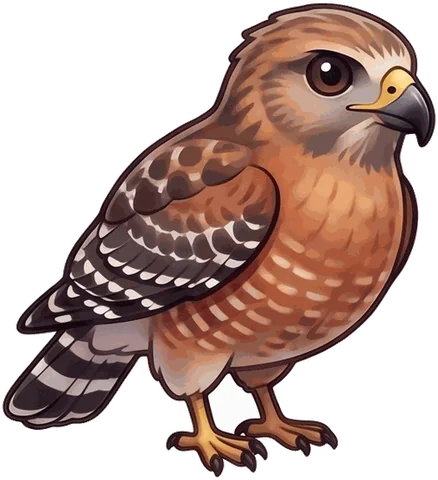
A Red-shouldered Hawk sounds like a clear, whistled scream with a downward slide, kee-yeeear or kee-aah, repeated three or four times in a row and often many more, especially in late winter and spring when pairs are courting and defending a territory. It is higher, cleaner and more insistent than the single hoarse scream of a Red-tailed Hawk. One catch: Blue Jays imitate this call almost perfectly, so a red-shoulder scream from inside a leafy tree may be a jay.
What the scream sounds like
The Red-shouldered Hawk is the noisy one among the big soaring hawks. Its scream is a loud kee-yeeear in Audubon's spelling, kee-aah in Wikipedia's, each note starting high and sliding down, with a clean whistled quality rather than the rasp of a red-tail. It does not stop at one. The notes come in series of three or four, and the Missouri Department of Conservation writes the whole thing as a descending keeyar-keeyar-keeyar. A pair in spring can keep it up for minutes while circling above the woods.
The calling is heaviest during courtship and territorial defense. Males perform a sky-dance display over the nest woods, and the screaming that goes with it is how most people first notice the bird. In Florida the species is the most commonly seen and heard raptor apart from the vultures.
The Blue Jay problem
Blue Jays give a near-perfect imitation of this call, and Audubon flags it in the first line of its voice description. Wikipedia adds that Steller's Jays do the same in the West, and that jays can copy local hawks so well it is sometimes hard to tell which bird you are hearing. Two reasons have been proposed: to test whether a hawk is nearby, or to scare other birds away from food.
The clues are context. A real Red-shouldered Hawk usually screams from the air or from a high, open perch and repeats the phrase steadily. A jay's version tends to come from inside cover, at jay height, often as a single burst, and is followed by ordinary jay chatter.
When and where you hear it
This is a hawk of wet woods. In the East it breeds from southern Canada through the eastern United States, in bottomland hardwoods, flooded swamps, wooded streamsides and upland mixed forest where the understory is open enough to see the ground. A separate population lives along the Pacific coast from southern Oregon to Baja California, in riverside and oak woodlands, eucalyptus groves and even residential neighborhoods. Missouri calls it uncommon in the south of the state and rare in the north.
Most Red-shouldered Hawks are permanent residents. Only the northern birds migrate, and not far, roughly 190 to 930 miles, following ridges and coastlines and avoiding big water; some winter as far south as central Mexico. The hunting style is patient: sit on a perch, watch, drop. Small mammals such as voles, mice and chipmunks are the staple, joined by frogs and toads in wet areas, snakes, crayfish, large insects and the occasional bird.
Pairs are monogamous and reuse the same stick nest in a large tree fork year after year, often near water. The three or four eggs are pale bluish white blotched with brown and lavender, incubated for about 33 days, and the young leave the nest at around six weeks. The species was one of the most common raptors in North America before 1900, lost ground to logging and pesticides, and has stabilized as forests regrew. In Warble the screaming series is one of the easier raptor cards in Florida, where this is the hawk you hear most.
What it looks like
A medium-sized hawk, 16 to 24 inches long with a wingspan around three and a half feet, slimmer and longer-tailed than a red-tail. The adult is rich reddish orange across the chest and barred below, with the rufous shoulder patches that give it its name, and dark flight feathers and tail crossed with narrow white bands. Two marks settle most sightings: the crisp banding of the tail, and a pale crescent near each wingtip that shows when the bird soars against the light. California birds are redder, Florida birds paler. Juveniles are brown above and streaked below and are most often confused with young Broad-winged Hawks, but they have longer tails and the wing crescents.
Birds that sound similar
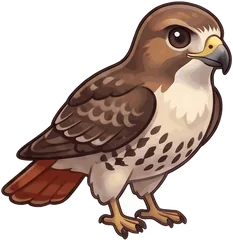 Red-tailed Hawk
The Red-tailed Hawk gives one long, hoarse, rasping scream and falls silent. The red-shoulder's notes are cleaner and shorter and come in runs of three, four or many more.
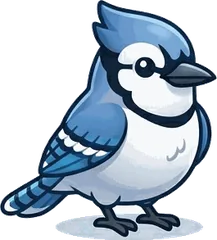 Blue Jay
Blue Jays imitate this hawk so well that Audubon warns about it. Listen for the source: a scream from inside dense foliage, followed by jay calls, is a jay; a scream from a soaring bird is the hawk.
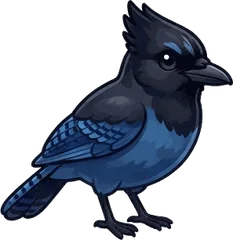 Steller's Jay
Steller's Jays copy the Red-shouldered scream in the West and are just as convincing. Same test: a hawk calls from open sky or a bare perch, a jay from inside the conifers.
Where the Red-shouldered Hawk card lives
In Warble the same bird can be an easy card in one state and a prized one in another, because each album ranks its birds by how often people really report them there. The Red-shouldered Hawk appears in 24 state albums:
 Heard one? Open Warble, tap the green button while it sings, and the Red-shouldered Hawk card flips into your album. Get the app free.
Questions people ask
Why does a blue jay sound like a hawk?
Because it is imitating one. Blue Jays copy the Red-shouldered Hawk's scream almost perfectly, and the Red-tailed Hawk's too. Wikipedia lists two proposed reasons: to test whether a hawk is actually nearby, or to scare other birds away from food. Steller's Jays do the same in the West.
What is the difference between a red-shouldered and a red-tailed hawk call?
Number and texture. A Red-tailed Hawk gives a single hoarse, rasping scream that slurs downward over two or three seconds. A Red-shouldered Hawk gives a cleaner, whistled kee-yeeear and repeats it three or four times or more.
Where do red-shouldered hawks live?
Wet woods. They breed across the eastern United States and southern Canada in bottomland forest, swamps and wooded streamsides, with a separate population along the Pacific coast from southern Oregon to Baja California. Most are permanent residents; northern birds move a few hundred miles south for the winter.
Do red-shouldered hawks eat birds at feeders?
Occasionally. Their main prey is small mammals, frogs, snakes and crayfish, but in winter some learn to watch feeders and take small birds.
Sources
- National Audubon Society, Guide to North American Birds: Red-shouldered Hawk. www.audubon.org/field-guide/bird/red-shouldered-hawk
- Wikipedia: Red-shouldered hawk (call, jay imitation, range, migration, diet, nesting). en.wikipedia.org/wiki/Red-shouldered_hawk
- Missouri Department of Conservation, Field Guide: Red-shouldered Hawk. mdc.mo.gov/discover-nature/field-guide/red-shouldered-hawk
- Wikipedia: Blue jay (imitation of hawk calls and proposed reasons). en.wikipedia.org/wiki/Blue_jay