 Warble
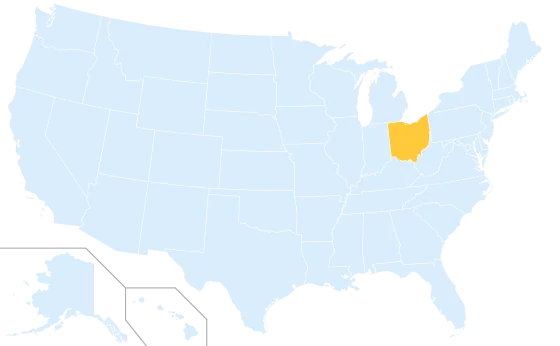
The state bird: Northern Cardinal
Adopted in 1933, and the right choice for a state where half the winter feeders have one on them. Both sexes sing, the male starts in late winter, and the sharp metallic chip is often the last bird sound of the day.
Recording by Chase Harris, CC0, via iNaturalist.
The Ohio Bird Records Committee had 456 species on its official list as of July 2026, and 193 of those have bred in the state. That is a big number for a place most people picture as cornfields and cul-de-sacs, and the reason is the Lake Erie shore: every spring, songbirds heading north pile up on the last strip of trees before the open water, and for a few weeks in May the marshes east of Toledo are one of the loudest places in North America.
Away from the lake, Ohio is three sounds: meadowlarks and Red-winged Blackbirds along the ditches of the western farm country, cardinal, robin, jay and House Sparrow in the cities and suburbs, and Wood Thrush and Ovenbird forest in the unglaciated hills of the southeast, where the Appalachians begin.
The Ohio album
These are the 100 birds people report most often in Ohio, ranked by how frequently they turn up. The common and uncommon ones are shown; the rare and legendary cards stay face down until you catch them in the game.
Common 25 cards
- #001
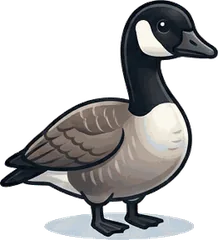 Canada Goose
Branta canadensis
Canada Goose
Branta canadensis - #006
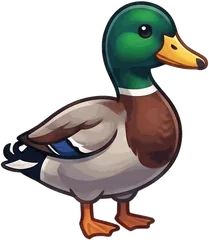 Mallard
Anas platyrhynchos
Mallard
Anas platyrhynchos - #014
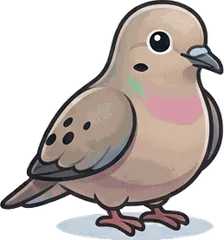 Mourning Dove
Zenaida macroura
Mourning Dove
Zenaida macroura - #018
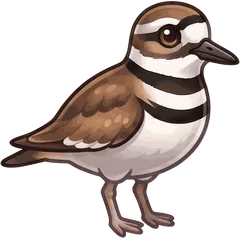 Killdeer
Charadrius vociferus
Killdeer
Charadrius vociferus - #027
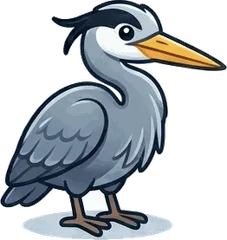 Great Blue Heron
Ardea herodias
Great Blue Heron
Ardea herodias - #028
 ?Catch it to find out
 - #035
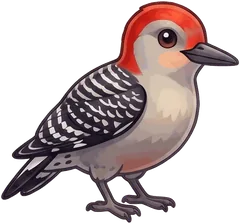 Red-bellied Woodpecker
Melanerpes carolinus
Red-bellied Woodpecker
Melanerpes carolinus - #036
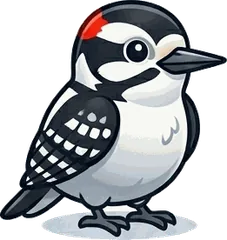 Downy Woodpecker
Dryobates pubescens
Downy Woodpecker
Dryobates pubescens - #038
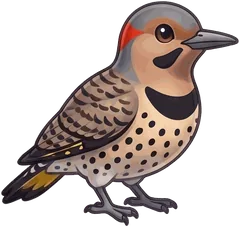 Northern Flicker
Colaptes auratus
Northern Flicker
Colaptes auratus - #046
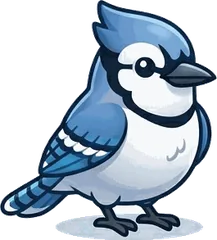 Blue Jay
Cyanocitta cristata
Blue Jay
Cyanocitta cristata - #047
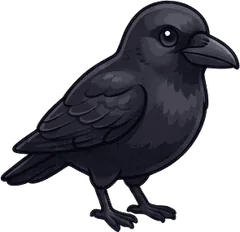 American Crow
Corvus brachyrhynchos
American Crow
Corvus brachyrhynchos - #048
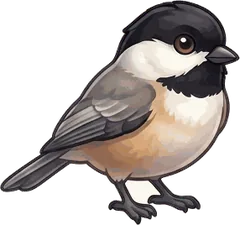 Carolina Chickadee
Poecile carolinensis
Carolina Chickadee
Poecile carolinensis - #050
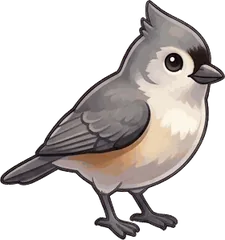 Tufted Titmouse
Baeolophus bicolor
Tufted Titmouse
Baeolophus bicolor - #056
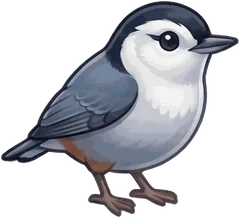 White-breasted Nuthatch
Sitta carolinensis
White-breasted Nuthatch
Sitta carolinensis - #059
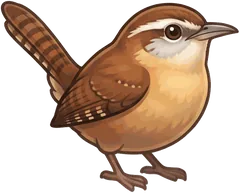 Carolina Wren
Thryothorus ludovicianus
Carolina Wren
Thryothorus ludovicianus - #060
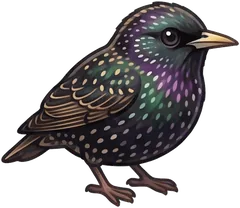 European Starling
Sturnus vulgaris
European Starling
Sturnus vulgaris - #061
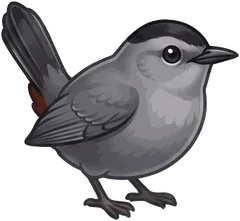 Gray Catbird
Dumetella carolinensis
Gray Catbird
Dumetella carolinensis - #067
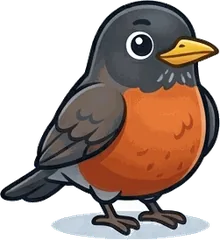 American Robin
Turdus migratorius
American Robin
Turdus migratorius - #069
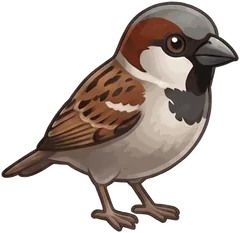 House Sparrow
Passer domesticus
House Sparrow
Passer domesticus - #070
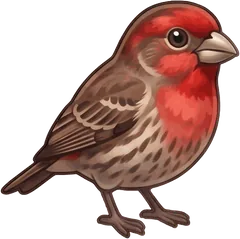 House Finch
Haemorhous mexicanus
House Finch
Haemorhous mexicanus - #071
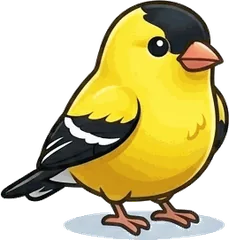 American Goldfinch
Spinus tristis
American Goldfinch
Spinus tristis - #078
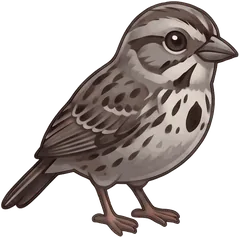 Song Sparrow
Melospiza melodia
Song Sparrow
Melospiza melodia - #083
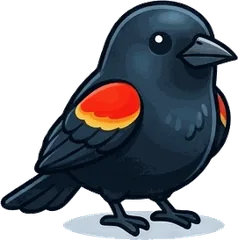 Red-winged Blackbird
Agelaius phoeniceus
Red-winged Blackbird
Agelaius phoeniceus - #085
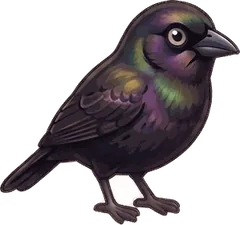 Common Grackle
Quiscalus quiscula
Common Grackle
Quiscalus quiscula - #098
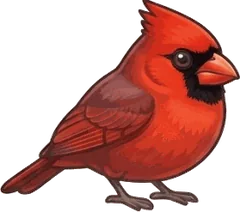 Northern Cardinal
Cardinalis cardinalis
Northern Cardinal
Cardinalis cardinalis
Uncommon 35 cards
- #003
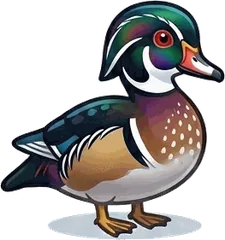 Wood Duck
Aix sponsa
Wood Duck
Aix sponsa - #015
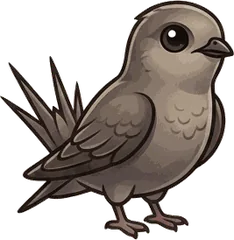 Chimney Swift
Chaetura pelagica
Chimney Swift
Chaetura pelagica - #016
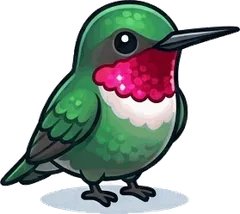 Ruby-throated Hummingbird
Archilochus colubris
Ruby-throated Hummingbird
Archilochus colubris - #022
 ?Catch it to find out
 - #023
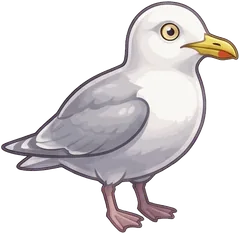 Herring Gull
Larus smithsonianus
Herring Gull
Larus smithsonianus - #024
 ?Catch it to find out
 - #026
 ?Catch it to find out
 - #030
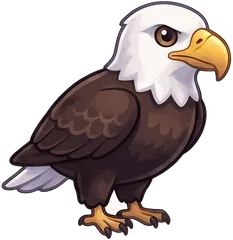 Bald Eagle
Haliaeetus leucocephalus
Bald Eagle
Haliaeetus leucocephalus - #032
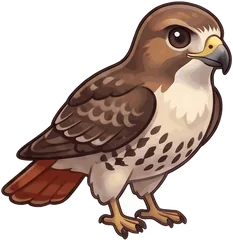 Red-tailed Hawk
Buteo jamaicensis
Red-tailed Hawk
Buteo jamaicensis - #033
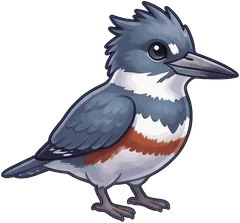 Belted Kingfisher
Megaceryle alcyon
Belted Kingfisher
Megaceryle alcyon - #037
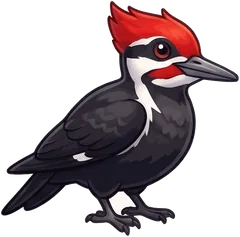 Pileated Woodpecker
Dryocopus pileatus
Pileated Woodpecker
Dryocopus pileatus - #040
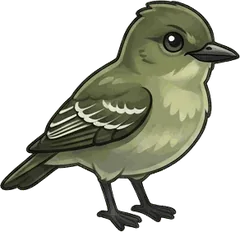 Eastern Wood-Pewee
Contopus virens
Eastern Wood-Pewee
Contopus virens - #041
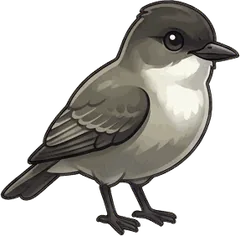 Eastern Phoebe
Sayornis phoebe
Eastern Phoebe
Sayornis phoebe - #043
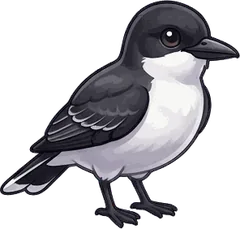 Eastern Kingbird
Tyrannus tyrannus
Eastern Kingbird
Tyrannus tyrannus - #044
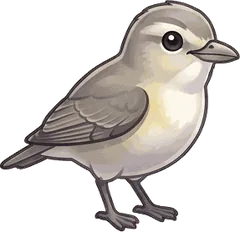 Warbling Vireo
Vireo gilvus
Warbling Vireo
Vireo gilvus - #045
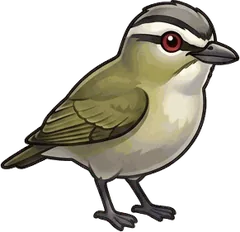 Red-eyed Vireo
Vireo olivaceus
Red-eyed Vireo
Vireo olivaceus - #049
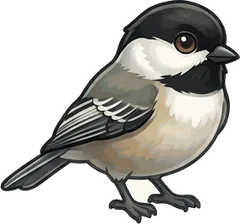 Black-capped Chickadee
Poecile atricapillus
Black-capped Chickadee
Poecile atricapillus - #051
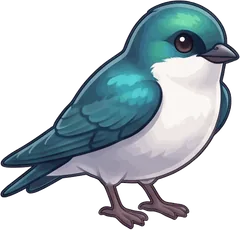 Tree Swallow
Tachycineta bicolor
Tree Swallow
Tachycineta bicolor - #054
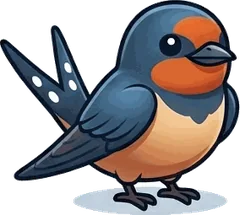 Barn Swallow
Hirundo rustica
Barn Swallow
Hirundo rustica - #057
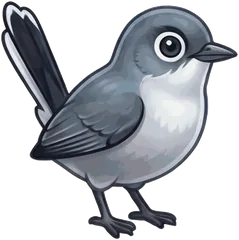 Blue-gray Gnatcatcher
Polioptila caerulea
Blue-gray Gnatcatcher
Polioptila caerulea - #058
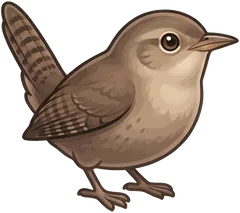 House Wren
Troglodytes aedon
House Wren
Troglodytes aedon - #064
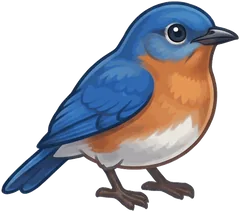 Eastern Bluebird
Sialia sialis
Eastern Bluebird
Sialia sialis - #066
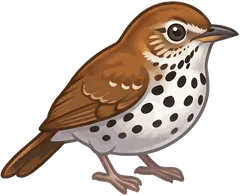 Wood Thrush
Hylocichla mustelina
Wood Thrush
Hylocichla mustelina - #068
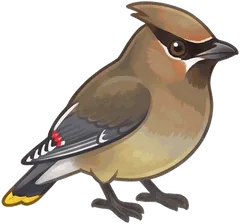 Cedar Waxwing
Bombycilla cedrorum
Cedar Waxwing
Bombycilla cedrorum - #072
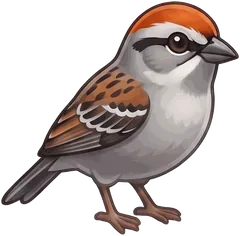 Chipping Sparrow
Spizella passerina
Chipping Sparrow
Spizella passerina - #073
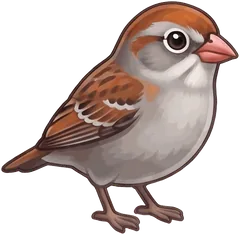 Field Sparrow
Spizella pusilla
Field Sparrow
Spizella pusilla - #075
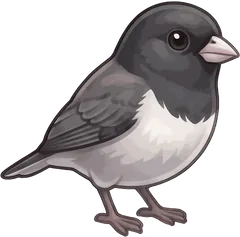 Dark-eyed Junco
Junco hyemalis
Dark-eyed Junco
Junco hyemalis - #077
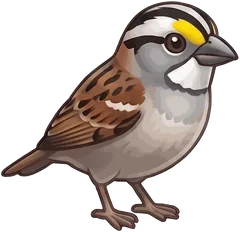 White-throated Sparrow
Zonotrichia albicollis
White-throated Sparrow
Zonotrichia albicollis - #080
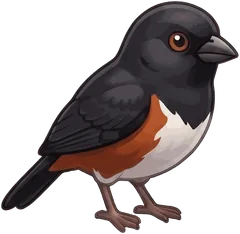 Eastern Towhee
Pipilo erythrophthalmus
Eastern Towhee
Pipilo erythrophthalmus - #082
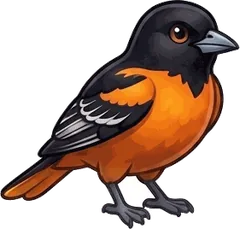 Baltimore Oriole
Icterus galbula
Baltimore Oriole
Icterus galbula - #084
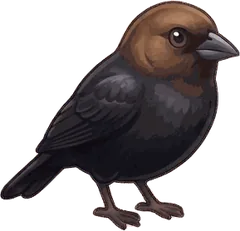 Brown-headed Cowbird
Molothrus ater
Brown-headed Cowbird
Molothrus ater - #089
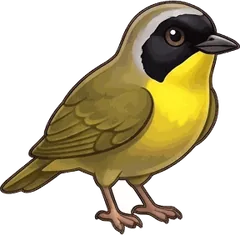 Common Yellowthroat
Geothlypis trichas
Common Yellowthroat
Geothlypis trichas - #093
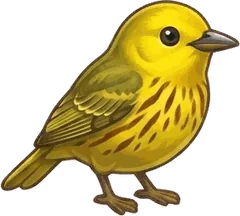 Yellow Warbler
Setophaga petechia
Yellow Warbler
Setophaga petechia - #095
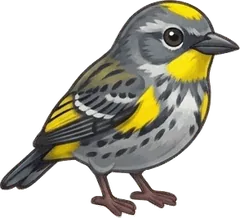 Yellow-rumped Warbler
Setophaga coronata
Yellow-rumped Warbler
Setophaga coronata - #100
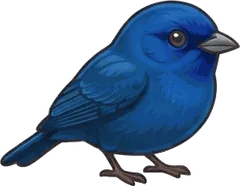 Indigo Bunting
Passerina cyanea
Indigo Bunting
Passerina cyanea
Rare 30 cards
- #002
 ?Catch it to find out
 - #004
 ?Catch it to find out
 - #009
 ?Catch it to find out
 - #010
 ?Catch it to find out
 - #011
 ?Catch it to find out
 - #013
 ?Catch it to reveal
 - #017
 ?Catch it to find out
 - #019
 ?Catch it to find out
 - #025
 ?Catch it to find out
 - #029?Catch it to reveal
- #031?Catch it to reveal
- #034?Catch it to reveal
- #039?Catch it to reveal
- #042?Catch it to reveal
- #052?Catch it to reveal
- #053
 ?Catch it to find out
 - #055?Catch it to reveal
- #062?Catch it to reveal
- #063?Catch it to reveal
- #074
 ?Catch it to find out
 - #076?Catch it to reveal
- #079
 ?Catch it to find out
 - #081?Catch it to reveal
- #090?Catch it to reveal
- #091?Catch it to reveal
- #092
 ?Catch it to find out
 - #094
 ?Catch it to find out
 - #096
 ?Catch it to find out
 - #097?Catch it to reveal
- #099?Catch it to reveal
Legendary 10 cards
- #005
 ?Catch it to find out
 - #007
 ?Catch it to find out
 - #008
 ?Catch it to find out
 - #012
 ?Catch it to find out
 - #020
 ?Catch it to find out
 - #021
 ?Catch it to find out
 - #065?Catch it to reveal
- #086?Catch it to reveal
- #087
 ?Catch it to find out
 - #088
 ?Catch it to find out
 56 of the 100 cards are shown here. The other 44, including all 30 rare and 10 legendary birds, are yours to discover. Get Warble and start with the common ones.
Backyard birds you will hear first
The Northern Cardinal is first in the album and first in the morning, a loud, clear cheer, cheer, cheer from the top of a spruce. The American Robin takes over at dawn from March to July with its cheerily, cheer-up phrases, and the Blue Jay screams from the oaks, then surprises you with a soft bell note or a Red-tailed Hawk impression.
The Song Sparrow is fourth on the list: it sits on a brush pile by the driveway and sings a few clear notes, a buzz and a trill, in a different order each time. The Mourning Dove coos from the wires, the Canada Goose honks over every retention pond, the Red-winged Blackbird sings conk-la-ree from any cattail, and the American Goldfinch bounces overhead calling po-ta-to-chip. Two woodpeckers are in the top ten: the Red-bellied's rolling churr and the Downy's soft whinny at the suet.
The regions, by ear
The Lake Erie shore
Magee Marsh Wildlife Area, 2,202 acres of marsh on the lakeshore in Ottawa County, established in 1951, is the reason birders fly to Ohio. Its boardwalk runs through lakeside woods where northbound warblers stop to feed at eye level, and the Black Swamp Bird Observatory holds the Biggest Week in American Birding there in early May, a festival that typically draws 60,000 to 80,000 visitors.
Northeast Ohio and the Cuyahoga Valley
Cuyahoga Valley National Park, between Cleveland and Akron, has about 250 species of birds and roughly 120 that breed there. Bald Eagles have nested in the park since 2006, Great Blue Herons raise young in three heronries in or beside it, and a spring morning there can produce more than 120 species in a single day, with more than twenty kinds of wood-warbler passing through in May.
The western farm country
Flat, open and windy. Eastern Meadowlarks whistle from fence posts, Killdeer cry over gravel lots, Red-winged Blackbirds hold every roadside ditch, and the Bobolink still bubbles over hayfields in June.
The Appalachian southeast
Hocking Hills, Shawnee and the Wayne National Forest: deep hardwood ravines where the Wood Thrush flutes at dusk, the Ovenbird shouts teacher, teacher from the leaf litter, the Scarlet Tanager sings like a hoarse robin from the canopy and the Pileated Woodpecker laughs across the hollow. Barred Owls ask who cooks for you after dark, and the Eastern Whip-poor-will still sings on some ridges.
Best months to listen
May is the month: residents on territory, warblers on the lake shore. April is quieter but honest, with robins, cardinals, phoebes and woodcocks peenting in wet fields at dusk. June belongs to the hills, where thrushes and tanagers sing into July. Fall migration, late August into October, is mostly silent, but the blackbird flocks over the marshes make up for it. Winter is the cardinal at the feeder, the junco, and more Bald Eagles along the lake than most Ohioans expect. In any month, the first hour after sunrise carries the song.
Places worth the drive
- Magee Marsh Wildlife Area, Ottawa County: the boardwalk in May, warblers at arm's length.
- Cuyahoga Valley National Park, between Cleveland and Akron: about 250 species, heronries and nesting eagles.
- Hocking Hills, southeast of Columbus: Wood Thrush, Ovenbird and Scarlet Tanager in the ravines.
None of them are required. A feeder in Dayton or a Cincinnati park with a creek and a few old oaks gives you the first 25 cards in Warble before the warblers arrive.
Listen before you go
Three of the common Ohio birds, so the first songs you hear outside already ring a bell.
Recording by Chase Harris, CC0, via iNaturalist.
Recording by Chase Harris, CC0, via iNaturalist.
Recording by Fionn Ó Marcaigh, CC BY 4.0, via iNaturalist.
Questions people ask
What is the most common bird in Ohio?
By the reports behind the album, the Northern Cardinal, then the American Robin, the Blue Jay, the Song Sparrow, the Canada Goose and the Mourning Dove. The cardinal is also the state bird.
What is the state bird of Ohio?
The Northern Cardinal, adopted in 1933. Six other states share it. It stays all year, sings from late winter, and the female sings too.
How many bird species are there in Ohio?
456 species as of July 2026, according to the Ohio Bird Records Committee, and 193 of them have nested in the state. The Warble album covers the 100 reported most often.
Nearby albums
Sources
- Wikipedia: List of birds of Ohio. en.wikipedia.org/wiki/List_of_birds_of_Ohio
- Wikipedia: List of U.S. state birds. en.wikipedia.org/wiki/List_of_U.S._state_birds
- Wikipedia: Magee Marsh Wildlife Area. en.wikipedia.org/wiki/Magee_Marsh_Wildlife_Area
- National Park Service: Cuyahoga Valley National Park, Birds. www.nps.gov/cuva/learn/nature/birds.htm