 Warble


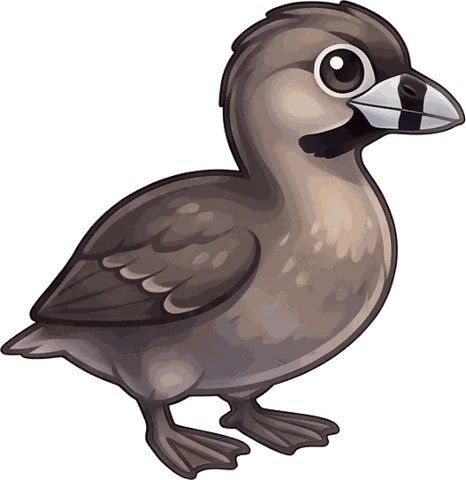
A Pied-billed Grebe sounds like a cuckoo that has moved onto the pond. Its call is a loud, hollow series of whooping notes, written cow-cow-cow-cow, cow, cow, cowp, cowp, cowp, that starts quick and slows down at the end. Pairs sometimes call in duets, and they may call by day or by night, mostly in the breeding season. The singer is a small, brown diving bird of marshy ponds and lakes that would rather sink out of sight than fly away.
What the call sounds like
The main call is one of the stranger sounds on a North American pond. Audubon describes a series of hollow, cuckoo-like notes, cow-cow-cow-cow, cow, cow, cowp, cowp, cowp, that slows down at the end. Wikipedia hears it as a loud, whooping kuk-kuk-cow-cow-cow-cowp-cowp. Either way the shape is the same: a fast opening that loses speed and stretches out into separate, gulping notes, as if the bird is running out of breath.
Wikipedia compares the call to the Yellow-billed Cuckoo's, and it is easy to hear why. The difference is in the tone: the grebe's notes are hollow and whooping, the cuckoo's harsh and rattling.
The University of Arizona's marsh bird survey team lists a call it names owhoop for courtship, for talk between members of a pair, and for defending territory. Courtship involves calling and sometimes duets, and rival males square off by facing each other, raising their heads and bills, and calling. Audubon notes the calling is heard most in the breeding season, by day or by night.
The other calls: clucks and a hyena
Outside the big call, Pied-billed Grebes make a range of clucking sounds. The Arizona survey also lists a greeting call it names, memorably, the hyena call.
When and where you hear it
This is the most widespread grebe in the New World and the one most people in temperate North America are likely to meet. It breeds on ponds, lakes and marshes with dense marsh plants and some open water, and prefers still water to rivers. Where the climate allows, the breeding season runs from early spring to mid-autumn, and that is when you will hear it most. Unlike most grebes it is a loner, rarely in flocks and usually found by itself on a small marshy pond.
Southern birds may stay all year. Northern birds, where the water freezes, migrate at night, leaving late in fall and returning early in spring. In winter look for them on open water, including estuaries and coastal bays as well as unfrozen ponds. The bird turns up in most state albums in Warble, which suits a voice you can hear from the shore without ever spotting the singer.
Audubon puts the population near 3.1 million and notes declines in recent decades. Wikipedia reports that the bird is listed as endangered in Connecticut and New Hampshire, threatened in New Jersey and Massachusetts, and extirpated in Rhode Island. Draining and filling of wetlands is the biggest threat, and nesting birds are easily scared off: boat wakes can destroy nests, and frightened adults may abandon their eggs.
Hell-diver: the vanishing act
Old names for this bird include hell-diver, devil-diver and water witch, and Wikipedia ties the first to its shyness. When something worries it, a Pied-billed Grebe rarely flies. It dives, usually to 20 feet or less, and stays down for about 30 seconds, or it simply sinks. By controlling the air trapped in its feathers, it can slowly lower itself until only its head shows above the water.
Underwater it swims mainly with its feet, hunting aquatic insects, small fish, leeches, frogs and tadpoles, and crushing crayfish with its thick bill. Like other grebes it also swallows its own feathers and feeds them to its chicks, which likely protects the gut from sharp fish bones.
What it looks like
A compact, short-necked brown diver about 12 to 15 inches long, with a darker crown and back, a white patch under the tail and no white in the wings. The short, thick bill is pale; in breeding season it gets a bold black ring, which is the pied bill of the name, and the throat turns black. Beginners often take it for a duck, but the bill is short and thick rather than flat, the toes have lobes instead of webs, and the feet sit so far back that it cannot walk on land.
The nest is a floating mound of plants anchored in the marsh, and a parent leaving it covers the eggs with nest material. The chicks ride and sleep on their parents' backs, and adults sometimes dive with the young still aboard.
Birds that sound similar
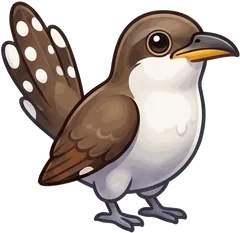 Yellow-billed Cuckoo
The cuckoo's ka-ka-ka-ka-kow-kow-kowp, kowp, kowp also slows at the end, but it is rapid, harsh and rattling, not hollow. It comes from dense leafy trees and thickets, often willow groves around marshes. The grebe calls from the water.
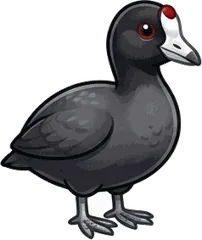 American Coot
Marsh bird surveyors write the coot's calls as short sounds: burrup, a hiccup and a honk. Nothing in the coot's repertoire builds into a long run of whooping notes that slows down.
Where the Pied-billed Grebe card lives
In Warble the same bird can be an easy card in one state and a prized one in another, because each album ranks its birds by how often people really report them there. The Pied-billed Grebe appears in 38 state albums:
 Heard one? Open Warble, tap the green button while it sings, and the Pied-billed Grebe card flips into your album. Get the app free.
More about the Pied-billed Grebe on this site
Questions people ask
What bird sounds like a cuckoo on a pond?
Most likely a Pied-billed Grebe. Its loud, hollow cow-cow-cow-cowp, cowp, cowp slows at the end like a cuckoo's call, but it comes from a marshy pond or lake, often from a bird you cannot see in the reeds.
Do Pied-billed Grebes call at night?
Yes. They call by day or night, most often in the breeding season. Pairs sometimes call together in duets.
Why is it called a hell-diver?
Because it disappears. When threatened, a Pied-billed Grebe dives or sinks slowly out of sight instead of flying, and may resurface with only its head above water. Old nicknames include hell-diver, devil-diver and water witch.
Is a Pied-billed Grebe a duck?
No. Grebes are a separate group, and Wikipedia notes they are more closely related to flamingos than to ducks. Look for the short, thick bill, lobed rather than webbed toes, and the habit of sinking instead of flying.
Sources
- National Audubon Society, Guide to North American Birds: Pied-billed Grebe. www.audubon.org/field-guide/bird/pied-billed-grebe
- Wikipedia: Pied-billed grebe (call, cuckoo comparison, diving, nicknames, state listings). en.wikipedia.org/wiki/Pied-billed_grebe
- National Audubon Society, Guide to North American Birds: Yellow-billed Cuckoo. www.audubon.org/field-guide/bird/yellow-billed-cuckoo
- University of Arizona, National Marsh Bird Monitoring Program: call types of marsh birds. cales.arizona.edu/research/azfwru/NationalMarshBird/Call_Types.html