 Warble


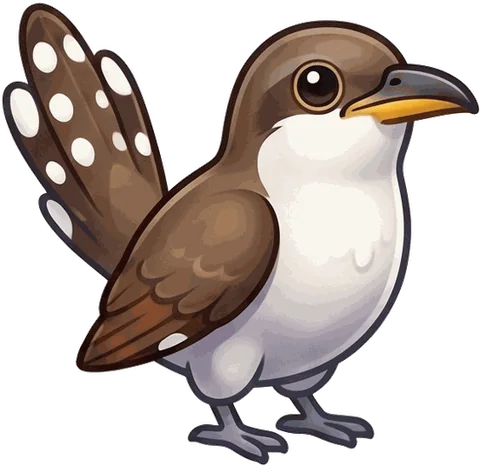
A Yellow-billed Cuckoo sounds like a stuttering, croaking rattle that runs out of steam: a fast, harsh ka-ka-ka-ka-ka-kow-kow-kowp, kowp, kowp, kowp that slows down toward the end. The bird hides in dense, leafy trees, so most people only ever hear it, often on hot, sticky summer afternoons, which is why it is called the rain crow. It is a summer visitor across much of the United States, arriving late in spring and leaving early in fall.
What the call sounds like
The sound to learn is a long series that starts quick and harsh and then slows. Audubon writes it as ka-ka-ka-ka-ka-ka-kow-kow-kowp, kowp, kowp, kowp: a rapid stutter of dry notes at the front, then fuller kowp notes spaced farther and farther apart, as if the bird were winding down. It is croaky rather than musical, and it carries a long way through summer woods. That slowing finish is the mark to listen for.
The caller is usually invisible. Yellow-billed Cuckoos keep to dense, leafy groves and thickets and climb through the foliage picking caterpillars off leaves, so a bird can call from the tree you are staring at and never show itself. When you do spot one, it is usually because it moved: a long tail sliding between branches, or a brief hover at a twig.
Other calls, including calls at night
Besides the long rattle, Audubon lists chattering, hooting and trilling calls, so not every sound from that thick tree will follow the slowing pattern. The surprise is the night: during migration, Yellow-billed Cuckoos are sometimes heard calling overhead in the dark, so a stuttering kowp from the sky on a spring or fall night is not your imagination.
When and where you hear it
Yellow-billed Cuckoos are long-distance migrants, and late ones: they mostly arrive in late spring and leave early in fall, spending the winter in South America, some as far south as northern Argentina. Eastern birds travel by way of the Caribbean, while western birds head down the western slope of Mexico and through Central America.
They breed in deciduous woods from southern Canada to Mexico and the Caribbean. Listen at forest edges, tall thickets, overgrown orchards, scrubby oak woods and willow groves around marshes; in the West, along streamside cottonwood and willow groves in dry country. Local numbers swing with insect outbreaks. Cuckoos eat mostly caterpillars, including hairy tent caterpillars, plus cicadas and other big insects, and they gather where caterpillars boom, including outbreaks of the non-native spongy moth. One study found about three quarters of them moving roughly 600 miles between two sites in a single breeding season, possibly to chase food and raise a second brood.
The western birds are in trouble. They vanished from British Columbia, Washington and Oregon in the first half of the twentieth century, and the western population is listed as threatened under the Endangered Species Act. Eastern numbers have dropped too, less steeply. Because this bird is heard far more often than seen, a short phone recording with Warble is often the easiest way to put a name on that rattle in the trees.
Why it is called the rain crow
In the southern United States the Yellow-billed Cuckoo has long gone by rain crow, and sometimes storm crow. The likely reason is timing: it calls a great deal on hot, humid days, the kind that often build into an afternoon thunderstorm, and people came to believe it was calling the rain in. Audubon puts it gently, saying people imagine it is calling for rain.
What it looks like
About the size of an American Robin, with a much longer tail. It is plain brown above and clean white below, with a yellow ring around the eye and a slightly curved bill that is black on top and yellow on the lower half, which you can see at close range. From below, the long tail looks black with big white spots. In flight, rusty cinnamon patches flash in the wings. Males and females look alike; fall juveniles have a duller, grayer tail pattern and less yellow on the bill.
The nest is a loose, flimsy platform of twigs in a tree, shrub or vine, and the chicks start clambering around the branches at about a week old. Yellow-billed Cuckoos occasionally lay eggs in other birds' nests, most often a Black-billed Cuckoo's, but unlike the common cuckoo of Europe and Asia they normally raise their own young.
Birds that sound similar
- ?Black-billed Cuckoo
Its call is a soft, mellow cu-cu-cu in groups of two to five notes, all on one pitch and evenly spaced. The Yellow-billed's rattle is harsher, starts fast and slows into separate kowp notes. Black-billed Cuckoos also call overhead on spring nights.
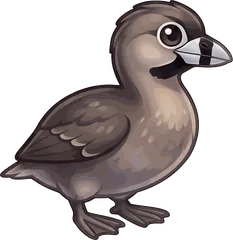 Pied-billed Grebe
Audubon calls this grebe's hollow cow-cow-cow-cow, cow, cow, cowp, cowp cuckoo-like, and it slows at the end too. The difference is the setting: the grebe calls from a pond or marsh with open water, the cuckoo from thick, leafy trees.
Where the Yellow-billed Cuckoo card lives
In Warble the same bird can be an easy card in one state and a prized one in another, because each album ranks its birds by how often people really report them there. The Yellow-billed Cuckoo appears in 15 state albums:
 Heard one? Open Warble, tap the green button while it sings, and the Yellow-billed Cuckoo card flips into your album. Get the app free.
Questions people ask
Why is the Yellow-billed Cuckoo called a rain crow?
Because it calls so much on hot, humid days, the kind that often end in showers or thunderstorms, and people came to believe it was calling for rain. The name rain crow, and sometimes storm crow, is used mostly in the southern United States.
Do Yellow-billed Cuckoos lay eggs in other birds' nests?
Occasionally, most often in Black-billed Cuckoo nests. But unlike the common cuckoo of Europe and Asia, it does not rely on other birds: a pair usually builds its own flimsy twig nest and raises its own young.
When do Yellow-billed Cuckoos arrive and leave?
Late and early. They mostly arrive in late spring and leave early in fall, wintering in South America as far south as northern Argentina.
Why can I hear a cuckoo but never see it?
Because it stays in dense, leafy groves and thickets and climbs quietly through the foliage hunting caterpillars. Its calls carry a long way, so the bird may be farther off than it sounds.
Sources
- National Audubon Society, Guide to North American Birds: Yellow-billed Cuckoo. www.audubon.org/field-guide/bird/yellow-billed-cuckoo
- Wikipedia: Yellow-billed cuckoo (rain crow name, migration, breeding, western population). en.wikipedia.org/wiki/Yellow-billed_cuckoo
- National Audubon Society, Guide to North American Birds: Black-billed Cuckoo. www.audubon.org/field-guide/bird/black-billed-cuckoo
- National Audubon Society, Guide to North American Birds: Pied-billed Grebe. www.audubon.org/field-guide/bird/pied-billed-grebe