 Warble
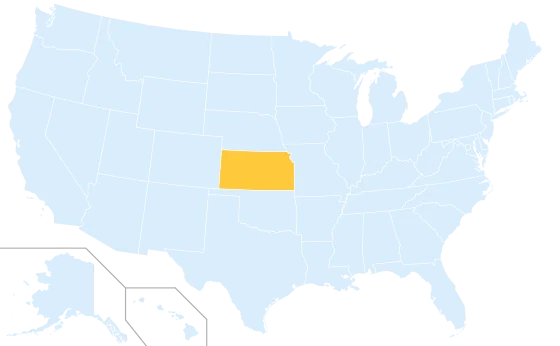
The state bird: Western Meadowlark
Made official in 1937 after a vote by Kansas schoolchildren. A yellow-breasted bird on a fence post with a rich, watery, flute-like song that tumbles downhill, nothing like the plain whistle of the Eastern Meadowlark in the eastern counties.
Recording by Anne Parsons, CC0, via iNaturalist.
Kansas has a longer state list than most people expect: 483 species as of January 2022, according to the Kansas Ornithological Society. The reason is geography. The eastern third has oak-hickory woods and rivers that sound like Missouri. The Flint Hills hold the largest surviving piece of tallgrass prairie on the continent. The center has two enormous marshes on the Central Flyway, and the west is short grass, wheat and sky, where the birds sing on the wing because there is nothing to perch on.
In town it is simpler. Cardinal, dove, robin, jay and crow lead the album in every county seat, and a Western Meadowlark on the first fence post past the city limits tells you where you are.
The Kansas album
These are the 100 birds people report most often in Kansas, ranked by how frequently they turn up. The common and uncommon ones are shown; the rare and legendary cards stay face down until you catch them in the game.
Common 25 cards
- #002
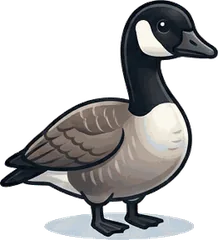 Canada Goose
Branta canadensis
Canada Goose
Branta canadensis - #007
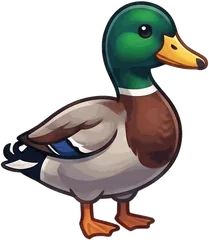 Mallard
Anas platyrhynchos
Mallard
Anas platyrhynchos - #018
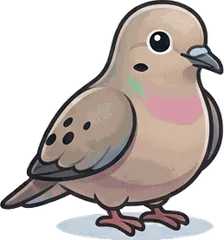 Mourning Dove
Zenaida macroura
Mourning Dove
Zenaida macroura - #023
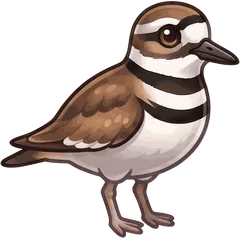 Killdeer
Charadrius vociferus
Killdeer
Charadrius vociferus - #030
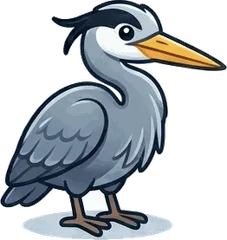 Great Blue Heron
Ardea herodias
Great Blue Heron
Ardea herodias - #032
 ?Catch it to find out
 - #036
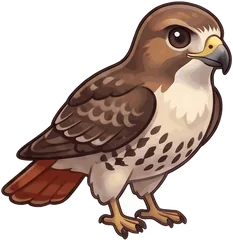 Red-tailed Hawk
Buteo jamaicensis
Red-tailed Hawk
Buteo jamaicensis - #040
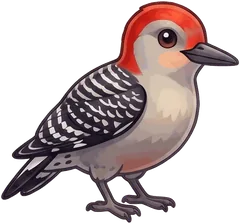 Red-bellied Woodpecker
Melanerpes carolinus
Red-bellied Woodpecker
Melanerpes carolinus - #041
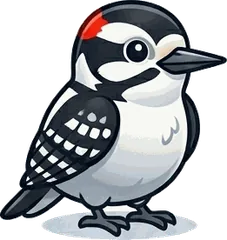 Downy Woodpecker
Dryobates pubescens
Downy Woodpecker
Dryobates pubescens - #042
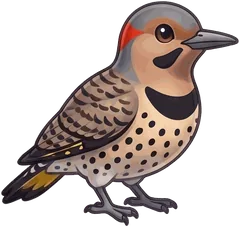 Northern Flicker
Colaptes auratus
Northern Flicker
Colaptes auratus - #051
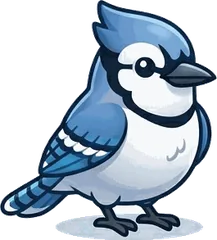 Blue Jay
Cyanocitta cristata
Blue Jay
Cyanocitta cristata - #052
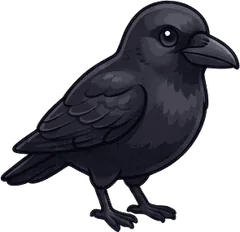 American Crow
Corvus brachyrhynchos
American Crow
Corvus brachyrhynchos - #053
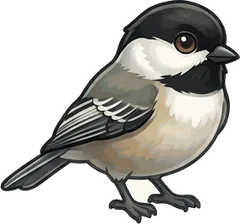 Black-capped Chickadee
Poecile atricapillus
Black-capped Chickadee
Poecile atricapillus - #054
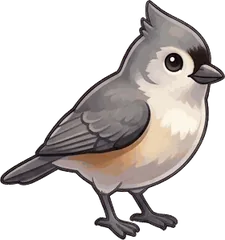 Tufted Titmouse
Baeolophus bicolor
Tufted Titmouse
Baeolophus bicolor - #064
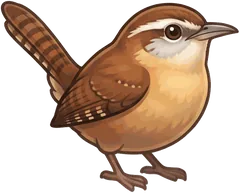 Carolina Wren
Thryothorus ludovicianus
Carolina Wren
Thryothorus ludovicianus - #065
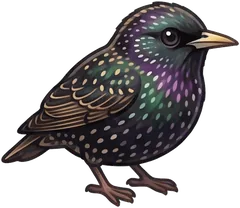 European Starling
Sturnus vulgaris
European Starling
Sturnus vulgaris - #069
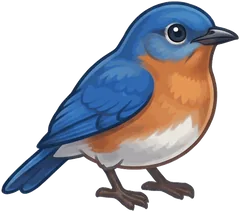 Eastern Bluebird
Sialia sialis
Eastern Bluebird
Sialia sialis - #070
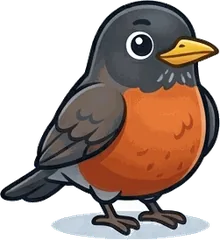 American Robin
Turdus migratorius
American Robin
Turdus migratorius - #072
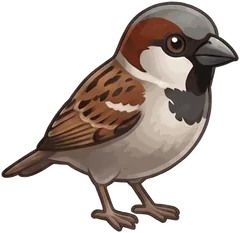 House Sparrow
Passer domesticus
House Sparrow
Passer domesticus - #073
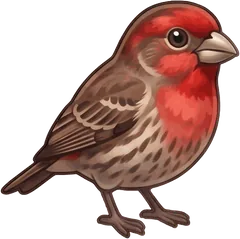 House Finch
Haemorhous mexicanus
House Finch
Haemorhous mexicanus - #074
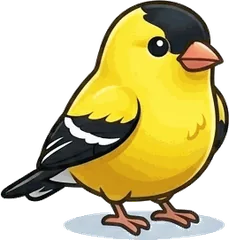 American Goldfinch
Spinus tristis
American Goldfinch
Spinus tristis - #079
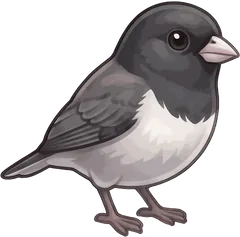 Dark-eyed Junco
Junco hyemalis
Dark-eyed Junco
Junco hyemalis - #089
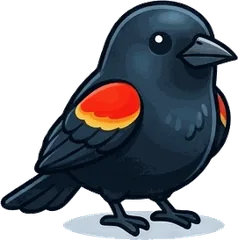 Red-winged Blackbird
Agelaius phoeniceus
Red-winged Blackbird
Agelaius phoeniceus - #091
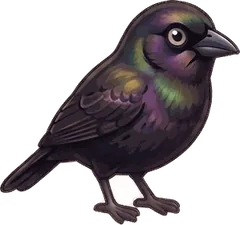 Common Grackle
Quiscalus quiscula
Common Grackle
Quiscalus quiscula - #098
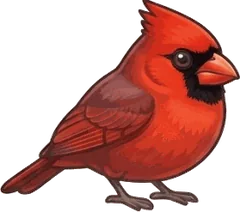 Northern Cardinal
Cardinalis cardinalis
Northern Cardinal
Cardinalis cardinalis
Uncommon 35 cards
- #004
 ?Catch it to find out
 - #005
 ?Catch it to find out
 - #006
 ?Catch it to find out
 - #016
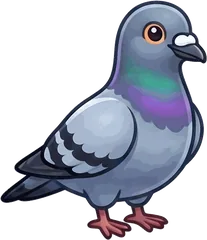 Rock Pigeon
Columba livia
Rock Pigeon
Columba livia - #017
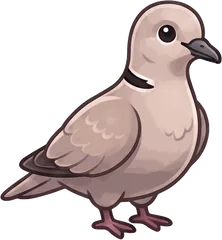 Eurasian Collared-Dove
Streptopelia decaocto
Eurasian Collared-Dove
Streptopelia decaocto - #022
 ?Catch it to find out
 - #027
 ?Catch it to find out
 - #028
 ?Catch it to find out
 - #033
 ?Catch it to find out
 - #034
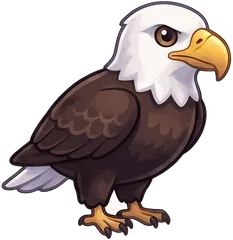 Bald Eagle
Haliaeetus leucocephalus
Bald Eagle
Haliaeetus leucocephalus - #039
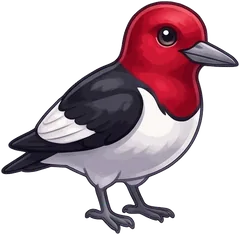 Red-headed Woodpecker
Melanerpes erythrocephalus
Red-headed Woodpecker
Melanerpes erythrocephalus - #043
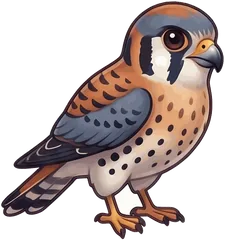 American Kestrel
Falco sparverius
American Kestrel
Falco sparverius - #045
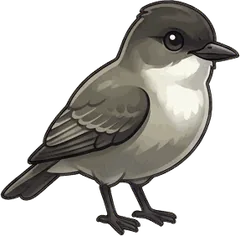 Eastern Phoebe
Sayornis phoebe
Eastern Phoebe
Sayornis phoebe - #046
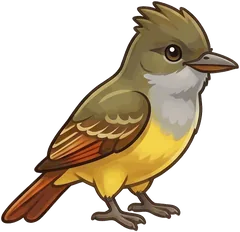 Great Crested Flycatcher
Myiarchus crinitus
Great Crested Flycatcher
Myiarchus crinitus - #047
 ?Catch it to find out
 - #048
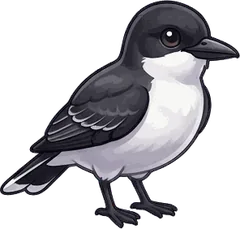 Eastern Kingbird
Tyrannus tyrannus
Eastern Kingbird
Tyrannus tyrannus - #049
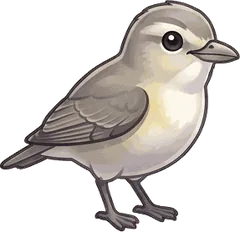 Warbling Vireo
Vireo gilvus
Warbling Vireo
Vireo gilvus - #055
 ?Catch it to find out
 - #059
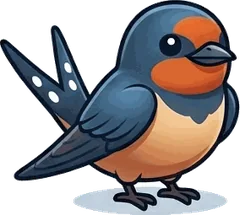 Barn Swallow
Hirundo rustica
Barn Swallow
Hirundo rustica - #061
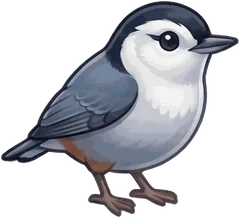 White-breasted Nuthatch
Sitta carolinensis
White-breasted Nuthatch
Sitta carolinensis - #063
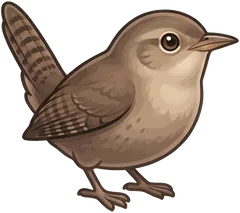 House Wren
Troglodytes aedon
House Wren
Troglodytes aedon - #067
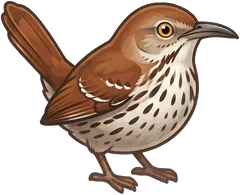 Brown Thrasher
Toxostoma rufum
Brown Thrasher
Toxostoma rufum - #068
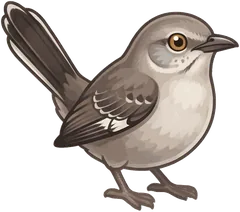 Northern Mockingbird
Mimus polyglottos
Northern Mockingbird
Mimus polyglottos - #075
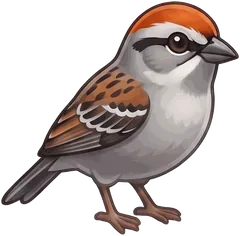 Chipping Sparrow
Spizella passerina
Chipping Sparrow
Spizella passerina - #080
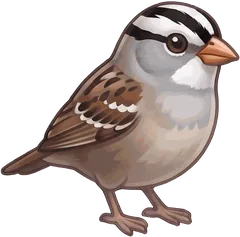 White-crowned Sparrow
Zonotrichia leucophrys
White-crowned Sparrow
Zonotrichia leucophrys - #081
 ?Catch it to find out
 - #082
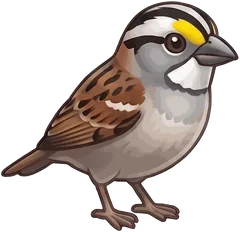 White-throated Sparrow
Zonotrichia albicollis
White-throated Sparrow
Zonotrichia albicollis - #084
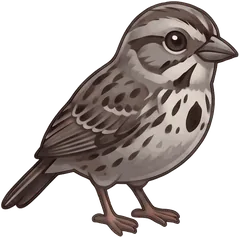 Song Sparrow
Melospiza melodia
Song Sparrow
Melospiza melodia - #085
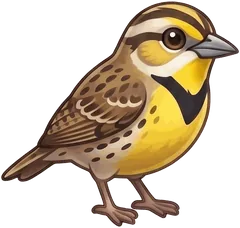 Western Meadowlark
Sturnella neglecta
Western Meadowlark
Sturnella neglecta - #086
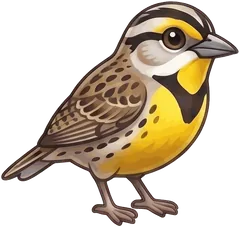 Eastern Meadowlark
Sturnella magna
Eastern Meadowlark
Sturnella magna - #088
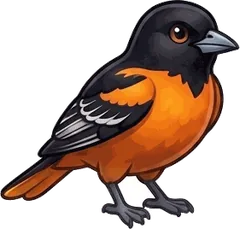 Baltimore Oriole
Icterus galbula
Baltimore Oriole
Icterus galbula - #090
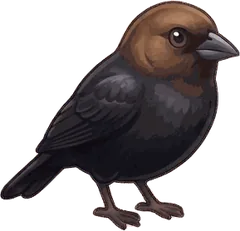 Brown-headed Cowbird
Molothrus ater
Brown-headed Cowbird
Molothrus ater - #096
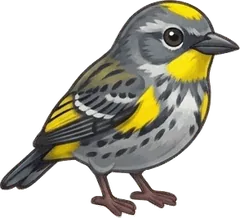 Yellow-rumped Warbler
Setophaga coronata
Yellow-rumped Warbler
Setophaga coronata - #099
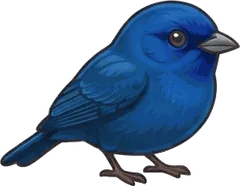 Indigo Bunting
Passerina cyanea
Indigo Bunting
Passerina cyanea - #100
 ?Catch it to find out
Rare 30 cards
- #003
 ?Catch it to reveal
 - #008
 ?Catch it to find out
 - #011
 ?Catch it to find out
 - #013?Catch it to reveal
- #014?Catch it to reveal
- #019
 ?Catch it to find out
 - #020?Catch it to reveal
- #021?Catch it to reveal
- #026
 ?Catch it to find out
 - #029
 ?Catch it to find out
 - #031
 ?Catch it to find out
 - #035?Catch it to reveal
- #038?Catch it to reveal
- #044?Catch it to reveal
- #050?Catch it to reveal
- #056?Catch it to reveal
- #057?Catch it to reveal
- #058
 ?Catch it to find out
 - #060
 ?Catch it to find out
 - #062?Catch it to reveal
- #066?Catch it to reveal
- #071?Catch it to reveal
- #076?Catch it to reveal
- #077
 ?Catch it to find out
 - #078
 ?Catch it to find out
 - #087
 ?Catch it to find out
 - #093?Catch it to reveal
- #094?Catch it to reveal
- #095?Catch it to reveal
- #097?Catch it to reveal
Legendary 10 cards
- #001
 ?Catch it to find out
 - #009
 ?Catch it to find out
 - #010
 ?Catch it to find out
 - #012
 ?Catch it to find out
 - #015?Catch it to reveal
- #024
 ?Catch it to find out
 - #025
 ?Catch it to find out
 - #037?Catch it to reveal
- #083
 ?Catch it to find out
 - #092
 ?Catch it to find out
 48 of the 100 cards are shown here. The other 52, including all 30 rare and 10 legendary birds, are yours to discover. Get Warble and start with the common ones.
Backyard birds you will hear first
The Northern Cardinal is the most reported bird in Kansas, whistling cheer, cheer, cheer from the top of a hackberry from February on. The Mourning Dove is second, and its soft coo-OO-oo, oo, oo from the wire at dawn is the sound people mistake for an owl. The American Robin carols before first light from March into July, and the Blue Jay yells from the oaks.
The Black-capped Chickadee whistles fee-bee from the elms in most of the state, the Red-bellied Woodpecker rolls a churr from the cottonwoods, and starlings whistle and click from every grain elevator. Outside town, the Red-winged Blackbird sings conk-la-ree from the cattail ditch, and from April the Scissor-tailed Flycatcher sputters from the fence wire with its ridiculous tail hanging below it.
The regions, by ear
The eastern woods
Kansas City to Topeka and south: oak and hickory on the hills, cottonwood and sycamore along the rivers. This is the Kansas that sounds like the Midwest, with Tufted Titmice, Carolina Wrens, Barred Owls and Eastern Meadowlarks whistling from the pastures.
The Flint Hills
A band of limestone hills too rocky to plow, which is why the grass survived. Less than five percent of the continent's tallgrass prairie is left, most of it here, and Tallgrass Prairie National Preserve near Strong City protects 10,882 acres of it, with a bison herd of around 90. In April the Greater Prairie-Chickens boom on the ridges before dawn, and in June the hills are Dickcissel, Grasshopper Sparrow, Upland Sandpiper and Western Meadowlark from horizon to horizon.
The central marshes
Cheyenne Bottoms, about 41,000 acres in Barton County, is the largest wetland in the interior United States. In spring as many as 600,000 shorebirds of 39 species pass through, and about 45 percent of North America's shorebirds use it at some point. Quivira National Wildlife Refuge, 22,135 acres of rare inland salt marsh and sand prairie, adds nesting avocets, Snowy Plovers and Least Terns, and both marshes host Whooping Cranes on migration. On a calm April morning the sound is a wall of peeps and the yodeling of avocets.
The High Plains
West of Hays the land flattens, dries and opens. Horned Larks tinkle over the wheat stubble, Lark Buntings sing in fluttering display flights in June, and Burrowing Owls stand on prairie dog mounds.
Best months to listen
April and May are the peak. Shorebirds crowd Cheyenne Bottoms and Quivira, prairie-chickens boom in the Flint Hills, and the resident songbirds are on territory in town. June is grassland song, loudest in the first hour of light. Fall migration runs September to December at Quivira, with Sandhill Cranes, geese and Whooping Cranes passing through. Winter is cardinals and chickadees at the feeder, and a hawk on every other telephone pole.
Places worth the drive
- Cheyenne Bottoms, Barton County: the largest inland marsh in the country, hundreds of thousands of shorebirds in April and May, more than 340 species recorded.
- Quivira National Wildlife Refuge, central Kansas: salt marsh and sand prairie, Whooping Cranes in fall, Snowy Plovers and avocets in summer.
- Tallgrass Prairie National Preserve, near Strong City: bison, booming prairie-chickens in April, grassland song in June.
- Flint Hills National Wildlife Refuge, in the Neosho River valley: managed wetlands full of ducks and geese on migration, with an auto tour route.
None of them is required. A town with old elms and a creek gives you the first 25 cards of the Warble album by June.
Listen before you go
Three of the common Kansas birds, so the first songs you hear outside already ring a bell.
Recording by Chase Harris, CC0, via iNaturalist.
Recording by Fionn Ó Marcaigh, CC BY 4.0, via iNaturalist.
Recording by Richard Littauer, CC BY 4.0, via iNaturalist.
Questions people ask
What is the most common bird in Kansas?
By the reports behind the album, the Northern Cardinal, then the Mourning Dove, the American Robin, the Blue Jay and the American Crow. The state bird, the Western Meadowlark, is common everywhere outside the cities.
What is the state bird of Kansas?
The Western Meadowlark, chosen by a vote of Kansas schoolchildren and written into law in 1937. Montana, Nebraska, North Dakota, Oregon and Wyoming share it.
How many bird species are there in Kansas?
483 species as of January 2022, on the official list of the Kansas Ornithological Society. The Warble album covers the 100 reported most often.
Nearby albums
Sources
- Wikipedia: List of birds of Kansas. en.wikipedia.org/wiki/List_of_birds_of_Kansas
- Kansas Office of Revisor of Statutes: K.S.A. 73-901, state bird. ksrevisor.gov/statutes/chapters/ch73/073_009_0001.html
- Wikipedia: Cheyenne Bottoms. en.wikipedia.org/wiki/Cheyenne_Bottoms
- U.S. Fish and Wildlife Service: Quivira National Wildlife Refuge. www.fws.gov/refuge/quivira