 Warble
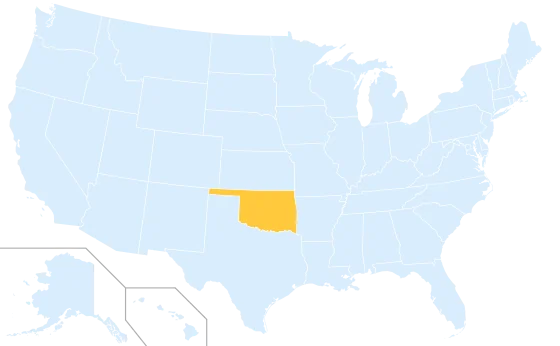
The state bird: Scissor-tailed Flycatcher
Adopted in 1951. A pale gray flycatcher with a forked black-and-white tail that can bring a male to 15 inches long; it sits on roadside wires all summer, gives a dry, sputtering chatter, and in courtship the male climbs and tumbles with the tail streaming behind him.
Recording by Jono, CC BY 4.0, via iNaturalist.
The Oklahoma Ornithological Society's Bird Records Committee had 488 species on the state list as of May 2022, 114 of them accidental. The number is high for a landlocked state because Oklahoma is a crossroads: the oak and hickory forest of the Ozarks and Ouachitas in the east, the Cross Timbers scrub through the middle, tallgrass and mixed prairie beyond that, and the short-grass High Plains of the Panhandle, which sound more like Colorado than Tulsa.
For most people the first birds are the same from Muskogee to Lawton: cardinal, crow, dove, jay and the little Carolina Chickadee at the feeder. Then the state shows its hand: the Scissor-tailed Flycatcher arrives in spring and the mockingbird sings from the mailbox.
The Oklahoma album
These are the 100 birds people report most often in Oklahoma, ranked by how frequently they turn up. The common and uncommon ones are shown; the rare and legendary cards stay face down until you catch them in the game.
Common 25 cards
- #001
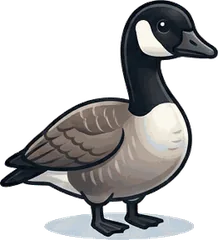 Canada Goose
Branta canadensis
Canada Goose
Branta canadensis - #006
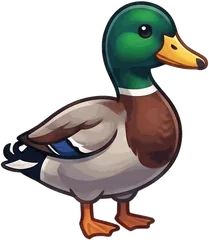 Mallard
Anas platyrhynchos
Mallard
Anas platyrhynchos - #016
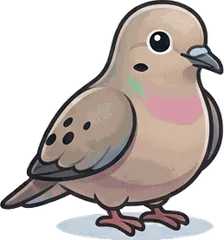 Mourning Dove
Zenaida macroura
Mourning Dove
Zenaida macroura - #021
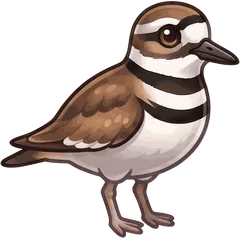 Killdeer
Charadrius vociferus
Killdeer
Charadrius vociferus - #030
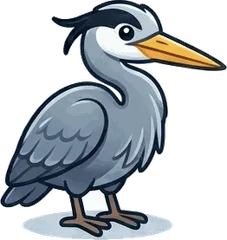 Great Blue Heron
Ardea herodias
Great Blue Heron
Ardea herodias - #033
 ?Catch it to find out
 - #038
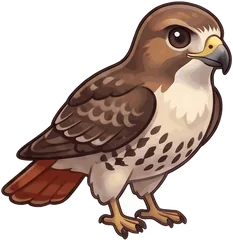 Red-tailed Hawk
Buteo jamaicensis
Red-tailed Hawk
Buteo jamaicensis - #041
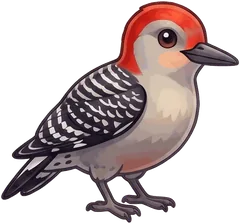 Red-bellied Woodpecker
Melanerpes carolinus
Red-bellied Woodpecker
Melanerpes carolinus - #042
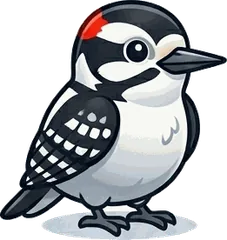 Downy Woodpecker
Dryobates pubescens
Downy Woodpecker
Dryobates pubescens - #050
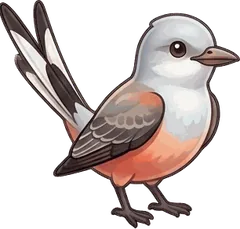 Scissor-tailed Flycatcher
Tyrannus forficatus
Scissor-tailed Flycatcher
Tyrannus forficatus - #054
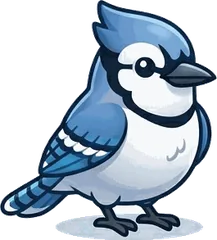 Blue Jay
Cyanocitta cristata
Blue Jay
Cyanocitta cristata - #055
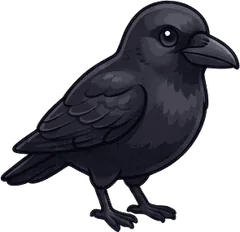 American Crow
Corvus brachyrhynchos
American Crow
Corvus brachyrhynchos - #057
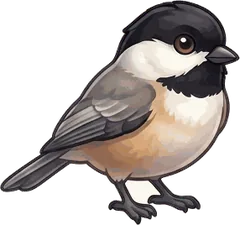 Carolina Chickadee
Poecile carolinensis
Carolina Chickadee
Poecile carolinensis - #058
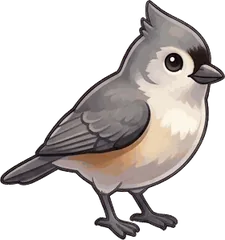 Tufted Titmouse
Baeolophus bicolor
Tufted Titmouse
Baeolophus bicolor - #064
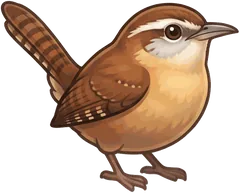 Carolina Wren
Thryothorus ludovicianus
Carolina Wren
Thryothorus ludovicianus - #066
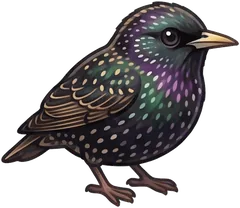 European Starling
Sturnus vulgaris
European Starling
Sturnus vulgaris - #068
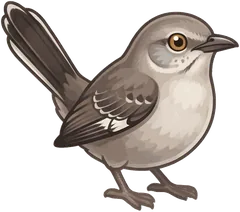 Northern Mockingbird
Mimus polyglottos
Northern Mockingbird
Mimus polyglottos - #069
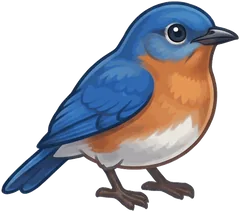 Eastern Bluebird
Sialia sialis
Eastern Bluebird
Sialia sialis - #070
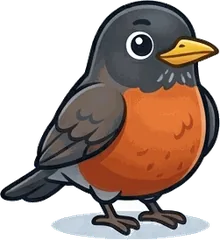 American Robin
Turdus migratorius
American Robin
Turdus migratorius - #072
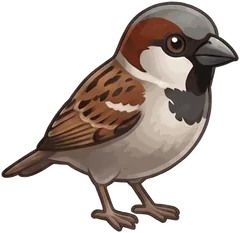 House Sparrow
Passer domesticus
House Sparrow
Passer domesticus - #073
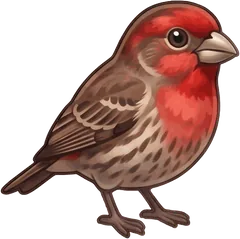 House Finch
Haemorhous mexicanus
House Finch
Haemorhous mexicanus - #074
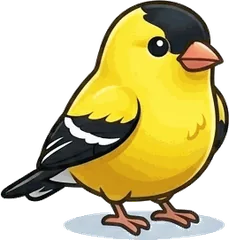 American Goldfinch
Spinus tristis
American Goldfinch
Spinus tristis - #078
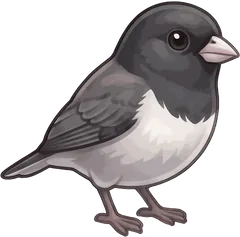 Dark-eyed Junco
Junco hyemalis
Dark-eyed Junco
Junco hyemalis - #088
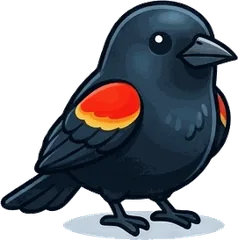 Red-winged Blackbird
Agelaius phoeniceus
Red-winged Blackbird
Agelaius phoeniceus - #096
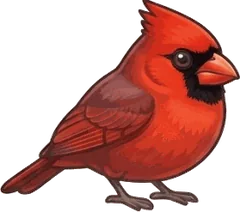 Northern Cardinal
Cardinalis cardinalis
Northern Cardinal
Cardinalis cardinalis
Uncommon 35 cards
- #003
 ?Catch it to find out
 - #004
 ?Catch it to find out
 - #005
 ?Catch it to find out
 - #013
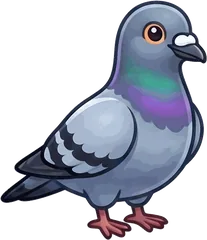 Rock Pigeon
Columba livia
Rock Pigeon
Columba livia - #014
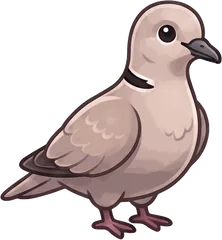 Eurasian Collared-Dove
Streptopelia decaocto
Eurasian Collared-Dove
Streptopelia decaocto - #019
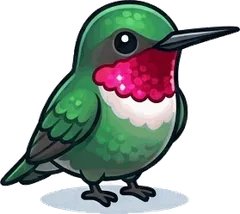 Ruby-throated Hummingbird
Archilochus colubris
Ruby-throated Hummingbird
Archilochus colubris - #020
 ?Catch it to find out
 - #026
 ?Catch it to find out
 - #027
 ?Catch it to find out
 - #029
 ?Catch it to find out
 - #031
 ?Catch it to find out
 - #036
 ?Catch it to find out
 - #037
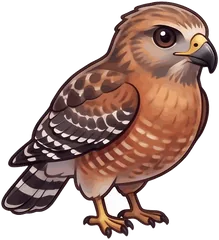 Red-shouldered Hawk
Buteo lineatus
Red-shouldered Hawk
Buteo lineatus - #039
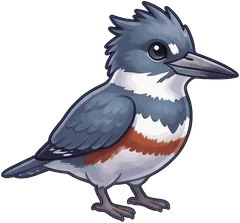 Belted Kingfisher
Megaceryle alcyon
Belted Kingfisher
Megaceryle alcyon - #044
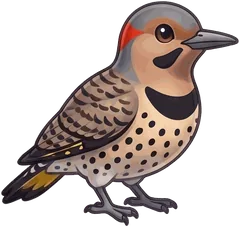 Northern Flicker
Colaptes auratus
Northern Flicker
Colaptes auratus - #045
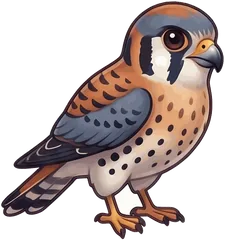 American Kestrel
Falco sparverius
American Kestrel
Falco sparverius - #046
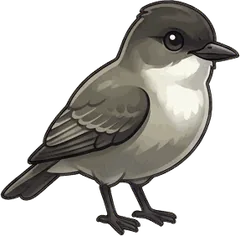 Eastern Phoebe
Sayornis phoebe
Eastern Phoebe
Sayornis phoebe - #047
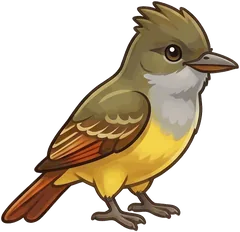 Great Crested Flycatcher
Myiarchus crinitus
Great Crested Flycatcher
Myiarchus crinitus - #056
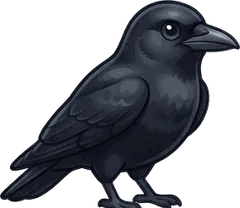 Fish Crow
Corvus ossifragus
Fish Crow
Corvus ossifragus - #060
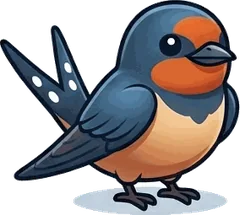 Barn Swallow
Hirundo rustica
Barn Swallow
Hirundo rustica - #061
 ?Catch it to find out
 - #062
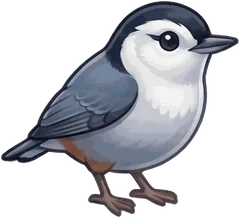 White-breasted Nuthatch
Sitta carolinensis
White-breasted Nuthatch
Sitta carolinensis - #063
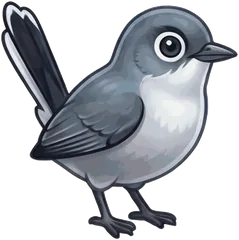 Blue-gray Gnatcatcher
Polioptila caerulea
Blue-gray Gnatcatcher
Polioptila caerulea - #067
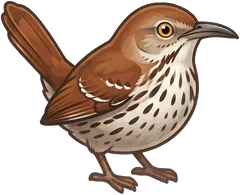 Brown Thrasher
Toxostoma rufum
Brown Thrasher
Toxostoma rufum - #071
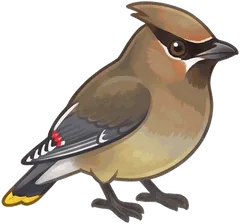 Cedar Waxwing
Bombycilla cedrorum
Cedar Waxwing
Bombycilla cedrorum - #079
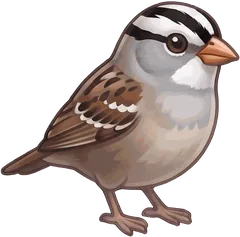 White-crowned Sparrow
Zonotrichia leucophrys
White-crowned Sparrow
Zonotrichia leucophrys - #080
 ?Catch it to find out
 - #081
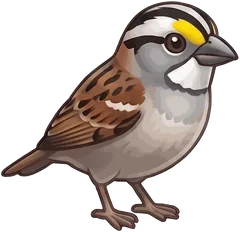 White-throated Sparrow
Zonotrichia albicollis
White-throated Sparrow
Zonotrichia albicollis - #083
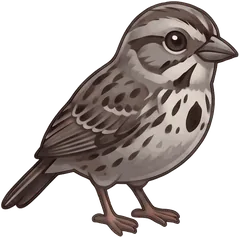 Song Sparrow
Melospiza melodia
Song Sparrow
Melospiza melodia - #086
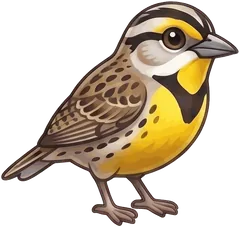 Eastern Meadowlark
Sturnella magna
Eastern Meadowlark
Sturnella magna - #089
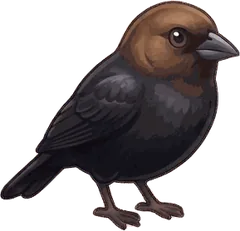 Brown-headed Cowbird
Molothrus ater
Brown-headed Cowbird
Molothrus ater - #090
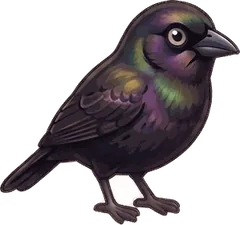 Common Grackle
Quiscalus quiscula
Common Grackle
Quiscalus quiscula - #091
 ?Catch it to find out
 - #094
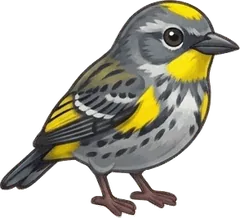 Yellow-rumped Warbler
Setophaga coronata
Yellow-rumped Warbler
Setophaga coronata - #098
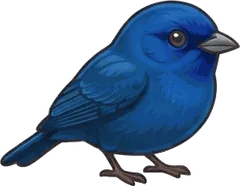 Indigo Bunting
Passerina cyanea
Indigo Bunting
Passerina cyanea
Rare 30 cards
- #007
 ?Catch it to find out
 - #009
 ?Catch it to find out
 - #015
 ?Catch it to find out
 - #017
 ?Catch it to find out
 - #018
 ?Catch it to reveal
 - #023
 ?Catch it to find out
 - #025
 ?Catch it to find out
 - #028
 ?Catch it to find out
 - #032
 ?Catch it to find out
 - #034
 ?Catch it to find out
 - #035?Catch it to reveal
- #040?Catch it to reveal
- #043?Catch it to reveal
- #048
 ?Catch it to find out
 - #049?Catch it to reveal
- #051
 ?Catch it to find out
 - #052?Catch it to reveal
- #053
 ?Catch it to find out
 - #059?Catch it to reveal
- #065?Catch it to reveal
- #075?Catch it to reveal
- #076?Catch it to reveal
- #077
 ?Catch it to find out
 - #082
 ?Catch it to find out
 - #084
 ?Catch it to find out
 - #085?Catch it to reveal
- #087?Catch it to reveal
- #095?Catch it to reveal
- #099?Catch it to reveal
- #100
 ?Catch it to find out
Legendary 10 cards
- #002?Catch it to reveal
- #008
 ?Catch it to find out
 - #010
 ?Catch it to find out
 - #011?Catch it to reveal
- #012?Catch it to reveal
- #022
 ?Catch it to find out
 - #024
 ?Catch it to find out
 - #092?Catch it to reveal
- #093?Catch it to reveal
- #097
 ?Catch it to find out
 47 of the 100 cards are shown here. The other 53, including all 30 rare and 10 legendary birds, are yours to discover. Get Warble and start with the common ones.
Backyard birds you will hear first
The Northern Cardinal leads the album and leads the morning, whistling cheer, cheer, cheer from the top of a redcedar. The American Crow is second, cawing over every town, and the Mourning Dove is third, cooing from the wires in a rhythm people mistake for an owl. The Blue Jay screams from the pecans and the Carolina Chickadee gives a fast, high fee-bee, fee-bay, higher and quicker than its northern cousin.
The Carolina Wren shouts teakettle, teakettle from under the deck at any hour and in any weather. The Northern Mockingbird sings from the highest point on the block, repeating each borrowed phrase several times before switching, and keeps going on spring nights. Overhead, the Turkey Vulture makes the list without a voice at all, rocking on long wings over every highway.
The regions, by ear
Green Country and the Ouachitas
The eastern third is hill forest and lakes, and it sounds like Arkansas: Wood Thrush and Summer Tanager in the oaks, Pine Warbler trills in the shortleaf pine of the Ouachitas, Pileated Woodpeckers laughing across the hollows and Barred Owls calling who cooks for you along the rivers after dark.
The Cross Timbers and the center
A belt of scrubby post oak and blackjack oak with prairie openings runs down the middle of the state through Oklahoma City and Tulsa. Painted Buntings sing sweet, jumbled warbles from the thickets, Bewick's Wrens buzz from brush piles, Northern Bobwhites whistle their own name from field edges and Scissor-tailed Flycatchers work the fences.
The Wichita Mountains
Wichita Mountains Wildlife Refuge near Lawton covers about 59,000 acres of granite mountains, mixed-grass prairie and lakes. Set aside in 1901 as a forest reserve, it is the oldest managed wildlife area in the Fish and Wildlife Service system, and it has recorded 240 bird species, including the Black-capped Vireo, a scrub songbird that was only recently taken off the endangered list. Fifteen bison sent from the Bronx Zoo in 1907 started a herd that now numbers about 650.
The northwest and the Panhandle
Big sky, short grass and salt. Salt Plains National Wildlife Refuge in north-central Oklahoma protects 32,197 acres, about 12,000 of them bare salt flat, where Snowy Plovers nest in summer and thousands of Sandhill Cranes, ducks and shorebirds stop in migration, with a few endangered Whooping Cranes among them. Farther west, the Panhandle is Western Meadowlark and Horned Lark country, with Lesser Prairie-Chickens booming on a few leks in March and April.
Best months to listen
April and May are the peak: the scissor-tails and buntings are back, the residents are singing, and warblers move through the eastern woods. March is crane and prairie-chicken season in the west. Summer mornings are loud until the heat arrives, then everything but the doves and the cicadas goes quiet, so start at first light. Late summer brings the scissor-tail roosts, October the ducks and cranes. Winter is cardinals and chickadees at the feeder, big blackbird flocks over the fields and Bald Eagles on the reservoirs.
Places worth the drive
- Wichita Mountains Wildlife Refuge, near Lawton: 240 species, Black-capped Vireo, bison.
- Salt Plains National Wildlife Refuge, north-central Oklahoma: cranes and shorebirds on the salt flats, Snowy Plovers in summer, Whooping Cranes in migration.
- The Ouachita National Forest, southeast: pine and oak hills with Pine Warblers, tanagers and Barred Owls.
You do not need the drive. A yard in Norman with a feeder and a fence wire hands you the cardinal, the chickadee, the wren and, from April, the state bird, and that is a good start on the Warble album.
Listen before you go
Three of the common Oklahoma birds, so the first songs you hear outside already ring a bell.
Recording by Chase Harris, CC0, via iNaturalist.
Recording by Fionn Ó Marcaigh, CC BY 4.0, via iNaturalist.
Recording by Richard Littauer, CC BY 4.0, via iNaturalist.
Questions people ask
What is the most common bird in Oklahoma?
By the reports behind the album, the Northern Cardinal, then the American Crow, the Mourning Dove, the Blue Jay and the Carolina Chickadee.
What is the state bird of Oklahoma?
The Scissor-tailed Flycatcher, adopted in 1951. It breeds across the south-central states, winters from southern Mexico to Panama, and gathers in roosts of up to a thousand birds before it leaves in fall.
How many bird species are there in Oklahoma?
488 species as of May 2022, according to the Oklahoma Ornithological Society's Bird Records Committee. The Warble album covers the 100 reported most often.
Nearby albums
Sources
- Wikipedia: List of birds of Oklahoma. en.wikipedia.org/wiki/List_of_birds_of_Oklahoma
- Wikipedia: Scissor-tailed flycatcher. en.wikipedia.org/wiki/Scissor-tailed_flycatcher
- Wikipedia: Wichita Mountains Wildlife Refuge. en.wikipedia.org/wiki/Wichita_Mountains_Wildlife_Refuge
- U.S. Fish and Wildlife Service: Salt Plains National Wildlife Refuge. www.fws.gov/refuge/salt-plains