 Warble
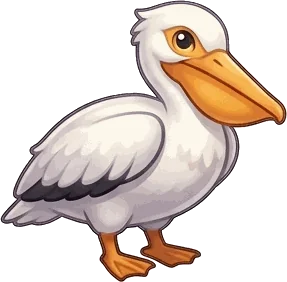
An American White Pelican is nearly silent. Away from its nesting islands you can watch a flock fish, rest or soar overhead and hear nothing at all. At the breeding colony adults give low grunts and croaks, mostly during squabbles, courtship and greetings, and the chicks squawk loudly when they beg for food. So the honest answer is: a huge white bird with a wingspan of 8 feet or more that almost never uses its voice. You see this pelican far more often than you hear it.
What it sounds like: almost nothing
Audubon's field guide puts it plainly: usually silent. Animal Diversity Web calls adults mostly quiet. There is no song, and flocks keep together without calling, even though this bird roosts, nests and feeds in groups. A line of pelicans gliding low over a reservoir, or a flock circling high on an updraft, usually passes in silence.
When adults do use their voices it is with low grunts and croaks, flat and short. Animal Diversity Web ties the grunts to close encounters: aggressive moments between neighbors, courtship, and a greeting or mild-threat posture in which the bird holds its head up, keeps its bill level and puffs out its pouch, grunting as it does. Most of this happens at the nesting colony, and since colonies sit on islands, few people ever hear it.
At the colony: grunts and squawking chicks
The breeding colony is the one noisy place in a white pelican's life, and much of the racket comes from the young. Chicks squawk loudly to beg for food, and parents feed them by regurgitating fish. Adults add their grunts during courtship, which includes circling flights above the colony, strutting side by side, bowing and head swaying. Rivals jab with their bills or open their mouths wide at each other.
Colonies sit on islands in or near shallow inland lakes, rivers and marshes, often far from where the birds feed. Nesting starts in spring. The nest is a simple scrape on the ground, and the whole colony tends to lay within about a week. A pair lays two or so chalky-white eggs and both parents take turns incubating for about 30 days, but most pairs raise only one chick. Colonies are very sensitive to disturbance: low-flying planes and motorboats can make adults abandon their nests, leaving chicks open to gulls.
When and where you hear it
White pelicans breed in the inland prairie country from British Columbia and Alberta south to northern California, Nevada and Colorado. Most migrate, by day and in flocks. Birds east of the Continental Divide generally head for the Gulf of Mexico and birds to the west for Baja California and western Mexico. In winter look for them in southern California, along the Texas coast and around the Gulf states to Florida, in shallow, protected bays and estuaries, on big lakes in warm places, on large rivers that do not freeze, and at the Salton Sea. Some on the Texas coast and in Mexico stay all year, and some nonbreeders spend the summer on the wintering grounds, especially in Florida.
Pelicans give you almost nothing to record away from the colony, and even Warble needs a sound to work with, so enjoy the view instead: flocks soar very high and wheel and circle in unison, flashing white and black as they turn.
Fishing as a team
Unlike the Brown Pelican, this species does not dive from the air. It swims on the surface, dips its bill and scoops fish into its pouch. Groups often work together, lining up and driving fish toward shallow water where they are easier to catch, and group foragers tend to do better than birds fishing alone. During the breeding season they fish mostly at night, finding prey by touch. They also steal fish from other birds.
The diet is mostly so-called rough fish of little interest to people, plus crayfish, salamanders and other amphibians. Breeding birds may commute more than 30 miles from their island colonies to good fishing water.
What it looks like
A giant: 4.5 to nearly 6 feet long, with a wingspan of 8 to 9.5 feet and a weight that can top 17 pounds. It is white with black flight feathers that show mainly in flight, and a huge bill with a pouch underneath. In breeding season adults grow an odd, raised plate on the top of the bill, which is shed later in the year. Numbers probably fell in the first half of the 20th century, and pesticides thinned eggshells, but the population has grown substantially since the 1970s.
Birds that sound similar
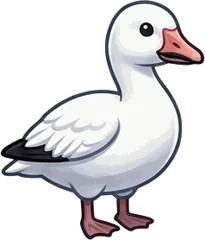 Snow Goose
Snow Geese call a high, barking howk-howk or bow-wow, while pelicans pass over in silence. Both are white with black in the wings, but the goose is far smaller, with black only at the wingtips.
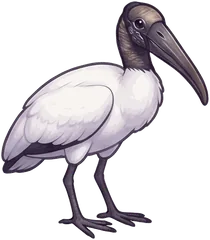 Wood Stork
Audubon notes that a Wood Stork soaring high looks like this pelican, white with black flight feathers. The stork is usually silent too, so ears will not help; look for its bare gray head, heavy bill and long legs.
Where the American White Pelican card lives
In Warble the same bird can be an easy card in one state and a prized one in another, because each album ranks its birds by how often people really report them there. The American White Pelican appears in 21 state albums:
 Heard one? Open Warble, tap the green button while it sings, and the American White Pelican card flips into your album. Get the app free.
Questions people ask
Do American white pelicans make any noise?
Very little. Adults are usually silent, giving low grunts and croaks mainly at the nesting colony during courtship, greetings and squabbles. Chicks are the loud ones, squawking when they beg for food.
What is the bump on a white pelican's bill?
A raised plate that adults grow on the top of the bill during the breeding season. It is temporary and is shed later in the year, so fall and winter birds have smooth bills.
Do white pelicans dive for fish?
No. They swim on the surface and scoop fish into their pouches, often in groups that herd fish into shallow water together. Plunge-diving from the air is the Brown Pelican's method.
Sources
- National Audubon Society, Guide to North American Birds: American White Pelican. www.audubon.org/field-guide/bird/american-white-pelican
- Animal Diversity Web: Pelecanus erythrorhynchos, American white pelican (communication, breeding, range). animaldiversity.org/accounts/Pelecanus_erythrorhynchos/
- National Audubon Society, Guide to North American Birds: Snow Goose (voice and plumage). www.audubon.org/field-guide/bird/snow-goose
- National Audubon Society, Guide to North American Birds: Wood Stork (voice and appearance). www.audubon.org/field-guide/bird/wood-stork