 Warble
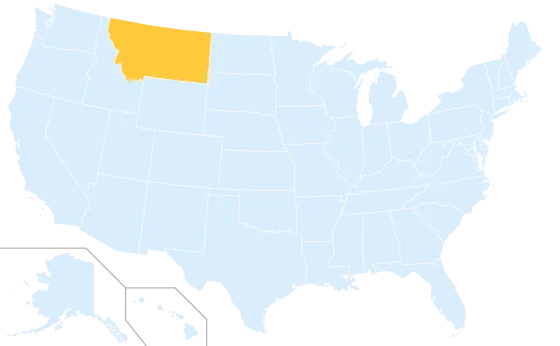
The state bird: Western Meadowlark
Adopted in 1941, and shared with five other states across the plains. A rich, flute-like warble from a fence post, nothing like the plain whistle of the Eastern Meadowlark, which is how you tell them apart where the two overlap.
Recording by Anne Parsons, CC0, via iNaturalist.
Most of Montana is empty of people, which is good for listening. The Montana Bird Records Committee had 442 species on the state list as of July 2021, with 104 of them on the review list of birds seen 20 times or fewer. West of the Continental Divide the state is conifer forest, river valleys and mountain lakes, with Glacier National Park at the top. East of it the land opens into mixed-grass prairie, badlands and the Missouri River breaks, with prairie potholes in the northeast that fill with ducks and shorebirds every spring.
In a yard in Billings, Missoula or Bozeman, though, the state is robin, magpie, chickadee, flicker and raven, with Mallards and Canada Geese on the river and starlings, House Finches and House Sparrows around the buildings.
The Montana album
These are the 100 birds people report most often in Montana, ranked by how frequently they turn up. The common and uncommon ones are shown; the rare and legendary cards stay face down until you catch them in the game.
Common 25 cards
- #001
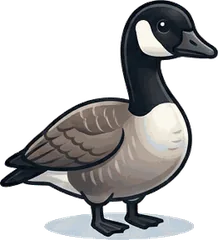 Canada Goose
Branta canadensis
Canada Goose
Branta canadensis - #008
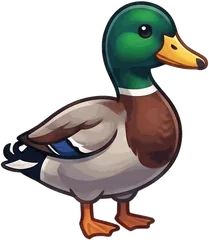 Mallard
Anas platyrhynchos
Mallard
Anas platyrhynchos - #022
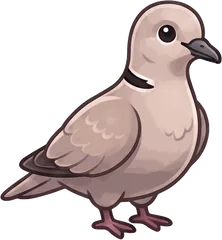 Eurasian Collared-Dove
Streptopelia decaocto
Eurasian Collared-Dove
Streptopelia decaocto - #023
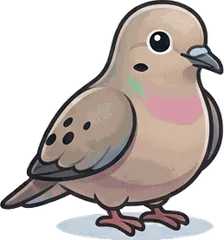 Mourning Dove
Zenaida macroura
Mourning Dove
Zenaida macroura - #026
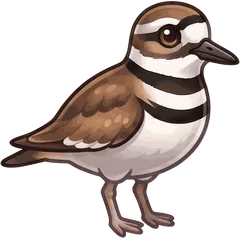 Killdeer
Charadrius vociferus
Killdeer
Charadrius vociferus - #039
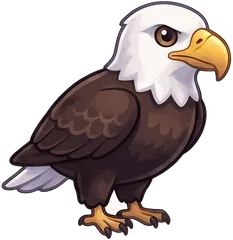 Bald Eagle
Haliaeetus leucocephalus
Bald Eagle
Haliaeetus leucocephalus - #040
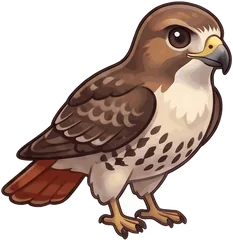 Red-tailed Hawk
Buteo jamaicensis
Red-tailed Hawk
Buteo jamaicensis - #046
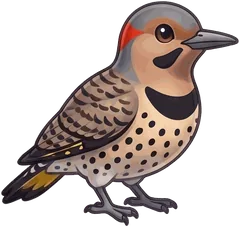 Northern Flicker
Colaptes auratus
Northern Flicker
Colaptes auratus - #054
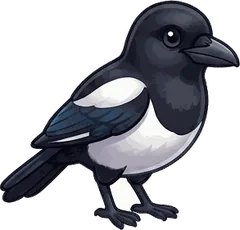 Black-billed Magpie
Pica hudsonia
Black-billed Magpie
Pica hudsonia - #056
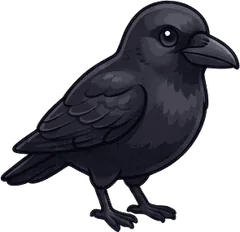 American Crow
Corvus brachyrhynchos
American Crow
Corvus brachyrhynchos - #057
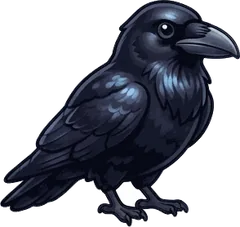 Common Raven
Corvus corax
Common Raven
Corvus corax - #058
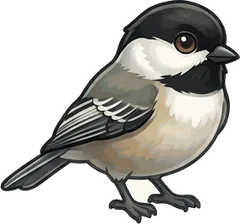 Black-capped Chickadee
Poecile atricapillus
Black-capped Chickadee
Poecile atricapillus - #059
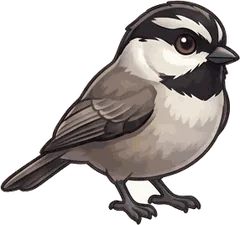 Mountain Chickadee
Poecile gambeli
Mountain Chickadee
Poecile gambeli - #061
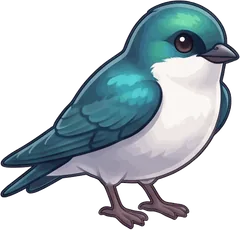 Tree Swallow
Tachycineta bicolor
Tree Swallow
Tachycineta bicolor - #067
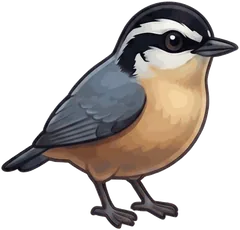 Red-breasted Nuthatch
Sitta canadensis
Red-breasted Nuthatch
Sitta canadensis - #069
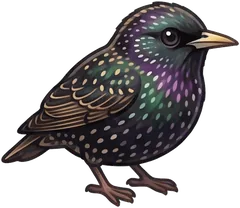 European Starling
Sturnus vulgaris
European Starling
Sturnus vulgaris - #074
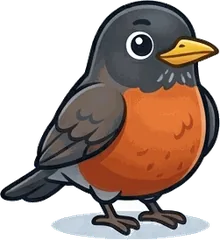 American Robin
Turdus migratorius
American Robin
Turdus migratorius - #076
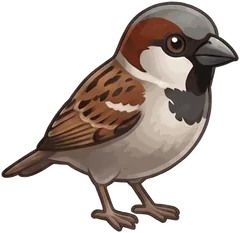 House Sparrow
Passer domesticus
House Sparrow
Passer domesticus - #077
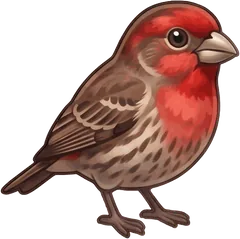 House Finch
Haemorhous mexicanus
House Finch
Haemorhous mexicanus - #080
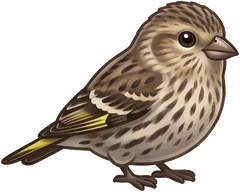 Pine Siskin
Spinus pinus
Pine Siskin
Spinus pinus - #083
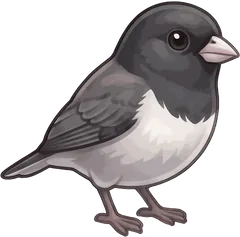 Dark-eyed Junco
Junco hyemalis
Dark-eyed Junco
Junco hyemalis - #087
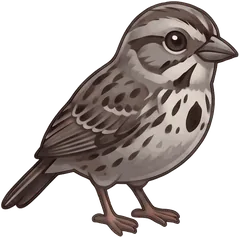 Song Sparrow
Melospiza melodia
Song Sparrow
Melospiza melodia - #090
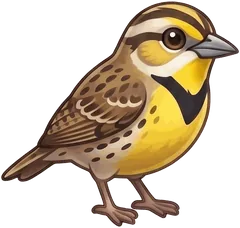 Western Meadowlark
Sturnella neglecta
Western Meadowlark
Sturnella neglecta - #091
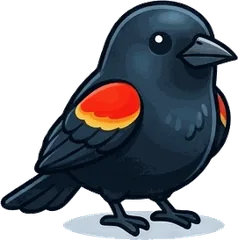 Red-winged Blackbird
Agelaius phoeniceus
Red-winged Blackbird
Agelaius phoeniceus - #096
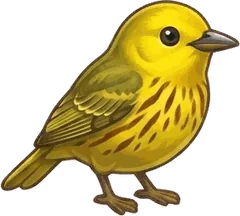 Yellow Warbler
Setophaga petechia
Yellow Warbler
Setophaga petechia
Uncommon 35 cards
- #005
 ?Catch it to find out
 - #006
 ?Catch it to find out
 - #007
 ?Catch it to find out
 - #015
 ?Catch it to find out
 - #017
 ?Catch it to find out
 - #020
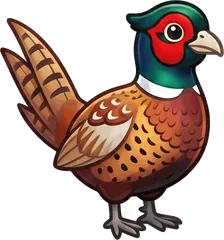 Ring-necked Pheasant
Phasianus colchicus
Ring-necked Pheasant
Phasianus colchicus - #021
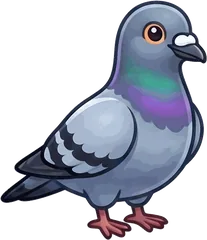 Rock Pigeon
Columba livia
Rock Pigeon
Columba livia - #025
 ?Catch it to find out
 - #029
 ?Catch it to find out
 - #033
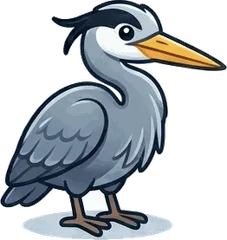 Great Blue Heron
Ardea herodias
Great Blue Heron
Ardea herodias - #035
 ?Catch it to find out
 - #036
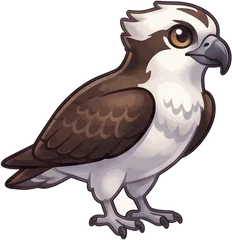 Osprey
Pandion haliaetus
Osprey
Pandion haliaetus - #038
 ?Catch it to find out
 - #042
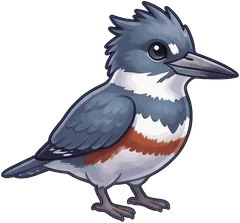 Belted Kingfisher
Megaceryle alcyon
Belted Kingfisher
Megaceryle alcyon - #044
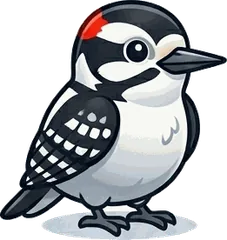 Downy Woodpecker
Dryobates pubescens
Downy Woodpecker
Dryobates pubescens - #047
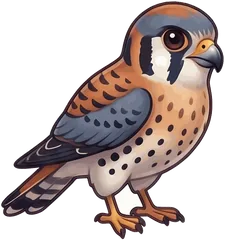 American Kestrel
Falco sparverius
American Kestrel
Falco sparverius - #048
 ?Catch it to find out
 - #050
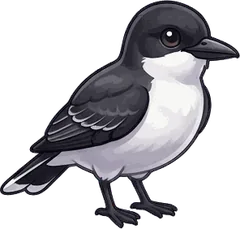 Eastern Kingbird
Tyrannus tyrannus
Eastern Kingbird
Tyrannus tyrannus - #051
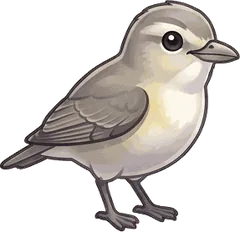 Warbling Vireo
Vireo gilvus
Warbling Vireo
Vireo gilvus - #064
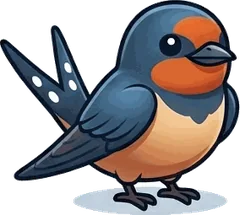 Barn Swallow
Hirundo rustica
Barn Swallow
Hirundo rustica - #068
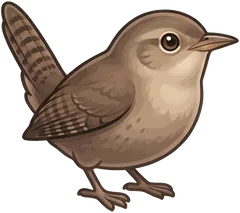 House Wren
Troglodytes aedon
House Wren
Troglodytes aedon - #070
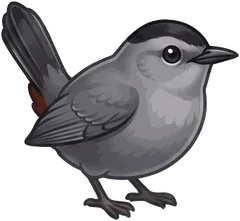 Gray Catbird
Dumetella carolinensis
Gray Catbird
Dumetella carolinensis - #071
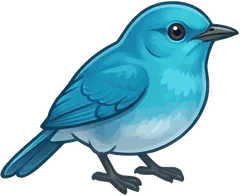 Mountain Bluebird
Sialia currucoides
Mountain Bluebird
Sialia currucoides - #075
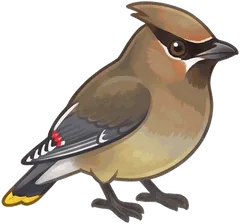 Cedar Waxwing
Bombycilla cedrorum
Cedar Waxwing
Bombycilla cedrorum - #081
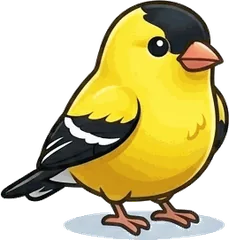 American Goldfinch
Spinus tristis
American Goldfinch
Spinus tristis - #082
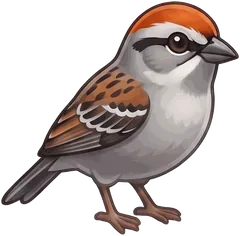 Chipping Sparrow
Spizella passerina
Chipping Sparrow
Spizella passerina - #084
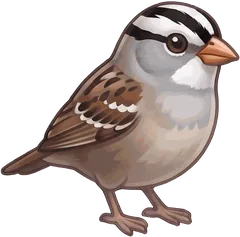 White-crowned Sparrow
Zonotrichia leucophrys
White-crowned Sparrow
Zonotrichia leucophrys - #085
 ?Catch it to find out
 - #086
 ?Catch it to find out
 - #092
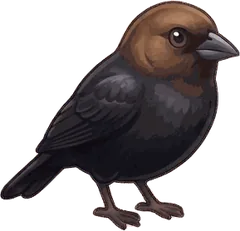 Brown-headed Cowbird
Molothrus ater
Brown-headed Cowbird
Molothrus ater - #093
 ?Catch it to find out
 - #094
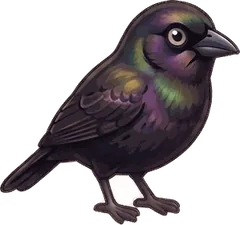 Common Grackle
Quiscalus quiscula
Common Grackle
Quiscalus quiscula - #095
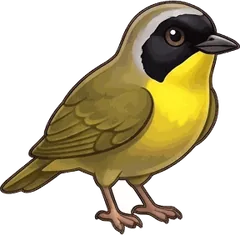 Common Yellowthroat
Geothlypis trichas
Common Yellowthroat
Geothlypis trichas - #097
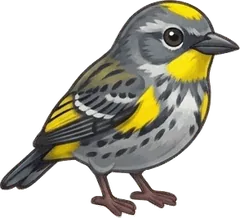 Yellow-rumped Warbler
Setophaga coronata
Yellow-rumped Warbler
Setophaga coronata - #098
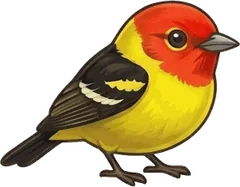 Western Tanager
Piranga ludoviciana
Western Tanager
Piranga ludoviciana
Rare 30 cards
- #004
 ?Catch it to find out
 - #009
 ?Catch it to find out
 - #010
 ?Catch it to find out
 - #011
 ?Catch it to find out
 - #012
 ?Catch it to find out
 - #013
 ?Catch it to find out
 - #014
 ?Catch it to find out
 - #016
 ?Catch it to find out
 - #018
 ?Catch it to find out
 - #027
 ?Catch it to find out
 - #028
 ?Catch it to find out
 - #030
 ?Catch it to reveal
 - #031
 ?Catch it to find out
 - #034
 ?Catch it to find out
 - #037
 ?Catch it to find out
 - #041
 ?Catch it to find out
 - #043
 ?Catch it to find out
 - #055
 ?Catch it to find out
 - #060
 ?Catch it to find out
 - #062
 ?Catch it to find out
 - #065
 ?Catch it to find out
 - #066?Catch it to reveal
- #072
 ?Catch it to find out
 - #073?Catch it to reveal
- #078
 ?Catch it to find out
 - #079
 ?Catch it to find out
 - #088?Catch it to reveal
- #089
 ?Catch it to find out
 - #099?Catch it to reveal
- #100
 ?Catch it to find out
Legendary 10 cards
- #002
 ?Catch it to find out
 - #003
 ?Catch it to find out
 - #019?Catch it to reveal
- #024
 ?Catch it to find out
 - #032
 ?Catch it to find out
 - #045?Catch it to reveal
- #049
 ?Catch it to find out
 - #052?Catch it to reveal
- #053?Catch it to reveal
- #063
 ?Catch it to find out
 47 of the 100 cards are shown here. The other 53, including all 30 rare and 10 legendary birds, are yours to discover. Get Warble and start with the common ones.
Backyard birds you will hear first
The American Robin leads the album, singing from the cottonwoods before dawn from March into summer and gathering in flocks along the rivers in winter. The Black-billed Magpie is second, long-tailed and black and white, chattering from the fence with no fear of anything. The Black-capped Chickadee whistles fee-bee from the spruce in February, and the Northern Flicker calls a long wick-wick-wick and drums on whatever is loudest, often the chimney cap.
The Common Raven croaks over town in every month, a sound that separates Montana from most of the East. Mallards and Canada Geese hold the river, the Red-winged Blackbird sings conk-la-ree from the first cattail, and the Red-tailed Hawk screams over the fence line.
The regions, by ear
Glacier and the northern Rockies
Cedar, spruce, subalpine meadow and rock. Glacier National Park has 279 documented bird species and 144 that nest there. The American Dipper sings from the boulders in the rivers all year, Harlequin Ducks ride the rapids, Clark's Nutcrackers rasp above the treeline, White-tailed Ptarmigan hold the alpine, and Golden Eagles are the rare, big shape over the ridges. Thrushes fill the cedar forest with song in June.
The western valleys
Missoula, the Bitterroot and the Flathead. Cottonwood river bottoms with Yellow Warblers and Western Tanagers in June, ponderosa pine on the benches, and Ospreys over the rivers.
The Centennial Valley
High, remote and wet, on the Idaho line. Red Rock Lakes refuge protects more than 53,000 acres, the largest wetland complex in the Greater Yellowstone Ecosystem, with no paved roads. It is Trumpeter Swan country.
The Rocky Mountain Front and Freezeout Lake
Where the plains run into the mountains without warning. Freezeout Lake, between Fairfield and Choteau, is a state wildlife management area known for its waterfowl: Mallards, Gadwalls, Northern Shovelers, teal, pintails, wigeon, Canada Geese and coots, with a Wild Wings birding event every March during spring migration.
The prairie and the potholes
Mixed-grass prairie and wetlands from the Hi-Line to the Dakotas. Bowdoin refuge near Malta, 15,551 acres set aside in 1936 around an old oxbow of the Missouri, has 263 bird species: Western Meadowlarks and pintails in spring, White-faced Ibis, Eared Grebes and American Avocets nesting in summer, godwits, Tundra Swans and Sandhill Cranes in fall, and Sharp-tailed Grouse, Rough-legged Hawks and Snowy Owls in winter.
Best months to listen
March is waterfowl month on the Front. May is the songbird peak in the valleys, and June is the peak in the mountains, when the snow finally leaves the high trails and the thrushes and warblers are on territory. On the prairie, dawn in late May is meadowlark song with nothing to block it. Fall brings cranes, swans and eagles through the eastern refuges. Winter is ravens, magpies, chickadees and, out east, grouse and Snowy Owls. Start before sunrise; the wind comes up by ten.
Places worth the drive
- Glacier National Park: 279 species, dippers, Harlequin Ducks, nutcrackers and ptarmigan.
- Bowdoin National Wildlife Refuge, near Malta: 263 species on the prairie potholes, ibis and grebes in summer, grouse and Snowy Owls in winter.
- Red Rock Lakes National Wildlife Refuge, Centennial Valley: 53,000 acres of high wetland, Trumpeter Swans, no pavement.
- Freezeout Lake, between Fairfield and Choteau: the March waterfowl flight on the Rocky Mountain Front.
None of it is required for the album. A cottonwood and a feeder in any Montana town hand you the first 20 cards in Warble before the snow is gone.
Listen before you go
Three of the common Montana birds, so the first songs you hear outside already ring a bell.
Recording by Chase Harris, CC0, via iNaturalist.
Recording by Fionn Ó Marcaigh, CC BY 4.0, via iNaturalist.
Recording by dugald, CC0, via iNaturalist.
Questions people ask
What is the most common bird in Montana?
By the reports behind the album, the American Robin, then the Black-billed Magpie, the Black-capped Chickadee, the Northern Flicker, the Mallard and the Common Raven.
What is the state bird of Montana?
The Western Meadowlark, adopted in 1941. Kansas, Nebraska, North Dakota, Oregon and Wyoming have the same bird.
How many bird species are there in Montana?
442 species as of July 2021, according to the Montana Bird Records Committee, with 104 on the review list and 8 introduced. The Warble album covers the 100 reported most often.
Nearby albums
Sources
- Wikipedia: List of birds of Montana. en.wikipedia.org/wiki/List_of_birds_of_Montana
- Wikipedia: Western meadowlark. en.wikipedia.org/wiki/Western_meadowlark
- National Park Service: Birds of Glacier National Park. www.nps.gov/glac/learn/nature/birds.htm
- U.S. Fish and Wildlife Service: Bowdoin National Wildlife Refuge. www.fws.gov/refuge/bowdoin