 Warble
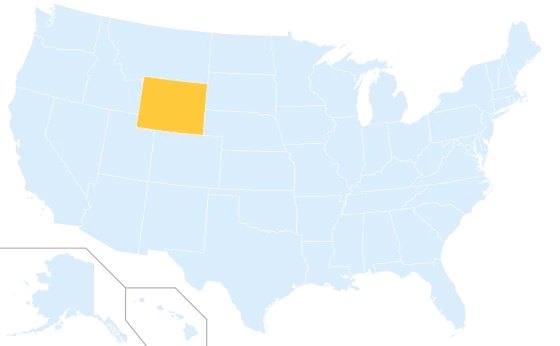
The state bird: Western Meadowlark
Adopted in 1927. A yellow-breasted bird with a black V that sings a rich, gurgling whistle from posts and sage from March to July, and the one sound every Wyoming driver knows with the window down.
Recording by Anne Parsons, CC0, via iNaturalist.
The Wyoming Game and Fish Department list had 452 species as of May 2021, with 118 of them accidental and 7 introduced. The state is high, dry and thinly settled, with sagebrush basins between mountain ranges, the Yellowstone plateau in the northwest corner and the short-grass prairie running off to the east.
The towns, Cheyenne, Casper, Laramie and the rest, have a western town album: robins on the lawns, magpies in the cottonwoods, ravens on the grain elevators, collared-doves on the wires. The meadowlark is just outside the city limits, and so is almost everything else.
The Wyoming album
These are the 100 birds people report most often in Wyoming, ranked by how frequently they turn up. The common and uncommon ones are shown; the rare and legendary cards stay face down until you catch them in the game.
Common 25 cards
- #001
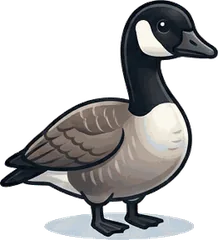 Canada Goose
Branta canadensis
Canada Goose
Branta canadensis - #008
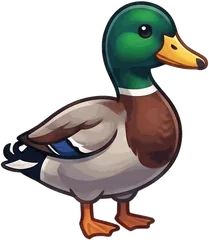 Mallard
Anas platyrhynchos
Mallard
Anas platyrhynchos - #019
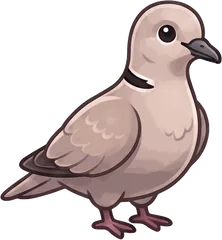 Eurasian Collared-Dove
Streptopelia decaocto
Eurasian Collared-Dove
Streptopelia decaocto - #020
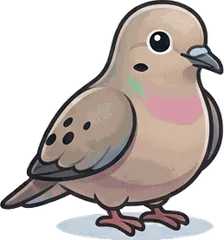 Mourning Dove
Zenaida macroura
Mourning Dove
Zenaida macroura - #025
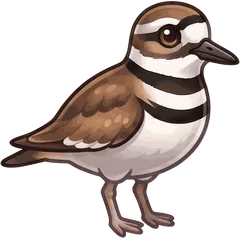 Killdeer
Charadrius vociferus
Killdeer
Charadrius vociferus - #040
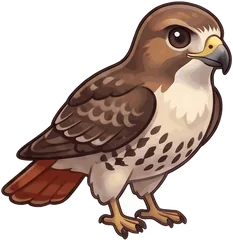 Red-tailed Hawk
Buteo jamaicensis
Red-tailed Hawk
Buteo jamaicensis - #043
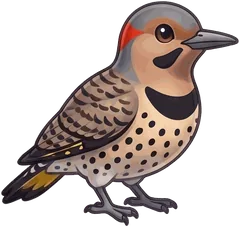 Northern Flicker
Colaptes auratus
Northern Flicker
Colaptes auratus - #051
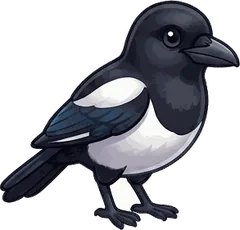 Black-billed Magpie
Pica hudsonia
Black-billed Magpie
Pica hudsonia - #053
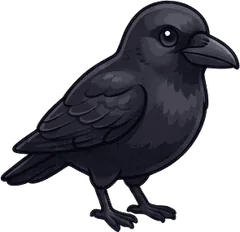 American Crow
Corvus brachyrhynchos
American Crow
Corvus brachyrhynchos - #054
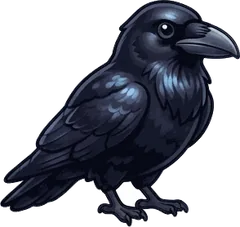 Common Raven
Corvus corax
Common Raven
Corvus corax - #055
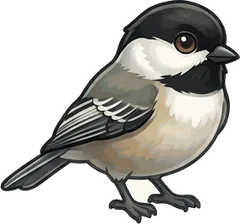 Black-capped Chickadee
Poecile atricapillus
Black-capped Chickadee
Poecile atricapillus - #056
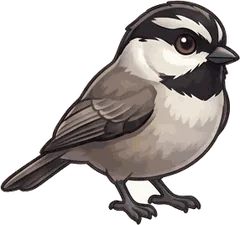 Mountain Chickadee
Poecile gambeli
Mountain Chickadee
Poecile gambeli - #065
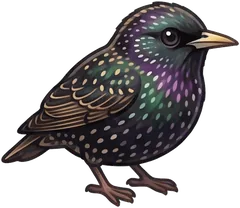 European Starling
Sturnus vulgaris
European Starling
Sturnus vulgaris - #070
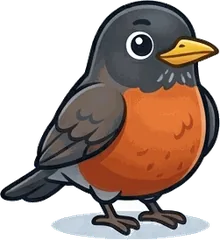 American Robin
Turdus migratorius
American Robin
Turdus migratorius - #072
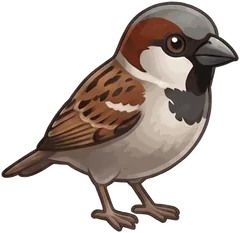 House Sparrow
Passer domesticus
House Sparrow
Passer domesticus - #073
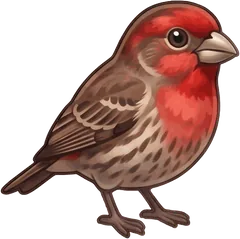 House Finch
Haemorhous mexicanus
House Finch
Haemorhous mexicanus - #076
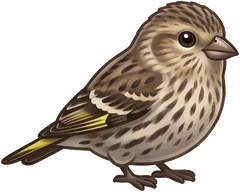 Pine Siskin
Spinus pinus
Pine Siskin
Spinus pinus - #077
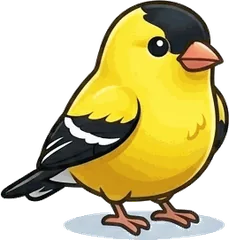 American Goldfinch
Spinus tristis
American Goldfinch
Spinus tristis - #078
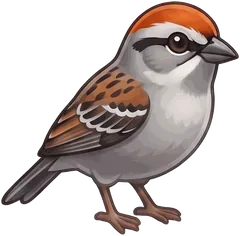 Chipping Sparrow
Spizella passerina
Chipping Sparrow
Spizella passerina - #081
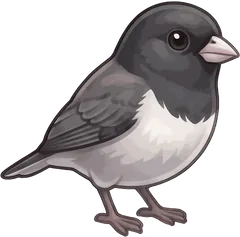 Dark-eyed Junco
Junco hyemalis
Dark-eyed Junco
Junco hyemalis - #082
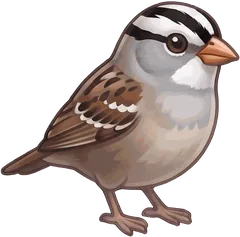 White-crowned Sparrow
Zonotrichia leucophrys
White-crowned Sparrow
Zonotrichia leucophrys - #089
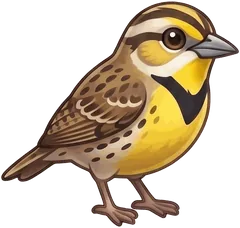 Western Meadowlark
Sturnella neglecta
Western Meadowlark
Sturnella neglecta - #091
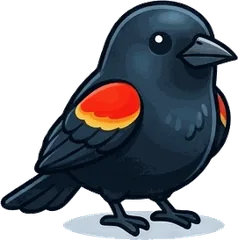 Red-winged Blackbird
Agelaius phoeniceus
Red-winged Blackbird
Agelaius phoeniceus - #096
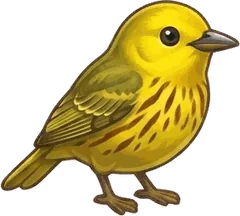 Yellow Warbler
Setophaga petechia
Yellow Warbler
Setophaga petechia - #097
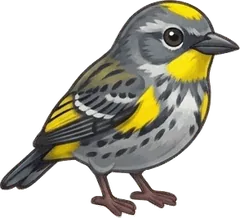 Yellow-rumped Warbler
Setophaga coronata
Yellow-rumped Warbler
Setophaga coronata
Uncommon 35 cards
- #006
 ?Catch it to find out
 - #007
 ?Catch it to find out
 - #009
 ?Catch it to find out
 - #012
 ?Catch it to find out
 - #016
 ?Catch it to find out
 - #018
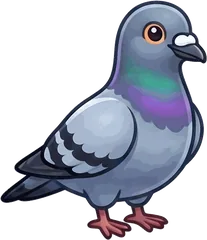 Rock Pigeon
Columba livia
Rock Pigeon
Columba livia - #023
 ?Catch it to find out
 - #027
 ?Catch it to find out
 - #028
 ?Catch it to find out
 - #032
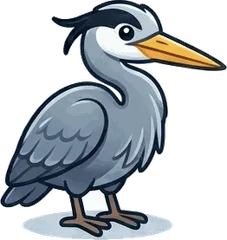 Great Blue Heron
Ardea herodias
Great Blue Heron
Ardea herodias - #033
 ?Catch it to find out
 - #034
 ?Catch it to find out
 - #035
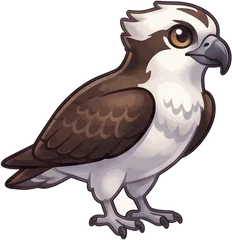 Osprey
Pandion haliaetus
Osprey
Pandion haliaetus - #036
 ?Catch it to find out
 - #037
 ?Catch it to find out
 - #038
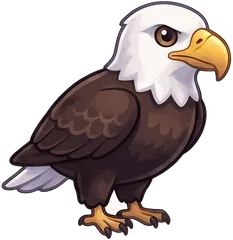 Bald Eagle
Haliaeetus leucocephalus
Bald Eagle
Haliaeetus leucocephalus - #039
 ?Catch it to find out
 - #044
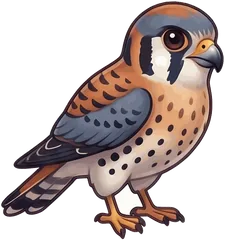 American Kestrel
Falco sparverius
American Kestrel
Falco sparverius - #045
 ?Catch it to find out
 - #052
 ?Catch it to find out
 - #057
 ?Catch it to find out
 - #058
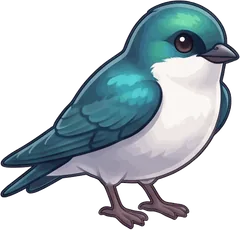 Tree Swallow
Tachycineta bicolor
Tree Swallow
Tachycineta bicolor - #059
 ?Catch it to find out
 - #060
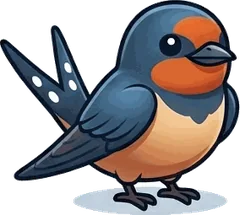 Barn Swallow
Hirundo rustica
Barn Swallow
Hirundo rustica - #061
 ?Catch it to find out
 - #063
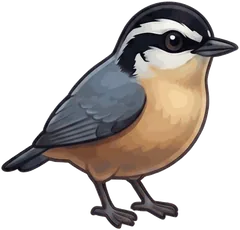 Red-breasted Nuthatch
Sitta canadensis
Red-breasted Nuthatch
Sitta canadensis - #064
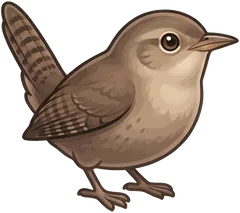 House Wren
Troglodytes aedon
House Wren
Troglodytes aedon - #067
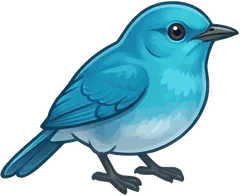 Mountain Bluebird
Sialia currucoides
Mountain Bluebird
Sialia currucoides - #083
 ?Catch it to find out
 - #085
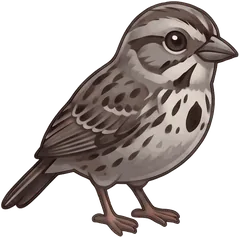 Song Sparrow
Melospiza melodia
Song Sparrow
Melospiza melodia - #088
 ?Catch it to find out
 - #092
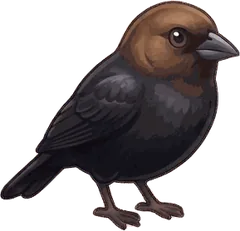 Brown-headed Cowbird
Molothrus ater
Brown-headed Cowbird
Molothrus ater - #093
 ?Catch it to find out
 - #094
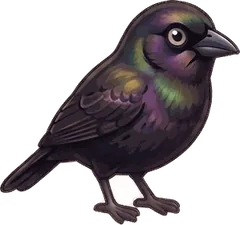 Common Grackle
Quiscalus quiscula
Common Grackle
Quiscalus quiscula - #099
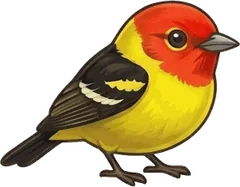 Western Tanager
Piranga ludoviciana
Western Tanager
Piranga ludoviciana
Rare 30 cards
- #002
 ?Catch it to find out
 - #004
 ?Catch it to find out
 - #005
 ?Catch it to find out
 - #010
 ?Catch it to find out
 - #011
 ?Catch it to find out
 - #013
 ?Catch it to find out
 - #015
 ?Catch it to find out
 - #017
 ?Catch it to find out
 - #021
 ?Catch it to reveal
 - #022
 ?Catch it to find out
 - #029?Catch it to reveal
- #030
 ?Catch it to find out
 - #031
 ?Catch it to find out
 - #041?Catch it to reveal
- #042?Catch it to reveal
- #046
 ?Catch it to find out
 - #047?Catch it to reveal
- #048?Catch it to reveal
- #050?Catch it to reveal
- #066?Catch it to reveal
- #068
 ?Catch it to find out
 - #071?Catch it to reveal
- #074
 ?Catch it to find out
 - #079
 ?Catch it to find out
 - #080
 ?Catch it to find out
 - #086
 ?Catch it to find out
 - #087
 ?Catch it to find out
 - #090
 ?Catch it to find out
 - #098
 ?Catch it to find out
 - #100?Catch it to reveal
Legendary 10 cards
- #003
 ?Catch it to find out
 - #014
 ?Catch it to find out
 - #024
 ?Catch it to find out
 - #026
 ?Catch it to find out
 - #049
 ?Catch it to find out
 - #062?Catch it to reveal
- #069?Catch it to reveal
- #075
 ?Catch it to find out
 - #084
 ?Catch it to find out
 - #095?Catch it to reveal
 39 of the 100 cards are shown here. The other 61, including all 30 rare and 10 legendary birds, are yours to discover. Get Warble and start with the common ones.
Backyard birds you will hear first
The American Robin leads, singing from the first mild mornings in March and keeping on until dark in June. The Common Raven is second, which is rare for a state album: a deep croak and a knocking call from the cliffs, the power poles and the dumpsters behind the gas station. Canada Geese and Mallards hold every town pond and river bend, and the Black-billed Magpie rounds out the top five, chattering in harsh mag, mag, mag bursts and following the cattle.
The Red-winged Blackbird shouts from the cattails of every stock pond from March, the Northern Flicker yells wick-wick-wick from the cottonwoods, and the Eurasian Collared-Dove coos a three-note coo-COO-coo from the wire in every town. House Sparrows, starlings, House Finches and crows fill in the rest, and the Western Meadowlark is usually the first bird you hear once the houses stop.
The regions, by ear
Yellowstone and the Tetons
Nearly 300 bird species have been sighted in Yellowstone National Park, about 150 of them nesting and about 50 staying year-round, among them Common Ravens, Canada Geese and American Dippers singing from the rocks in the rapids in January. The park supports 19 breeding raptor species and monitors Trumpeter Swans, Golden Eagles, Common Loons, Bald Eagles, Ospreys and Peregrine Falcons. About 30 percent of the breeding birds depend on wetlands, so the willow, aspen and cottonwood bottoms are the loudest places, with Hayden Valley for water birds and raptors and the Alum Creek mudflats for shorebirds. Grand Teton, just south, has the same cast under bigger mountains.
The sagebrush basins and the Green River
Most of the state: sage to the horizon, with a river through it. Seedskadee National Wildlife Refuge in the southwest follows the Green River through high desert that gets only 4 to 8 inches of rain a year, a cottonwood oasis that supports more than 300 species of resident and migrant wildlife, with Trumpeter Swans, Greater Sage-Grouse, bitterns in the marsh and Wilson's Warblers in the willows. Out in the sage itself it is Sage Thrashers, Brewer's Sparrows and the meadowlark.
The mountains
The Bighorns, the Wind Rivers, the Snowy Range: spruce, fir and aspen with alpine meadow above. Mountain Bluebirds on the fence posts up to the tree line, Mountain Chickadees in the firs, and Hermit Thrushes at dusk in the timber.
The eastern plains
Short-grass prairie from Cheyenne north to the Black Hills. Lark Buntings, Horned Larks and longspurs skylarking over the grass, Burrowing Owls at the prairie dog towns, and meadowlarks on every post.
Best months to listen
Late May and June are the peak in the basins and the towns, with the robins and meadowlarks on territory. Yellowstone runs later: the park's own advice is spring and early summer for migration and nesting, with late June and July for the high meadows, and fall hawk-watching from late August through October.
Winter is long and windy. Ravens, magpies and flickers never leave, dippers sing in the open water, and the first meadowlark on a fence post in March is the sound of the end of it.
Places worth the drive
- Yellowstone National Park: nearly 300 species, swans, loons and 19 kinds of nesting raptors, Hayden Valley at dawn.
- Seedskadee National Wildlife Refuge, near Green River: cottonwoods, swans and sage-grouse in the high desert.
- The Snowy Range, west of Laramie: Mountain Bluebirds and Hermit Thrushes an hour from town.
None of it is required. A yard with a cottonwood and a feeder in Casper or Sheridan gives you the first 20 cards in Warble.
Listen before you go
Three of the common Wyoming birds, so the first songs you hear outside already ring a bell.
Recording by Chase Harris, CC0, via iNaturalist.
Recording by Fionn Ó Marcaigh, CC BY 4.0, via iNaturalist.
Recording by Richard Littauer, CC BY 4.0, via iNaturalist.
Questions people ask
What is the most common bird in Wyoming?
By the reports behind the album, the American Robin, then the Common Raven, the Canada Goose, the Mallard and the Black-billed Magpie. Outside the towns the Western Meadowlark is the one you hear most.
What is the state bird of Wyoming?
The Western Meadowlark, adopted in 1927. It sings a loud, gurgling flute song from fence posts across the state from March to July, and it is the bird most people hear first once they leave town.
How many bird species are there in Wyoming?
452 species as of May 2021, according to the Wyoming Game and Fish Department list, including 118 accidental and 7 introduced species. The Warble album covers the 100 reported most often.
Nearby albums
Sources
- Wikipedia: List of birds of Wyoming. en.wikipedia.org/wiki/List_of_birds_of_Wyoming
- Wikipedia: List of U.S. state birds. en.wikipedia.org/wiki/List_of_U.S._state_birds
- National Park Service: Birds, Yellowstone National Park. www.nps.gov/yell/learn/nature/birds.htm
- U.S. Fish and Wildlife Service: Seedskadee National Wildlife Refuge. www.fws.gov/refuge/seedskadee