 Warble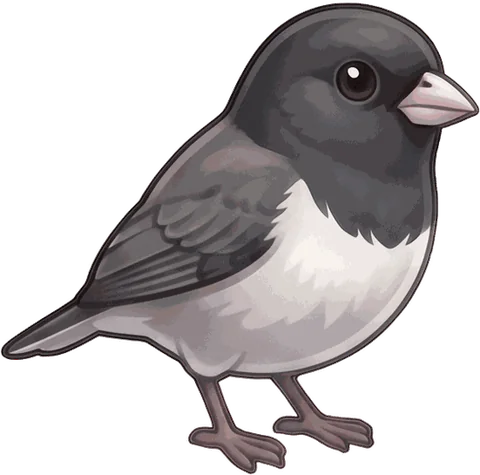
A Dark-eyed Junco sounds like a small bell being shaken: a ringing, metallic trill, one note repeated fast and all on the same pitch, given from the top of a conifer in spring. In winter, when most people meet juncos, you hear the calls instead: a sharp tsick or tchet as birds keep in touch on the ground, very high tinkling chips, and a soft buzzy trill when a flock flushes and flashes its white outer tail feathers.
What the song sounds like
The song is a simple trill: one note repeated fast, all on one pitch. What sets it apart is the tone, which is ringing and slightly metallic, like a musical rattle, more liquid than the dry buzz of a Chipping Sparrow and less sweet than a Pine Warbler. Males sing it from a high, exposed perch, usually the tip of a spruce or fir, to mark territory.
The trill is remarkably similar to the Chipping Sparrow's, and in northern woods where both breed, telling them apart by ear takes practice. The junco's tends to be more musical and bell-like, but there is overlap, and even experienced listeners sometimes have to go and look.
Most Americans rarely hear the song, because juncos sing on their northern and mountain breeding grounds. Listen on warm days in March and April, just before the winter flocks leave, when a few males start practicing.
The calls: ticks, smacks and tinkles
Winter juncos are a soundtrack of small noises. The contact call is a sharp tsick or tchet, given constantly as a flock hops and scratches through leaf litter or snow under the feeder. There are also very high, thin, tinkling chips, easy to miss, and when the flock takes off it gives a soft, buzzy trill and flashes white along both sides of the tail. That flash of white outer tail feathers, plus the ticking, is how you know a gray flock in the hedge is juncos before you have seen a single face.
When and where you hear it
Juncos breed in conifer and mixed forest across Canada, Alaska, the northern states and the western mountains, usually at edges and clearings. In fall most of them move south and downhill, arriving in their winter areas between mid-September and November and leaving again from mid-March. Some populations in the southwestern mountains and along the southern Pacific coast stay put all year. Curiously, males tend to winter a little farther north than females.
For most of the country, then, the junco is a winter bird, which is where the nickname snowbird comes from: it shows up with the first cold weather and disappears with the last. In Missouri, for example, it is a common winter resident and only an accidental visitor in summer. Winter habitat is open woods, roadsides, brush, thickets and suburban yards.
Juncos feed on the ground, hopping and running and sometimes scratching in the leaves or snow with both feet, and they prefer the spilled seed under a feeder to the feeder itself. Seeds make up about three quarters of the year's diet; in the breeding season insects rise to nearly half. In winter albums from Missouri to Maine it is one of the first Warble cards most players catch, usually from the tsick calls of a flock at dusk.
What it looks like
A sparrow about six inches long with a pale pink bill, a white belly and white outer tail feathers that flash in flight. The rest depends on where you are, because the species comes in several regional forms. The slate-colored junco of the East is plain gray above with a white belly, females and young birds a little browner. The Oregon junco of the West has a black or slaty hood, a chestnut back and rusty sides. The pink-sided has a pale blue-gray hood and pink flanks; the gray-headed has a reddish patch on the back; the white-winged is larger and paler with white wing bars. Juveniles are streaky brown.
The nest is an open cup of grass and leaves on the ground, well hidden and very hard to find. Three to five eggs are incubated for about twelve days, the young leave within two weeks, and pairs raise one or two broods, occasionally three. In courtship both birds hop about with drooping wings and the tail fanned to show off that white.
Birds that sound similar
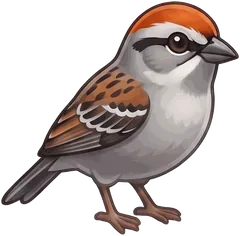 Chipping Sparrow
The Chipping Sparrow's trill is thinner, drier and more mechanical, like the whir of a sewing machine, and it comes from open woods, lawns and parks. The junco's is more ringing and bell-like, usually from a conifer top.
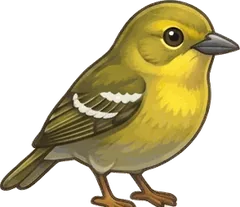 Pine Warbler
The Pine Warbler sings a softer, sweeter, slightly melancholy version of the same trill, always from pine woods. The junco's trill is harder and more metallic.
- ?Swamp Sparrow
The Swamp Sparrow's trill is sweet, slow and musical, all on one note, from cattails and sedges in a marsh. A ringing trill from a dry spruce edge is the junco.
Where the Dark-eyed Junco card lives
In Warble the same bird can be an easy card in one state and a prized one in another, because each album ranks its birds by how often people really report them there. The Dark-eyed Junco appears in 47 state albums:
 Heard one? Open Warble, tap the green button while it sings, and the Dark-eyed Junco card flips into your album. Get the app free.
Questions people ask
Why are juncos called snowbirds?
Because across most of the United States they arrive with the first cold weather in fall, between mid-September and November, and leave again in March and April. They breed in the northern and mountain forests, so for most people they are strictly a winter bird.
What does a Dark-eyed Junco sound like compared with a Chipping Sparrow?
Both sing a fast trill on one pitch. The junco's is more ringing, musical and metallic, and usually comes from a conifer top; the Chipping Sparrow's is drier and more mechanical, often from a lawn tree. Where both breed, telling them apart by ear is genuinely hard.
Do juncos eat from bird feeders?
Yes, but mostly from the ground beneath them. Juncos hop and scratch for spilled seed rather than perching on the feeder itself, so seed scattered on the ground or on a low tray is what brings them in.
Where do juncos go in summer?
North and uphill. They nest on the ground in conifer and mixed forest across Canada, Alaska, the northern states and the western mountains, leaving their winter areas from mid-March onward. A few populations in the Southwest and along the Pacific coast stay year-round.
Sources
- National Audubon Society, Guide to North American Birds: Dark-eyed Junco. www.audubon.org/field-guide/bird/dark-eyed-junco
- Wikipedia: Dark-eyed junco (song, calls, forms, migration dates, diet). en.wikipedia.org/wiki/Dark-eyed_junco
- Missouri Department of Conservation, Field Guide: Dark-eyed Junco. mdc.mo.gov/discover-nature/field-guide/dark-eyed-junco
- National Audubon Society, Guide to North American Birds: Chipping Sparrow. www.audubon.org/field-guide/bird/chipping-sparrow