 Warble
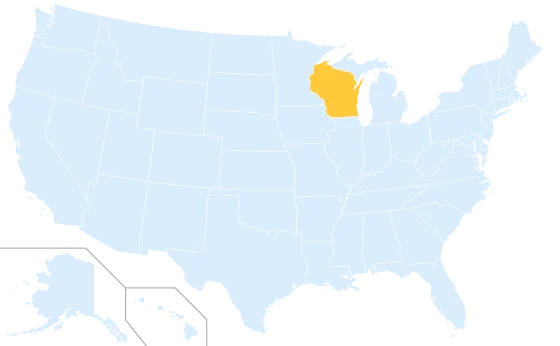
The state bird: American Robin
Adopted in 1949. The first long cheerily, cheer-up, cheerio from a bare maple in March is a bigger event in Wisconsin than in most places, and the same bird is still singing at 9 pm in June under a streetlight.
Recording by elonicera, CC0, via iNaturalist.
The Records Committee of the Wisconsin Society for Ornithology listed 441 species and one species pair as of July 2022, with 96 of them accidental, 34 casual and 10 introduced. Lake Michigan on one side, Lake Superior and the Mississippi on the others, and in between dairy farms, oak savanna, the big marshes of the center and the pine and spruce of the north.
Most people live in the southeast, from Milwaukee to Madison, and the everyday album there is chickadee, robin, crow, cardinal and goldfinch, with jays and a nuthatch at the feeder and Red-winged Blackbirds in every roadside ditch from the first week of March.
The Wisconsin album
These are the 100 birds people report most often in Wisconsin, ranked by how frequently they turn up. The common and uncommon ones are shown; the rare and legendary cards stay face down until you catch them in the game.
Common 25 cards
- #001
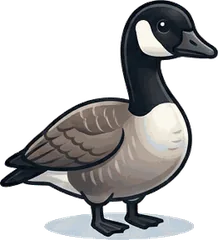 Canada Goose
Branta canadensis
Canada Goose
Branta canadensis - #005
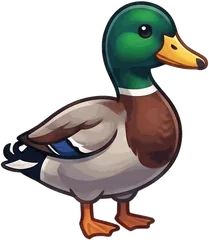 Mallard
Anas platyrhynchos
Mallard
Anas platyrhynchos - #016
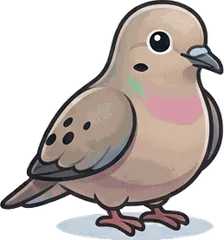 Mourning Dove
Zenaida macroura
Mourning Dove
Zenaida macroura - #022
 ?Catch it to find out
 - #035
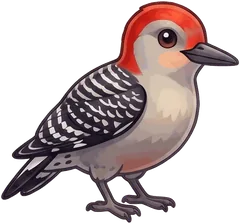 Red-bellied Woodpecker
Melanerpes carolinus
Red-bellied Woodpecker
Melanerpes carolinus - #036
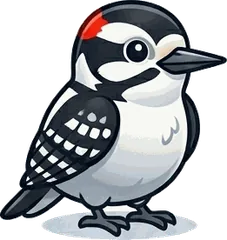 Downy Woodpecker
Dryobates pubescens
Downy Woodpecker
Dryobates pubescens - #038
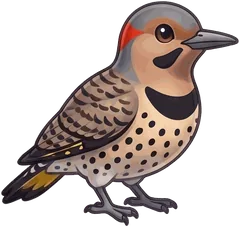 Northern Flicker
Colaptes auratus
Northern Flicker
Colaptes auratus - #047
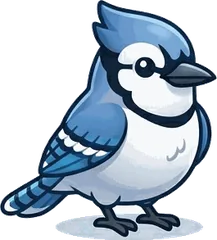 Blue Jay
Cyanocitta cristata
Blue Jay
Cyanocitta cristata - #048
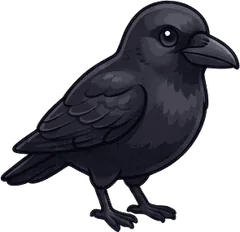 American Crow
Corvus brachyrhynchos
American Crow
Corvus brachyrhynchos - #050
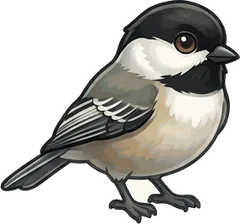 Black-capped Chickadee
Poecile atricapillus
Black-capped Chickadee
Poecile atricapillus - #052
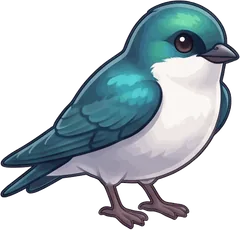 Tree Swallow
Tachycineta bicolor
Tree Swallow
Tachycineta bicolor - #056
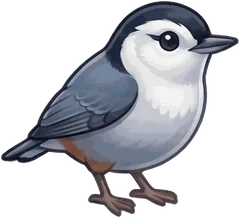 White-breasted Nuthatch
Sitta carolinensis
White-breasted Nuthatch
Sitta carolinensis - #060
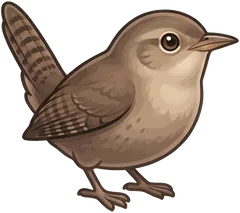 House Wren
Troglodytes aedon
House Wren
Troglodytes aedon - #061
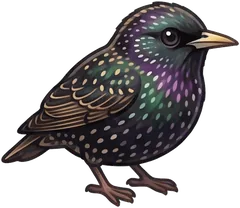 European Starling
Sturnus vulgaris
European Starling
Sturnus vulgaris - #062
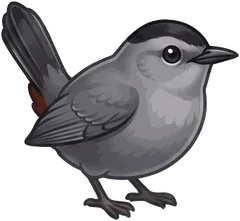 Gray Catbird
Dumetella carolinensis
Gray Catbird
Dumetella carolinensis - #066
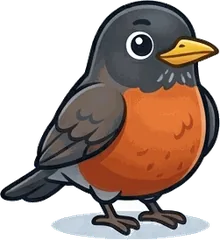 American Robin
Turdus migratorius
American Robin
Turdus migratorius - #068
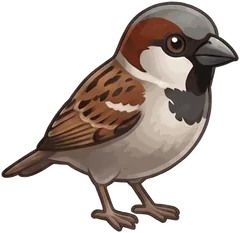 House Sparrow
Passer domesticus
House Sparrow
Passer domesticus - #069
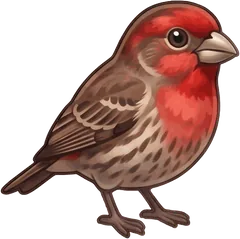 House Finch
Haemorhous mexicanus
House Finch
Haemorhous mexicanus - #072
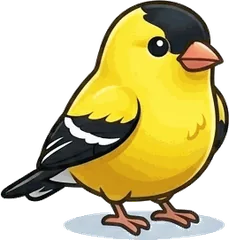 American Goldfinch
Spinus tristis
American Goldfinch
Spinus tristis - #076
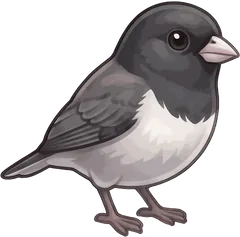 Dark-eyed Junco
Junco hyemalis
Dark-eyed Junco
Junco hyemalis - #080
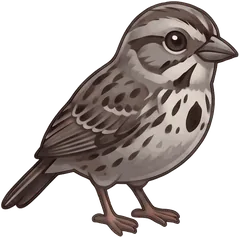 Song Sparrow
Melospiza melodia
Song Sparrow
Melospiza melodia - #085
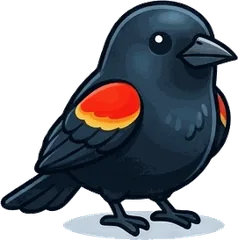 Red-winged Blackbird
Agelaius phoeniceus
Red-winged Blackbird
Agelaius phoeniceus - #086
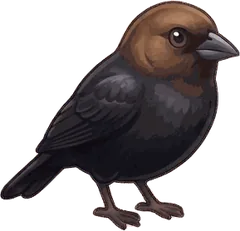 Brown-headed Cowbird
Molothrus ater
Brown-headed Cowbird
Molothrus ater - #087
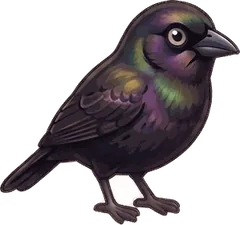 Common Grackle
Quiscalus quiscula
Common Grackle
Quiscalus quiscula - #098
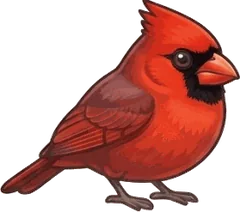 Northern Cardinal
Cardinalis cardinalis
Northern Cardinal
Cardinalis cardinalis
Uncommon 35 cards
- #002
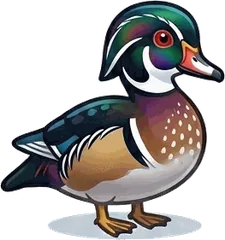 Wood Duck
Aix sponsa
Wood Duck
Aix sponsa - #003
 ?Catch it to find out
 - #014
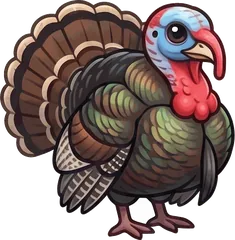 Wild Turkey
Meleagris gallopavo
Wild Turkey
Meleagris gallopavo - #015
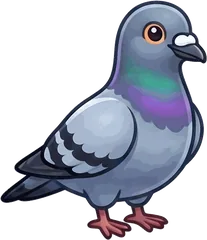 Rock Pigeon
Columba livia
Rock Pigeon
Columba livia - #018
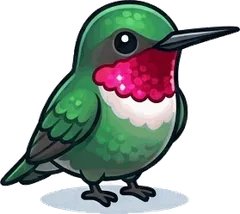 Ruby-throated Hummingbird
Archilochus colubris
Ruby-throated Hummingbird
Archilochus colubris - #020
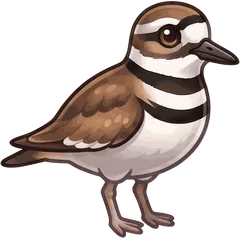 Killdeer
Charadrius vociferus
Killdeer
Charadrius vociferus - #023
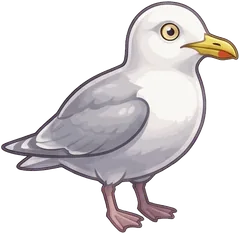 Herring Gull
Larus smithsonianus
Herring Gull
Larus smithsonianus - #028
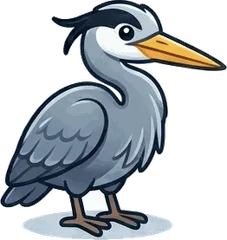 Great Blue Heron
Ardea herodias
Great Blue Heron
Ardea herodias - #030
 ?Catch it to find out
 - #031
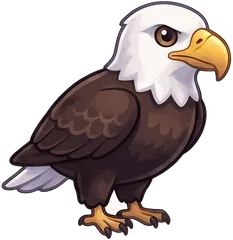 Bald Eagle
Haliaeetus leucocephalus
Bald Eagle
Haliaeetus leucocephalus - #032
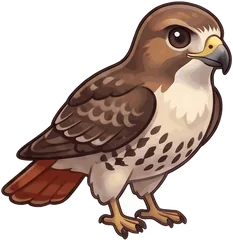 Red-tailed Hawk
Buteo jamaicensis
Red-tailed Hawk
Buteo jamaicensis - #033
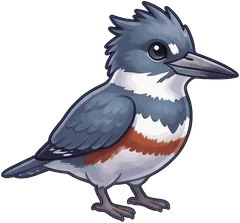 Belted Kingfisher
Megaceryle alcyon
Belted Kingfisher
Megaceryle alcyon - #037
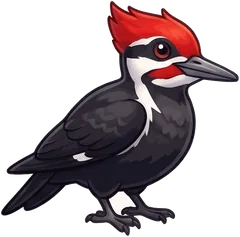 Pileated Woodpecker
Dryocopus pileatus
Pileated Woodpecker
Dryocopus pileatus - #040
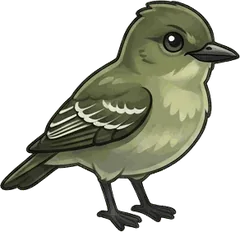 Eastern Wood-Pewee
Contopus virens
Eastern Wood-Pewee
Contopus virens - #042
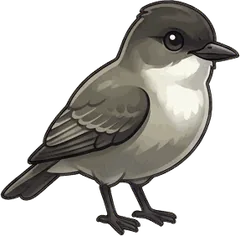 Eastern Phoebe
Sayornis phoebe
Eastern Phoebe
Sayornis phoebe - #043
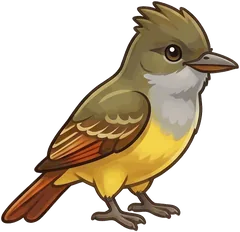 Great Crested Flycatcher
Myiarchus crinitus
Great Crested Flycatcher
Myiarchus crinitus - #044
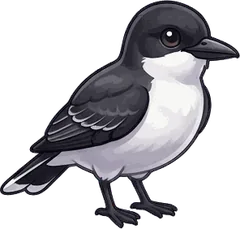 Eastern Kingbird
Tyrannus tyrannus
Eastern Kingbird
Tyrannus tyrannus - #046
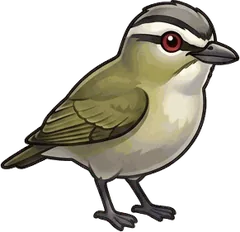 Red-eyed Vireo
Vireo olivaceus
Red-eyed Vireo
Vireo olivaceus - #051
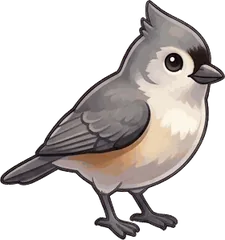 Tufted Titmouse
Baeolophus bicolor
Tufted Titmouse
Baeolophus bicolor - #054
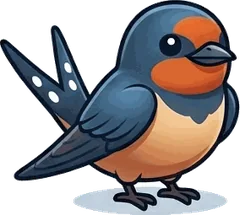 Barn Swallow
Hirundo rustica
Barn Swallow
Hirundo rustica - #057
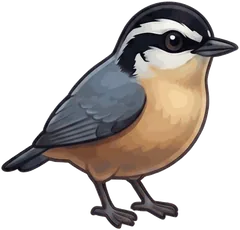 Red-breasted Nuthatch
Sitta canadensis
Red-breasted Nuthatch
Sitta canadensis - #064
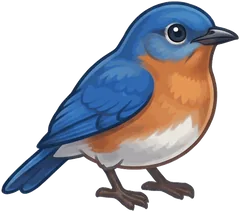 Eastern Bluebird
Sialia sialis
Eastern Bluebird
Sialia sialis - #067
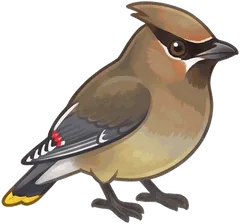 Cedar Waxwing
Bombycilla cedrorum
Cedar Waxwing
Bombycilla cedrorum - #073
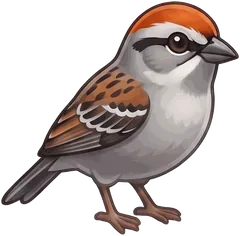 Chipping Sparrow
Spizella passerina
Chipping Sparrow
Spizella passerina - #075
 ?Catch it to find out
 - #078
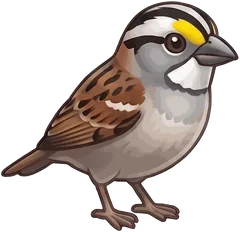 White-throated Sparrow
Zonotrichia albicollis
White-throated Sparrow
Zonotrichia albicollis - #081
 ?Catch it to find out
 - #082
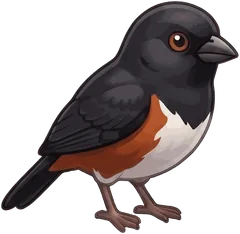 Eastern Towhee
Pipilo erythrophthalmus
Eastern Towhee
Pipilo erythrophthalmus - #084
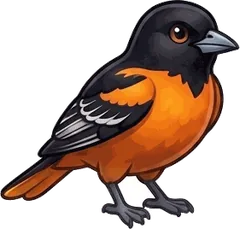 Baltimore Oriole
Icterus galbula
Baltimore Oriole
Icterus galbula - #091
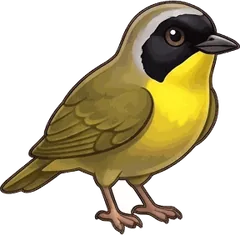 Common Yellowthroat
Geothlypis trichas
Common Yellowthroat
Geothlypis trichas - #092
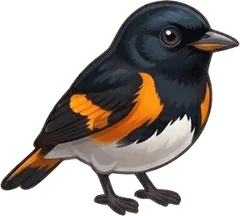 American Redstart
Setophaga ruticilla
American Redstart
Setophaga ruticilla - #093
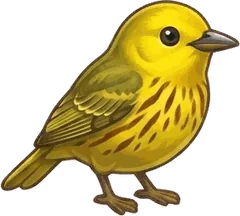 Yellow Warbler
Setophaga petechia
Yellow Warbler
Setophaga petechia - #096
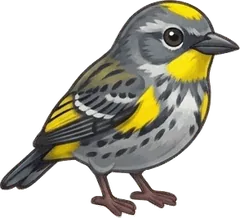 Yellow-rumped Warbler
Setophaga coronata
Yellow-rumped Warbler
Setophaga coronata - #099
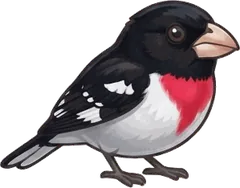 Rose-breasted Grosbeak
Pheucticus ludovicianus
Rose-breasted Grosbeak
Pheucticus ludovicianus - #100
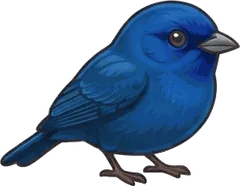 Indigo Bunting
Passerina cyanea
Indigo Bunting
Passerina cyanea
Rare 30 cards
- #004
 ?Catch it to find out
 - #007
 ?Catch it to find out
 - #009
 ?Catch it to find out
 - #010
 ?Catch it to find out
 - #011
 ?Catch it to find out
 - #012
 ?Catch it to find out
 - #013
 ?Catch it to find out
 - #017
 ?Catch it to reveal
 - #019
 ?Catch it to find out
 - #024
 ?Catch it to find out
 - #026
 ?Catch it to find out
 - #029
 ?Catch it to find out
 - #034?Catch it to reveal
- #039?Catch it to reveal
- #041
 ?Catch it to find out
 - #045?Catch it to reveal
- #049?Catch it to reveal
- #055?Catch it to reveal
- #059?Catch it to reveal
- #063?Catch it to reveal
- #065?Catch it to reveal
- #070?Catch it to reveal
- #071?Catch it to reveal
- #074?Catch it to reveal
- #083?Catch it to reveal
- #088?Catch it to reveal
- #089?Catch it to reveal
- #090
 ?Catch it to find out
 - #094
 ?Catch it to find out
 - #095
 ?Catch it to find out
Legendary 10 cards
- #006
 ?Catch it to find out
 - #008
 ?Catch it to find out
 - #021
 ?Catch it to find out
 - #025?Catch it to reveal
- #027
 ?Catch it to find out
 - #053
 ?Catch it to find out
 - #058?Catch it to reveal
- #077?Catch it to reveal
- #079
 ?Catch it to find out
 - #097
 ?Catch it to find out
 55 of the 100 cards are shown here. The other 45, including all 30 rare and 10 legendary birds, are yours to discover. Get Warble and start with the common ones.
Backyard birds you will hear first
The Black-capped Chickadee leads the album, which is what happens in a state with real winters: it is at the feeder in January calling chick-a-dee-dee-dee and whistling its two-note fee-bee on the first sunny days of February. The American Robin is second, the American Crow third, and the Northern Cardinal fourth, whistling from the top of a spruce from late February on. The American Goldfinch rounds out the top five, calling po-ta-to-chip in bounding flight.
The Blue Jay screams and does hawk impressions in the oaks, the Mourning Dove coos from the wire, and the Red-winged Blackbird shouts conk-la-ree from every cattail from March to July. Canada Geese and Mallards are on every park pond, the Downy Woodpecker whinnies from the suet, and the White-breasted Nuthatch gives a nasal yank, yank while walking headfirst down the trunk.
The regions, by ear
The southeast and the Lake Michigan shore
Cities, suburbs and the lakeshore parks, which catch migrants in May and September: gulls and Caspian Terns on the water, and warblers in the shoreline trees after a night of south wind.
Horicon Marsh and the central wetlands
Horicon Marsh, in Dodge and Fond du Lac counties, is one of the largest freshwater marshes in the country at more than 33,000 acres. The 22,000-acre Horicon National Wildlife Refuge was established in 1941 as a sanctuary for migratory birds, the Redhead duck in particular, and the marsh is habitat for more than 300 species of birds. Fall brings huge numbers of Canada Geese, ducks and Sandhill Cranes; spring brings waterbirds and songbirds, and the three-mile auto tour opens on March 16 and runs into late November. The sound of the place in October is geese by the thousand and cranes bugling overhead.
The Driftless Area and the Mississippi
Steep unglaciated hills and bluffs in the southwest: Eastern Meadowlarks and Bobolinks in the hayfields, Scarlet Tanagers and Wood Thrushes in the bluff forest, and Bald Eagles along the Mississippi all winter.
The Northwoods and Lake Superior
Pine, spruce, bog and lake country, where the sound turns boreal: Common Loons at dusk, Hermit Thrushes and Veeries in the evening, White-throated Sparrows whistling Old Sam Peabody. On the Lake Superior shore, the Chequamegon Bay checklist around the Apostle Islands has more than 300 species observed since 1972, and the islands are a spring stopover for songbirds, hawks, waterfowl and shorebirds. Bald Eagles went from none in the 1970s to 46 active nests on 21 of the 22 islands by 2018, and Piping Plovers nest on Long Island, with 3 to 5 successful nests a year between 2006 and 2020.
Best months to listen
The second and third weeks of May are the peak in the south, with the residents singing and the warblers moving through the lakeshore parks. The Northwoods run two weeks behind, with early June best for loons and thrushes. October is for Horicon, when the geese and cranes stack up before heading south.
Winter is long and the chickadee carries it, with nuthatches, cardinals and jays at the feeder. The first robin song in March is the sound Wisconsinites wait for.
Places worth the drive
- Horicon National Wildlife Refuge, Dodge County: more than 300 species, geese and Sandhill Cranes in fall, a three-mile auto tour.
- Apostle Islands National Lakeshore, Bayfield: spring migrants, Bald Eagles on nearly every island, Piping Plovers on Long Island.
- The Mississippi bluffs, from Prairie du Chien to La Crosse: tanagers in the woods and eagles on the river in winter.
None of it is required. A yard with a maple and a feeder in Waukesha or Eau Claire gives you the first 20 cards in Warble.
Listen before you go
Three of the common Wisconsin birds, so the first songs you hear outside already ring a bell.
Recording by Chase Harris, CC0, via iNaturalist.
Recording by Chase Harris, CC0, via iNaturalist.
Recording by Fionn Ó Marcaigh, CC BY 4.0, via iNaturalist.
Questions people ask
What is the most common bird in Wisconsin?
By the reports behind the album, the Black-capped Chickadee, then the American Robin, the American Crow, the Northern Cardinal and the American Goldfinch.
What is the state bird of Wisconsin?
The American Robin, adopted in 1949. It is the second most reported bird in the state and the usual first song of spring, from a bare maple in March.
How many bird species are there in Wisconsin?
441 species and one species pair as of July 2022, according to the Wisconsin Society for Ornithology's records committee, including 96 accidental and 10 introduced species. The Warble album covers the 100 reported most often.
Nearby albums
Sources
- Wikipedia: List of birds of Wisconsin. en.wikipedia.org/wiki/List_of_birds_of_Wisconsin
- Wikipedia: List of U.S. state birds. en.wikipedia.org/wiki/List_of_U.S._state_birds
- U.S. Fish and Wildlife Service: Horicon National Wildlife Refuge. www.fws.gov/refuge/horicon
- National Park Service: Birds, Apostle Islands National Lakeshore. www.nps.gov/apis/learn/nature/birds.htm