 Warble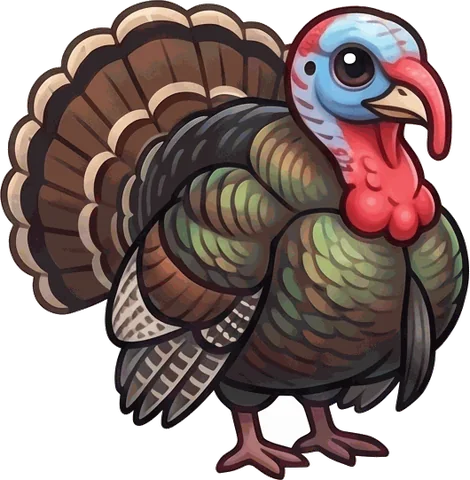
A Wild Turkey sounds like the farmyard bird, only wilder. The male's gobble is a loud, rapid, gurgling rattle that carries up to a mile on a still spring morning. Hens answer with yelps, a series of three to eight single notes, and the flock keeps in touch with short clucks, soft rolling purrs and, when something is wrong, a sharp putt. A strutting tom also hums and drums with his air sacs, a sound you only hear close up.
The gobble
The gobble is the male's advertisement, and Audubon simply notes that it sounds like a domestic turkey's. The National Wild Turkey Federation calls it a loud, rapid gurgling. It is given mostly in spring, from the roost before dawn and then from the ground, and it does two jobs at once: it tells hens where the tom is and warns other males off. Wikipedia and Animal Diversity Web agree on the range, about a mile on a quiet morning.
Up close, a strutting male makes sounds most people never notice. Audubon describes him puffing out his feathers, fanning his tail, swelling his wattles and drooping his wings, then rattling his wing feathers and humming as he walks. Wikipedia describes a low drumming or booming from an air sac in the chest and a sharp spit as the air is let out. You have to be within a few dozen yards to hear it.
The hen's yelp, and the rest of the vocabulary
Animal Diversity Web says biologists recognize at least 15 turkey vocalizations. The ones you are most likely to hear, with the National Wild Turkey Federation's descriptions:
- Plain yelp: the basic hen call, a series of single notes, usually three to eight, given in spring to reach a gobbler.
- Cluck: one or a few short, staccato notes, used to get another bird's attention.
- Putt: one or several sharp notes from an alarmed bird. If you hear putts, you have been seen.
- Purr: a soft, rolling sound from feeding turkeys that are content.
- Kee-kee: a three-note whistle lasting about two seconds, the call of a lost young turkey in fall.
- Fly-down cackle: three to ten irregular, loud notes rising in pitch as a bird leaves the roost.
- Tree call: soft, muffled yelps from a roosted bird as the sky brightens.
In fall, an adult hen gives the assembly call, a longer and more emphatic string of yelps, to pull a scattered flock together.
When and where you hear it
Gobbling belongs to spring. Animal Diversity Web puts the start of courtship in late January in the South and late February in the North. Listen in the half hour before sunrise, when toms gobble from their roost trees, and again as they fly down. Turkeys roost in trees every night because, as Wikipedia notes, they see poorly in the dark, and they feed most in the hours after dawn and before dusk.
The habitat is woods with openings: Audubon lists oak-hickory and pine-oak forests, cypress swamps, mesquite grassland, pinyon-juniper and chaparral, almost always near some kind of oak, since acorns are a favorite food. They also eat seeds, berries, buds, insects and the occasional salamander, and they will visit pastures and backyard feeders.
That you can hear one at all is a recovery story. Wikipedia says overhunting and forest clearing had cut the whole United States population to about 30,000 by the late 1930s, and the species had vanished from 18 states. Trapping wild birds and moving them to empty range worked where releasing farm-raised birds failed, and the count reached 1.3 million by 1973. Estimates today run from about 4 million, per Animal Diversity Web, to 7 million, per Wikipedia. In many eastern states a Warble player's first spring gobble is a card worth getting up early for.
What it looks like
Huge and unmistakable: Audubon gives 3 feet 7 inches to 3 feet 9 inches long, a wingspan over 4 feet, and weights from 5.5 to nearly 24 pounds. The head is bare, red with blue and white in the male, with a fleshy snood over the bill and wattles on the throat. Males are dark with a bronze, copper and green sheen, a long fan-shaped tail, a beard of coarse, hair-like feathers on the chest and spurs on the legs. Hens are smaller and browner. Wikipedia notes the head goes nearly white when a tom is most excited.
Birds that sound similar
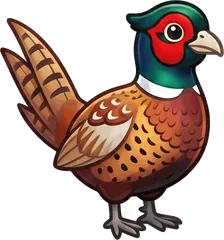 Ring-necked Pheasant
A rooster pheasant's crow is a short, harsh two-note caw-cawk followed by a whir of wings, from open fields. The gobble is longer, a rattling gurgle, and comes from woodland edges.
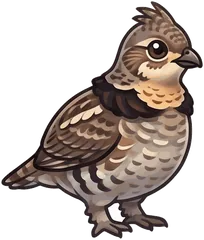 Ruffed Grouse
The Ruffed Grouse drums in the same spring woods, a deep accelerating thump you feel as much as hear. A strutting turkey's drum is a low hum audible only at close range, and the gobble is loud and unmistakable.
Where the Wild Turkey card lives
In Warble the same bird can be an easy card in one state and a prized one in another, because each album ranks its birds by how often people really report them there. The Wild Turkey appears in 26 state albums:
 Heard one? Open Warble, tap the green button while it sings, and the Wild Turkey card flips into your album. Get the app free.
Questions people ask
How far away can you hear a turkey gobble?
About a mile on a calm morning, according to both Wikipedia and Animal Diversity Web. Wind, rain and cold reduce gobbling, so the best listening is a still, mild spring dawn, starting a half hour before sunrise while the toms are still on the roost.
What does a hen turkey sound like?
Hens yelp: a series of three to eight single notes, higher and more even than a gobble. They also cluck, purr softly while feeding, give a sharp putt when alarmed, and in fall use a long assembly yelp to gather a scattered flock.
Do turkeys gobble in the fall?
Mostly no. Gobbling is a spring courtship sound. In fall you hear yelps, clucks, purrs, the kee-kee whistle of young birds that have lost the flock, and the hen's assembly call.
Is the Wild Turkey a state bird?
Not officially anywhere, but it is the state game bird of Alabama, South Carolina, Oklahoma and Massachusetts. The idea that Benjamin Franklin wanted it as the national bird comes from a private 1784 letter to his daughter; he never proposed it publicly.
Sources
- National Audubon Society, Guide to North American Birds: Wild Turkey. www.audubon.org/field-guide/bird/wild-turkey
- Wikipedia: Wild turkey (gobble range, drumming, roosting, population history, Franklin letter). en.wikipedia.org/wiki/Wild_turkey
- National Wild Turkey Federation: The Sounds of the Wild Turkey. www.nwtf.org/content-hub/the-sounds-of-the-wild-turkey
- Animal Diversity Web: Meleagris gallopavo (15 vocalizations, courtship timing, flight speed). animaldiversity.org/accounts/Meleagris_gallopavo/