 Warble
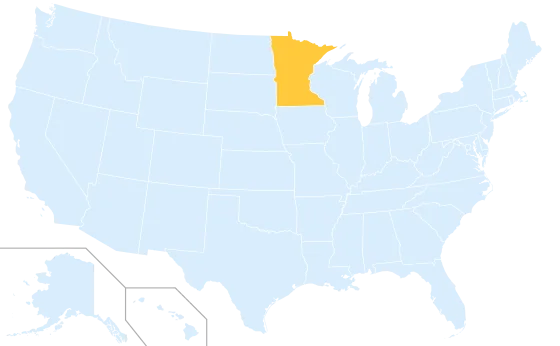
The state bird: Common Loon
Adopted in 1961, and on the state quarter and the seal. Four calls: a long wail to say where it is, a laughing tremolo when alarmed, a soft hoot to family, and the yodel, made only by the male, to hold a lake.
Recording by Whitney Brook Matson, CC BY 4.0, via iNaturalist.
Minnesota sounds different depending on which corner you stand in. The Minnesota Ornithologists' Union Records Committee had 446 species on the state list as of October 2020. The northeast is spruce, pine and more than a thousand lakes, with loons, eagles and ravens. The center is oak, maple and farm, where the Twin Cities sit on the Mississippi at the core of one of the continent's great flyways. The west and south were tallgrass prairie and are mostly corn now, with meadowlarks and Bobolinks left along the fence lines.
For most Minnesotans, though, the state is a yard in the suburbs and a lake cabin, and that means chickadee, crow, robin, jay, Downy Woodpecker and goldfinch at home, and a loon calling from the water after dark.
The Minnesota album
These are the 100 birds people report most often in Minnesota, ranked by how frequently they turn up. The common and uncommon ones are shown; the rare and legendary cards stay face down until you catch them in the game.
Common 25 cards
- #001
 Canada Goose
Branta canadensis
Canada Goose
Branta canadensis - #003
 Wood Duck
Aix sponsa
Wood Duck
Aix sponsa - #007
 Mallard
Anas platyrhynchos
Mallard
Anas platyrhynchos - #017
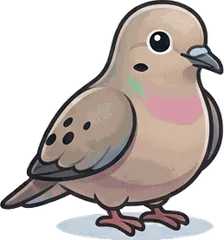 Mourning Dove
Zenaida macroura
Mourning Dove
Zenaida macroura - #022
 ?Catch it to find out
 - #033
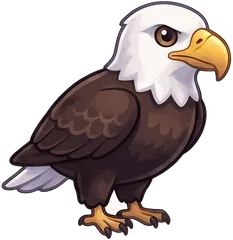 Bald Eagle
Haliaeetus leucocephalus
Bald Eagle
Haliaeetus leucocephalus - #037
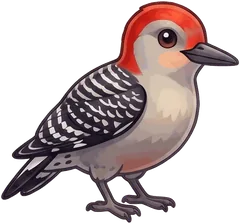 Red-bellied Woodpecker
Melanerpes carolinus
Red-bellied Woodpecker
Melanerpes carolinus - #038
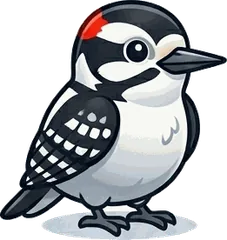 Downy Woodpecker
Dryobates pubescens
Downy Woodpecker
Dryobates pubescens - #050
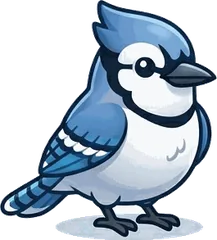 Blue Jay
Cyanocitta cristata
Blue Jay
Cyanocitta cristata - #051
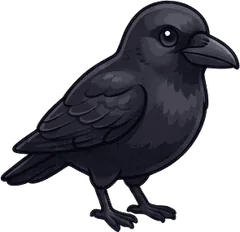 American Crow
Corvus brachyrhynchos
American Crow
Corvus brachyrhynchos - #053
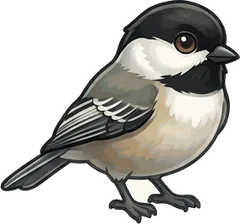 Black-capped Chickadee
Poecile atricapillus
Black-capped Chickadee
Poecile atricapillus - #058
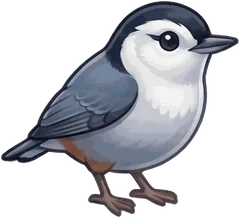 White-breasted Nuthatch
Sitta carolinensis
White-breasted Nuthatch
Sitta carolinensis - #062
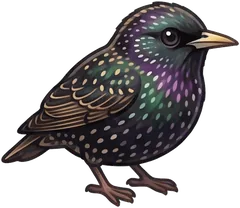 European Starling
Sturnus vulgaris
European Starling
Sturnus vulgaris - #063
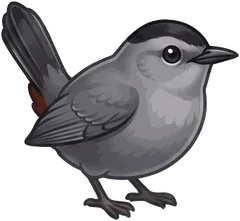 Gray Catbird
Dumetella carolinensis
Gray Catbird
Dumetella carolinensis - #067
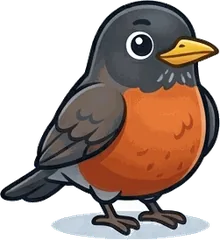 American Robin
Turdus migratorius
American Robin
Turdus migratorius - #069
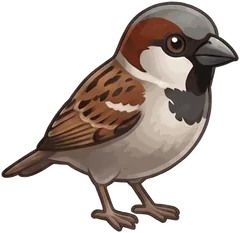 House Sparrow
Passer domesticus
House Sparrow
Passer domesticus - #070
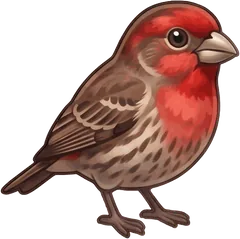 House Finch
Haemorhous mexicanus
House Finch
Haemorhous mexicanus - #074
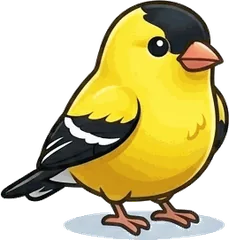 American Goldfinch
Spinus tristis
American Goldfinch
Spinus tristis - #075
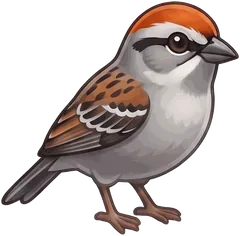 Chipping Sparrow
Spizella passerina
Chipping Sparrow
Spizella passerina - #079
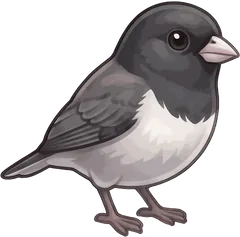 Dark-eyed Junco
Junco hyemalis
Dark-eyed Junco
Junco hyemalis - #082
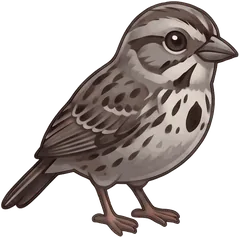 Song Sparrow
Melospiza melodia
Song Sparrow
Melospiza melodia - #085
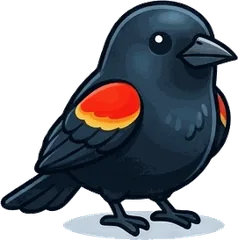 Red-winged Blackbird
Agelaius phoeniceus
Red-winged Blackbird
Agelaius phoeniceus - #087
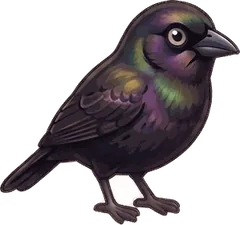 Common Grackle
Quiscalus quiscula
Common Grackle
Quiscalus quiscula - #092
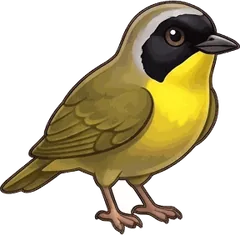 Common Yellowthroat
Geothlypis trichas
Common Yellowthroat
Geothlypis trichas - #098
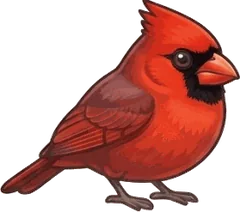 Northern Cardinal
Cardinalis cardinalis
Northern Cardinal
Cardinalis cardinalis
Uncommon 35 cards
- #002
 ?Catch it to find out
 - #004
 ?Catch it to find out
 - #012
 ?Catch it to find out
 - #014
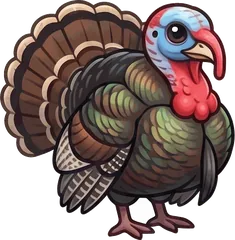 Wild Turkey
Meleagris gallopavo
Wild Turkey
Meleagris gallopavo - #016
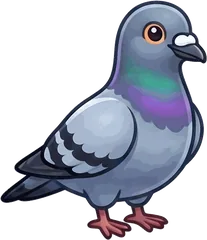 Rock Pigeon
Columba livia
Rock Pigeon
Columba livia - #019
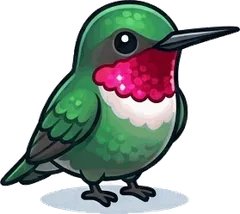 Ruby-throated Hummingbird
Archilochus colubris
Ruby-throated Hummingbird
Archilochus colubris - #021
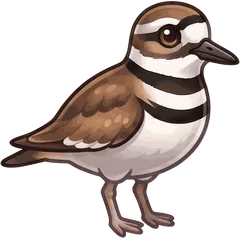 Killdeer
Charadrius vociferus
Killdeer
Charadrius vociferus - #025
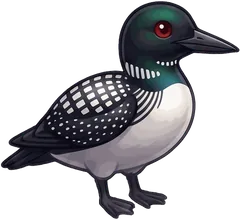 Common Loon
Gavia immer
Common Loon
Gavia immer - #027
 ?Catch it to find out
 - #028
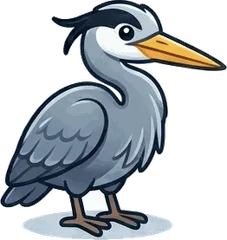 Great Blue Heron
Ardea herodias
Great Blue Heron
Ardea herodias - #030
 ?Catch it to find out
 - #034
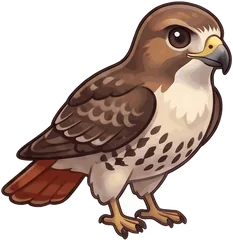 Red-tailed Hawk
Buteo jamaicensis
Red-tailed Hawk
Buteo jamaicensis - #039
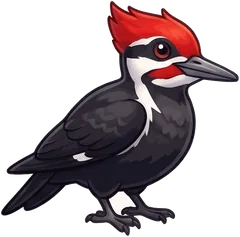 Pileated Woodpecker
Dryocopus pileatus
Pileated Woodpecker
Dryocopus pileatus - #040
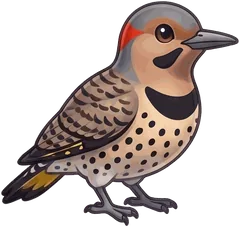 Northern Flicker
Colaptes auratus
Northern Flicker
Colaptes auratus - #042
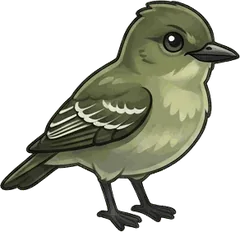 Eastern Wood-Pewee
Contopus virens
Eastern Wood-Pewee
Contopus virens - #044
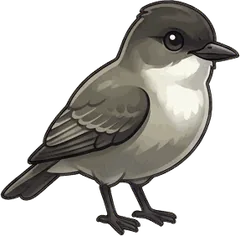 Eastern Phoebe
Sayornis phoebe
Eastern Phoebe
Sayornis phoebe - #045
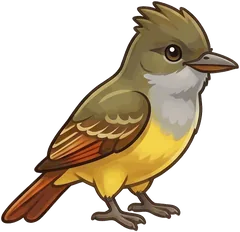 Great Crested Flycatcher
Myiarchus crinitus
Great Crested Flycatcher
Myiarchus crinitus - #046
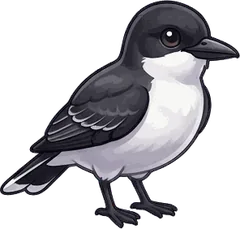 Eastern Kingbird
Tyrannus tyrannus
Eastern Kingbird
Tyrannus tyrannus - #049
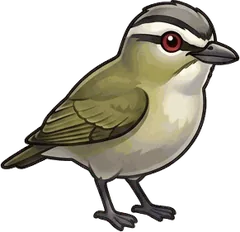 Red-eyed Vireo
Vireo olivaceus
Red-eyed Vireo
Vireo olivaceus - #052
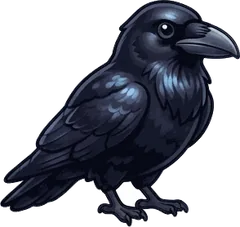 Common Raven
Corvus corax
Common Raven
Corvus corax - #055
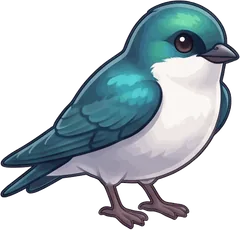 Tree Swallow
Tachycineta bicolor
Tree Swallow
Tachycineta bicolor - #056
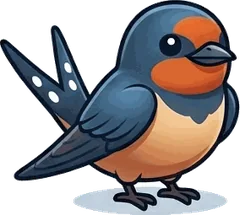 Barn Swallow
Hirundo rustica
Barn Swallow
Hirundo rustica - #059
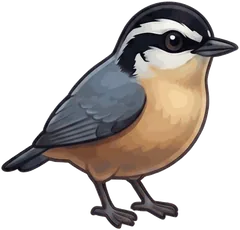 Red-breasted Nuthatch
Sitta canadensis
Red-breasted Nuthatch
Sitta canadensis - #061
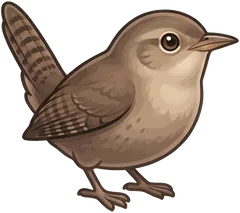 House Wren
Troglodytes aedon
House Wren
Troglodytes aedon - #065
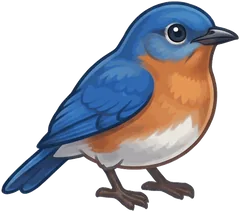 Eastern Bluebird
Sialia sialis
Eastern Bluebird
Sialia sialis - #068
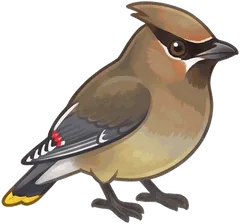 Cedar Waxwing
Bombycilla cedrorum
Cedar Waxwing
Bombycilla cedrorum - #080
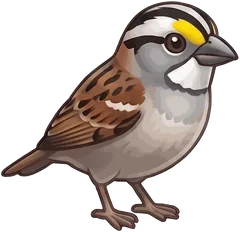 White-throated Sparrow
Zonotrichia albicollis
White-throated Sparrow
Zonotrichia albicollis - #083
 ?Catch it to find out
 - #084
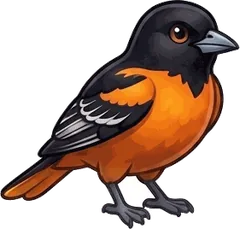 Baltimore Oriole
Icterus galbula
Baltimore Oriole
Icterus galbula - #086
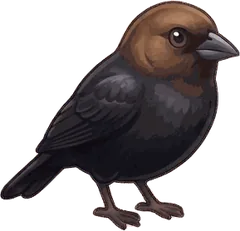 Brown-headed Cowbird
Molothrus ater
Brown-headed Cowbird
Molothrus ater - #091
 ?Catch it to find out
 - #093
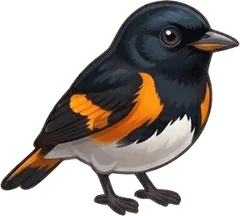 American Redstart
Setophaga ruticilla
American Redstart
Setophaga ruticilla - #094
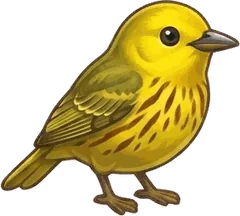 Yellow Warbler
Setophaga petechia
Yellow Warbler
Setophaga petechia - #097
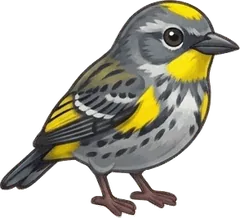 Yellow-rumped Warbler
Setophaga coronata
Yellow-rumped Warbler
Setophaga coronata - #099
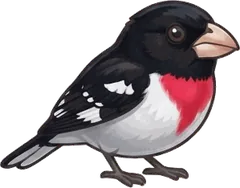 Rose-breasted Grosbeak
Pheucticus ludovicianus
Rose-breasted Grosbeak
Pheucticus ludovicianus
Rare 30 cards
- #005
 ?Catch it to find out
 - #008
 ?Catch it to find out
 - #009
 ?Catch it to find out
 - #010
 ?Catch it to find out
 - #011
 ?Catch it to find out
 - #013
 ?Catch it to find out
 - #015
 ?Catch it to reveal
 - #018?Catch it to reveal
- #020
 ?Catch it to find out
 - #023?Catch it to reveal
- #024
 ?Catch it to find out
 - #026
 ?Catch it to find out
 - #029
 ?Catch it to find out
 - #035?Catch it to reveal
- #036?Catch it to reveal
- #041?Catch it to reveal
- #043
 ?Catch it to find out
 - #048?Catch it to reveal
- #071?Catch it to reveal
- #072
 ?Catch it to find out
 - #073?Catch it to reveal
- #076
 ?Catch it to find out
 - #077?Catch it to reveal
- #078
 ?Catch it to find out
 - #088?Catch it to reveal
- #089?Catch it to reveal
- #090
 ?Catch it to find out
 - #095
 ?Catch it to find out
 - #096
 ?Catch it to find out
 - #100?Catch it to reveal
Legendary 10 cards
- #006
 ?Catch it to find out
 - #031?Catch it to reveal
- #032
 ?Catch it to find out
 - #047
 ?Catch it to find out
 - #054
 ?Catch it to find out
 - #057
 ?Catch it to find out
 - #060?Catch it to reveal
- #064?Catch it to reveal
- #066?Catch it to reveal
- #081
 ?Catch it to find out
 52 of the 100 cards are shown here. The other 48, including all 30 rare and 10 legendary birds, are yours to discover. Get Warble and start with the common ones.
Backyard birds you will hear first
The Black-capped Chickadee leads the album, whistling fee-bee from the feeder in February when nothing else is singing, and adding extra dee notes to its call when a hawk goes over. The American Crow is second, which tells you something about Minnesota winters: it is loud, present in every month and hard to miss. The American Robin takes over the dawn chorus from March, and the Blue Jay yells from the oaks.
The Downy Woodpecker whinnies and taps at the suet, the White-breasted Nuthatch honks down the trunk, and the American Goldfinch bounces overhead. The Northern Cardinal whistles from the spruce in every month and sits in the top ten. Canada Geese and Mallards hold every pond, and the Red-winged Blackbird sings conk-la-ree from the cattails as soon as the ice goes out.
The regions, by ear
The Arrowhead and the Boundary Waters
Spruce, fir and granite. The Boundary Waters Canoe Area Wilderness is 1,090,000 acres along the Canadian border with more than 1,100 lakes, and the American Bird Conservancy lists it as a globally important bird habitat. Loons on every lake, Bald Eagles, Peregrine Falcons on the cliffs, Ruffed Grouse drumming in the aspen, and ravens croaking over the portages.
Duluth and the North Shore
Lake Superior is a wall for southbound hawks, and they follow its shore to Hawk Ridge above Duluth every fall. The reserve was set up in 1972 on 135 acres with 200 more added later, and it draws 20,000 birdwatchers a year.
The Twin Cities and the river
The Mississippi runs through Minneapolis and Saint Paul, and the river corridor carries migrants through the metro twice a year. Wood Ducks, Bald Eagles, orioles and warblers in the floodplain woods, with all the backyard birds in the neighborhoods above.
Northwest and the aspen parkland
The transition between the boreal forest and the prairie. Agassiz refuge, 61,500 acres set aside in 1937, has 300 bird species with about half of them nesting, a colony of Franklin's Gulls, moose and two packs of wolves. Tamarac refuge to the south, established in 1938, has 250 species and more than 50 nesting pairs of Trumpeter Swans, part of a state population of about 17,000.
Prairie and farm country
The west and south. Western Meadowlarks flute from the posts, Bobolinks tumble over hayfields in June, and Red-winged Blackbirds fill the ditches.
Best months to listen
May is the peak, when the ice is gone, the warblers are moving up the river and the residents are singing for territory. June is the loon month: yodels and wails on the northern lakes, best from a dock at dusk. September is hawk season at Duluth. October and November bring ducks, swans and geese through the western refuges. Winter is chickadees, nuthatches and woodpeckers at the feeder, crows and ravens over the snow, and, in some years, owls down from Canada. Stay up late for the loons.
Places worth the drive
- Boundary Waters Canoe Area Wilderness, northeast: 1,090,000 acres and 1,100 lakes, loons, eagles and Peregrine Falcons.
- Hawk Ridge, Duluth: the fall raptor flight along Lake Superior, September and October.
- Agassiz National Wildlife Refuge, northwest: 61,500 acres of marsh and bog, 300 species, Franklin's Gulls and nesting waterfowl.
- Tamarac National Wildlife Refuge, near Detroit Lakes: 250 species, Trumpeter Swans and loons where three forests meet.
None of it is required. A feeder in Bloomington hands you the first 20 cards in Warble by the time the snow is gone.
Listen before you go
Three of the common Minnesota birds, so the first songs you hear outside already ring a bell.
Recording by Chase Harris, CC0, via iNaturalist.
Recording by Chase Harris, CC0, via iNaturalist.
Recording by Fionn Ó Marcaigh, CC BY 4.0, via iNaturalist.
Questions people ask
What is the most common bird in Minnesota?
By the reports behind the album, the Black-capped Chickadee, then the American Crow, the American Robin, the Blue Jay, the Downy Woodpecker and the American Goldfinch.
What is the state bird of Minnesota?
The Common Loon, adopted in 1961. It nests on lakes larger than about nine acres and is the bird on the Minnesota quarter.
How many bird species are there in Minnesota?
446 species as of October 2020, according to the Minnesota Ornithologists' Union Records Committee, of which 89 are accidental and 41 casual. The Warble album covers the 100 reported most often.
Nearby albums
Sources
- Wikipedia: List of birds of Minnesota. en.wikipedia.org/wiki/List_of_birds_of_Minnesota
- Wikipedia: Common loon. en.wikipedia.org/wiki/Common_loon
- U.S. Fish and Wildlife Service: Agassiz National Wildlife Refuge. www.fws.gov/refuge/agassiz
- Wikipedia: Hawk Ridge Bird Observatory. en.wikipedia.org/wiki/Hawk_Ridge_Bird_Observatory