 Warble
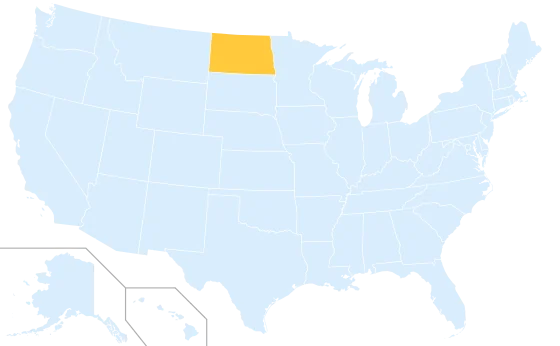
The state bird: Western Meadowlark
Adopted in 1947, and the state bird of five other states as well. A grassland bird that sings a rich, watery, flute-like warble from a fence post, much fancier than the plain whistle of the Eastern Meadowlark.
Recording by Anne Parsons, CC0, via iNaturalist.
The North Dakota Game and Fish Department's April 2016 checklist, with a few additions from the state records committee, puts the state list at 420 species. Most of them are here because of water: the eastern two thirds of the state sit in the Prairie Pothole Region, a belt of glacial wetlands across the northern plains, and every slough with a ring of cattails is a duck factory in May.
For most people the state is Fargo, Bismarck, Grand Forks or Minot, a shelterbelt of cottonwoods and a lot of horizon: robins, blackbirds, doves and geese at home, and a meadowlark within a mile of any front door.
The North Dakota album
These are the 100 birds people report most often in North Dakota, ranked by how frequently they turn up. The common and uncommon ones are shown; the rare and legendary cards stay face down until you catch them in the game.
Common 25 cards
- #001
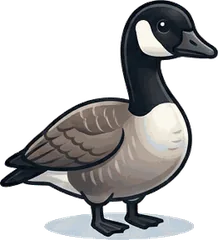 Canada Goose
Branta canadensis
Canada Goose
Branta canadensis - #003
 ?Catch it to find out
 - #004
 ?Catch it to find out
 - #007
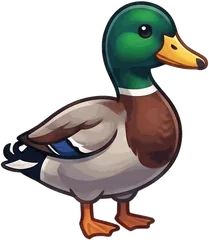 Mallard
Anas platyrhynchos
Mallard
Anas platyrhynchos - #018
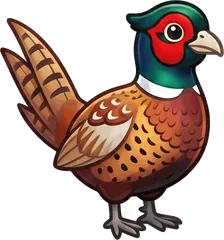 Ring-necked Pheasant
Phasianus colchicus
Ring-necked Pheasant
Phasianus colchicus - #021
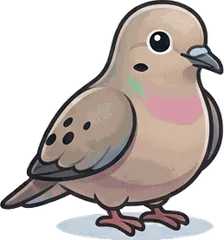 Mourning Dove
Zenaida macroura
Mourning Dove
Zenaida macroura - #025
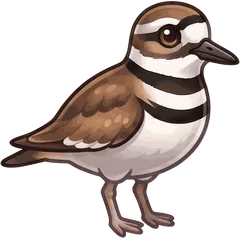 Killdeer
Charadrius vociferus
Killdeer
Charadrius vociferus - #034
 ?Catch it to find out
 - #046
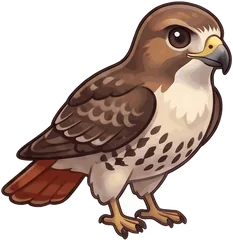 Red-tailed Hawk
Buteo jamaicensis
Red-tailed Hawk
Buteo jamaicensis - #047
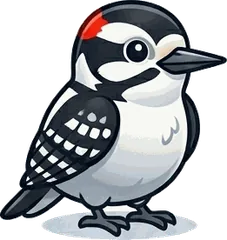 Downy Woodpecker
Dryobates pubescens
Downy Woodpecker
Dryobates pubescens - #052
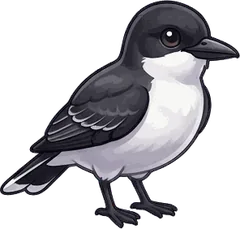 Eastern Kingbird
Tyrannus tyrannus
Eastern Kingbird
Tyrannus tyrannus - #057
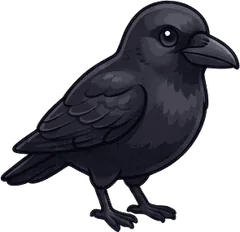 American Crow
Corvus brachyrhynchos
American Crow
Corvus brachyrhynchos - #058
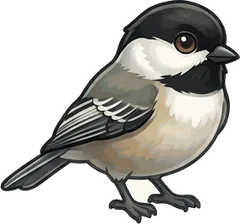 Black-capped Chickadee
Poecile atricapillus
Black-capped Chickadee
Poecile atricapillus - #062
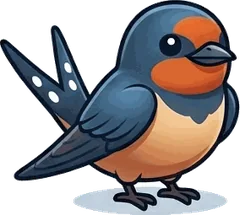 Barn Swallow
Hirundo rustica
Barn Swallow
Hirundo rustica - #064
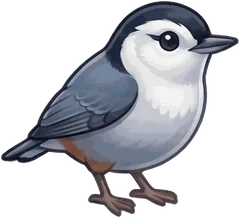 White-breasted Nuthatch
Sitta carolinensis
White-breasted Nuthatch
Sitta carolinensis - #071
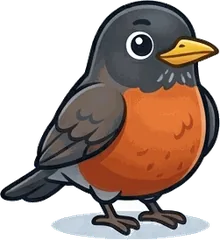 American Robin
Turdus migratorius
American Robin
Turdus migratorius - #073
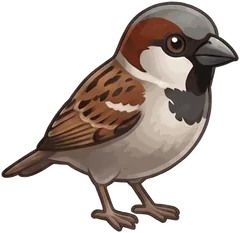 House Sparrow
Passer domesticus
House Sparrow
Passer domesticus - #076
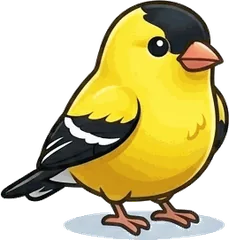 American Goldfinch
Spinus tristis
American Goldfinch
Spinus tristis - #078
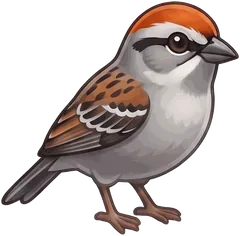 Chipping Sparrow
Spizella passerina
Chipping Sparrow
Spizella passerina - #085
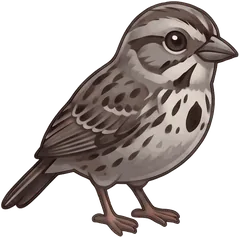 Song Sparrow
Melospiza melodia
Song Sparrow
Melospiza melodia - #089
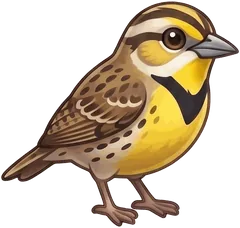 Western Meadowlark
Sturnella neglecta
Western Meadowlark
Sturnella neglecta - #092
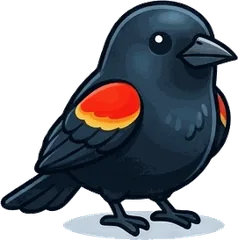 Red-winged Blackbird
Agelaius phoeniceus
Red-winged Blackbird
Agelaius phoeniceus - #093
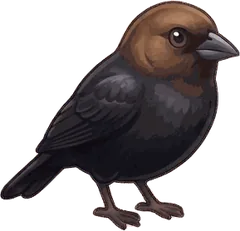 Brown-headed Cowbird
Molothrus ater
Brown-headed Cowbird
Molothrus ater - #095
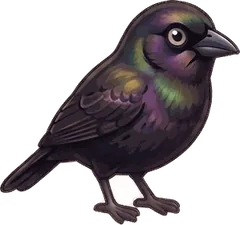 Common Grackle
Quiscalus quiscula
Common Grackle
Quiscalus quiscula - #099
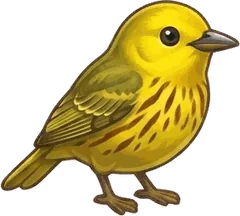 Yellow Warbler
Setophaga petechia
Yellow Warbler
Setophaga petechia
Uncommon 35 cards
- #005
 ?Catch it to find out
 - #008
 ?Catch it to find out
 - #010
 ?Catch it to find out
 - #011
 ?Catch it to find out
 - #013
 ?Catch it to find out
 - #016
 ?Catch it to find out
 - #019
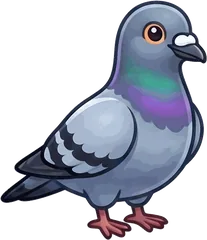 Rock Pigeon
Columba livia
Rock Pigeon
Columba livia - #020
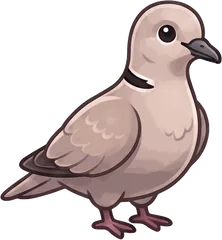 Eurasian Collared-Dove
Streptopelia decaocto
Eurasian Collared-Dove
Streptopelia decaocto - #023
 ?Catch it to find out
 - #033
 ?Catch it to find out
 - #035
 ?Catch it to find out
 - #041
 ?Catch it to find out
 - #043
 ?Catch it to find out
 - #044
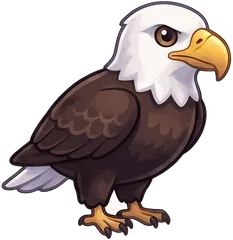 Bald Eagle
Haliaeetus leucocephalus
Bald Eagle
Haliaeetus leucocephalus - #048
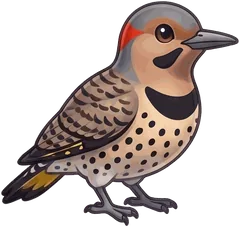 Northern Flicker
Colaptes auratus
Northern Flicker
Colaptes auratus - #050
 ?Catch it to find out
 - #051
 ?Catch it to find out
 - #055
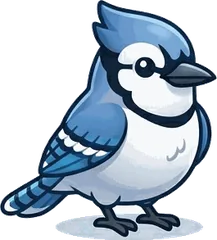 Blue Jay
Cyanocitta cristata
Blue Jay
Cyanocitta cristata - #059
 ?Catch it to find out
 - #061
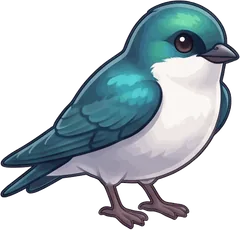 Tree Swallow
Tachycineta bicolor
Tree Swallow
Tachycineta bicolor - #063
 ?Catch it to find out
 - #066
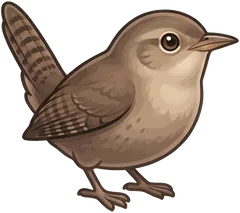 House Wren
Troglodytes aedon
House Wren
Troglodytes aedon - #068
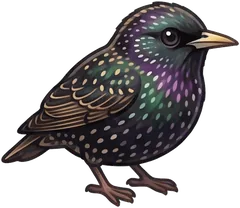 European Starling
Sturnus vulgaris
European Starling
Sturnus vulgaris - #069
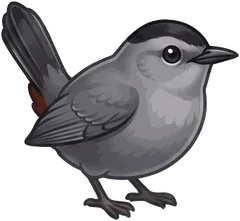 Gray Catbird
Dumetella carolinensis
Gray Catbird
Dumetella carolinensis - #072
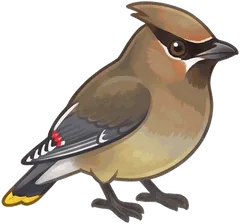 Cedar Waxwing
Bombycilla cedrorum
Cedar Waxwing
Bombycilla cedrorum - #074
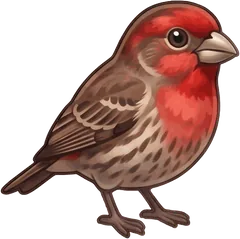 House Finch
Haemorhous mexicanus
House Finch
Haemorhous mexicanus - #075
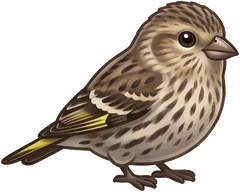 Pine Siskin
Spinus pinus
Pine Siskin
Spinus pinus - #079
 ?Catch it to find out
 - #081
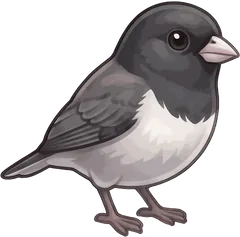 Dark-eyed Junco
Junco hyemalis
Dark-eyed Junco
Junco hyemalis - #083
 ?Catch it to find out
 - #084
 ?Catch it to find out
 - #087
 ?Catch it to find out
 - #088
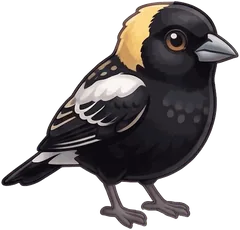 Bobolink
Dolichonyx oryzivorus
Bobolink
Dolichonyx oryzivorus - #097
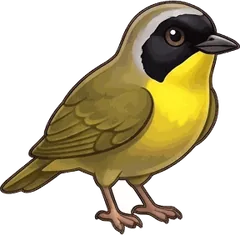 Common Yellowthroat
Geothlypis trichas
Common Yellowthroat
Geothlypis trichas - #100
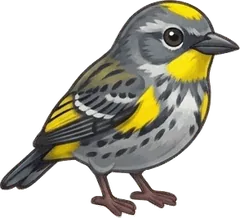 Yellow-rumped Warbler
Setophaga coronata
Yellow-rumped Warbler
Setophaga coronata
Rare 30 cards
- #002
 ?Catch it to reveal
 - #006
 ?Catch it to find out
 - #009
 ?Catch it to find out
 - #014
 ?Catch it to find out
 - #022
 ?Catch it to find out
 - #024
 ?Catch it to find out
 - #026
 ?Catch it to find out
 - #027
 ?Catch it to find out
 - #028
 ?Catch it to find out
 - #029
 ?Catch it to find out
 - #032
 ?Catch it to find out
 - #037
 ?Catch it to find out
 - #038
 ?Catch it to find out
 - #039
 ?Catch it to find out
 - #040?Catch it to reveal
- #042
 ?Catch it to find out
 - #045
 ?Catch it to find out
 - #049?Catch it to reveal
- #053?Catch it to reveal
- #054?Catch it to reveal
- #056?Catch it to reveal
- #065?Catch it to reveal
- #067
 ?Catch it to find out
 - #070?Catch it to reveal
- #077
 ?Catch it to find out
 - #082?Catch it to reveal
- #090
 ?Catch it to find out
 - #091?Catch it to reveal
- #094
 ?Catch it to find out
 - #098?Catch it to reveal
Legendary 10 cards
- #012
 ?Catch it to find out
 - #015
 ?Catch it to find out
 - #017
 ?Catch it to find out
 - #030
 ?Catch it to find out
 - #031
 ?Catch it to find out
 - #036
 ?Catch it to find out
 - #060
 ?Catch it to find out
 - #080
 ?Catch it to find out
 - #086?Catch it to reveal
- #096
 ?Catch it to find out
 38 of the 100 cards are shown here. The other 62, including all 30 rare and 10 legendary birds, are yours to discover. Get Warble and start with the common ones.
Backyard birds you will hear first
The American Robin leads the album, singing from the cottonwoods before dawn from April to July, and the Red-winged Blackbird is second, which tells you how much water there is: conk-la-ree from every cattail ditch as soon as the ice goes out. The Mourning Dove coos from the wires, and Canada Geese and Mallards hold every pond and stubble field in the state.
The Common Grackle creaks like a rusty gate from the spruce in town, the Black-capped Chickadee whistles fee-bee through the winter at the feeder, and the Killdeer shouts its own name over the gravel lots from March. The Western Meadowlark itself sits eighth on the album, which for a bird that lives almost entirely outside town says a great deal.
The regions, by ear
The Red River Valley
Flat, black soil and shelterbelts along the Minnesota line. Robins, grackles and House Sparrows in town, blackbirds and meadowlarks in the ditches, and Snow Geese overhead in huge, noisy flocks in April and October.
The Drift Prairie and the potholes
The middle of the state, rolling and pocked with sloughs. Mallards, Gadwalls, Blue-winged Teal and Canvasbacks on every wetland, Yellow-headed Blackbirds grinding from the reeds, Marbled Godwits and Willets calling over the grass, and Bobolinks tumbling over the hayfields in June.
The Souris River loop
Up near the Canadian border the Souris River loops through three refuges. J. Clark Salyer National Wildlife Refuge, established in 1935 two miles north of Upham in the old bed of glacial Lake Souris, is river-valley marsh bordered by wooded bottomland, floodplain meadow and native prairie sandhills, with more than 250 bird species, including the Black Tern, a marsh bird in decline. Des Lacs National Wildlife Refuge near Kenmare is 10,500 acres of natural lakes and managed wetlands along the Des Lacs River, known for Western Grebes running across the water in their spring courtship, with four other kinds of grebe, American White Pelicans in summer and 150 to 200 giant Canada Goose goslings a year.
The Missouri and the Badlands
West of the Missouri the land breaks up into buttes and coulees. In Theodore Roosevelt National Park, Golden Eagles, Wild Turkeys, chickadees, nuthatches and Great Horned Owls stay all year, flycatchers, warblers and swallows come for the summer, and big flocks of Sandhill Cranes pass over in spring and fall, croaking from so high you hear them before you find them.
Best months to listen
Late April brings the meadowlarks, the blackbirds and the geese back almost at once, and the sound of a prairie slough in May, with ducks, grebes, blackbirds and snipe winnowing overhead, is the best thing the state does. June is the peak for song on the grasslands: Bobolinks, godwits and meadowlarks from first light, which comes before five. July fades fast. September and October are geese and cranes on the refuges and the stubble. Winter is long, and the album shrinks to chickadees, House Sparrows, crows and the occasional Snowy Owl on a fence post, which is a fine card to have.
Places worth the drive
- Des Lacs National Wildlife Refuge, near Kenmare: Western Grebes dancing in May, pelicans in summer, 10,500 acres of lake and marsh.
- J. Clark Salyer National Wildlife Refuge, near Upham: more than 250 species along the Souris, Black Terns over the marsh.
- Theodore Roosevelt National Park, Medora: Golden Eagles and Sandhill Cranes over the Badlands.
- Any gravel road in the pothole country in June, windows down.
None of it is required. A yard in Bismarck with a slough at the end of the street hands you the first 20 cards in Warble.
Listen before you go
Three of the common North Dakota birds, so the first songs you hear outside already ring a bell.
Recording by Chase Harris, CC0, via iNaturalist.
Recording by Fionn Ó Marcaigh, CC BY 4.0, via iNaturalist.
Recording by dugald, CC0, via iNaturalist.
Questions people ask
What is the most common bird in North Dakota?
By the reports behind the album, the American Robin, then the Red-winged Blackbird, the Mourning Dove, the Canada Goose and the Mallard.
What is the state bird of North Dakota?
The Western Meadowlark, adopted in 1947. Kansas, Montana, Nebraska, Oregon and Wyoming have it too. Its flute-like, watery song is how you tell it from the Eastern Meadowlark.
How many bird species are there in North Dakota?
About 420 species, based on the North Dakota Game and Fish Department's April 2016 checklist plus a few records-committee additions. The Warble album covers the 100 reported most often.
Nearby albums
Sources
- Wikipedia: List of birds of North Dakota. en.wikipedia.org/wiki/List_of_birds_of_North_Dakota
- Wikipedia: List of U.S. state birds. en.wikipedia.org/wiki/List_of_U.S._state_birds
- U.S. Fish and Wildlife Service: Des Lacs National Wildlife Refuge. www.fws.gov/refuge/des-lacs
- U.S. Fish and Wildlife Service: J. Clark Salyer National Wildlife Refuge. www.fws.gov/refuge/j-clark-salyer