 Warble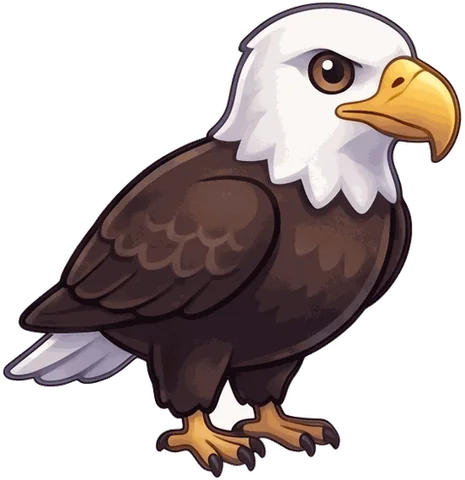
A Bald Eagle sounds surprisingly small for its size. The usual call is a weak, staccato series of chirping whistles, something like kleek kik ik ik ik, along with squeaky cackles and thin, gull-like squeals. It is nothing like the fierce scream you hear whenever an eagle appears on television; that sound is dubbed in from a Red-tailed Hawk. Young eagles sound harsher and shriller than adults. Listen near big rivers, lakes and coasts, especially in winter.
What the call sounds like: a chatter, not a scream
Start with what the Bald Eagle does not do: it does not scream. Its main call is a rapid string of thin, chirping whistles that Wikipedia writes as kleek kik ik ik ik and Audubon sums up as squeaky cackling and thin squeals, weak and gull-like. Animal Diversity Web sorts the repertoire into a chatter, a wail, and a long, high cry given when the bird feels threatened.
The volume is what surprises people. From a bird with a seven-foot wingspan you expect thunder and get something closer to a squeaky gate. Eagles crowded onto a winter roost keep up a constant chattering, and young birds sound harsher and shriller than adults.
Every time a Bald Eagle appears on screen and lets out a piercing, descending scream, you are hearing a Red-tailed Hawk. Sound editors have borrowed the hawk's cry as the all-purpose raptor voice for decades, presumably because the eagle's own voice does not sound the way a national symbol should.
The wail and the alarm
When a person or another eagle comes too close to the nest, the bird gives a long, high-pitched cry that Missouri's field guide calls a loud screaming whistle, still thin next to a hawk. Much of eagle communication is visual anyway: head movements, wing postures and crouching. A soaring eagle is generally silent.
When and where you hear it
Bald Eagles live only in North America, across most of Canada, all of the lower 48 and Alaska, and northern Mexico, and as of 2018 they nest in every continental state and province. Birds breeding south of about 40 degrees north mostly stay put. Northern birds move south between August and January and return from January to March, using coastlines, the Mississippi River and the Appalachians as highways. Missouri had more than 600 active nests in 2025, yet eagles are far more common there in winter, when northern birds pile in along the big rivers.
Look near water: coasts, rivers and large lakes, from Florida swamps to Alaskan conifer forest. Fish are the main food, 56 percent of the diet in one review of nesting studies, followed by birds at 28 percent and mammals at 14 percent. They also eat carrion, and they steal: an eagle will chase an Osprey until it drops its catch, which is one reason the two are so often heard together.
Pairs mate for life and first breed at four or five years. The nest is the largest of any North American bird, typically five to six feet across and two to four feet deep, added to every year until it can weigh two tons; the record, found in Florida in 1963, was nine and a half feet wide and twenty feet deep. In Warble the eagle is a card most players want, and the way to earn it is to learn the chatter rather than wait for a scream that never comes.
The comeback
Bald Eagles nearly vanished from the lower 48. Shooting, habitat loss and above all the pesticide DDT cut the population to 417 nesting pairs by the 1960s. DDT was banned in 1972, the species was listed as endangered, and states ran reintroductions; Missouri released 74 eagles between 1981 and 1990. The listing was removed in 2007, and estimates now run from 150,000 to about 200,000 birds. The main remaining threat is lead poisoning from carcasses left behind by hunters.
What it looks like
The adult is unmistakable: dark brown body and wings, pure white head and tail, a big hooked yellow bill and yellow eyes. It is 28 to 40 inches long with a wingspan of six to seven and a half feet, and the female is about a quarter larger than the male. Birds under five years old are dark brown all over with messy white mottling and no white head; the full white head and tail arrive around the fifth year. In flight an eagle holds its wings flat, not in the shallow V of a vulture.
Birds that sound similar
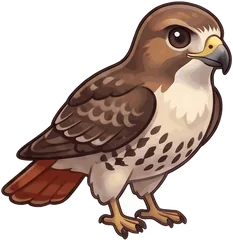 Red-tailed Hawk
The Red-tailed Hawk owns the scream the movies give the eagle: one long, hoarse, falling kree-eee-ar. A real eagle chatters and squeaks in short notes and never produces that sound.
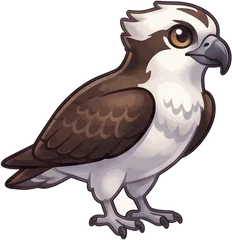 Osprey
The Osprey gives loud, clear, musical chirping whistles in a series, rising to a frantic cheereek when an eagle comes to rob it. Eagle notes are weaker, flatter and more stuttering.
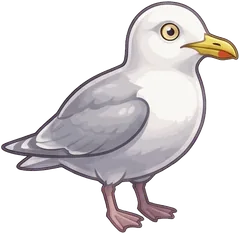 Herring Gull
Audubon calls the eagle's voice gull-like, and a distant eagle's squeals can pass for a Herring Gull. The gull's calls are louder and drawn out; the eagle's are short, thin and broken up.
Where the Bald Eagle card lives
In Warble the same bird can be an easy card in one state and a prized one in another, because each album ranks its birds by how often people really report them there. The Bald Eagle appears in 44 state albums:
 Heard one? Open Warble, tap the green button while it sings, and the Bald Eagle card flips into your album. Get the app free.
Questions people ask
Do bald eagles really sound like they do in movies?
No. The piercing scream that plays whenever an eagle appears on screen is a Red-tailed Hawk. A Bald Eagle's real voice is a weak, staccato series of chirping whistles, plus squeaky cackles and thin squeals that Audubon calls gull-like.
How big is a bald eagle's nest?
The largest of any North American bird. A typical nest is five to six feet across and two to four feet deep, enlarged every year until it can weigh two tons. The record nest, found in Florida in 1963, was nine and a half feet wide and twenty feet deep.
Are bald eagles still endangered?
No. After shooting and DDT reduced the population to 417 nesting pairs in the 1960s, the 1972 DDT ban and endangered species protection brought them back. The species was taken off the list in 2007; estimates now run from 150,000 to 200,000 birds.
Sources
- National Audubon Society, Guide to North American Birds: Bald Eagle. www.audubon.org/field-guide/bird/bald-eagle
- Wikipedia: Bald eagle (call, measurements, diet studies, nest record, delisting). en.wikipedia.org/wiki/Bald_eagle
- Missouri Department of Conservation, Field Guide: Bald Eagle. mdc.mo.gov/discover-nature/field-guide/bald-eagle
- Animal Diversity Web: Haliaeetus leucocephalus (call types, lifespan, breeding). animaldiversity.org/accounts/Haliaeetus_leucocephalus/