 Warble
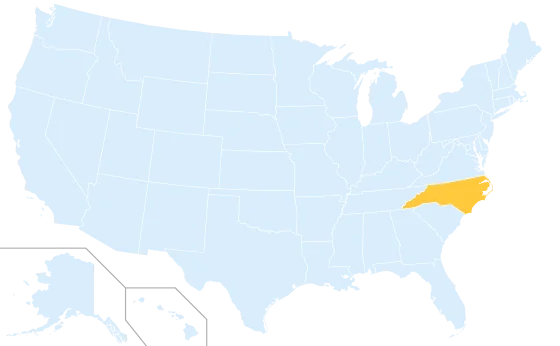
The state bird: Northern Cardinal
Adopted in 1943. The red male whistles clear phrases like cheer, cheer, cheer from the top of the tallest tree, and the pair keeps in touch with a short metallic chip from the hedge.
Recording by Chase Harris, CC0, via iNaturalist.
The North Carolina Bird Records Committee of the Carolina Bird Club had 479 species and a species pair on the official state list as of January 2020. The reason is the spread: barrier islands and sounds on the coast, pine flatwoods and swamps behind them, red clay and oak in the Piedmont where most people live, and the Blue Ridge and the Smokies in the west, where the high ridges hold birds that otherwise nest far to the north.
For most North Carolinians the state is a yard in Charlotte, Raleigh or Greensboro with a big oak, a feeder and a Carolina Wren nesting in the grill cover, and that is the top of the album: cardinal, wren, chickadee, crow and titmouse.
The North Carolina album
These are the 100 birds people report most often in North Carolina, ranked by how frequently they turn up. The common and uncommon ones are shown; the rare and legendary cards stay face down until you catch them in the game.
Common 25 cards
- #001
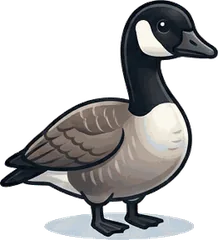 Canada Goose
Branta canadensis
Canada Goose
Branta canadensis - #009
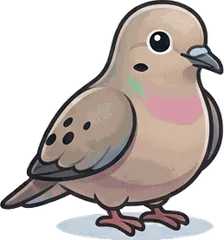 Mourning Dove
Zenaida macroura
Mourning Dove
Zenaida macroura - #021
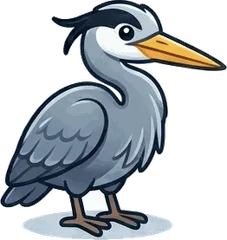 Great Blue Heron
Ardea herodias
Great Blue Heron
Ardea herodias - #024
 ?Catch it to find out
 - #033
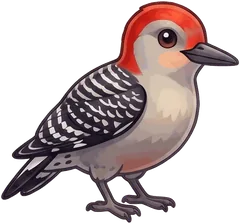 Red-bellied Woodpecker
Melanerpes carolinus
Red-bellied Woodpecker
Melanerpes carolinus - #034
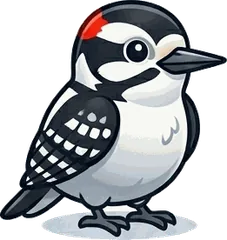 Downy Woodpecker
Dryobates pubescens
Downy Woodpecker
Dryobates pubescens - #040
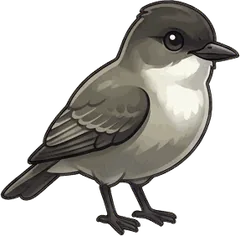 Eastern Phoebe
Sayornis phoebe
Eastern Phoebe
Sayornis phoebe - #046
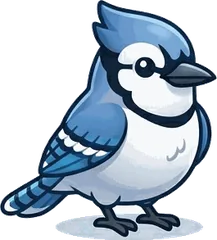 Blue Jay
Cyanocitta cristata
Blue Jay
Cyanocitta cristata - #047
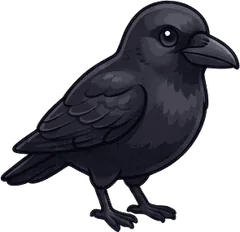 American Crow
Corvus brachyrhynchos
American Crow
Corvus brachyrhynchos - #049
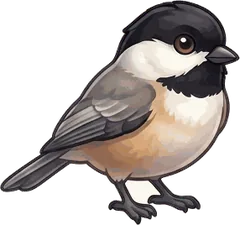 Carolina Chickadee
Poecile carolinensis
Carolina Chickadee
Poecile carolinensis - #050
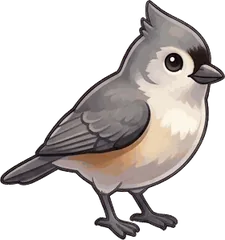 Tufted Titmouse
Baeolophus bicolor
Tufted Titmouse
Baeolophus bicolor - #056
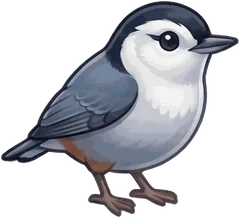 White-breasted Nuthatch
Sitta carolinensis
White-breasted Nuthatch
Sitta carolinensis - #060
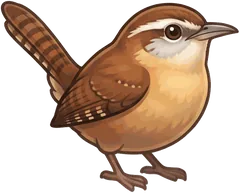 Carolina Wren
Thryothorus ludovicianus
Carolina Wren
Thryothorus ludovicianus - #064
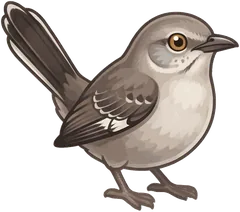 Northern Mockingbird
Mimus polyglottos
Northern Mockingbird
Mimus polyglottos - #065
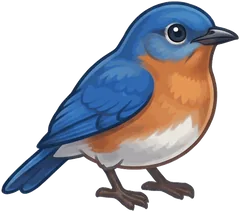 Eastern Bluebird
Sialia sialis
Eastern Bluebird
Sialia sialis - #068
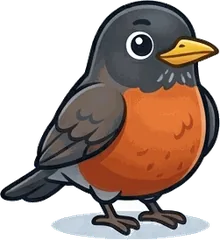 American Robin
Turdus migratorius
American Robin
Turdus migratorius - #071
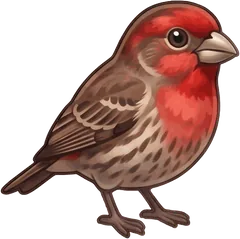 House Finch
Haemorhous mexicanus
House Finch
Haemorhous mexicanus - #072
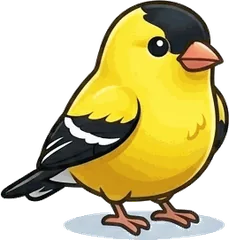 American Goldfinch
Spinus tristis
American Goldfinch
Spinus tristis - #073
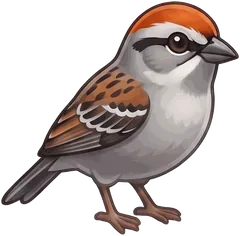 Chipping Sparrow
Spizella passerina
Chipping Sparrow
Spizella passerina - #076
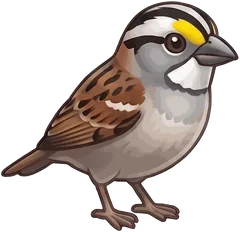 White-throated Sparrow
Zonotrichia albicollis
White-throated Sparrow
Zonotrichia albicollis - #077
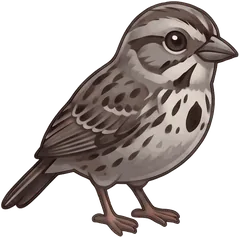 Song Sparrow
Melospiza melodia
Song Sparrow
Melospiza melodia - #079
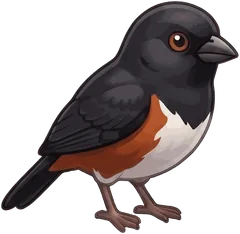 Eastern Towhee
Pipilo erythrophthalmus
Eastern Towhee
Pipilo erythrophthalmus - #093
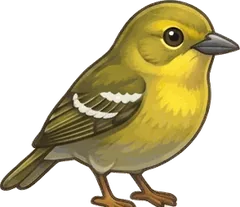 Pine Warbler
Setophaga pinus
Pine Warbler
Setophaga pinus - #094
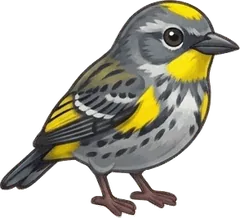 Yellow-rumped Warbler
Setophaga coronata
Yellow-rumped Warbler
Setophaga coronata - #098
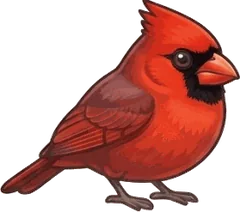 Northern Cardinal
Cardinalis cardinalis
Northern Cardinal
Cardinalis cardinalis
Uncommon 35 cards
- #003
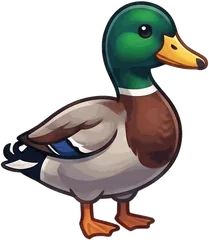 Mallard
Anas platyrhynchos
Mallard
Anas platyrhynchos - #011
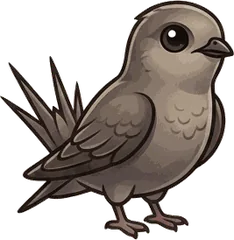 Chimney Swift
Chaetura pelagica
Chimney Swift
Chaetura pelagica - #012
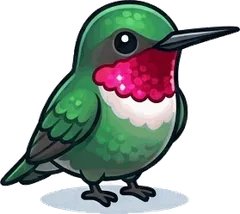 Ruby-throated Hummingbird
Archilochus colubris
Ruby-throated Hummingbird
Archilochus colubris - #013
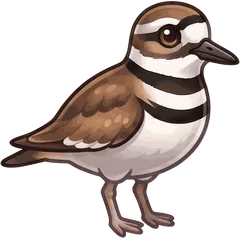 Killdeer
Charadrius vociferus
Killdeer
Charadrius vociferus - #015
 ?Catch it to find out
 - #020
 ?Catch it to find out
 - #023
 ?Catch it to find out
 - #025
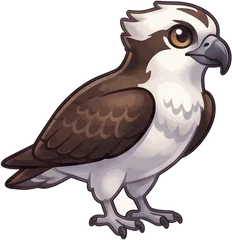 Osprey
Pandion haliaetus
Osprey
Pandion haliaetus - #027
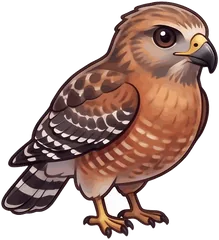 Red-shouldered Hawk
Buteo lineatus
Red-shouldered Hawk
Buteo lineatus - #028
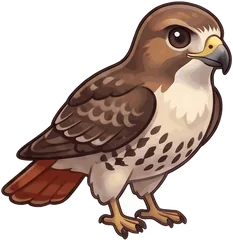 Red-tailed Hawk
Buteo jamaicensis
Red-tailed Hawk
Buteo jamaicensis - #030
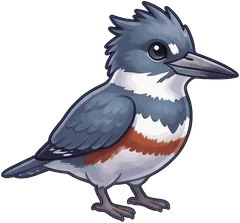 Belted Kingfisher
Megaceryle alcyon
Belted Kingfisher
Megaceryle alcyon - #031
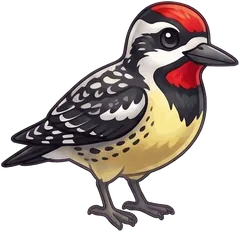 Yellow-bellied Sapsucker
Sphyrapicus varius
Yellow-bellied Sapsucker
Sphyrapicus varius - #035
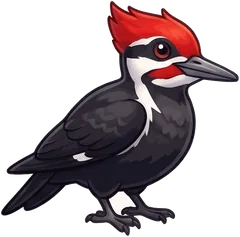 Pileated Woodpecker
Dryocopus pileatus
Pileated Woodpecker
Dryocopus pileatus - #036
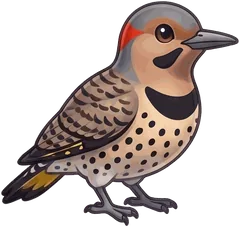 Northern Flicker
Colaptes auratus
Northern Flicker
Colaptes auratus - #038
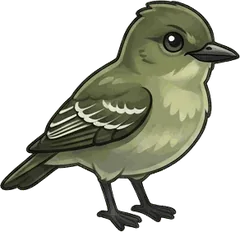 Eastern Wood-Pewee
Contopus virens
Eastern Wood-Pewee
Contopus virens - #041
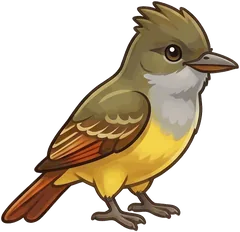 Great Crested Flycatcher
Myiarchus crinitus
Great Crested Flycatcher
Myiarchus crinitus - #043
 ?Catch it to find out
 - #045
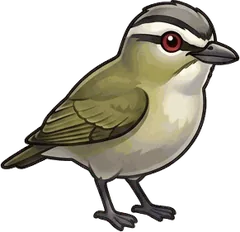 Red-eyed Vireo
Vireo olivaceus
Red-eyed Vireo
Vireo olivaceus - #048
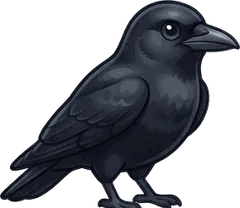 Fish Crow
Corvus ossifragus
Fish Crow
Corvus ossifragus - #054
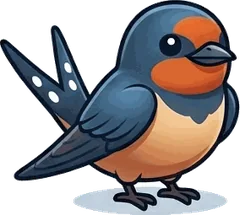 Barn Swallow
Hirundo rustica
Barn Swallow
Hirundo rustica - #055
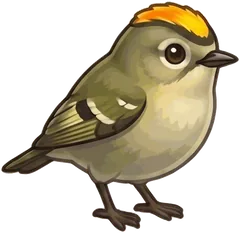 Golden-crowned Kinglet
Regulus satrapa
Golden-crowned Kinglet
Regulus satrapa - #057
 ?Catch it to find out
 - #058
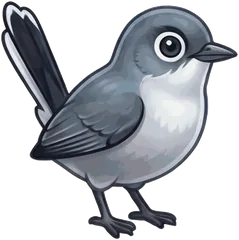 Blue-gray Gnatcatcher
Polioptila caerulea
Blue-gray Gnatcatcher
Polioptila caerulea - #061
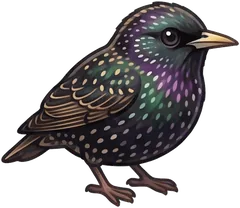 European Starling
Sturnus vulgaris
European Starling
Sturnus vulgaris - #062
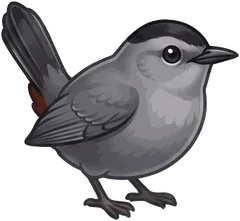 Gray Catbird
Dumetella carolinensis
Gray Catbird
Dumetella carolinensis - #063
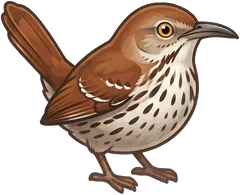 Brown Thrasher
Toxostoma rufum
Brown Thrasher
Toxostoma rufum - #069
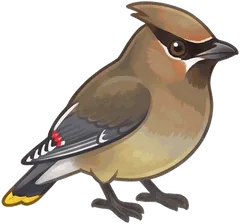 Cedar Waxwing
Bombycilla cedrorum
Cedar Waxwing
Bombycilla cedrorum - #074
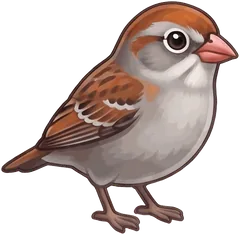 Field Sparrow
Spizella pusilla
Field Sparrow
Spizella pusilla - #075
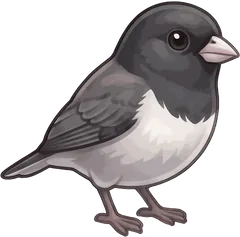 Dark-eyed Junco
Junco hyemalis
Dark-eyed Junco
Junco hyemalis - #081
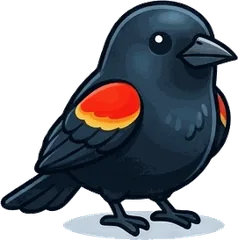 Red-winged Blackbird
Agelaius phoeniceus
Red-winged Blackbird
Agelaius phoeniceus - #082
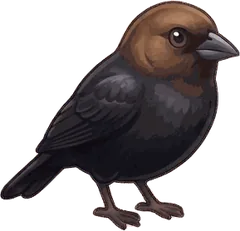 Brown-headed Cowbird
Molothrus ater
Brown-headed Cowbird
Molothrus ater - #083
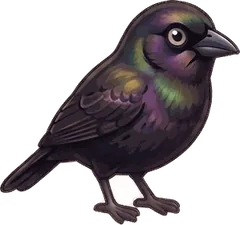 Common Grackle
Quiscalus quiscula
Common Grackle
Quiscalus quiscula - #087
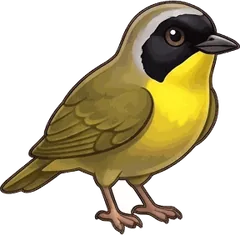 Common Yellowthroat
Geothlypis trichas
Common Yellowthroat
Geothlypis trichas - #090
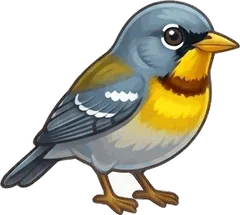 Northern Parula
Setophaga americana
Northern Parula
Setophaga americana - #100
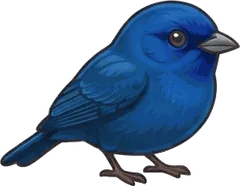 Indigo Bunting
Passerina cyanea
Indigo Bunting
Passerina cyanea
Rare 30 cards
- #002
 ?Catch it to reveal
 - #004
 ?Catch it to find out
 - #005
 ?Catch it to find out
 - #008?Catch it to reveal
- #010
 ?Catch it to find out
 - #014?Catch it to reveal
- #017
 ?Catch it to find out
 - #019
 ?Catch it to find out
 - #022?Catch it to reveal
- #026?Catch it to reveal
- #032?Catch it to reveal
- #042?Catch it to reveal
- #044
 ?Catch it to find out
 - #051?Catch it to reveal
- #052?Catch it to reveal
- #053
 ?Catch it to find out
 - #059?Catch it to reveal
- #066?Catch it to reveal
- #067?Catch it to reveal
- #070?Catch it to reveal
- #078
 ?Catch it to find out
 - #080?Catch it to reveal
- #084
 ?Catch it to find out
 - #085?Catch it to reveal
- #086?Catch it to reveal
- #088
 ?Catch it to find out
 - #089?Catch it to reveal
- #096?Catch it to reveal
- #097?Catch it to reveal
- #099
 ?Catch it to find out
Legendary 10 cards
- #006
 ?Catch it to find out
 - #007?Catch it to reveal
- #016?Catch it to reveal
- #018
 ?Catch it to find out
 - #029?Catch it to reveal
- #037?Catch it to reveal
- #039
 ?Catch it to find out
 - #091
 ?Catch it to find out
 - #092
 ?Catch it to find out
 - #095
 ?Catch it to find out
 54 of the 100 cards are shown here. The other 46, including all 30 rare and 10 legendary birds, are yours to discover. Get Warble and start with the common ones.
Backyard birds you will hear first
The Northern Cardinal leads the album and the state, whistling from the top of the crepe myrtle before the sun is up. The Carolina Wren is second, a bird the size of a golf ball that shouts teakettle, teakettle, teakettle from the porch rail in every month, including the coldest week of January. The Carolina Chickadee is third: a faster, higher chick-a-dee-dee than the northern bird, and a four-note whistled song, fee-bee, fee-bay.
The Tufted Titmouse whistles peter, peter, peter from March, the American Crow is everywhere and honest about it, and the Red-bellied Woodpecker rolls a churr from the oaks. The Eastern Bluebird sits in the top ten, warbling softly from the mailbox post, and the Eastern Towhee scratches in the leaf litter and calls drink your tea from the edge of the woods.
The regions, by ear
The Outer Banks and the sounds
Barrier islands, salt marsh and the sounds. Pea Island National Wildlife Refuge on the north end of Hatteras Island was established in 1938 for nesting, resting and wintering migratory birds, on beach, dune, brackish pond and marsh, and its bird list runs past 370 species: waterfowl in winter, shorebirds and wading birds in the ponds, raptors along the dunes. Farther inland, Mattamuskeet National Wildlife Refuge holds the largest natural freshwater lake in the state, with swans, geese and ducks in winter.
The Coastal Plain
Longleaf pine, pocosin and blackwater swamp. Pine Warblers trill from the tops, Brown-headed Nuthatches squeak in the pines, Prothonotary Warblers ring out from the cypress, and Chuck-will's-widows call all night in May.
The Piedmont
Oak, hickory, loblolly pine and the cities. All the backyard birds, plus Summer Tanagers in the oaks, Wood Thrushes in the creek bottoms and Red-shouldered Hawks screaming over the greenways.
The Blue Ridge and the Smokies
The mountains stack habitats. In Great Smoky Mountains National Park, more than 240 species have been documented; about 60 stay all year and nearly 120 nest in the warmer months, 52 of them migrants from Central and South America. Warblers are the most varied group in the park, with Chestnut-sided and Blackburnian among the breeders, and the road up to Kuwohi reaches high-elevation birds like the Canada Warbler and the Black-capped Chickadee, a northern bird that replaces the Carolina Chickadee on the ridge tops.
Best months to listen
March and April are the peak in the Piedmont and on the coast: residents on territory, the towhees and thrushes back, and the first warblers moving through. May is the mountain month, when the high ridges finally green up and every warbler is singing. Summer is dawn only, with Chuck-will's-widows after dark on the coast. September and October bring hawks down the Blue Ridge and warblers through the yards, mostly silent. Winter belongs to the coast, with swans and ducks on Mattamuskeet and Pea Island, while the cardinal and the Carolina Wren keep singing at home on any mild day.
Places worth the drive
- Pea Island National Wildlife Refuge, Outer Banks: more than 370 species on the bird list, waterfowl in winter, shorebirds in the ponds.
- Mattamuskeet National Wildlife Refuge, Hyde County: the state's largest natural lake, swans and ducks from November on.
- Great Smoky Mountains National Park: more than 240 species, the richest warbler breeding in the East, northern birds on the high ridges.
- The Blue Ridge Parkway: any overlook in May.
None of it is required. A yard in Durham or Winston-Salem hands you the first 20 cards in Warble.
Listen before you go
Three of the common North Carolina birds, so the first songs you hear outside already ring a bell.
Recording by Chase Harris, CC0, via iNaturalist.
Recording by Fionn Ó Marcaigh, CC BY 4.0, via iNaturalist.
Recording by Chase Harris, CC0, via iNaturalist.
Questions people ask
What is the most common bird in North Carolina?
By the reports behind the album, the Northern Cardinal, then the Carolina Wren, the Carolina Chickadee, the American Crow and the Tufted Titmouse.
What is the state bird of North Carolina?
The Northern Cardinal, adopted in 1943. It is a year-round resident that sings in every month, and the chip note from the hedge is the last bird sound of the day in most yards.
How many bird species are there in North Carolina?
479 species and a species pair as of January 2020, according to the North Carolina Bird Records Committee of the Carolina Bird Club. The Warble album covers the 100 reported most often.
Nearby albums
Sources
- Wikipedia: List of birds of North Carolina. en.wikipedia.org/wiki/List_of_birds_of_North_Carolina
- Wikipedia: List of U.S. state birds. en.wikipedia.org/wiki/List_of_U.S._state_birds
- U.S. Fish and Wildlife Service: Pea Island National Wildlife Refuge. www.fws.gov/refuge/pea-island
- National Park Service: Birds of Great Smoky Mountains National Park. www.nps.gov/grsm/learn/nature/birds.htm