 Warble
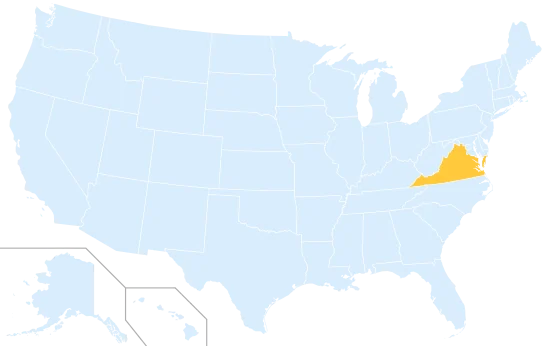
The state bird: Northern Cardinal
Adopted in 1950, and the top bird in the album by a wide margin. It whistles cheer, cheer, cheer from the top of a holly in February, and the female sings too, which is unusual among songbirds.
Recording by Chase Harris, CC0, via iNaturalist.
The Virginia Avian Records Committee counted 487 species and four species pairs as of January 1, 2022, with 109 of them accidental and 7 introduced. The state earns that total with three very different edges: the Atlantic and the Chesapeake Bay in the east, the Piedmont farm country in the middle, and the Blue Ridge and the Alleghenies in the west.
Most Virginians live in the Northern Virginia suburbs, Richmond and Hampton Roads, and the everyday album there is a southeastern one: cardinal, wren, chickadee, titmouse, jay, crow and a Red-bellied Woodpecker in the oaks.
The Virginia album
These are the 100 birds people report most often in Virginia, ranked by how frequently they turn up. The common and uncommon ones are shown; the rare and legendary cards stay face down until you catch them in the game.
Common 25 cards
- #001
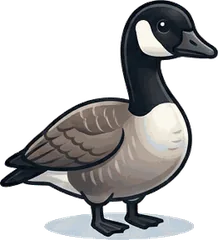 Canada Goose
Branta canadensis
Canada Goose
Branta canadensis - #004
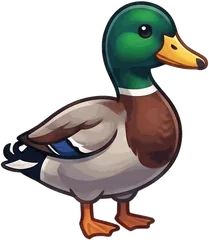 Mallard
Anas platyrhynchos
Mallard
Anas platyrhynchos - #012
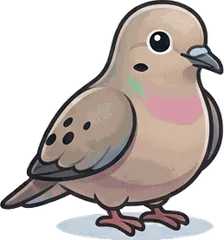 Mourning Dove
Zenaida macroura
Mourning Dove
Zenaida macroura - #025
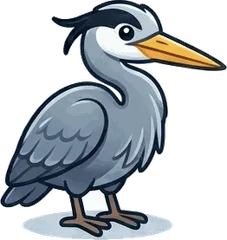 Great Blue Heron
Ardea herodias
Great Blue Heron
Ardea herodias - #027
 ?Catch it to find out
 - #035
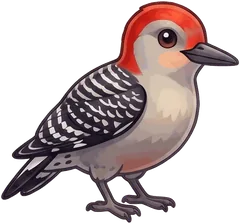 Red-bellied Woodpecker
Melanerpes carolinus
Red-bellied Woodpecker
Melanerpes carolinus - #036
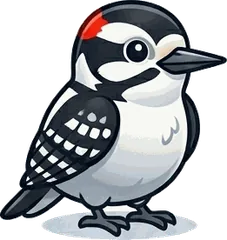 Downy Woodpecker
Dryobates pubescens
Downy Woodpecker
Dryobates pubescens - #038
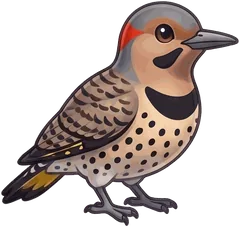 Northern Flicker
Colaptes auratus
Northern Flicker
Colaptes auratus - #047
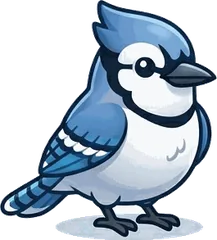 Blue Jay
Cyanocitta cristata
Blue Jay
Cyanocitta cristata - #048
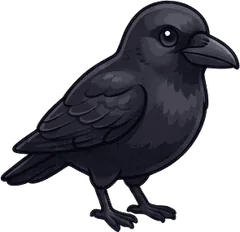 American Crow
Corvus brachyrhynchos
American Crow
Corvus brachyrhynchos - #051
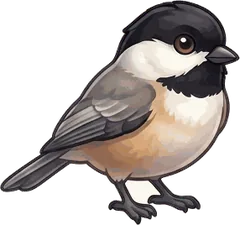 Carolina Chickadee
Poecile carolinensis
Carolina Chickadee
Poecile carolinensis - #052
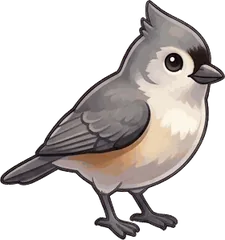 Tufted Titmouse
Baeolophus bicolor
Tufted Titmouse
Baeolophus bicolor - #058
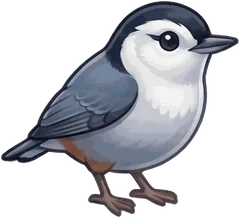 White-breasted Nuthatch
Sitta carolinensis
White-breasted Nuthatch
Sitta carolinensis - #064
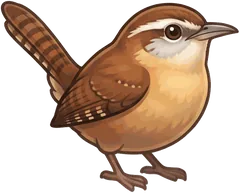 Carolina Wren
Thryothorus ludovicianus
Carolina Wren
Thryothorus ludovicianus - #065
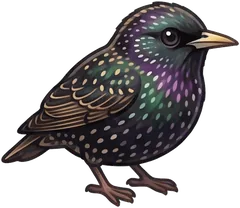 European Starling
Sturnus vulgaris
European Starling
Sturnus vulgaris - #068
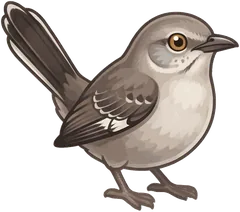 Northern Mockingbird
Mimus polyglottos
Northern Mockingbird
Mimus polyglottos - #069
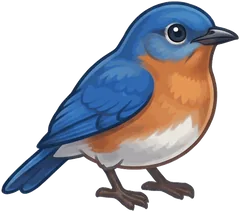 Eastern Bluebird
Sialia sialis
Eastern Bluebird
Sialia sialis - #072
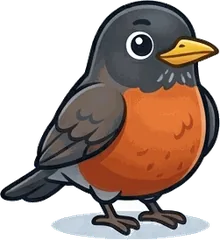 American Robin
Turdus migratorius
American Robin
Turdus migratorius - #075
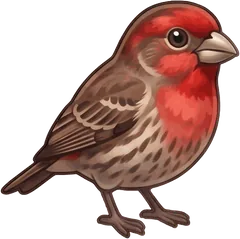 House Finch
Haemorhous mexicanus
House Finch
Haemorhous mexicanus - #076
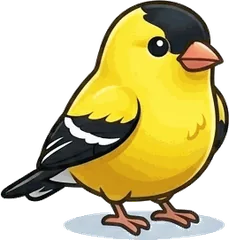 American Goldfinch
Spinus tristis
American Goldfinch
Spinus tristis - #080
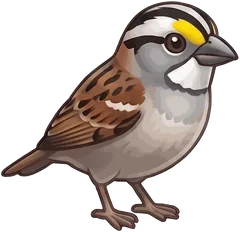 White-throated Sparrow
Zonotrichia albicollis
White-throated Sparrow
Zonotrichia albicollis - #081
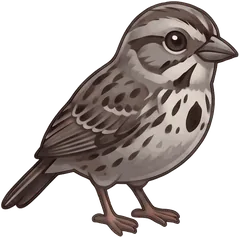 Song Sparrow
Melospiza melodia
Song Sparrow
Melospiza melodia - #087
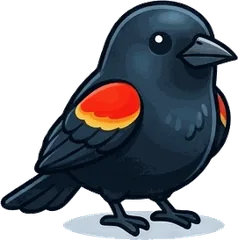 Red-winged Blackbird
Agelaius phoeniceus
Red-winged Blackbird
Agelaius phoeniceus - #089
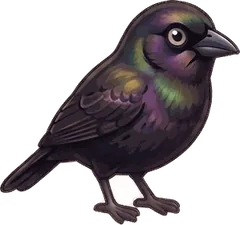 Common Grackle
Quiscalus quiscula
Common Grackle
Quiscalus quiscula - #098
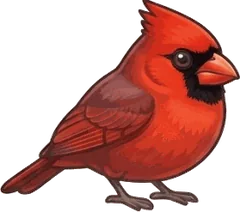 Northern Cardinal
Cardinalis cardinalis
Northern Cardinal
Cardinalis cardinalis
Uncommon 35 cards
- #011
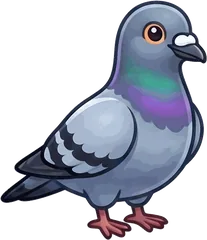 Rock Pigeon
Columba livia
Rock Pigeon
Columba livia - #014
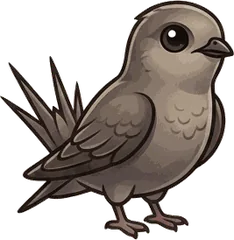 Chimney Swift
Chaetura pelagica
Chimney Swift
Chaetura pelagica - #015
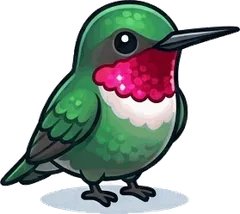 Ruby-throated Hummingbird
Archilochus colubris
Ruby-throated Hummingbird
Archilochus colubris - #016
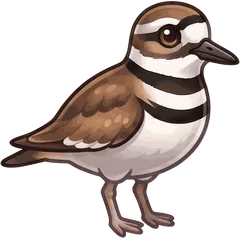 Killdeer
Charadrius vociferus
Killdeer
Charadrius vociferus - #017
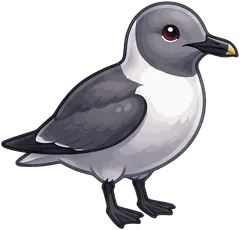 Laughing Gull
Leucophaeus atricilla
Laughing Gull
Leucophaeus atricilla - #018
 ?Catch it to find out
 - #024
 ?Catch it to find out
 - #026
 ?Catch it to find out
 - #028
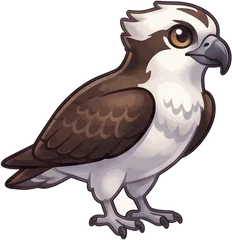 Osprey
Pandion haliaetus
Osprey
Pandion haliaetus - #029
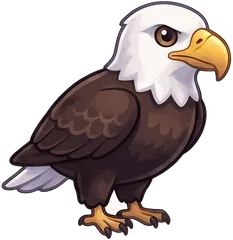 Bald Eagle
Haliaeetus leucocephalus
Bald Eagle
Haliaeetus leucocephalus - #030
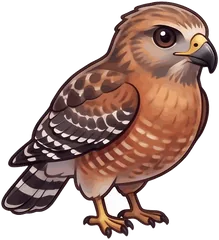 Red-shouldered Hawk
Buteo lineatus
Red-shouldered Hawk
Buteo lineatus - #031
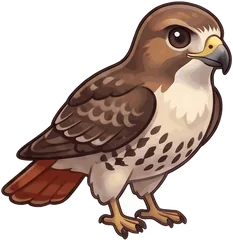 Red-tailed Hawk
Buteo jamaicensis
Red-tailed Hawk
Buteo jamaicensis - #032
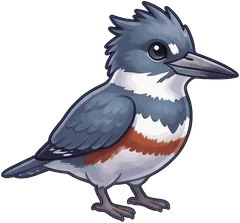 Belted Kingfisher
Megaceryle alcyon
Belted Kingfisher
Megaceryle alcyon - #037
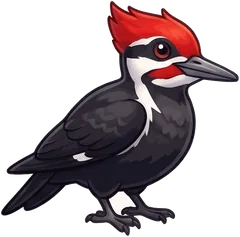 Pileated Woodpecker
Dryocopus pileatus
Pileated Woodpecker
Dryocopus pileatus - #040
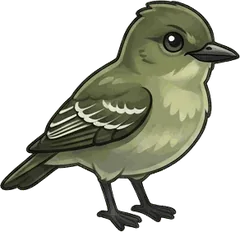 Eastern Wood-Pewee
Contopus virens
Eastern Wood-Pewee
Contopus virens - #042
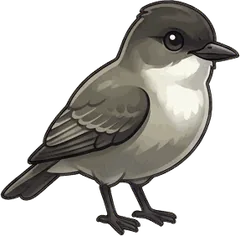 Eastern Phoebe
Sayornis phoebe
Eastern Phoebe
Sayornis phoebe - #043
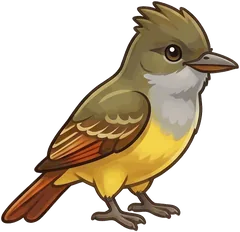 Great Crested Flycatcher
Myiarchus crinitus
Great Crested Flycatcher
Myiarchus crinitus - #046
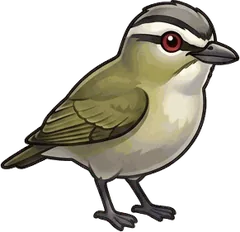 Red-eyed Vireo
Vireo olivaceus
Red-eyed Vireo
Vireo olivaceus - #049
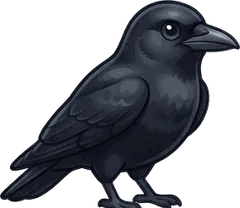 Fish Crow
Corvus ossifragus
Fish Crow
Corvus ossifragus - #053
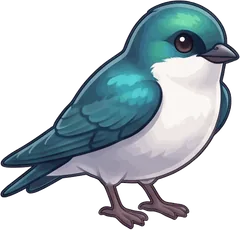 Tree Swallow
Tachycineta bicolor
Tree Swallow
Tachycineta bicolor - #056
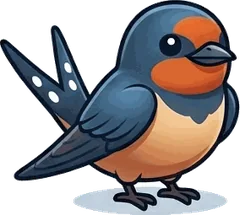 Barn Swallow
Hirundo rustica
Barn Swallow
Hirundo rustica - #061
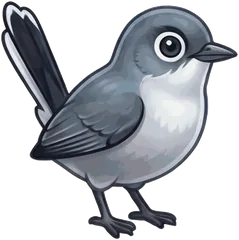 Blue-gray Gnatcatcher
Polioptila caerulea
Blue-gray Gnatcatcher
Polioptila caerulea - #066
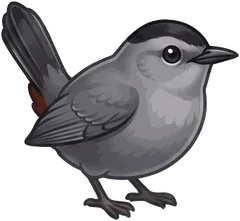 Gray Catbird
Dumetella carolinensis
Gray Catbird
Dumetella carolinensis - #067
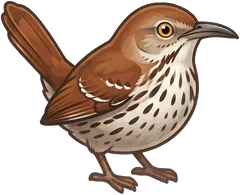 Brown Thrasher
Toxostoma rufum
Brown Thrasher
Toxostoma rufum - #073
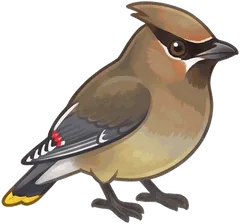 Cedar Waxwing
Bombycilla cedrorum
Cedar Waxwing
Bombycilla cedrorum - #074
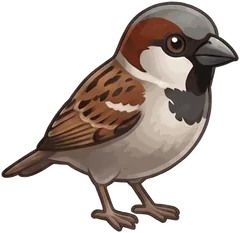 House Sparrow
Passer domesticus
House Sparrow
Passer domesticus - #077
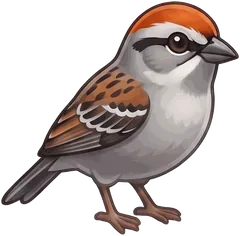 Chipping Sparrow
Spizella passerina
Chipping Sparrow
Spizella passerina - #078
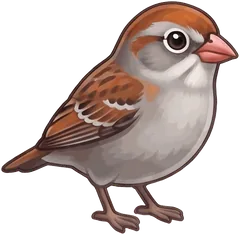 Field Sparrow
Spizella pusilla
Field Sparrow
Spizella pusilla - #079
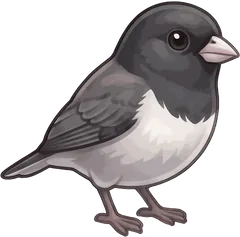 Dark-eyed Junco
Junco hyemalis
Dark-eyed Junco
Junco hyemalis - #083
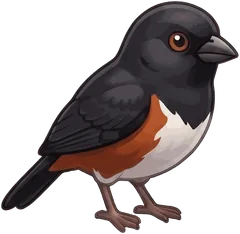 Eastern Towhee
Pipilo erythrophthalmus
Eastern Towhee
Pipilo erythrophthalmus - #088
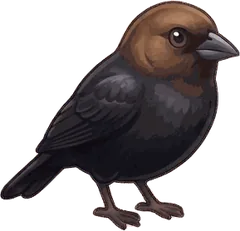 Brown-headed Cowbird
Molothrus ater
Brown-headed Cowbird
Molothrus ater - #092
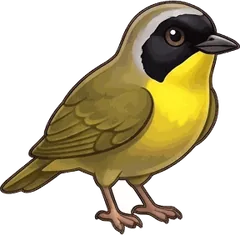 Common Yellowthroat
Geothlypis trichas
Common Yellowthroat
Geothlypis trichas - #095
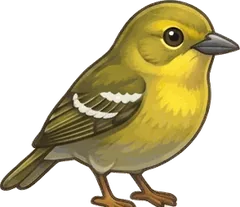 Pine Warbler
Setophaga pinus
Pine Warbler
Setophaga pinus - #096
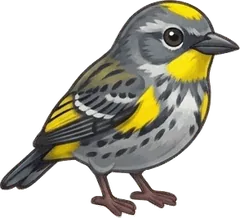 Yellow-rumped Warbler
Setophaga coronata
Yellow-rumped Warbler
Setophaga coronata - #100
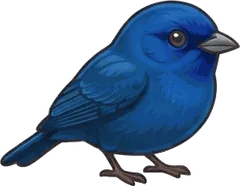 Indigo Bunting
Passerina cyanea
Indigo Bunting
Passerina cyanea
Rare 30 cards
- #002
 ?Catch it to reveal
 - #003
 ?Catch it to find out
 - #007
 ?Catch it to find out
 - #008
 ?Catch it to find out
 - #013
 ?Catch it to find out
 - #019?Catch it to reveal
- #020
 ?Catch it to find out
 - #022
 ?Catch it to find out
 - #023
 ?Catch it to find out
 - #033?Catch it to reveal
- #034?Catch it to reveal
- #039?Catch it to reveal
- #041
 ?Catch it to find out
 - #044?Catch it to reveal
- #045
 ?Catch it to find out
 - #050?Catch it to reveal
- #055
 ?Catch it to find out
 - #057?Catch it to reveal
- #062?Catch it to reveal
- #070?Catch it to reveal
- #071?Catch it to reveal
- #082
 ?Catch it to find out
 - #084?Catch it to reveal
- #085
 ?Catch it to find out
 - #090?Catch it to reveal
- #091?Catch it to reveal
- #093?Catch it to reveal
- #094?Catch it to reveal
- #097?Catch it to reveal
- #099
 ?Catch it to find out
Legendary 10 cards
- #005
 ?Catch it to find out
 - #006
 ?Catch it to find out
 - #009
 ?Catch it to find out
 - #010?Catch it to reveal
- #021
 ?Catch it to find out
 - #054?Catch it to reveal
- #059
 ?Catch it to find out
 - #060?Catch it to reveal
- #063
 ?Catch it to find out
 - #086?Catch it to reveal
 56 of the 100 cards are shown here. The other 44, including all 30 rare and 10 legendary birds, are yours to discover. Get Warble and start with the common ones.
Backyard birds you will hear first
The Northern Cardinal leads, with a loud clear whistle before dawn from late winter through summer and a metallic chip from the hedge all year. The Carolina Wren is second and louder for its size than anything else in the state, a three-part teakettle, teakettle, teakettle from the woodpile in January as readily as June. The American Crow and the Blue Jay fill in the middle distance, caws, screams and the jay's uncanny hawk impression.
The Carolina Chickadee and the Tufted Titmouse travel together through the oaks, a fast four-note whistle and a ringing peter, peter, peter. The Mourning Dove coos from the wire, the robin sings at first light on the lawn, the Red-bellied Woodpecker rolls a churr from the trunk, and the American Goldfinch bounces overhead calling po-ta-to-chip. The Turkey Vulture makes the top twelve on sight rather than sound; it hisses and grunts but does not sing, so it is one leader you cannot catch by ear.
The regions, by ear
The Eastern Shore and the coast
Beach, dune, salt marsh and maritime forest. Chincoteague National Wildlife Refuge, on the Eastern Shore, was established in 1943 to protect migratory birds and is one of the most visited refuges in the country, with 15 miles of trails and 14 managed impoundments. Piping Plovers, American Oystercatchers and Least Terns nest on the beach in summer, and Snow Geese pour into the impoundments in late fall. The sound of the place is Laughing Gulls and Willets yelling over the marsh.
Tidewater and the Dismal Swamp
Flat pine and cypress country south of the James River, with the Great Dismal Swamp at the bottom of it. In April and May the swamp woods are among the best warbler forests on the East Coast: Prothonotary Warblers over the ditches and Ovenbirds shouting from the floor.
The Piedmont
Rolling farmland, hedgerows and second-growth woods from Fairfax to Danville, where the album's top twelve live, plus Eastern Bluebirds on the fence lines, meadowlarks in the hayfields and Eastern Towhees telling you to drink your tea from the brush.
The Blue Ridge and the mountains
Shenandoah National Park sits along the crest of the Blue Ridge, and more than 190 species of resident and transient birds use it, about half of them breeding, including eighteen kinds of warblers. Around thirty species stay all year, among them Tufted Titmice, Carolina Chickadees, Wild Turkeys and Barred Owls. Scarlet Tanagers sing their hoarse robin song from the canopy in June, Cerulean Warblers hang on after a long decline, Peregrine Falcons have been restored to the cliffs, and Big Meadows holds open-country birds found nowhere else in the park.
Best months to listen
Late April through May is the peak everywhere: the residents are singing on territory, the warblers are moving up the Blue Ridge, and the swamp woods of Tidewater are full. The mountains stay busy into June. September and October are quieter in the woods but loud on the coast, as shorebirds and then waterfowl arrive at Chincoteague, with the geese peaking in November.
Winter is cardinals, wrens and chickadees at the feeder, Bald Eagles along the rivers, and White-throated Sparrows whistling under the shrubs.
Places worth the drive
- Chincoteague National Wildlife Refuge, Eastern Shore: plovers and terns on the beach in summer, Snow Geese in fall, 15 miles of trails.
- Shenandoah National Park: more than 190 species, eighteen nesting warblers, tanagers in June, Big Meadows for open-country birds.
- Great Dismal Swamp, near Suffolk: cypress, cedar and spring warblers.
- Any Piedmont farm road at dawn in May: bluebirds, meadowlarks and towhees for free.
None of it is required. A yard with a holly and a brush pile in Charlottesville or Norfolk hands you the first 20 cards in Warble.
Listen before you go
Three of the common Virginia birds, so the first songs you hear outside already ring a bell.
Recording by Chase Harris, CC0, via iNaturalist.
Recording by Fionn Ó Marcaigh, CC BY 4.0, via iNaturalist.
Recording by Richard Littauer, CC BY 4.0, via iNaturalist.
Questions people ask
What is the most common bird in Virginia?
By the reports behind the album, the Northern Cardinal, then the Carolina Wren, the American Crow, the Blue Jay and the Carolina Chickadee.
What is the state bird of Virginia?
The Northern Cardinal, adopted in 1950. West Virginia next door picked the same bird a year earlier. It is also the most reported bird in the state.
How many bird species are there in Virginia?
487 species and four species pairs as of January 1, 2022, according to the Virginia Avian Records Committee, including 109 accidental and 7 introduced species. The Warble album covers the 100 reported most often.
Nearby albums
Sources
- Wikipedia: List of birds of Virginia. en.wikipedia.org/wiki/List_of_birds_of_Virginia
- Wikipedia: List of U.S. state birds. en.wikipedia.org/wiki/List_of_U.S._state_birds
- U.S. Fish and Wildlife Service: Chincoteague National Wildlife Refuge. www.fws.gov/refuge/chincoteague
- National Park Service: Birds, Shenandoah National Park. www.nps.gov/shen/learn/nature/birds.htm