 Warble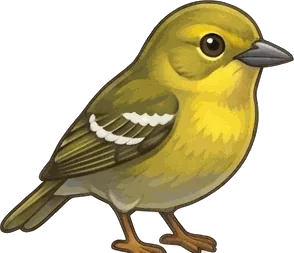
A Pine Warbler sounds like a gentler, more musical Chipping Sparrow: a loose, sweet trill of similar slightly slurred notes on one pitch, lasting one or two seconds, a little slower and rounder than the sparrow's dry, driving rattle. Field guides call it musical and somewhat melancholy. It comes from high in pine trees, where the bird spends nearly all its time, and a male may sing it in any month, most of all at dawn from late winter into early summer. The call is a musical chip. It is one of the few warblers you can hear in the southeastern United States all year.
What the song sounds like
The song is a short, rapid trill, one to two seconds long, made of notes that are all close to the same pitch and slightly slurred into each other. Compared with the other one-pitch trills of the eastern woods it is soft, sweet and musical, with a wistful, unhurried quality. Individual males improvise a fair amount, changing the speed or the length of the trill from one song to the next, but the basic shape holds: a level, liquid rattle from the top of a pine.
Only the male sings, and unlike most warblers he does not stop when the nesting season ends. Pine Warblers can be heard singing throughout the year, with the most singing in early spring at the start of breeding, and they are most active at dawn. In the Southeast that means a warm February morning in a pine stand can already have Pine Warblers trilling while most other warblers are still in the tropics.
This is the classic trill puzzle. A Chipping Sparrow gives the same kind of one-note trill, but drier, faster and more mechanical, like a sewing machine. A Dark-eyed Junco gives a ringing, metallic trill on one pitch, tighter and harder than the warbler's. If the trill is sweet, a touch slow and coming from the pines, and the bird singing it is yellow rather than gray or rusty-capped, it is the Pine Warbler. When you cannot see the singer, the pine is the best clue, because this bird rarely strays far from one.
The call: a musical chip
The call is a short, musical chip, slightly slurred, used by both sexes as a contact and alarm note. Migrants and birds in winter flocks give it as they move through the branches. There is also a thin seet flight call that you will rarely hear.
When and where you hear it
The name is accurate. Pine Warblers breed almost exclusively in pine: open pine woods, pine barrens, longleaf pine forest across the Southeast, pitch pine barrens with scrub oak in the Northeast, jack pine in the north, and pine-oak woods and mature pine plantations in between. The breeding range runs from southern Manitoba, Ontario and Quebec south through New England, the Great Lakes and the eastern states to Florida and southern Texas. Isolated pockets of pine will do; the bird cares about the tree, not the size of the forest. In Missouri it is a common but local summer resident of the southern pine woodlands and only a rare winter bird in the far south.
Across the southeastern United States, from roughly southern Virginia, southern Tennessee and central Arkansas southward, the Pine Warbler stays all year, and northern breeders join them in winter, which makes it one of the few warblers a southern birder can count on in December. It migrates early in spring and late in fall, at night, and a few reach northeastern Mexico, Bermuda and the Caribbean. In winter it also uses wooded bottomlands, orchards, thickets and woodland edges away from pines.
Its diet is the other thing that sets it apart. It forages deliberately, creeping along pine branches and poking its bill into cones for insects and spiders and sometimes chasing a flying insect, but when insects run short it eats pine seeds, grass and weed seeds and berries, far more plant food than other warblers take, and it has a heavier bill to match. That is why it is one of the only warblers that regularly comes to feeders, for suet, sunflower seeds, corn and other soft foods. The female builds a compact cup of grass and plant fibers bound with spider silk far out on a pine limb among the needles, usually 30 to 50 feet up, and incubates three to five eggs for 10 to 13 days. Pairs can raise two or three broods a year. The population is estimated at 13 million.
What it looks like
A largish, long-tailed warbler, 5 to 5.5 inches long with a wingspan of 8 to 9 inches, weighing a little under half an ounce. The male is plain olive above with no streaks on the back, a bright yellow throat and breast with soft olive streaks on the sides, a white belly, two white wing bars and a yellow line around the eye that sets off a darker cheek. The female is duller and browner, and first-year females can be so drab that the wing bars and long tail are the best clues. The bill is large for a warbler and the legs are dark. A yellow warbler-shaped bird moving slowly through pine needles is almost always this species.
Birds that sound similar
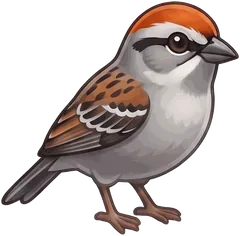 Chipping Sparrow
The Chipping Sparrow's trill is thin, dry and mechanical, all on one note like a sewing machine, and faster. The Pine Warbler's is slower, softer and more musical, and comes from pines.
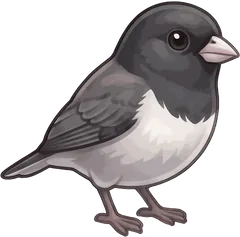 Dark-eyed Junco
A junco's trill is ringing and metallic on a single pitch, harder-edged than the warbler's sweet slur. Juncos sing from conifers too, but in the north and the mountains rather than southern pine woods.
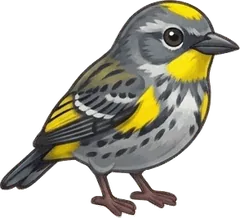 Yellow-rumped Warbler
The Yellow-rumped Warbler's trill is looser and thinner, often speeding up and then sagging lower and softer at the end. The Pine Warbler holds its pitch and its fullness to the finish.
Where the Pine Warbler card lives
In Warble the same bird can be an easy card in one state and a prized one in another, because each album ranks its birds by how often people really report them there. The Pine Warbler appears in 20 state albums:
 Heard one? Open Warble, tap the green button while it sings, and the Pine Warbler card flips into your album. Get the app free.
Questions people ask
How do you tell a Pine Warbler from a Chipping Sparrow by song?
Speed and sweetness. The Chipping Sparrow's trill is faster, drier and more driving, like a sewing machine; the Pine Warbler's is slightly slower, softer and more musical, with a slurred, liquid quality. Habitat helps: the warbler sings from inside pines, the sparrow often from lawns, edges and open ground.
Do Pine Warblers sing in winter?
Yes. Males can be heard in any month, though they sing most in early spring at the start of breeding and mostly at dawn. In the southeastern states, where the species lives year round, a sunny winter morning in a pine stand is often enough to get one going.
Do Pine Warblers come to bird feeders?
Yes, and they are one of the very few warblers that do. Because they eat pine seeds and other plant food when insects are scarce, they take suet, sunflower seeds, corn and soft foods, mostly in winter in the Southeast.
Where do Pine Warblers live year round?
Across the southeastern United States, from about southern Virginia, southern Tennessee and central Arkansas southward to Florida and Texas. Birds that breed farther north in New England, the Great Lakes and southern Canada join them there in winter.
Sources
- National Audubon Society, Guide to North American Birds: Pine Warbler. www.audubon.org/field-guide/bird/pine-warbler
- Wikipedia: Pine warbler (size, plumage, range, diet). en.wikipedia.org/wiki/Pine_warbler
- Missouri Department of Conservation field guide: Pine Warbler. mdc.mo.gov/discover-nature/field-guide/pine-warbler
- Animal Diversity Web: Dendroica pinus (year-round song, dawn activity, winter range, feeder foods, nesting). animaldiversity.org/accounts/Dendroica_pinus/