 Warble
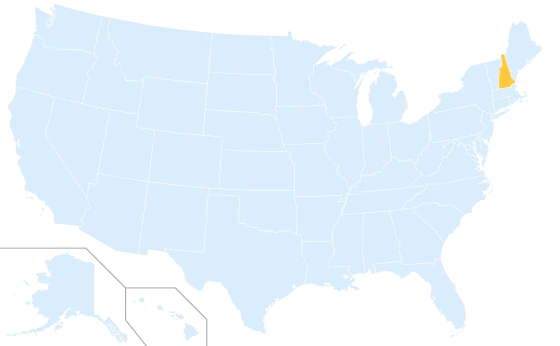
The state bird: Purple Finch
Adopted in 1957, chosen over a proposed New Hampshire red hen. A bird of conifer and mixed forest with a rich, rolling warble, now often crowded out of feeders in summer by the House Finch that arrived from the West.
Recording by David Bird, CC0, via iNaturalist.
The New Hampshire Rare Bird Committee and New Hampshire Audubon had 425 species on the state list as of February 2021. That is a big number for a state this size, and the reasons are a seacoast with Great Bay behind it, and mountains and lakes to the north that pull in birds that belong to Canada.
Most people live in the southern third, from Nashua and Manchester up to Concord and over to the coast, in towns with big oaks and a feeder on the deck. That is chickadee, jay, titmouse and nuthatch country.
The New Hampshire album
These are the 100 birds people report most often in New Hampshire, ranked by how frequently they turn up. The common and uncommon ones are shown; the rare and legendary cards stay face down until you catch them in the game.
Common 25 cards
- #001
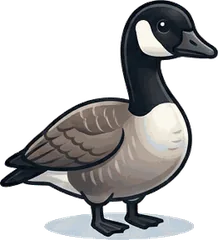 Canada Goose
Branta canadensis
Canada Goose
Branta canadensis - #003
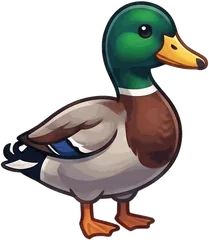 Mallard
Anas platyrhynchos
Mallard
Anas platyrhynchos - #011
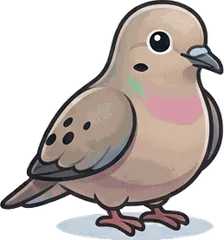 Mourning Dove
Zenaida macroura
Mourning Dove
Zenaida macroura - #030
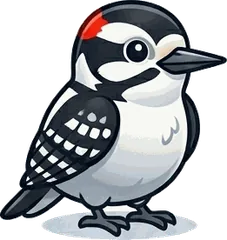 Downy Woodpecker
Dryobates pubescens
Downy Woodpecker
Dryobates pubescens - #036
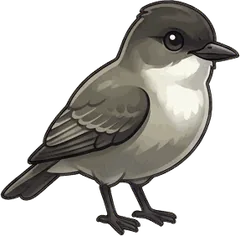 Eastern Phoebe
Sayornis phoebe
Eastern Phoebe
Sayornis phoebe - #041
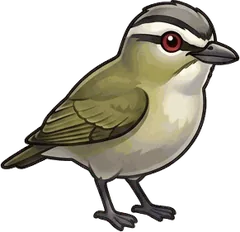 Red-eyed Vireo
Vireo olivaceus
Red-eyed Vireo
Vireo olivaceus - #042
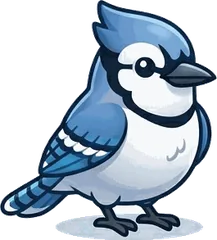 Blue Jay
Cyanocitta cristata
Blue Jay
Cyanocitta cristata - #043
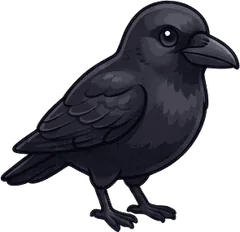 American Crow
Corvus brachyrhynchos
American Crow
Corvus brachyrhynchos - #045
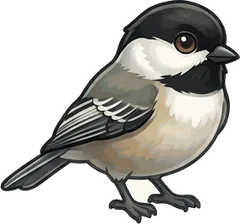 Black-capped Chickadee
Poecile atricapillus
Black-capped Chickadee
Poecile atricapillus - #046
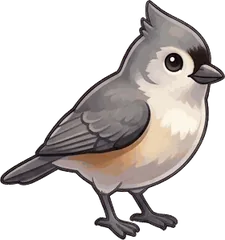 Tufted Titmouse
Baeolophus bicolor
Tufted Titmouse
Baeolophus bicolor - #050
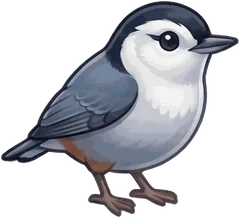 White-breasted Nuthatch
Sitta carolinensis
White-breasted Nuthatch
Sitta carolinensis - #051
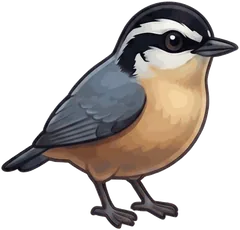 Red-breasted Nuthatch
Sitta canadensis
Red-breasted Nuthatch
Sitta canadensis - #056
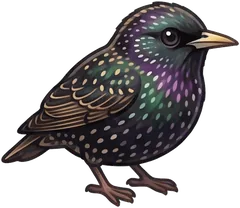 European Starling
Sturnus vulgaris
European Starling
Sturnus vulgaris - #057
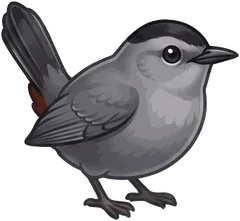 Gray Catbird
Dumetella carolinensis
Gray Catbird
Dumetella carolinensis - #063
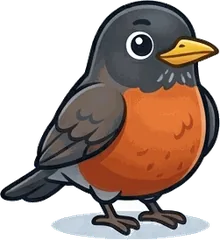 American Robin
Turdus migratorius
American Robin
Turdus migratorius - #066
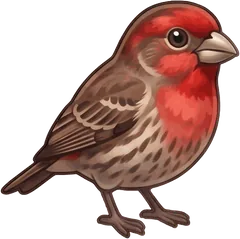 House Finch
Haemorhous mexicanus
House Finch
Haemorhous mexicanus - #069
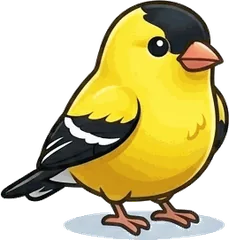 American Goldfinch
Spinus tristis
American Goldfinch
Spinus tristis - #070
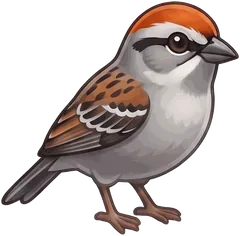 Chipping Sparrow
Spizella passerina
Chipping Sparrow
Spizella passerina - #072
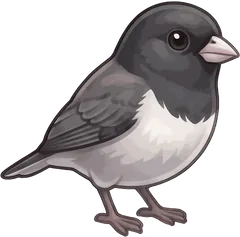 Dark-eyed Junco
Junco hyemalis
Dark-eyed Junco
Junco hyemalis - #073
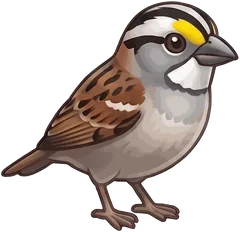 White-throated Sparrow
Zonotrichia albicollis
White-throated Sparrow
Zonotrichia albicollis - #075
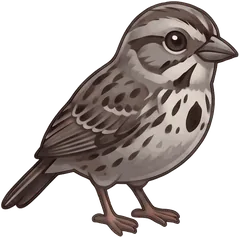 Song Sparrow
Melospiza melodia
Song Sparrow
Melospiza melodia - #079
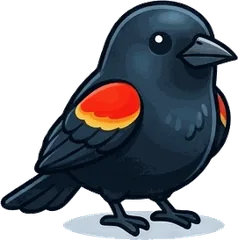 Red-winged Blackbird
Agelaius phoeniceus
Red-winged Blackbird
Agelaius phoeniceus - #081
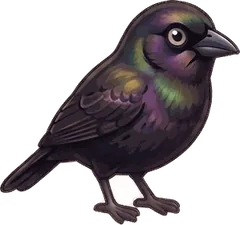 Common Grackle
Quiscalus quiscula
Common Grackle
Quiscalus quiscula - #084
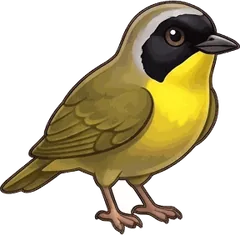 Common Yellowthroat
Geothlypis trichas
Common Yellowthroat
Geothlypis trichas - #098
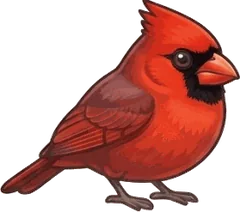 Northern Cardinal
Cardinalis cardinalis
Northern Cardinal
Cardinalis cardinalis
Uncommon 35 cards
- #002
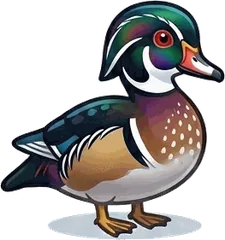 Wood Duck
Aix sponsa
Wood Duck
Aix sponsa - #009
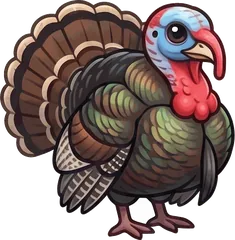 Wild Turkey
Meleagris gallopavo
Wild Turkey
Meleagris gallopavo - #010
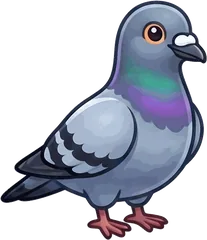 Rock Pigeon
Columba livia
Rock Pigeon
Columba livia - #013
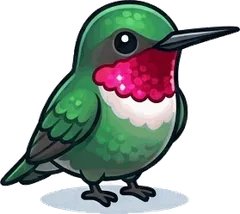 Ruby-throated Hummingbird
Archilochus colubris
Ruby-throated Hummingbird
Archilochus colubris - #016
 ?Catch it to find out
 - #017
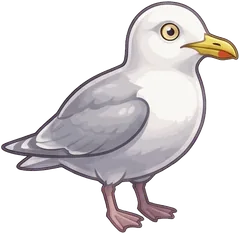 Herring Gull
Larus smithsonianus
Herring Gull
Larus smithsonianus - #019
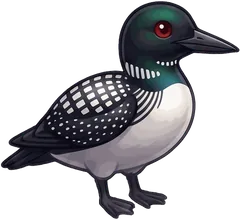 Common Loon
Gavia immer
Common Loon
Gavia immer - #020
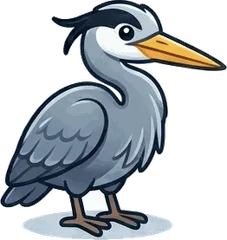 Great Blue Heron
Ardea herodias
Great Blue Heron
Ardea herodias - #021
 ?Catch it to find out
 - #023
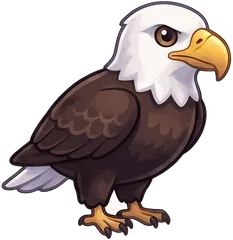 Bald Eagle
Haliaeetus leucocephalus
Bald Eagle
Haliaeetus leucocephalus - #025
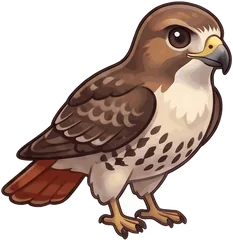 Red-tailed Hawk
Buteo jamaicensis
Red-tailed Hawk
Buteo jamaicensis - #027
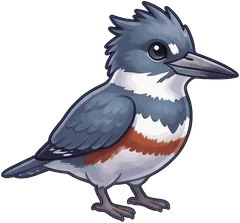 Belted Kingfisher
Megaceryle alcyon
Belted Kingfisher
Megaceryle alcyon - #028
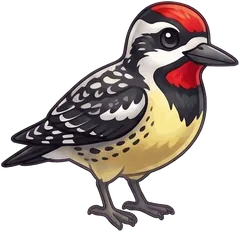 Yellow-bellied Sapsucker
Sphyrapicus varius
Yellow-bellied Sapsucker
Sphyrapicus varius - #029
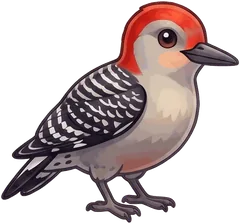 Red-bellied Woodpecker
Melanerpes carolinus
Red-bellied Woodpecker
Melanerpes carolinus - #031
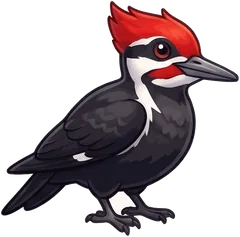 Pileated Woodpecker
Dryocopus pileatus
Pileated Woodpecker
Dryocopus pileatus - #032
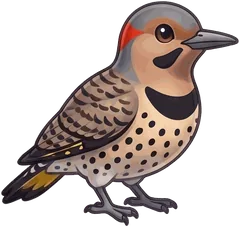 Northern Flicker
Colaptes auratus
Northern Flicker
Colaptes auratus - #038
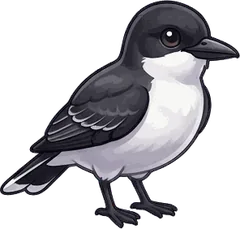 Eastern Kingbird
Tyrannus tyrannus
Eastern Kingbird
Tyrannus tyrannus - #039
 ?Catch it to find out
 - #044
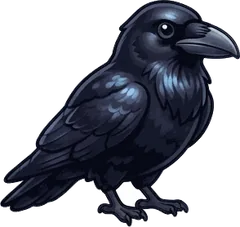 Common Raven
Corvus corax
Common Raven
Corvus corax - #047
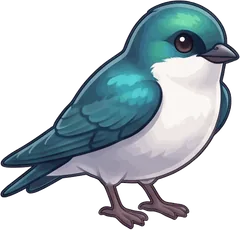 Tree Swallow
Tachycineta bicolor
Tree Swallow
Tachycineta bicolor - #052
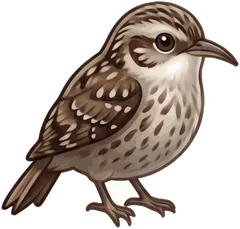 Brown Creeper
Certhia americana
Brown Creeper
Certhia americana - #055
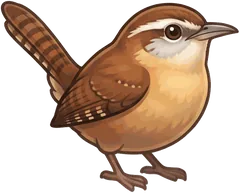 Carolina Wren
Thryothorus ludovicianus
Carolina Wren
Thryothorus ludovicianus - #059
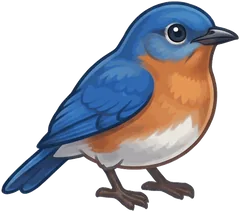 Eastern Bluebird
Sialia sialis
Eastern Bluebird
Sialia sialis - #061
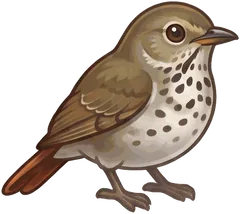 Hermit Thrush
Catharus guttatus
Hermit Thrush
Catharus guttatus - #064
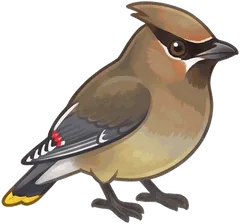 Cedar Waxwing
Bombycilla cedrorum
Cedar Waxwing
Bombycilla cedrorum - #065
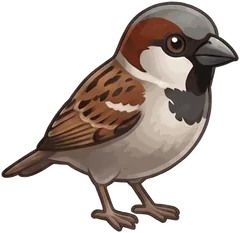 House Sparrow
Passer domesticus
House Sparrow
Passer domesticus - #067
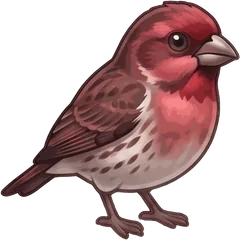 Purple Finch
Haemorhous purpureus
Purple Finch
Haemorhous purpureus - #076
 ?Catch it to find out
 - #082
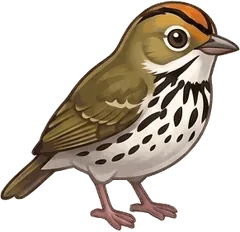 Ovenbird
Seiurus aurocapilla
Ovenbird
Seiurus aurocapilla - #083
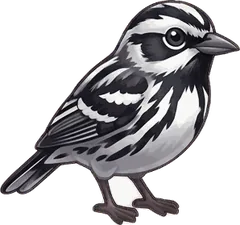 Black-and-white Warbler
Mniotilta varia
Black-and-white Warbler
Mniotilta varia - #085
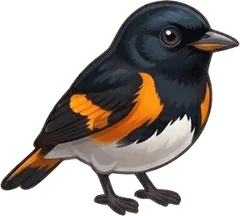 American Redstart
Setophaga ruticilla
American Redstart
Setophaga ruticilla - #089
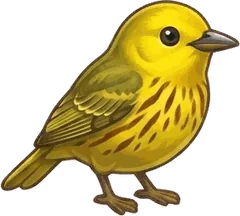 Yellow Warbler
Setophaga petechia
Yellow Warbler
Setophaga petechia - #094
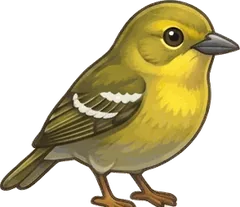 Pine Warbler
Setophaga pinus
Pine Warbler
Setophaga pinus - #095
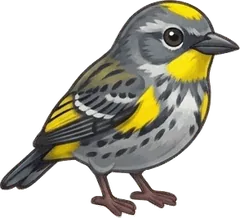 Yellow-rumped Warbler
Setophaga coronata
Yellow-rumped Warbler
Setophaga coronata - #096
 ?Catch it to find out
Rare 30 cards
- #004
 ?Catch it to find out
 - #005
 ?Catch it to find out
 - #007
 ?Catch it to find out
 - #008
 ?Catch it to find out
 - #012
 ?Catch it to reveal
 - #014?Catch it to reveal
- #018
 ?Catch it to find out
 - #022?Catch it to reveal
- #024
 ?Catch it to find out
 - #034?Catch it to reveal
- #040?Catch it to reveal
- #048?Catch it to reveal
- #049?Catch it to reveal
- #053?Catch it to reveal
- #054
 ?Catch it to find out
 - #058?Catch it to reveal
- #060?Catch it to reveal
- #062?Catch it to reveal
- #068?Catch it to reveal
- #071
 ?Catch it to find out
 - #074
 ?Catch it to find out
 - #077?Catch it to reveal
- #078?Catch it to reveal
- #080?Catch it to reveal
- #086?Catch it to reveal
- #087
 ?Catch it to find out
 - #090
 ?Catch it to find out
 - #092
 ?Catch it to find out
 - #097?Catch it to reveal
- #099?Catch it to reveal
Legendary 10 cards
- #006
 ?Catch it to find out
 - #015
 ?Catch it to find out
 - #026?Catch it to reveal
- #033?Catch it to reveal
- #035
 ?Catch it to find out
 - #037?Catch it to reveal
- #088
 ?Catch it to find out
 - #091
 ?Catch it to find out
 - #093
 ?Catch it to find out
 - #100?Catch it to reveal
 55 of the 100 cards are shown here. The other 45, including all 30 rare and 10 legendary birds, are yours to discover. Get Warble and start with the common ones.
Backyard birds you will hear first
The Black-capped Chickadee leads the album and is the first bird most New Hampshire kids learn: chick-a-dee-dee-dee at the feeder all winter, and a clear whistled fee-bee that starts in late January when nothing else is singing. The Blue Jay is second, screaming from the oaks and doing a passable Red-tailed Hawk, and the American Crow is third, present in every month and loud about it.
The Tufted Titmouse whistles peter, peter, peter from March on, the White-breasted Nuthatch honks down the trunk, and the Downy Woodpecker whinnies at the suet. The American Goldfinch bounces overhead all year and the Northern Cardinal whistles from the hedges in every month. The Dark-eyed Junco is the winter bird under the feeder, and the Song Sparrow takes over the roadside brush in April.
The regions, by ear
The Seacoast and Great Bay
A few miles of Atlantic shore and, behind it, the tidal estuary of Great Bay. Great Bay National Wildlife Refuge in Newington, established in 1992, holds more than 1,000 acres of mud flats, marsh, swamp, ponds, woods and fields on one of the longest undeveloped stretches of the bay, and it has the state's biggest concentration of wintering Bald Eagles. Gulls on the ocean side; ducks, herons and ospreys on the bay.
The Merrimack Valley and the south
Oak, white pine, old fields and suburbs. All the backyard birds, plus phoebes on the porch, Wood Thrushes in the woodlots and Red-winged Blackbirds in every cattail ditch.
The Lakes Region
Winnipesaukee and the smaller lakes around it. Common Loons wail and yodel from the water after dark in June, and Ospreys whistle over the coves.
The White Mountains
Spruce and fir above the hardwoods, with Hermit Thrushes fluting at dusk, Winter Wrens pouring out long songs from the blowdowns, and ravens croaking off the ledges.
The North Country
Above the notches the forest turns boreal. Umbagog National Wildlife Refuge, established in 1992 around Umbagog Lake near Errol, is 25,650 acres of lake, floating bog, marsh and forest where the boreal and hardwood forests meet, about 70 percent of it in New Hampshire. More than 229 species have been recorded and 137 breed there, including 24 kinds of warbler, Ospreys, Bald Eagles and loons, which the state lists as threatened. The best way in is by boat.
Best months to listen
May is the peak, when the warblers arrive and the residents are all singing at once. Late May into June is when the North Country and the mountains come alive, a few weeks behind the coast. June is loon month on the lakes. September brings the warblers back through, duller and mostly silent, and October brings the juncos down to the yards. Winter is chickadee, titmouse, nuthatch and jay at the feeder, and eagles on the ice at Great Bay. The whistle of a chickadee in late January is the first sign that the year has turned.
Places worth the drive
- Great Bay National Wildlife Refuge, Newington: more than 1,000 acres of marsh, mud flat and woods, and the state's largest gathering of wintering Bald Eagles.
- Umbagog National Wildlife Refuge, near Errol: 25,650 acres of boreal lake and bog, loons, eagles and two dozen kinds of warbler, best reached by boat.
- The White Mountains: drive up out of the hardwoods into spruce and fir, then get out and listen for thrushes and Winter Wrens.
- Lake Winnipesaukee: loons from a dock at dusk in June.
None of it is required. A feeder in Concord fills the first 20 cards in Warble before the snow melts.
Listen before you go
Three of the common New Hampshire birds, so the first songs you hear outside already ring a bell.
Recording by Chase Harris, CC0, via iNaturalist.
Recording by Chase Harris, CC0, via iNaturalist.
Recording by Fionn Ó Marcaigh, CC BY 4.0, via iNaturalist.
Questions people ask
What is the most common bird in New Hampshire?
By the reports behind the album, the Black-capped Chickadee, then the Blue Jay, the American Crow, the American Goldfinch and the American Robin.
What is the state bird of New Hampshire?
The Purple Finch, adopted in 1957. It sings a rich, continuous warble from conifers and mixed woods, and looks like a sparrow dipped in raspberry juice, not the orange-red of the House Finch.
How many bird species are there in New Hampshire?
425 species as of February 2021, according to the New Hampshire Rare Bird Committee and New Hampshire Audubon. The Warble album covers the 100 reported most often.
Nearby albums
Sources
- Wikipedia: List of birds of New Hampshire. en.wikipedia.org/wiki/List_of_birds_of_New_Hampshire
- Wikipedia: Purple finch. en.wikipedia.org/wiki/Purple_finch
- Wikipedia: Umbagog National Wildlife Refuge. en.wikipedia.org/wiki/Umbagog_National_Wildlife_Refuge
- U.S. Fish and Wildlife Service: Great Bay National Wildlife Refuge. www.fws.gov/refuge/great-bay