 Warble
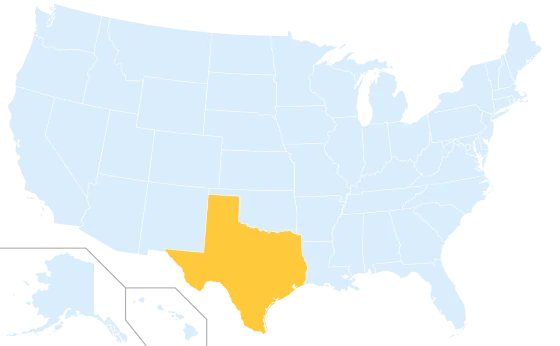
The state bird: Northern Mockingbird
Adopted in 1927, and impossible to miss: a gray bird on a wire that runs through car alarms, cardinal phrases and its own inventions, sometimes all night in spring.
Recording by Kristi Zoebelein, CC0, via iNaturalist.
Where you stand in Texas decides what you hear. The Piney Woods of East Texas sound like the Deep South, with Carolina Wrens, Pine Warblers and Red-bellied Woodpeckers. The Hill Country west of Austin adds Golden-cheeked Warblers and Black-capped Vireos that nest nowhere else. The Gulf Coast has herons, gulls and, in April, exhausted migrants dropping into the first trees they see. The Panhandle is meadowlark and lark country, and the Rio Grande Valley in the far south is a slice of Mexico, with chachalacas and green jays.
For a beginner, though, the first ten birds are the same almost everywhere in the state: mockingbird, cardinal, dove, grackle, House Sparrow, Blue Jay, Carolina Wren, White-winged Dove, House Finch and Killdeer. Learn those by ear and you already understand most of what a Texas morning is saying.
The Texas album
These are the 100 birds people report most often in Texas, ranked by how frequently they turn up. The common and uncommon ones are shown; the rare and legendary cards stay face down until you catch them in the game.
Common 25 cards
- #011
 ?Catch it to find out
 - #012
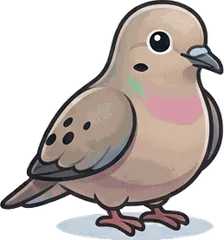 Mourning Dove
Zenaida macroura
Mourning Dove
Zenaida macroura - #019
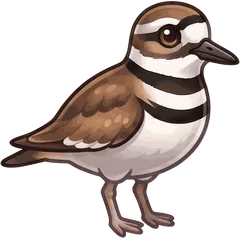 Killdeer
Charadrius vociferus
Killdeer
Charadrius vociferus - #033
 ?Catch it to find out
 - #035
 ?Catch it to find out
 - #036
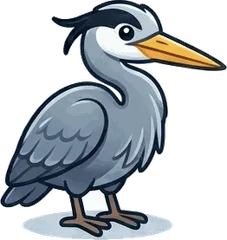 Great Blue Heron
Ardea herodias
Great Blue Heron
Ardea herodias - #039
 ?Catch it to find out
 - #040
 ?Catch it to find out
 - #044
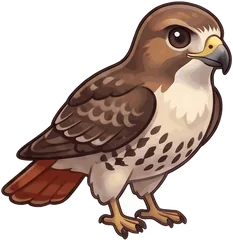 Red-tailed Hawk
Buteo jamaicensis
Red-tailed Hawk
Buteo jamaicensis - #047
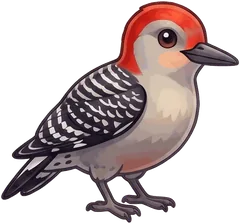 Red-bellied Woodpecker
Melanerpes carolinus
Red-bellied Woodpecker
Melanerpes carolinus - #052
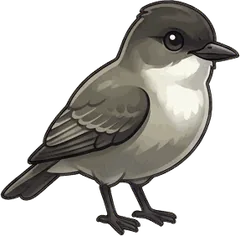 Eastern Phoebe
Sayornis phoebe
Eastern Phoebe
Sayornis phoebe - #059
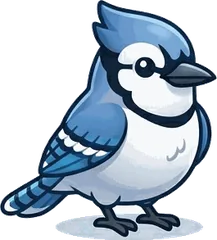 Blue Jay
Cyanocitta cristata
Blue Jay
Cyanocitta cristata - #060
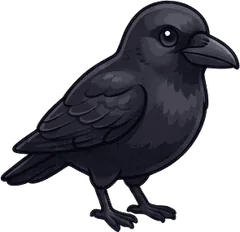 American Crow
Corvus brachyrhynchos
American Crow
Corvus brachyrhynchos - #061
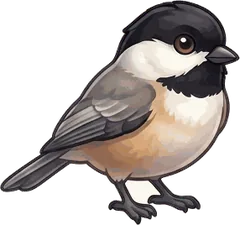 Carolina Chickadee
Poecile carolinensis
Carolina Chickadee
Poecile carolinensis - #063
 ?Catch it to find out
 - #065
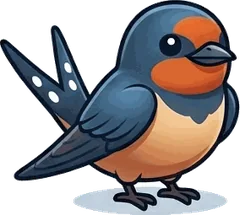 Barn Swallow
Hirundo rustica
Barn Swallow
Hirundo rustica - #069
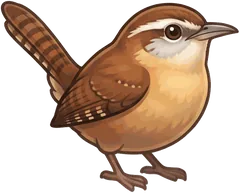 Carolina Wren
Thryothorus ludovicianus
Carolina Wren
Thryothorus ludovicianus - #071
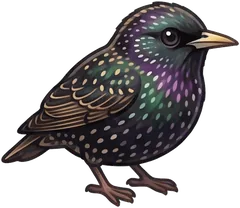 European Starling
Sturnus vulgaris
European Starling
Sturnus vulgaris - #074
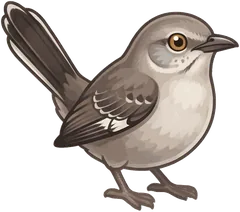 Northern Mockingbird
Mimus polyglottos
Northern Mockingbird
Mimus polyglottos - #078
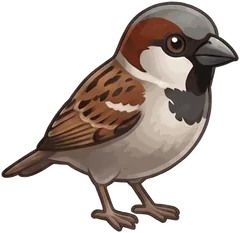 House Sparrow
Passer domesticus
House Sparrow
Passer domesticus - #079
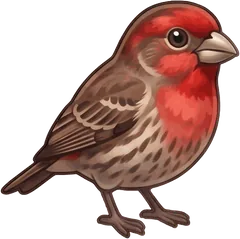 House Finch
Haemorhous mexicanus
House Finch
Haemorhous mexicanus - #089
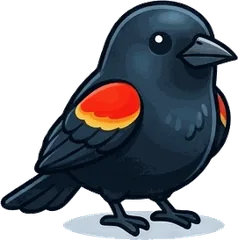 Red-winged Blackbird
Agelaius phoeniceus
Red-winged Blackbird
Agelaius phoeniceus - #092
 ?Catch it to find out
 - #096
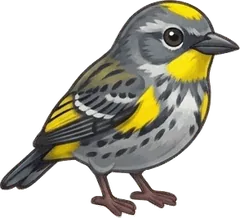 Yellow-rumped Warbler
Setophaga coronata
Yellow-rumped Warbler
Setophaga coronata - #098
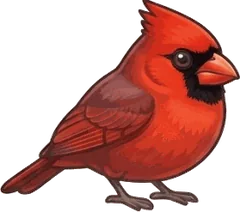 Northern Cardinal
Cardinalis cardinalis
Northern Cardinal
Cardinalis cardinalis
Uncommon 35 cards
- #001
 ?Catch it to find out
 - #002
 ?Catch it to find out
 - #003
 ?Catch it to find out
 - #005
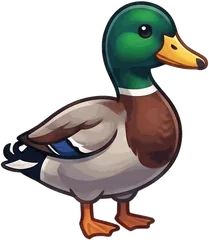 Mallard
Anas platyrhynchos
Mallard
Anas platyrhynchos - #008
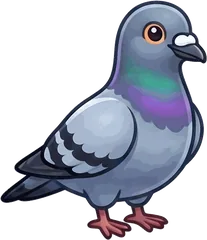 Rock Pigeon
Columba livia
Rock Pigeon
Columba livia - #009
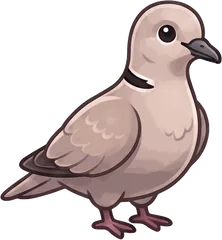 Eurasian Collared-Dove
Streptopelia decaocto
Eurasian Collared-Dove
Streptopelia decaocto - #014
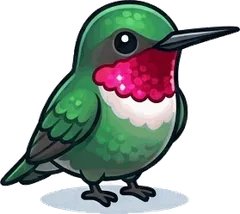 Ruby-throated Hummingbird
Archilochus colubris
Ruby-throated Hummingbird
Archilochus colubris - #017
 ?Catch it to find out
 - #024
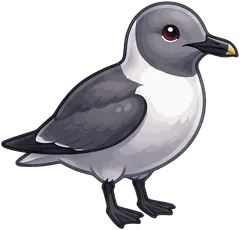 Laughing Gull
Leucophaeus atricilla
Laughing Gull
Leucophaeus atricilla - #027
 ?Catch it to find out
 - #028
 ?Catch it to find out
 - #041
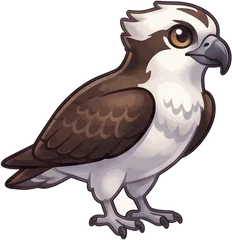 Osprey
Pandion haliaetus
Osprey
Pandion haliaetus - #043
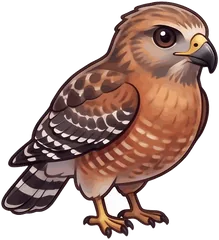 Red-shouldered Hawk
Buteo lineatus
Red-shouldered Hawk
Buteo lineatus - #046
 ?Catch it to find out
 - #048
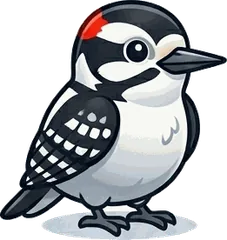 Downy Woodpecker
Dryobates pubescens
Downy Woodpecker
Dryobates pubescens - #049
 ?Catch it to find out
 - #050
 ?Catch it to find out
 - #051
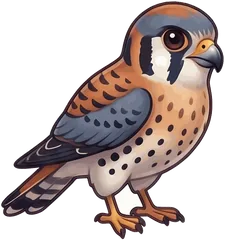 American Kestrel
Falco sparverius
American Kestrel
Falco sparverius - #053
 ?Catch it to find out
 - #055
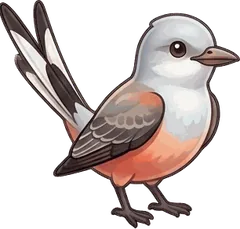 Scissor-tailed Flycatcher
Tyrannus forficatus
Scissor-tailed Flycatcher
Tyrannus forficatus - #056
 ?Catch it to find out
 - #057
 ?Catch it to find out
 - #062
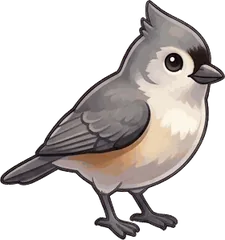 Tufted Titmouse
Baeolophus bicolor
Tufted Titmouse
Baeolophus bicolor - #064
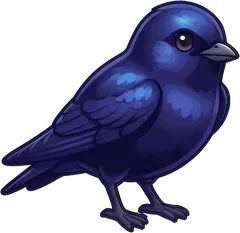 Purple Martin
Progne subis
Purple Martin
Progne subis - #067
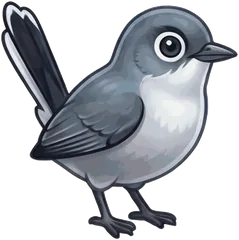 Blue-gray Gnatcatcher
Polioptila caerulea
Blue-gray Gnatcatcher
Polioptila caerulea - #070
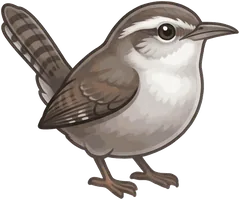 Bewick's Wren
Thryomanes bewickii
Bewick's Wren
Thryomanes bewickii - #075
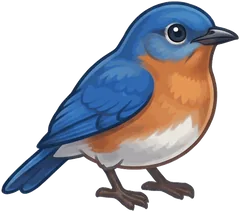 Eastern Bluebird
Sialia sialis
Eastern Bluebird
Sialia sialis - #076
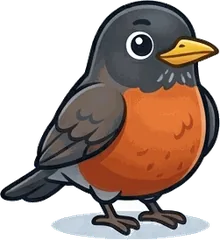 American Robin
Turdus migratorius
American Robin
Turdus migratorius - #077
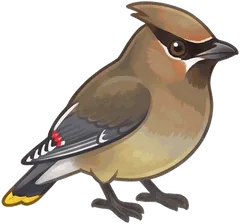 Cedar Waxwing
Bombycilla cedrorum
Cedar Waxwing
Bombycilla cedrorum - #080
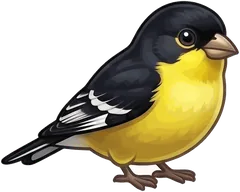 Lesser Goldfinch
Spinus psaltria
Lesser Goldfinch
Spinus psaltria - #082
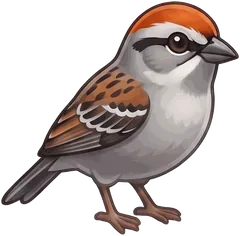 Chipping Sparrow
Spizella passerina
Chipping Sparrow
Spizella passerina - #086
 ?Catch it to find out
 - #087
 ?Catch it to find out
 - #090
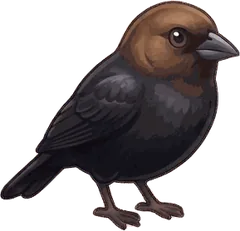 Brown-headed Cowbird
Molothrus ater
Brown-headed Cowbird
Molothrus ater - #094
 ?Catch it to find out
Rare 30 cards
- #004
 ?Catch it to find out
 - #006
 ?Catch it to find out
 - #010
 ?Catch it to find out
 - #013
 ?Catch it to reveal
 - #015
 ?Catch it to find out
 - #018
 ?Catch it to find out
 - #020
 ?Catch it to find out
 - #022
 ?Catch it to find out
 - #023
 ?Catch it to find out
 - #025
 ?Catch it to find out
 - #029
 ?Catch it to find out
 - #031
 ?Catch it to find out
 - #032
 ?Catch it to find out
 - #034
 ?Catch it to find out
 - #037
 ?Catch it to find out
 - #038?Catch it to reveal
- #042
 ?Catch it to find out
 - #045?Catch it to reveal
- #058
 ?Catch it to find out
 - #068?Catch it to reveal
- #081?Catch it to reveal
- #083
 ?Catch it to find out
 - #084?Catch it to reveal
- #085?Catch it to reveal
- #088?Catch it to reveal
- #091?Catch it to reveal
- #095?Catch it to reveal
- #097?Catch it to reveal
- #099?Catch it to reveal
- #100?Catch it to reveal
Legendary 10 cards
- #007
 ?Catch it to find out
 - #016
 ?Catch it to find out
 - #021
 ?Catch it to find out
 - #026
 ?Catch it to find out
 - #030
 ?Catch it to find out
 - #054
 ?Catch it to find out
 - #066
 ?Catch it to find out
 - #072?Catch it to reveal
- #073
 ?Catch it to find out
 - #093?Catch it to reveal
 38 of the 100 cards are shown here. The other 62, including all 30 rare and 10 legendary birds, are yours to discover. Get Warble and start with the common ones.
Backyard birds you will hear first
The Northern Mockingbird is the soundtrack of Texas towns. It sings from the highest point around, repeats each phrase three to six times, then moves on to the next borrowed sound. Unpaired males sing at night in spring, which is where most of the "what bird sings at 2 am" questions from Texas come from.
The Northern Cardinal whistles cheer, cheer, cheer from February onward, the Carolina Wren shouts teakettle from under the porch, and the Mourning Dove and White-winged Dove coo from the wires. The White-winged Dove's who cooks for you rhythm is the one people mistake for an owl in daylight.
Great-tailed Grackles are the loud ones in every supermarket lot, with whistles, clacks and a sound like a rusty gate. They are common enough that most Texans stop hearing them, which is exactly why they make a satisfying early catch.
The regions, by ear
Gulf Coast
Laughing Gulls, Brown Pelicans and Black Skimmers along the beaches; Great Blue Herons, Great Egrets and Roseate Spoonbills in the marshes. In late April, the woods at High Island fill with warblers, tanagers and orioles that have just crossed the Gulf, and on a good day the trees are louder than the surf.
Hill Country
Limestone canyons with juniper and oak: Golden-cheeked Warbler, Black-capped Vireo, Painted Bunting, Bewick's Wren and Canyon Wren, whose descending cascade echoes off the rock. Spring here starts in March.
Piney Woods and the East
Tall pine and hardwood forest that sounds southeastern: Pine Warbler trills, Pileated Woodpecker laughs, Red-shouldered Hawk screams, and Barred Owls asking who cooks for you after dark.
Panhandle and West Texas
Open country: Western Meadowlark, Horned Lark, Scissor-tailed Flycatcher on fences, Cassin's Sparrow skylarking over grass. Toward Big Bend the desert adds Cactus Wren, Verdin and Pyrrhuloxia.
Best months to listen
March to May is the peak: resident birds are singing for territory while migrants pour through. April on the coast is the single best week of birding in the state. Summer mornings are still busy until about 9 am, then heat closes everything down. Fall migration is quieter but long, from August into November. Winter brings sparrows, ducks, Sandhill Cranes to the plains, and, near Rockport, the last wild flock of Whooping Cranes.
In any month, the first hour after sunrise carries most of the song. In summer, start at first light.
Places worth the drive
- High Island and Anahuac, east of Houston: spring migration and marsh birds.
- Aransas National Wildlife Refuge, near Rockport: wintering Whooping Cranes, November to March.
- Balcones Canyonlands, northwest of Austin: Golden-cheeked Warbler and Black-capped Vireo in spring.
- Santa Ana and Bentsen, in the Rio Grande Valley: Green Jays, Plain Chachalacas and other birds found nowhere else in the country.
- Big Bend National Park: desert and mountain birds, and the only Colima Warblers in the United States.
You do not need any of them to fill the album. A city park with water and a few big trees will give you 30 of the 100 in a season.
Listen before you go
Three of the common Texas birds, so the first songs you hear outside already ring a bell.
Recording by Fionn Ó Marcaigh, CC BY 4.0, via iNaturalist.
Recording by Richard Littauer, CC BY 4.0, via iNaturalist.
Recording by Gabriel Dixon, CC0, via iNaturalist.
Questions people ask
What is the most common bird in Texas?
By reports, the Northern Mockingbird, the Northern Cardinal, the Great-tailed Grackle and the Mourning Dove trade the top spots. The mockingbird is also the state bird.
How many bird species are there in Texas?
More than 650 species have been recorded in Texas, the most of any US state, according to the Texas Parks and Wildlife Department. The Warble album covers the 100 reported most often.
What bird sings all night in Texas?
Almost always a Northern Mockingbird, usually an unpaired male in spring, often under a streetlight. Chuck-will's-widows and Barred Owls also call at night in wooded parts of the state.
Nearby albums
Sources
- Texas Parks and Wildlife Department: Birding in Texas. tpwd.texas.gov/huntwild/wild/birding/
- National Audubon Society, Guide to North American Birds: Northern Mockingbird. www.audubon.org/field-guide/bird/northern-mockingbird
- Texas State Library and Archives Commission: Texas state symbols. www.tsl.texas.gov/ref/abouttx/symbols