 Warble
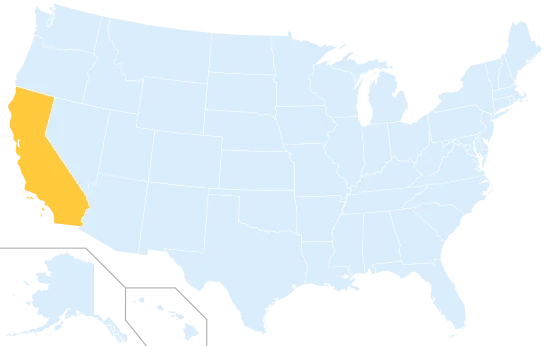
The state bird: California Quail
Adopted in 1931. A plump, plumed bird that lives in coveys, takes dust baths in the sun and calls chi-ca-go to gather the group, and it has been carried from California to New Zealand, Chile and Hawaii.
Recording by Anne Parsons, CC0, via iNaturalist.
California is several states stacked side by side. The coast is fog, gulls, pelicans and the Wrentit's bouncing-ball song from the scrub. The Central Valley is farmland that fills with Pacific Flyway ducks and geese from November on. The foothills are oak woodland and chaparral, quail and scrub-jay and Acorn Woodpecker country. The Sierra Nevada rises to alpine tundra, and the deserts in the south and east sound like Arizona.
A yard in Los Angeles, Sacramento or San Jose is the same twenty birds, though: House Finch, Black Phoebe, Anna's Hummingbird, crow, Mourning Dove, scrub-jay, towhee, Lesser Goldfinch, Bushtit and, in winter, White-crowned Sparrows and Yellow-rumped Warblers.
The California album
These are the 100 birds people report most often in California, ranked by how frequently they turn up. The common and uncommon ones are shown; the rare and legendary cards stay face down until you catch them in the game.
Common 25 cards
- #006
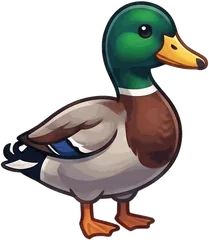 Mallard
Anas platyrhynchos
Mallard
Anas platyrhynchos - #014
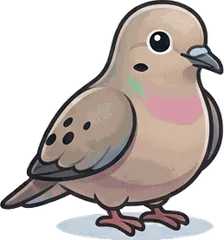 Mourning Dove
Zenaida macroura
Mourning Dove
Zenaida macroura - #015
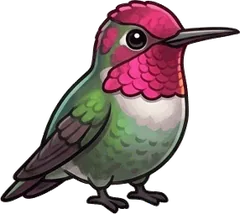 Anna's Hummingbird
Calypte anna
Anna's Hummingbird
Calypte anna - #017
 ?Catch it to find out
 - #036
 ?Catch it to find out
 - #040
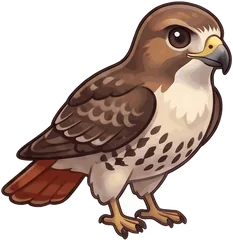 Red-tailed Hawk
Buteo jamaicensis
Red-tailed Hawk
Buteo jamaicensis - #044
 ?Catch it to find out
 - #045
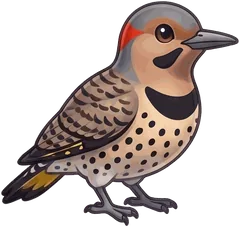 Northern Flicker
Colaptes auratus
Northern Flicker
Colaptes auratus - #048
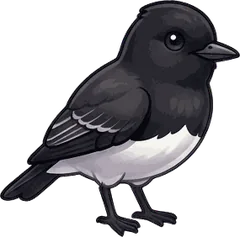 Black Phoebe
Sayornis nigricans
Black Phoebe
Sayornis nigricans - #053
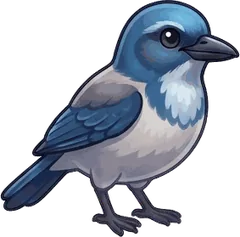 California Scrub-Jay
Aphelocoma californica
California Scrub-Jay
Aphelocoma californica - #054
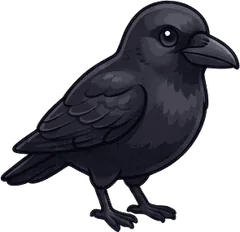 American Crow
Corvus brachyrhynchos
American Crow
Corvus brachyrhynchos - #055
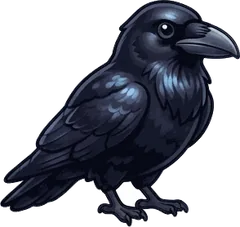 Common Raven
Corvus corax
Common Raven
Corvus corax - #063
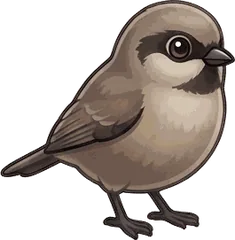 Bushtit
Psaltriparus minimus
Bushtit
Psaltriparus minimus - #068
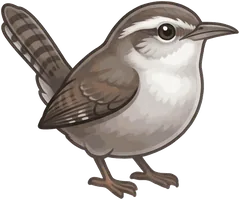 Bewick's Wren
Thryomanes bewickii
Bewick's Wren
Thryomanes bewickii - #069
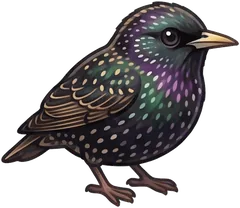 European Starling
Sturnus vulgaris
European Starling
Sturnus vulgaris - #071
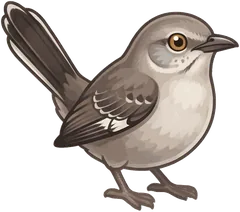 Northern Mockingbird
Mimus polyglottos
Northern Mockingbird
Mimus polyglottos - #074
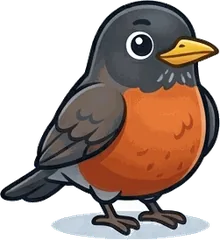 American Robin
Turdus migratorius
American Robin
Turdus migratorius - #077
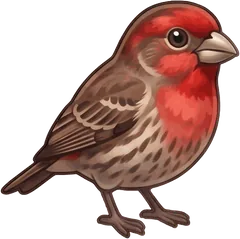 House Finch
Haemorhous mexicanus
House Finch
Haemorhous mexicanus - #078
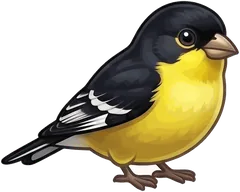 Lesser Goldfinch
Spinus psaltria
Lesser Goldfinch
Spinus psaltria - #081
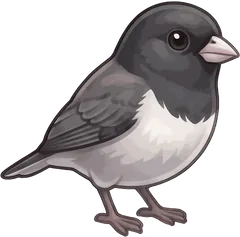 Dark-eyed Junco
Junco hyemalis
Dark-eyed Junco
Junco hyemalis - #082
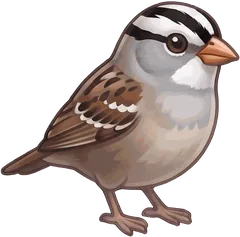 White-crowned Sparrow
Zonotrichia leucophrys
White-crowned Sparrow
Zonotrichia leucophrys - #085
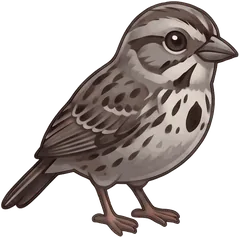 Song Sparrow
Melospiza melodia
Song Sparrow
Melospiza melodia - #086
 ?Catch it to find out
 - #087
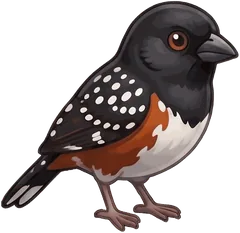 Spotted Towhee
Pipilo maculatus
Spotted Towhee
Pipilo maculatus - #096
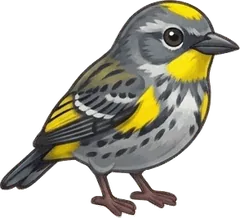 Yellow-rumped Warbler
Setophaga coronata
Yellow-rumped Warbler
Setophaga coronata
Uncommon 35 cards
- #001
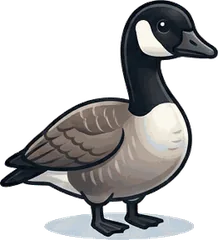 Canada Goose
Branta canadensis
Canada Goose
Branta canadensis - #008
 ?Catch it to find out
 - #009
 ?Catch it to find out
 - #010
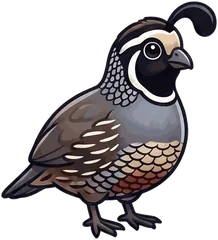 California Quail
Callipepla californica
California Quail
Callipepla californica - #011
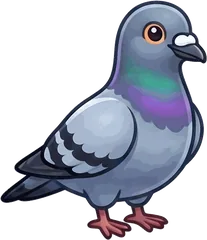 Rock Pigeon
Columba livia
Rock Pigeon
Columba livia - #013
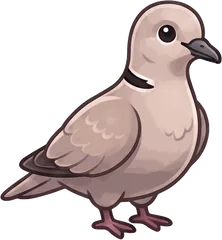 Eurasian Collared-Dove
Streptopelia decaocto
Eurasian Collared-Dove
Streptopelia decaocto - #016
 ?Catch it to find out
 - #020
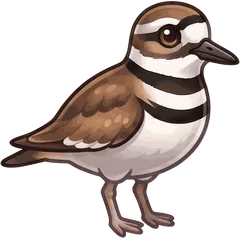 Killdeer
Charadrius vociferus
Killdeer
Charadrius vociferus - #025
 ?Catch it to find out
 - #026
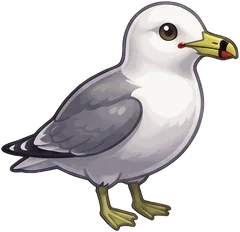 California Gull
Larus californicus
California Gull
Larus californicus - #027
 ?Catch it to find out
 - #031
 ?Catch it to find out
 - #032
 ?Catch it to find out
 - #033
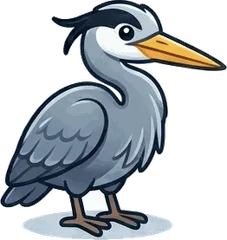 Great Blue Heron
Ardea herodias
Great Blue Heron
Ardea herodias - #035
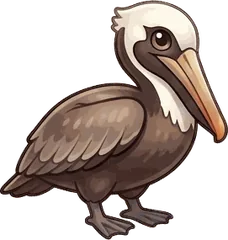 Brown Pelican
Pelecanus occidentalis
Brown Pelican
Pelecanus occidentalis - #039
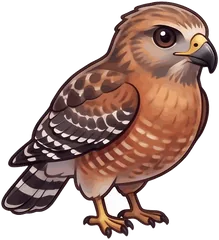 Red-shouldered Hawk
Buteo lineatus
Red-shouldered Hawk
Buteo lineatus - #042
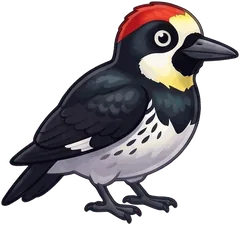 Acorn Woodpecker
Melanerpes formicivorus
Acorn Woodpecker
Melanerpes formicivorus - #046
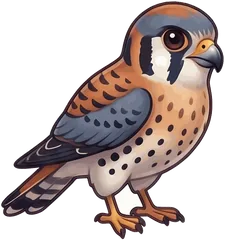 American Kestrel
Falco sparverius
American Kestrel
Falco sparverius - #049
 ?Catch it to find out
 - #052
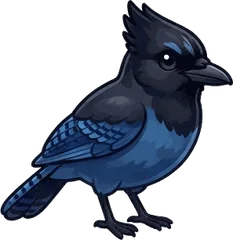 Steller's Jay
Cyanocitta stelleri
Steller's Jay
Cyanocitta stelleri - #056
 ?Catch it to find out
 - #057
 ?Catch it to find out
 - #058
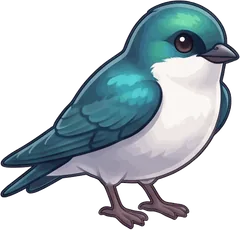 Tree Swallow
Tachycineta bicolor
Tree Swallow
Tachycineta bicolor - #061
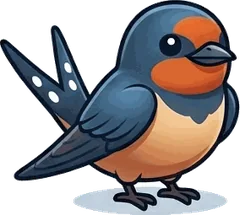 Barn Swallow
Hirundo rustica
Barn Swallow
Hirundo rustica - #064
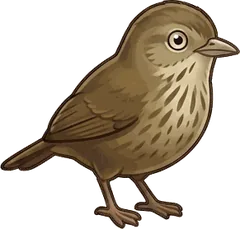 Wrentit
Chamaea fasciata
Wrentit
Chamaea fasciata - #065
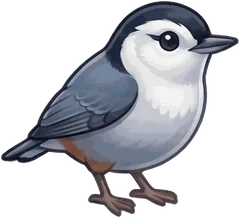 White-breasted Nuthatch
Sitta carolinensis
White-breasted Nuthatch
Sitta carolinensis - #066
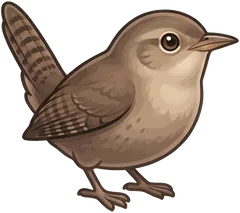 House Wren
Troglodytes aedon
House Wren
Troglodytes aedon - #072
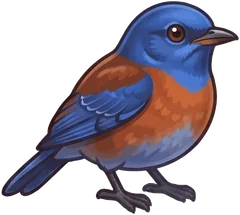 Western Bluebird
Sialia mexicana
Western Bluebird
Sialia mexicana - #076
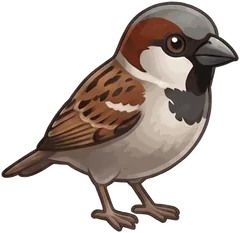 House Sparrow
Passer domesticus
House Sparrow
Passer domesticus - #083
 ?Catch it to find out
 - #088
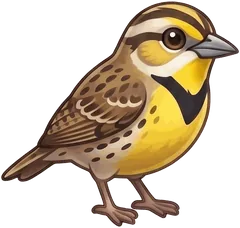 Western Meadowlark
Sturnella neglecta
Western Meadowlark
Sturnella neglecta - #090
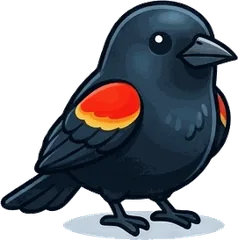 Red-winged Blackbird
Agelaius phoeniceus
Red-winged Blackbird
Agelaius phoeniceus - #092
 ?Catch it to find out
 - #093
 ?Catch it to find out
 - #094
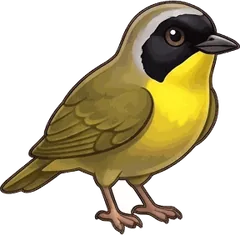 Common Yellowthroat
Geothlypis trichas
Common Yellowthroat
Geothlypis trichas
Rare 30 cards
- #003
 ?Catch it to find out
 - #004
 ?Catch it to find out
 - #005
 ?Catch it to find out
 - #012
 ?Catch it to find out
 - #018
 ?Catch it to find out
 - #021
 ?Catch it to find out
 - #022
 ?Catch it to find out
 - #023
 ?Catch it to find out
 - #024
 ?Catch it to find out
 - #028
 ?Catch it to find out
 - #029
 ?Catch it to find out
 - #030
 ?Catch it to find out
 - #038
 ?Catch it to find out
 - #041
 ?Catch it to reveal
 - #043?Catch it to reveal
- #047
 ?Catch it to find out
 - #050
 ?Catch it to find out
 - #062
 ?Catch it to find out
 - #067
 ?Catch it to find out
 - #070
 ?Catch it to find out
 - #073?Catch it to reveal
- #075?Catch it to reveal
- #079?Catch it to reveal
- #084
 ?Catch it to find out
 - #089
 ?Catch it to find out
 - #091?Catch it to reveal
- #095?Catch it to reveal
- #097
 ?Catch it to find out
 - #098
 ?Catch it to find out
 - #100?Catch it to reveal
Legendary 10 cards
- #002
 ?Catch it to find out
 - #007
 ?Catch it to find out
 - #019
 ?Catch it to find out
 - #034
 ?Catch it to find out
 - #037?Catch it to reveal
- #051
 ?Catch it to find out
 - #059
 ?Catch it to find out
 - #060
 ?Catch it to find out
 - #080
 ?Catch it to find out
 - #099?Catch it to reveal
 43 of the 100 cards are shown here. The other 57, including all 30 rare and 10 legendary birds, are yours to discover. Get Warble and start with the common ones.
Backyard birds you will hear first
The House Finch is the voice of every California street, a long, rolling warble that usually ends on a rising buzz. The Black Phoebe, black with a white belly, sits on the fence and says fee-bee in a thin, sharp voice, and the Anna's Hummingbird sings all year from a bare twig, a scratchy, buzzy series that few people realize is a song.
The California Scrub-Jay is the loud blue one, with harsh, rising screeches from the top of the oak. The California Towhee gives a metallic chink from under the hedge and the Lesser Goldfinch wheezes and twitters from the sunflowers. In winter the White-crowned Sparrow whistles a short, wistful song from the same hedge.
The California Quail is the state bird and a real backyard bird wherever brush meets houses. Listen for the three-note chi-ca-go assembly call, the soft pip notes of a covey feeding, and the sudden roar of wings when one flushes.
The regions, by ear
The coast
Gulls, Brown Pelicans and the surf, with the Wrentit singing its accelerating ping-pong-ball song from every patch of coastal scrub. Point Reyes, north of San Francisco, has recorded nearly 490 species, more than most entire states, because the peninsula sticks out into the Pacific Flyway and catches whatever passes.
The Central Valley
Flat, farmed and, in winter, deafening. The Sacramento National Wildlife Refuge alone supports more than 500,000 ducks and 250,000 geese between September and April, with the peak in late November and December. Yellow-billed Magpies, found nowhere on earth but California, chatter from the oaks.
Foothills and chaparral
Oak woodland with Acorn Woodpeckers laughing waka-waka from their granary trees, scrub-jays, quail, Spotted Towhees trilling from the brush, and Oak Titmice with a plain, whistled song.
The Sierra Nevada
Yosemite has documented 262 species across 11,000 feet of elevation. Steller's Jay and Dark-eyed Junco are the common ones, Western Tanagers sing from the pines, American Dippers sing over the roar of the creeks even in winter, and the Mountain Chickadee whistles a hoarse cheese-bur-ger from the firs.
The deserts
Cactus Wrens, Gambel's Quail and roadrunners in the low Colorado Desert; at the Salton Sea, which sits more than 200 feet below sea level, pelicans, grebes and Burrowing Owls.
Best months to listen
California has no real off season. Anna's Hummingbirds and House Finches sing in January, the chaparral is in full voice by March, and April and May bring migrants along the coast and song to the foothills. The Sierra runs later: June and July on the high passes. Summer lowlands are quiet by mid morning.
Winter is the Valley and the coast: geese overhead from November, White-crowned Sparrows in every hedge, and the refuges at their loudest in December.
Places worth the drive
- Point Reyes National Seashore, Marin County: nearly 490 species, Snowy Plovers on the beach and Spotted Owls in the firs.
- Sacramento National Wildlife Refuge, near Willows: the auto tour through half a million ducks in December.
- Yosemite National Park: mountain birds from the Valley floor to the tundra, best from June.
- Mono Lake, east of the Sierra: one of the largest California Gull colonies anywhere, and grebes and phalaropes by the hundreds of thousands in late summer.
- The Salton Sea, Imperial County: a desert lake below sea level where a huge share of the continent's Eared Grebes and White Pelicans stop.
You do not need any of them. A feeder in any California suburb gives you 30 of the 100 in a season.
Listen before you go
Three of the common California birds, so the first songs you hear outside already ring a bell.
Recording by Chase Harris, CC0, via iNaturalist.
Recording by Fionn Ó Marcaigh, CC BY 4.0, via iNaturalist.
Recording by Anne Parsons, CC0, via iNaturalist.
Questions people ask
What is the state bird of California?
The California Quail, adopted in 1931. It is the plump gray bird with the forward-curling head plume that runs across suburban streets in coveys and calls chi-ca-go.
How many bird species are there in California?
More than 600 have been recorded in the state according to Audubon California, and about 450 are seen regularly. That is close to two thirds of all North American species. The Warble album covers the 100 reported most often.
What bird sings all year in California?
The Anna's Hummingbird. Unlike most hummingbirds it stays through the winter along the coast and in the cities, and males sing their scratchy, buzzy song from an exposed perch in every month of the year.
Nearby albums
Sources
- National Audubon Society, Audubon California: Birds of California. www.audubon.org/california/birds
- Wikipedia: California quail. en.wikipedia.org/wiki/California_quail
- National Park Service: Birds of Point Reyes National Seashore. www.nps.gov/pore/learn/nature/birds.htm
- U.S. Fish and Wildlife Service: Sacramento National Wildlife Refuge. www.fws.gov/refuge/sacramento