 Warble
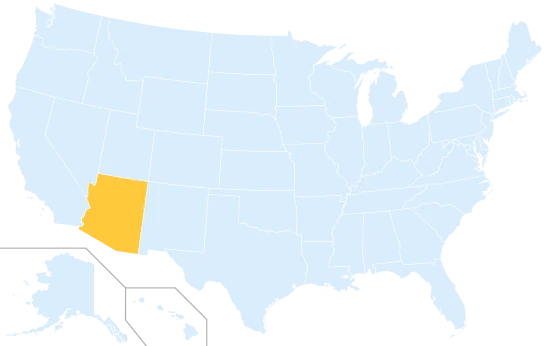
The state bird: Cactus Wren
Adopted in 1931. A big, bold wren that builds football-shaped nests in cholla and sings a harsh, rising series of char-char-char notes that ornithologists once compared to a car that will not start.
Recording by Wendy A, CC0, via iNaturalist.
Arizona is two states by ear. The low desert around Phoenix, Tucson and Yuma is doves, quail, thrashers, verdins and woodpeckers in saguaros, and it is loudest from February to May, before the heat. Above the Mogollon Rim, around Flagstaff and the White Mountains, ponderosa pine and aspen sound like the Rockies: Steller's Jays, Mountain Chickadees, Western Tanagers. In between, on the Colorado Plateau, pinyon and juniper hold Pinyon Jays and ravens.
Then there is the southeast corner, where the Madrean Sky Islands rise out of the grassland. The Santa Ritas, Huachucas and Chiricahuas carry birds from Mexico that occur nowhere else in the country, and every serious birder in America ends up there eventually.
The Arizona album
These are the 100 birds people report most often in Arizona, ranked by how frequently they turn up. The common and uncommon ones are shown; the rare and legendary cards stay face down until you catch them in the game.
Common 25 cards
- #008
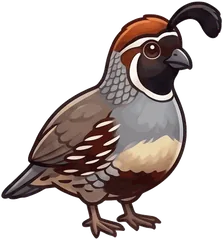 Gambel's Quail
Callipepla gambelii
Gambel's Quail
Callipepla gambelii - #010
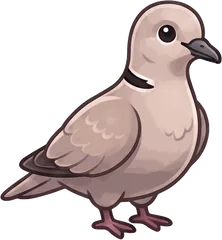 Eurasian Collared-Dove
Streptopelia decaocto
Eurasian Collared-Dove
Streptopelia decaocto - #012
 ?Catch it to find out
 - #013
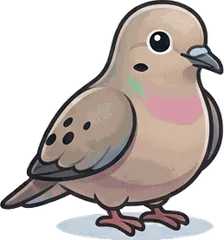 Mourning Dove
Zenaida macroura
Mourning Dove
Zenaida macroura - #016
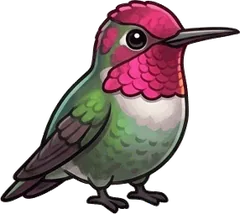 Anna's Hummingbird
Calypte anna
Anna's Hummingbird
Calypte anna - #020
 ?Catch it to find out
 - #025
 ?Catch it to find out
 - #026
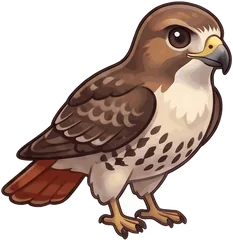 Red-tailed Hawk
Buteo jamaicensis
Red-tailed Hawk
Buteo jamaicensis - #028
 ?Catch it to find out
 - #029
 ?Catch it to find out
 - #033
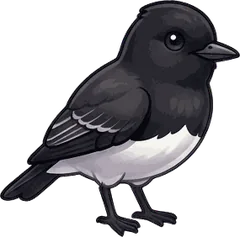 Black Phoebe
Sayornis nigricans
Black Phoebe
Sayornis nigricans - #035
 ?Catch it to find out
 - #046
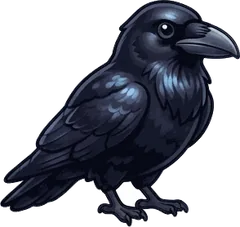 Common Raven
Corvus corax
Common Raven
Corvus corax - #048
 ?Catch it to find out
 - #052
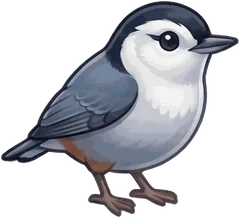 White-breasted Nuthatch
Sitta carolinensis
White-breasted Nuthatch
Sitta carolinensis - #060
 ?Catch it to find out
 - #061
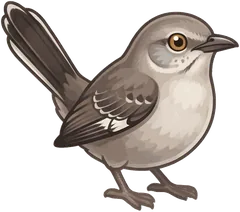 Northern Mockingbird
Mimus polyglottos
Northern Mockingbird
Mimus polyglottos - #066
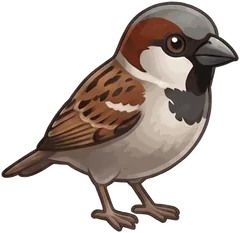 House Sparrow
Passer domesticus
House Sparrow
Passer domesticus - #067
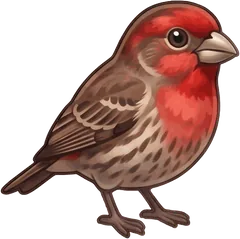 House Finch
Haemorhous mexicanus
House Finch
Haemorhous mexicanus - #069
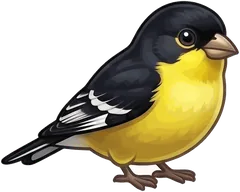 Lesser Goldfinch
Spinus psaltria
Lesser Goldfinch
Spinus psaltria - #076
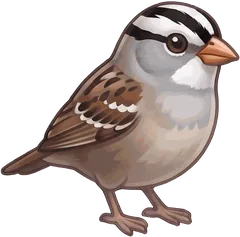 White-crowned Sparrow
Zonotrichia leucophrys
White-crowned Sparrow
Zonotrichia leucophrys - #080
 ?Catch it to find out
 - #086
 ?Catch it to find out
 - #091
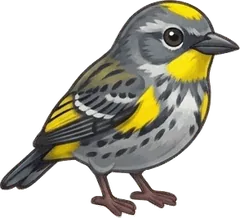 Yellow-rumped Warbler
Setophaga coronata
Yellow-rumped Warbler
Setophaga coronata - #097
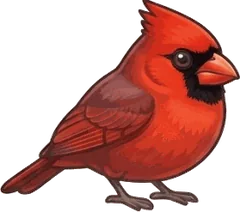 Northern Cardinal
Cardinalis cardinalis
Northern Cardinal
Cardinalis cardinalis
Uncommon 35 cards
- #003
 ?Catch it to find out
 - #004
 Mallard
Anas platyrhynchos
Mallard
Anas platyrhynchos - #007
 ?Catch it to find out
 - #009
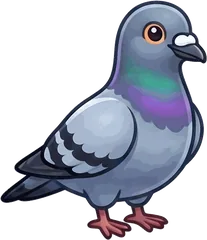 Rock Pigeon
Columba livia
Rock Pigeon
Columba livia - #014
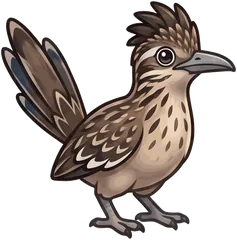 Greater Roadrunner
Geococcyx californianus
Greater Roadrunner
Geococcyx californianus - #015
 ?Catch it to find out
 - #019
 ?Catch it to find out
 - #021
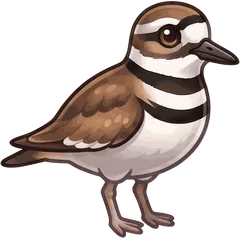 Killdeer
Charadrius vociferus
Killdeer
Charadrius vociferus - #022
 ?Catch it to find out
 - #024
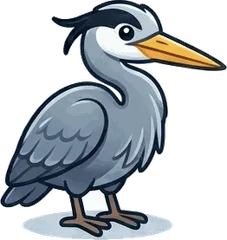 Great Blue Heron
Ardea herodias
Great Blue Heron
Ardea herodias - #027
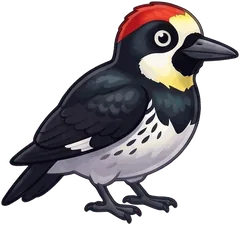 Acorn Woodpecker
Melanerpes formicivorus
Acorn Woodpecker
Melanerpes formicivorus - #030
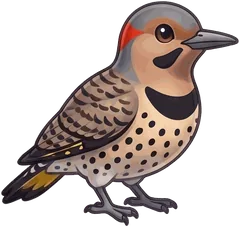 Northern Flicker
Colaptes auratus
Northern Flicker
Colaptes auratus - #031
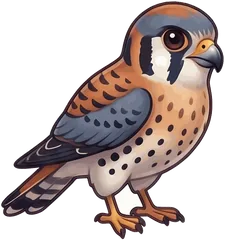 American Kestrel
Falco sparverius
American Kestrel
Falco sparverius - #034
 ?Catch it to find out
 - #036
 ?Catch it to find out
 - #038
 ?Catch it to find out
 - #040
 ?Catch it to find out
 - #045
 ?Catch it to find out
 - #047
 ?Catch it to find out
 - #057
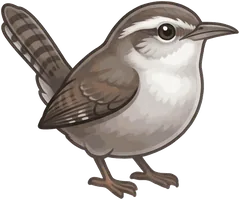 Bewick's Wren
Thryomanes bewickii
Bewick's Wren
Thryomanes bewickii - #058
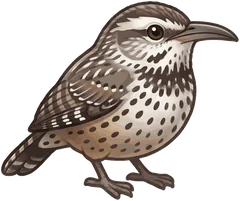 Cactus Wren
Campylorhynchus brunneicapillus
Cactus Wren
Campylorhynchus brunneicapillus - #059
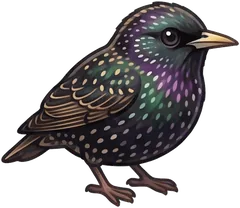 European Starling
Sturnus vulgaris
European Starling
Sturnus vulgaris - #064
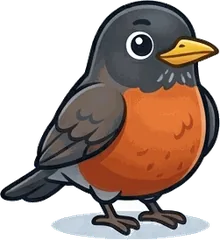 American Robin
Turdus migratorius
American Robin
Turdus migratorius - #065
 ?Catch it to find out
 - #071
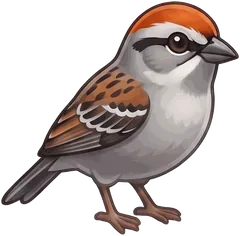 Chipping Sparrow
Spizella passerina
Chipping Sparrow
Spizella passerina - #072
 ?Catch it to find out
 - #074
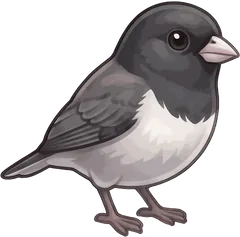 Dark-eyed Junco
Junco hyemalis
Dark-eyed Junco
Junco hyemalis - #077
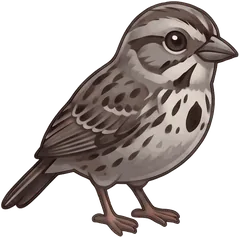 Song Sparrow
Melospiza melodia
Song Sparrow
Melospiza melodia - #079
 ?Catch it to find out
 - #082
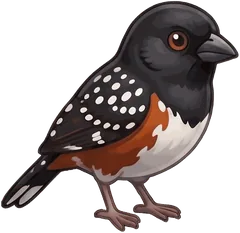 Spotted Towhee
Pipilo maculatus
Spotted Towhee
Pipilo maculatus - #084
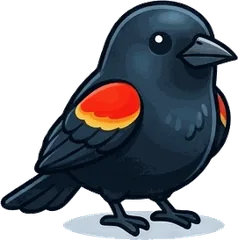 Red-winged Blackbird
Agelaius phoeniceus
Red-winged Blackbird
Agelaius phoeniceus - #085
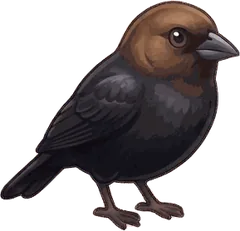 Brown-headed Cowbird
Molothrus ater
Brown-headed Cowbird
Molothrus ater - #088
 ?Catch it to find out
 - #090
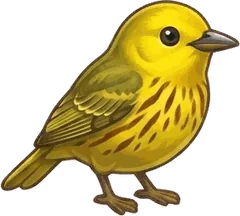 Yellow Warbler
Setophaga petechia
Yellow Warbler
Setophaga petechia - #099
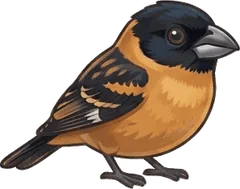 Black-headed Grosbeak
Pheucticus melanocephalus
Black-headed Grosbeak
Pheucticus melanocephalus
Rare 30 cards
- #001
 ?Catch it to find out
 - #002
 ?Catch it to find out
 - #005
 ?Catch it to find out
 - #006
 ?Catch it to find out
 - #011
 ?Catch it to find out
 - #017
 ?Catch it to find out
 - #018
 ?Catch it to find out
 - #023
 ?Catch it to find out
 - #032
 ?Catch it to find out
 - #039
 ?Catch it to find out
 - #042
 ?Catch it to find out
 - #043
 ?Catch it to reveal
 - #050
 ?Catch it to find out
 - #051?Catch it to reveal
- #053
 ?Catch it to find out
 - #056?Catch it to reveal
- #062?Catch it to reveal
- #063?Catch it to reveal
- #068?Catch it to reveal
- #073
 ?Catch it to find out
 - #078
 ?Catch it to find out
 - #087
 ?Catch it to find out
 - #089?Catch it to reveal
- #092
 ?Catch it to find out
 - #093
 ?Catch it to find out
 - #094
 ?Catch it to find out
 - #095?Catch it to reveal
- #096?Catch it to reveal
- #098
 ?Catch it to find out
 - #100
 ?Catch it to find out
Legendary 10 cards
- #037
 ?Catch it to find out
 - #041
 ?Catch it to find out
 - #044
 ?Catch it to find out
 - #049
 ?Catch it to find out
 - #054
 ?Catch it to find out
 - #055?Catch it to reveal
- #070
 ?Catch it to find out
 - #075
 ?Catch it to find out
 - #081
 ?Catch it to find out
 - #083
 ?Catch it to find out
 35 of the 100 cards are shown here. The other 65, including all 30 rare and 10 legendary birds, are yours to discover. Get Warble and start with the common ones.
Backyard birds you will hear first
The Mourning Dove and the White-winged Dove are the first sounds of a desert morning, and in a Tucson neighborhood in May the White-winged Doves can be loud enough to cover everything else. The House Finch sings its long warble from the wires, the Lesser Goldfinch adds thin, wheezy notes, and the Verdin, a tiny gray bird with a yellow face, gives a three-note whistle heard far more often than the bird is seen.
The Cactus Wren is the state bird and the hardest to ignore. It sings from the top of a cholla or a saguaro, a rising, rasping char-char-char-char that gets louder as it goes. Gila Woodpeckers roll out a churring call from the same saguaros, and the Curve-billed Thrasher whistles a sharp whit-wheet from the yard.
Gambel's Quail run across the street in a line, calling chi-ca-go to keep the covey together, and the Greater Roadrunner gives a low, descending series of coos that people rarely connect with the bird. The Anna's Hummingbird sings all winter, a scratchy, buzzy song from a bare branch, and the Common Raven croaks over all of it.
The regions, by ear
The Sonoran Desert
Phoenix, Tucson and everything between. Saguaro National Park holds the classic cast: Gila Woodpecker, Cactus Wren, Gambel's Quail, Greater Roadrunner, and after dark the Elf Owl, the smallest owl in the world, which returns to the saguaros by March. Great-tailed Grackles have the parking lots.
The sky islands
Madera Canyon, in the Santa Rita Mountains 25 miles southeast of Tucson, has more than 256 recorded species and 15 kinds of hummingbird, plus the Elegant Trogon, whose barking croak echoes off the sycamores in spring. The Canyon Wren pours its descending whistle down the rock, and Mexican Jays travel the oaks in noisy family groups. The San Pedro River, a green ribbon through the desert, is one of the great migration corridors of the Southwest.
The high country
Ponderosa pine above the Rim: Steller's Jay scolding, Mountain Chickadee whistling a hoarse fee-bee-bee, Western Tanager singing like a robin with a sore throat, and the wing trill of Broad-tailed Hummingbirds passing overhead.
The Colorado Plateau
Pinyon-juniper woodland and open sky: Pinyon Jays in wandering flocks, ravens and Western Bluebirds.
Best months to listen
The desert starts early. Anna's Hummingbirds and doves are going in January, Cactus Wrens and thrashers are in full song by February, and March and April are the peak in the lowlands, with migrants moving through the river corridors. By June the low desert is quiet except at dawn, and the action moves up: the sky islands and the Rim are best from May into August.
Winter is the lowland season again. Sparrows fill the washes, Sandhill Cranes gather at Whitewater Draw in the southeast, and the Anna's Hummingbird in your yard is still singing.
Places worth the drive
- Saguaro National Park, both sides of Tucson: the Sonoran Desert cast, and Elf Owls calling at dusk in spring.
- Madera Canyon, southeast of Tucson: trogons, hummingbirds and the sound of a canyon full of Mexican Jays.
- San Pedro River, near Sierra Vista: cottonwood forest and the busiest migration corridor in the state.
- Whitewater Draw, in the Sulphur Springs Valley: Sandhill Cranes in winter, by the thousand.
- The Mogollon Rim and Flagstaff: mountain birds within two hours of Phoenix.
You do not need any of them. A Phoenix backyard with a mesquite and a hummingbird feeder will give you 25 of the 100 in a month.
Listen before you go
Three of the common Arizona birds, so the first songs you hear outside already ring a bell.
Recording by Fionn Ó Marcaigh, CC BY 4.0, via iNaturalist.
Recording by Elizabeth, CC0, via iNaturalist.
Recording by Richard Littauer, CC BY 4.0, via iNaturalist.
Questions people ask
What is the state bird of Arizona?
The Cactus Wren, adopted in 1931. It is the largest wren in the United States, nests in cholla and other spiny cactus, and sings a harsh, rising rasp rather than anything musical.
How many bird species are there in Arizona?
The Arizona Bird Committee lists 569 species as of January 2023, about 150 of them accidental visitors and more than 300 with confirmed nesting. Many are Mexican species that reach the United States only in the sky islands of the southeast.
What bird sounds like a car that will not start in Arizona?
The Cactus Wren. Its song is a low, rasping char-char-char that speeds up and gets louder, and the comparison to a stalling engine is an old one among ornithologists.
Nearby albums
Sources
- Wikipedia: List of birds of Arizona. en.wikipedia.org/wiki/List_of_birds_of_Arizona
- Wikipedia: Cactus wren. en.wikipedia.org/wiki/Cactus_wren
- National Audubon Society, Audubon Southwest: Birds of Arizona and New Mexico. www.audubon.org/southwest/birds
- Wikipedia: Madera Canyon. en.wikipedia.org/wiki/Madera_Canyon