 Warble
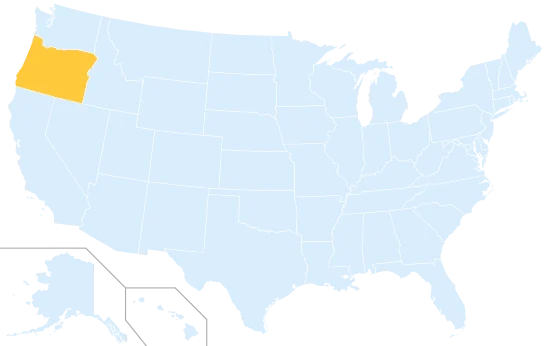
The state bird: Western Meadowlark
Proclaimed the state bird by Governor Patterson in 1927 but never made official by the legislature until 2017, when it became the state songbird and the Osprey the state raptor. A rich, gurgling whistle from a fence post over open grass.
Recording by Anne Parsons, CC0, via iNaturalist.
The Oregon Bird Records Committee had 547 species on its list as of August 2022, with 164 of them rare enough to sit on the review list. The count is high because the state runs from the Pacific to the Great Basin: rocky headlands and seabird colonies, the wet Coast Range, the Willamette Valley where most Oregonians live, the Cascades, and then a dry eastern two-thirds of sagebrush, rimrock and marsh that most visitors never see.
By ear, the west side is soft and layered: robins, juncos and Song Sparrows through a drizzle that lasts from November to May, Pacific Wrens pouring out long songs from the ferns, a Varied Thrush humming one eerie note from the firs. Cross the pass and the sound opens up: meadowlarks, Sandhill Cranes and the wind.
The Oregon album
These are the 100 birds people report most often in Oregon, ranked by how frequently they turn up. The common and uncommon ones are shown; the rare and legendary cards stay face down until you catch them in the game.
Common 25 cards
- #002
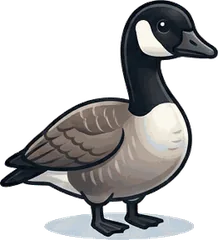 Canada Goose
Branta canadensis
Canada Goose
Branta canadensis - #008
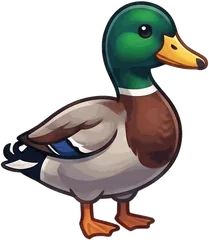 Mallard
Anas platyrhynchos
Mallard
Anas platyrhynchos - #021
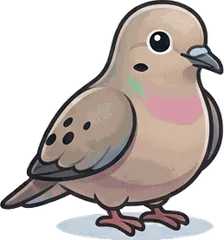 Mourning Dove
Zenaida macroura
Mourning Dove
Zenaida macroura - #023
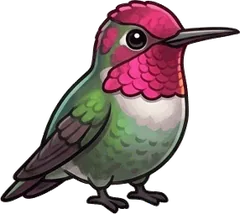 Anna's Hummingbird
Calypte anna
Anna's Hummingbird
Calypte anna - #034
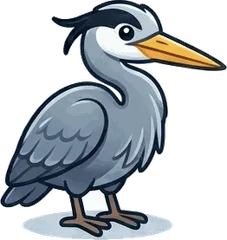 Great Blue Heron
Ardea herodias
Great Blue Heron
Ardea herodias - #035
 ?Catch it to find out
 - #039
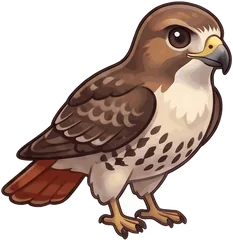 Red-tailed Hawk
Buteo jamaicensis
Red-tailed Hawk
Buteo jamaicensis - #044
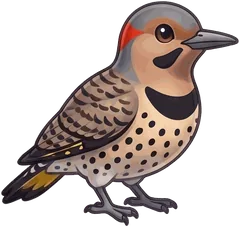 Northern Flicker
Colaptes auratus
Northern Flicker
Colaptes auratus - #049
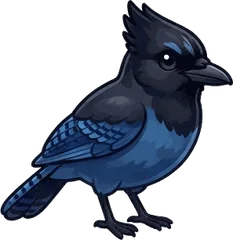 Steller's Jay
Cyanocitta stelleri
Steller's Jay
Cyanocitta stelleri - #050
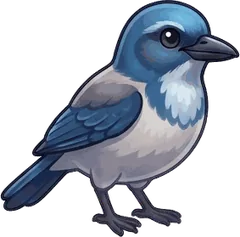 California Scrub-Jay
Aphelocoma californica
California Scrub-Jay
Aphelocoma californica - #052
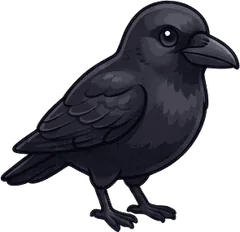 American Crow
Corvus brachyrhynchos
American Crow
Corvus brachyrhynchos - #053
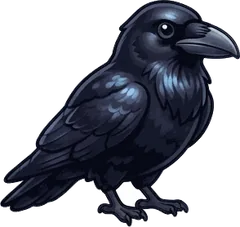 Common Raven
Corvus corax
Common Raven
Corvus corax - #054
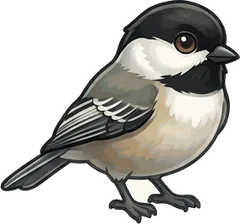 Black-capped Chickadee
Poecile atricapillus
Black-capped Chickadee
Poecile atricapillus - #064
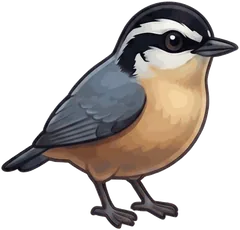 Red-breasted Nuthatch
Sitta canadensis
Red-breasted Nuthatch
Sitta canadensis - #070
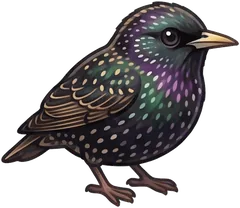 European Starling
Sturnus vulgaris
European Starling
Sturnus vulgaris - #075
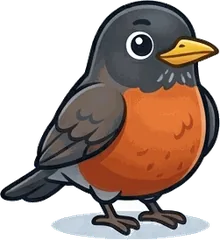 American Robin
Turdus migratorius
American Robin
Turdus migratorius - #078
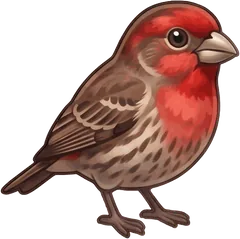 House Finch
Haemorhous mexicanus
House Finch
Haemorhous mexicanus - #081
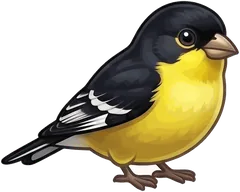 Lesser Goldfinch
Spinus psaltria
Lesser Goldfinch
Spinus psaltria - #082
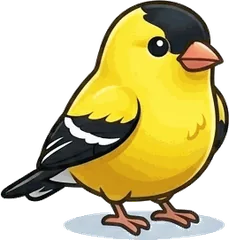 American Goldfinch
Spinus tristis
American Goldfinch
Spinus tristis - #084
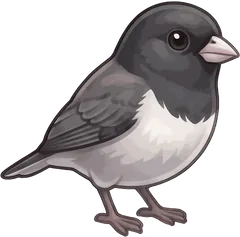 Dark-eyed Junco
Junco hyemalis
Dark-eyed Junco
Junco hyemalis - #085
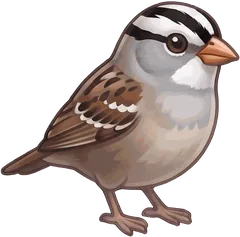 White-crowned Sparrow
Zonotrichia leucophrys
White-crowned Sparrow
Zonotrichia leucophrys - #088
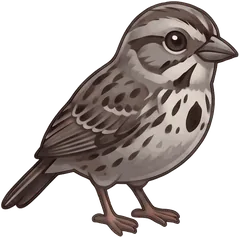 Song Sparrow
Melospiza melodia
Song Sparrow
Melospiza melodia - #089
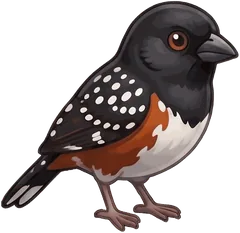 Spotted Towhee
Pipilo maculatus
Spotted Towhee
Pipilo maculatus - #091
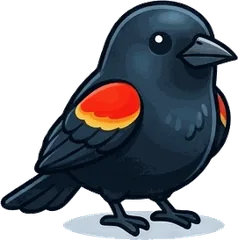 Red-winged Blackbird
Agelaius phoeniceus
Red-winged Blackbird
Agelaius phoeniceus - #097
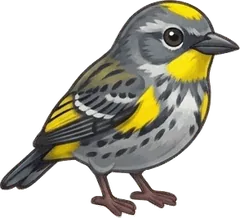 Yellow-rumped Warbler
Setophaga coronata
Yellow-rumped Warbler
Setophaga coronata
Uncommon 35 cards
- #001
 ?Catch it to find out
 - #005
 ?Catch it to find out
 - #006
 ?Catch it to find out
 - #007
 ?Catch it to find out
 - #010
 ?Catch it to find out
 - #011
 ?Catch it to find out
 - #013
 ?Catch it to find out
 - #020
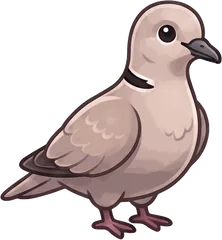 Eurasian Collared-Dove
Streptopelia decaocto
Eurasian Collared-Dove
Streptopelia decaocto - #025
 ?Catch it to find out
 - #026
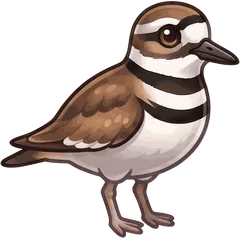 Killdeer
Charadrius vociferus
Killdeer
Charadrius vociferus - #032
 ?Catch it to find out
 - #033
 ?Catch it to find out
 - #037
 ?Catch it to find out
 - #038
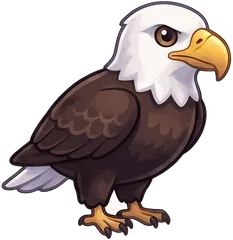 Bald Eagle
Haliaeetus leucocephalus
Bald Eagle
Haliaeetus leucocephalus - #040
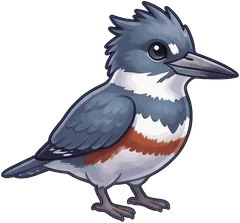 Belted Kingfisher
Megaceryle alcyon
Belted Kingfisher
Megaceryle alcyon - #043
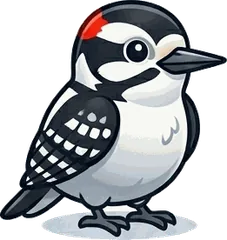 Downy Woodpecker
Dryobates pubescens
Downy Woodpecker
Dryobates pubescens - #045
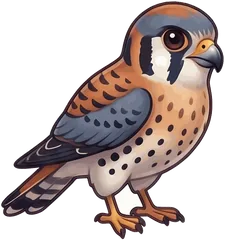 American Kestrel
Falco sparverius
American Kestrel
Falco sparverius - #056
 ?Catch it to find out
 - #057
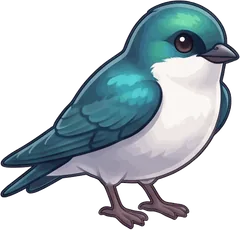 Tree Swallow
Tachycineta bicolor
Tree Swallow
Tachycineta bicolor - #058
 ?Catch it to find out
 - #059
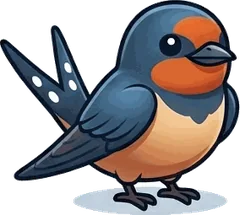 Barn Swallow
Hirundo rustica
Barn Swallow
Hirundo rustica - #061
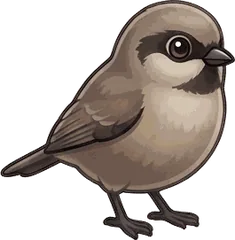 Bushtit
Psaltriparus minimus
Bushtit
Psaltriparus minimus - #062
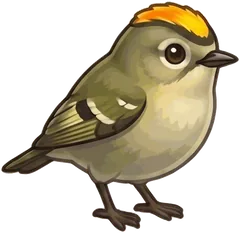 Golden-crowned Kinglet
Regulus satrapa
Golden-crowned Kinglet
Regulus satrapa - #063
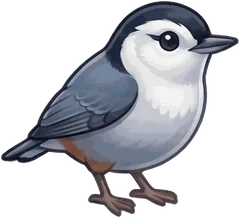 White-breasted Nuthatch
Sitta carolinensis
White-breasted Nuthatch
Sitta carolinensis - #065
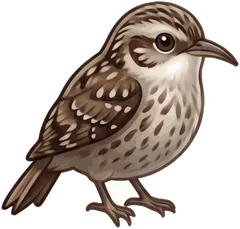 Brown Creeper
Certhia americana
Brown Creeper
Certhia americana - #067
 ?Catch it to find out
 - #069
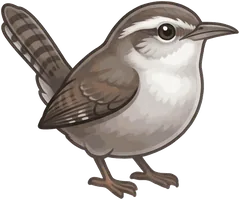 Bewick's Wren
Thryomanes bewickii
Bewick's Wren
Thryomanes bewickii - #076
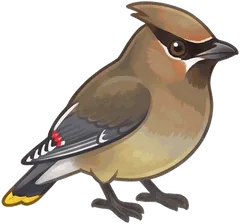 Cedar Waxwing
Bombycilla cedrorum
Cedar Waxwing
Bombycilla cedrorum - #077
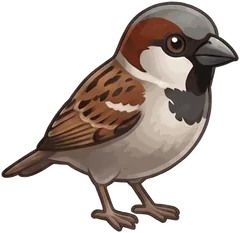 House Sparrow
Passer domesticus
House Sparrow
Passer domesticus - #080
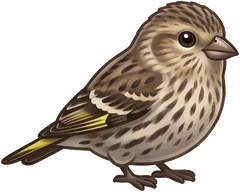 Pine Siskin
Spinus pinus
Pine Siskin
Spinus pinus - #086
 ?Catch it to find out
 - #092
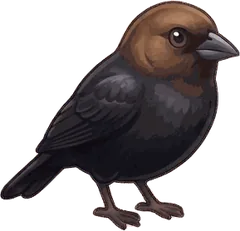 Brown-headed Cowbird
Molothrus ater
Brown-headed Cowbird
Molothrus ater - #093
 ?Catch it to find out
 - #095
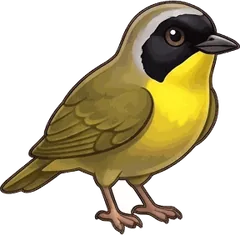 Common Yellowthroat
Geothlypis trichas
Common Yellowthroat
Geothlypis trichas - #100
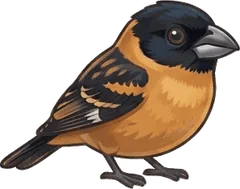 Black-headed Grosbeak
Pheucticus melanocephalus
Black-headed Grosbeak
Pheucticus melanocephalus
Rare 30 cards
- #003
 ?Catch it to reveal
 - #009
 ?Catch it to find out
 - #012
 ?Catch it to find out
 - #014
 ?Catch it to find out
 - #015
 ?Catch it to find out
 - #017?Catch it to reveal
- #018?Catch it to reveal
- #022
 ?Catch it to find out
 - #024
 ?Catch it to find out
 - #029
 ?Catch it to find out
 - #030?Catch it to reveal
- #031
 ?Catch it to find out
 - #036?Catch it to reveal
- #041
 ?Catch it to find out
 - #042?Catch it to reveal
- #046
 ?Catch it to find out
 - #047?Catch it to reveal
- #055?Catch it to reveal
- #060
 ?Catch it to find out
 - #068
 ?Catch it to find out
 - #072?Catch it to reveal
- #073?Catch it to reveal
- #079?Catch it to reveal
- #083
 ?Catch it to find out
 - #087
 ?Catch it to find out
 - #090?Catch it to reveal
- #094
 ?Catch it to find out
 - #096?Catch it to reveal
- #098
 ?Catch it to find out
 - #099?Catch it to reveal
Legendary 10 cards
- #004
 ?Catch it to find out
 - #016
 ?Catch it to find out
 - #019
 ?Catch it to find out
 - #027
 ?Catch it to find out
 - #028
 ?Catch it to find out
 - #048?Catch it to reveal
- #051?Catch it to reveal
- #066?Catch it to reveal
- #071?Catch it to reveal
- #074?Catch it to reveal
 43 of the 100 cards are shown here. The other 57, including all 30 rare and 10 legendary birds, are yours to discover. Get Warble and start with the common ones.
Backyard birds you will hear first
The American Robin leads the album and sings from February to July, before dawn and after dark under the streetlights. The Song Sparrow is second, a dark, streaky western bird that sings its clear notes, buzz and trill from every blackberry tangle, and the American Crow is third and everywhere. The Dark-eyed Junco is the feeder bird of the state, trilling on one pitch from a Douglas-fir in spring and ticking in the shrubs all winter.
The Northern Flicker shouts a long wick-wick-wick and drums on gutters in March. The Black-capped Chickadee whistles fee-bee in the valley towns, and the Spotted Towhee buzzes a hoarse trill from the underbrush. Two jays split the state: the California Scrub-Jay screeches from the oaks and rooftops of the valley, and the Steller's Jay rasps from the conifers and takes over as soon as the road climbs.
The regions, by ear
The coast
Headlands, sea stacks and wide beaches. Common Murres and cormorants crowd the offshore rocks in summer, Western Gulls and Brown Pelicans work the surf, Black Oystercatchers pipe from the tide pools, and in the spruce behind the beach a Pacific Wren sings for ten seconds without a breath.
The Willamette Valley
Farms, oak savanna and the cities. William L. Finley National Wildlife Refuge, ten miles south of Corvallis, was set up in 1964 as winter habitat for the dusky Canada goose, a subspecies of about 16,000 birds that nests on Alaska's Copper River Delta and winters almost entirely in these valley wetlands. Its 5,700 acres of oak savanna, wet prairie and riparian forest hold the largest remaining piece of native Willamette Valley wet prairie, and more than 260 recorded bird species.
The Cascades
Big fir and hemlock forest, then high lakes and lava. The Varied Thrush hums its single drawn-out note from the shade, Hermit Thrushes and Swainson's Thrushes spiral through the evening, Mountain Chickadees and Red-breasted Nuthatches work the pines on the dry eastern slope.
The high desert and Malheur
Malheur National Wildlife Refuge, about 30 miles south of Burns in the Harney Basin, was created by President Theodore Roosevelt on August 18, 1908, and now covers 187,757 acres of marsh, desert, grassland and rimrock. As many as 320 bird species and 58 mammals have been recorded there. Sandhill Cranes bugle over the meadows, pintails and Tundra Swans fill the ponds, and in a good year well over 300,000 migrating ducks feed on Harney Lake. Late spring and early fall are the times to go; summer bakes and winter freezes.
Best months to listen
West of the Cascades, song starts early: robins and Song Sparrows in February, juncos and towhees in March, and by late April the valley is full and the coast wrens are at their loudest. May is the peak everywhere. June and July belong to the mountains, where thrushes sing until dark. Fall brings the ducks and geese back to the valley refuges and the seabirds close to shore, and winter is the quiet season of juncos at the feeder and swans on the flooded fields.
Places worth the drive
- Malheur National Wildlife Refuge, southeast Oregon: cranes, ducks and up to 320 species in a desert marsh.
- William L. Finley National Wildlife Refuge, south of Corvallis: dusky Canada geese in winter, oak savanna and wet prairie.
- Cape Meares and the Three Capes, on the coast: murres and cormorants on the rocks, Pacific Wrens in the spruce.
None of it is required. A Portland backyard with a fir, a feeder and a blackberry hedge gives you the first 20 cards in Warble by the end of March.
Listen before you go
Three of the common Oregon birds, so the first songs you hear outside already ring a bell.
Recording by Chase Harris, CC0, via iNaturalist.
Recording by Fionn Ó Marcaigh, CC BY 4.0, via iNaturalist.
Recording by Gabriel Dixon, CC0, via iNaturalist.
Questions people ask
What is the most common bird in Oregon?
By the reports behind the album, the American Robin, then the Song Sparrow, the American Crow, the Dark-eyed Junco, the Northern Flicker and the Black-capped Chickadee.
What is the state bird of Oregon?
The Western Meadowlark, proclaimed by the governor in 1927 and made the official state songbird by the legislature in 2017, when the Osprey was named the state raptor. Five other states also chose the Western Meadowlark.
How many bird species are there in Oregon?
547 species as of August 2022, according to the Oregon Bird Records Committee. The Warble album covers the 100 reported most often.
Nearby albums
Sources
- Wikipedia: List of birds of Oregon. en.wikipedia.org/wiki/List_of_birds_of_Oregon
- Wikipedia: List of U.S. state birds. en.wikipedia.org/wiki/List_of_U.S._state_birds
- Wikipedia: Malheur National Wildlife Refuge. en.wikipedia.org/wiki/Malheur_National_Wildlife_Refuge
- U.S. Fish and Wildlife Service: William L. Finley National Wildlife Refuge. www.fws.gov/refuge/william-l-finley