 Warble
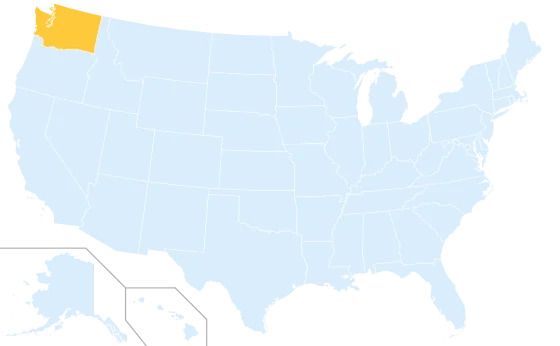
The state bird: American Goldfinch
Adopted in 1951 under the name Willow Goldfinch, the local name for the same bird. A bright yellow finch that nests late, in July when the thistles seed, and calls po-ta-to-chip in flight over every field and roadside.
Recording by Chase Harris, CC0, via iNaturalist.
The Washington Bird Records Committee listed 522 species as of November 2021, with 159 of them accidental and 11 introduced. That total comes from range: the Pacific coast and the Olympic rainforest, the inland sea of Puget Sound, two mountain ranges, and the sagebrush and wheat of the Columbia Basin.
Most of the people are on the wet side, in Seattle, Tacoma and Olympia, and the everyday album there is robins, crows, Song Sparrows in the blackberries, juncos under the feeder and a Spotted Towhee scratching in the leaves, through a winter that rarely freezes.
The Washington album
These are the 100 birds people report most often in Washington, ranked by how frequently they turn up. The common and uncommon ones are shown; the rare and legendary cards stay face down until you catch them in the game.
Common 25 cards
- #002
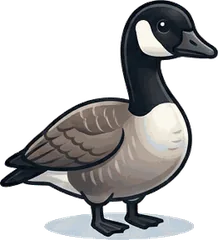 Canada Goose
Branta canadensis
Canada Goose
Branta canadensis - #007
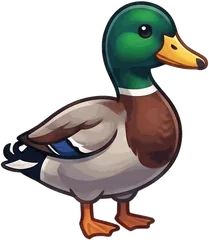 Mallard
Anas platyrhynchos
Mallard
Anas platyrhynchos - #013
 ?Catch it to find out
 - #023
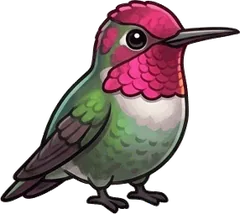 Anna's Hummingbird
Calypte anna
Anna's Hummingbird
Calypte anna - #032
 ?Catch it to find out
 - #038
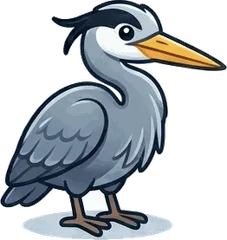 Great Blue Heron
Ardea herodias
Great Blue Heron
Ardea herodias - #042
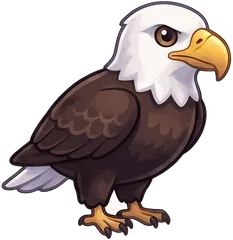 Bald Eagle
Haliaeetus leucocephalus
Bald Eagle
Haliaeetus leucocephalus - #043
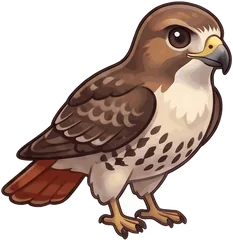 Red-tailed Hawk
Buteo jamaicensis
Red-tailed Hawk
Buteo jamaicensis - #048
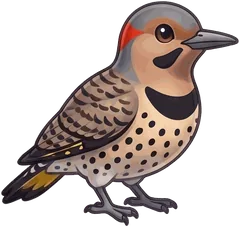 Northern Flicker
Colaptes auratus
Northern Flicker
Colaptes auratus - #054
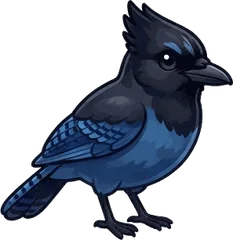 Steller's Jay
Cyanocitta stelleri
Steller's Jay
Cyanocitta stelleri - #057
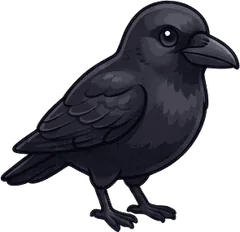 American Crow
Corvus brachyrhynchos
American Crow
Corvus brachyrhynchos - #058
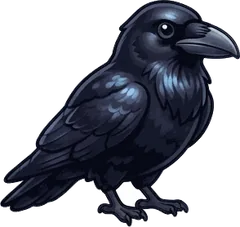 Common Raven
Corvus corax
Common Raven
Corvus corax - #059
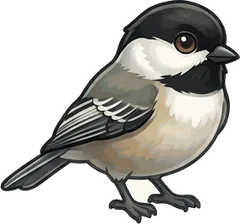 Black-capped Chickadee
Poecile atricapillus
Black-capped Chickadee
Poecile atricapillus - #060
 ?Catch it to find out
 - #068
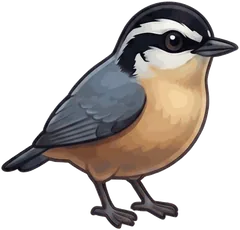 Red-breasted Nuthatch
Sitta canadensis
Red-breasted Nuthatch
Sitta canadensis - #072
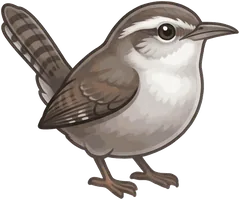 Bewick's Wren
Thryomanes bewickii
Bewick's Wren
Thryomanes bewickii - #073
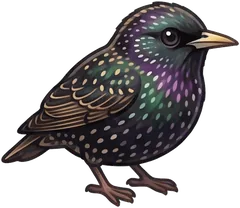 European Starling
Sturnus vulgaris
European Starling
Sturnus vulgaris - #076
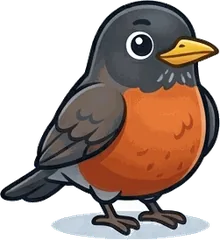 American Robin
Turdus migratorius
American Robin
Turdus migratorius - #079
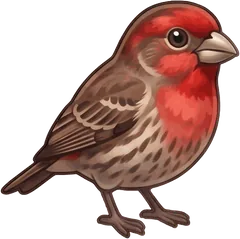 House Finch
Haemorhous mexicanus
House Finch
Haemorhous mexicanus - #082
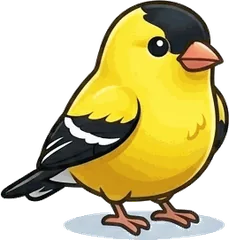 American Goldfinch
Spinus tristis
American Goldfinch
Spinus tristis - #084
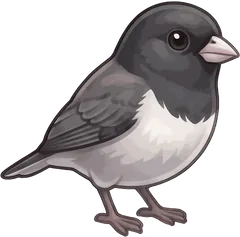 Dark-eyed Junco
Junco hyemalis
Dark-eyed Junco
Junco hyemalis - #085
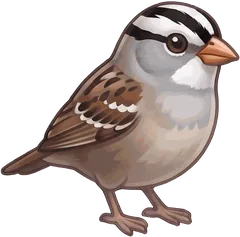 White-crowned Sparrow
Zonotrichia leucophrys
White-crowned Sparrow
Zonotrichia leucophrys - #088
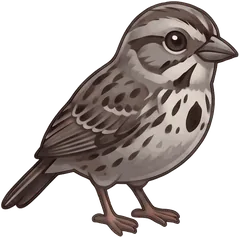 Song Sparrow
Melospiza melodia
Song Sparrow
Melospiza melodia - #089
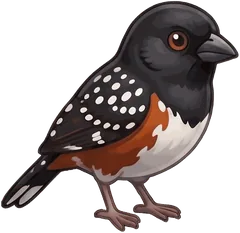 Spotted Towhee
Pipilo maculatus
Spotted Towhee
Pipilo maculatus - #091
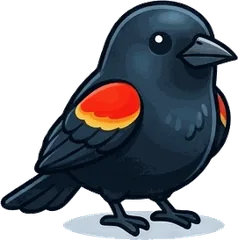 Red-winged Blackbird
Agelaius phoeniceus
Red-winged Blackbird
Agelaius phoeniceus
Uncommon 35 cards
- #005
 ?Catch it to find out
 - #006
 ?Catch it to find out
 - #009
 ?Catch it to find out
 - #010
 ?Catch it to find out
 - #014
 ?Catch it to find out
 - #015
 ?Catch it to find out
 - #016
 ?Catch it to find out
 - #019
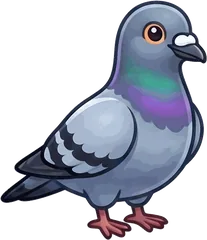 Rock Pigeon
Columba livia
Rock Pigeon
Columba livia - #021
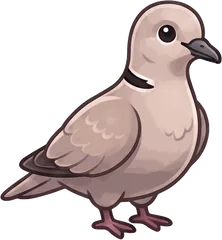 Eurasian Collared-Dove
Streptopelia decaocto
Eurasian Collared-Dove
Streptopelia decaocto - #022
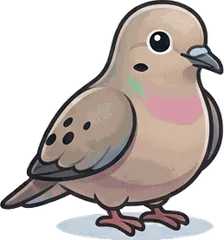 Mourning Dove
Zenaida macroura
Mourning Dove
Zenaida macroura - #024
 ?Catch it to find out
 - #025
 ?Catch it to find out
 - #026
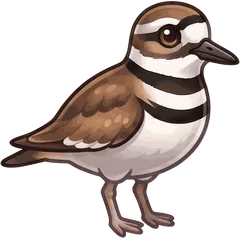 Killdeer
Charadrius vociferus
Killdeer
Charadrius vociferus - #030
 ?Catch it to find out
 - #034
 ?Catch it to find out
 - #040
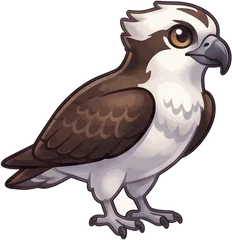 Osprey
Pandion haliaetus
Osprey
Pandion haliaetus - #044
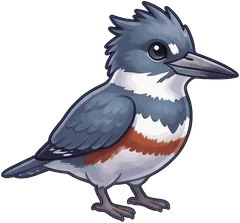 Belted Kingfisher
Megaceryle alcyon
Belted Kingfisher
Megaceryle alcyon - #046
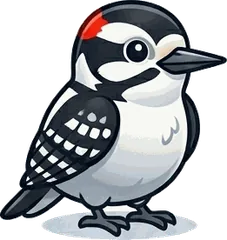 Downy Woodpecker
Dryobates pubescens
Downy Woodpecker
Dryobates pubescens - #061
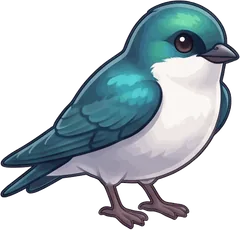 Tree Swallow
Tachycineta bicolor
Tree Swallow
Tachycineta bicolor - #062
 ?Catch it to find out
 - #064
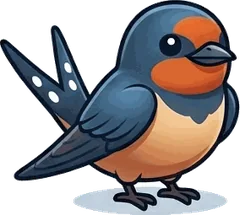 Barn Swallow
Hirundo rustica
Barn Swallow
Hirundo rustica - #066
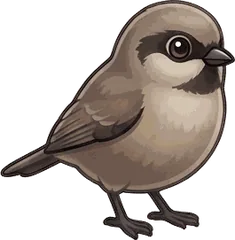 Bushtit
Psaltriparus minimus
Bushtit
Psaltriparus minimus - #067
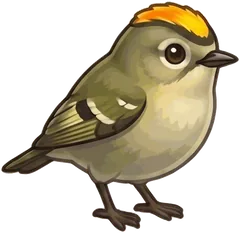 Golden-crowned Kinglet
Regulus satrapa
Golden-crowned Kinglet
Regulus satrapa - #069
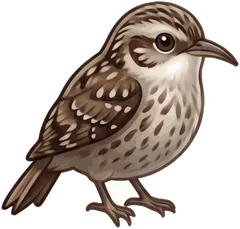 Brown Creeper
Certhia americana
Brown Creeper
Certhia americana - #070
 ?Catch it to find out
 - #071
 ?Catch it to find out
 - #077
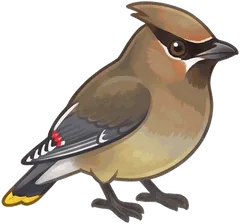 Cedar Waxwing
Bombycilla cedrorum
Cedar Waxwing
Bombycilla cedrorum - #078
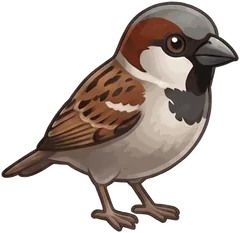 House Sparrow
Passer domesticus
House Sparrow
Passer domesticus - #080
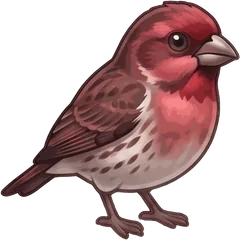 Purple Finch
Haemorhous purpureus
Purple Finch
Haemorhous purpureus - #081
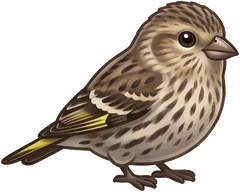 Pine Siskin
Spinus pinus
Pine Siskin
Spinus pinus - #086
 ?Catch it to find out
 - #087
 ?Catch it to find out
 - #092
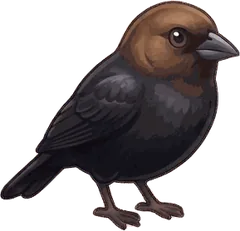 Brown-headed Cowbird
Molothrus ater
Brown-headed Cowbird
Molothrus ater - #097
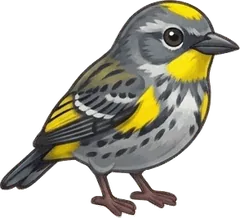 Yellow-rumped Warbler
Setophaga coronata
Yellow-rumped Warbler
Setophaga coronata - #100
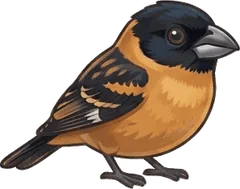 Black-headed Grosbeak
Pheucticus melanocephalus
Black-headed Grosbeak
Pheucticus melanocephalus
Rare 30 cards
- #003
 ?Catch it to reveal
 - #004
 ?Catch it to find out
 - #008
 ?Catch it to find out
 - #012
 ?Catch it to find out
 - #018?Catch it to reveal
- #028
 ?Catch it to find out
 - #029
 ?Catch it to find out
 - #031?Catch it to reveal
- #033
 ?Catch it to find out
 - #035
 ?Catch it to find out
 - #037?Catch it to reveal
- #039
 ?Catch it to find out
 - #041
 ?Catch it to find out
 - #047?Catch it to reveal
- #049?Catch it to reveal
- #050
 ?Catch it to find out
 - #052
 ?Catch it to find out
 - #053?Catch it to reveal
- #055?Catch it to reveal
- #056?Catch it to reveal
- #074?Catch it to reveal
- #075?Catch it to reveal
- #083
 ?Catch it to find out
 - #090?Catch it to reveal
- #093
 ?Catch it to find out
 - #094
 ?Catch it to find out
 - #095?Catch it to reveal
- #096?Catch it to reveal
- #098
 ?Catch it to find out
 - #099?Catch it to reveal
Legendary 10 cards
- #001
 ?Catch it to find out
 - #011
 ?Catch it to find out
 - #017
 ?Catch it to find out
 - #020
 ?Catch it to find out
 - #027
 ?Catch it to find out
 - #036
 ?Catch it to find out
 - #045
 ?Catch it to find out
 - #051
 ?Catch it to find out
 - #063
 ?Catch it to find out
 - #065
 ?Catch it to find out
 41 of the 100 cards are shown here. The other 59, including all 30 rare and 10 legendary birds, are yours to discover. Get Warble and start with the common ones.
Backyard birds you will hear first
The American Robin leads, singing from February in the lowlands and running past dark on June evenings. The American Crow is second and present everywhere, including the roosts that darken the Seattle sky at dusk in winter. The Song Sparrow is third, darker here than in the East but with the same three clear notes and a jumble. The Dark-eyed Junco trills from the top of a Douglas-fir, and the Black-capped Chickadee whistles its two-note fee-bee from the alders.
The Spotted Towhee is the one easterners do not know: a big rusty-sided sparrow that scratches noisily in the leaf litter and calls a rising, catlike mew from the salal. The Northern Flicker shouts wick-wick-wick from the snags, and Anna's Hummingbird sings a thin scratchy song from a bare twig in January, in the rain. Mallards, Canada Geese, starlings and House Finches fill in the rest of the top twelve.
The regions, by ear
Puget Sound
Cities, mudflats and second-growth forest. Billy Frank Jr. Nisqually National Wildlife Refuge, where the Nisqually River meets Puget Sound near Olympia, was established in 1974 and has recorded at least 250 bird species; in 2009 it completed the largest estuary restoration in the Pacific Northwest, and a mile-long boardwalk runs out over the tide flats. In winter it is ducks, geese and Bald Eagles; in spring the willows along the dikes are full of warblers and Swainson's Thrushes spiraling upward at dusk.
The Olympic Peninsula and the coast
Olympic National Park runs from sea level to more than 2,000 meters and holds about 300 species across beach, rainforest and mountain meadow. The rainforest voice is the Varied Thrush, a single long buzzing whistle that hangs in the fog, with Pacific Wrens pouring out long tinkling songs from the roots of the big trees. Marbled Murrelets fly in from the sea at dawn to nest on mossy limbs, Northern Spotted Owls are monitored in the old growth, Sooty Grouse hoot from the mountain meadows, and Peregrine Falcons hunt the cliffs.
The Cascades
Fir and hemlock below, heather and snow above. Steller's Jays scold through the campgrounds, Hermit Thrushes sing in the subalpine at dusk, and in July the high meadows are full of Mountain Bluebirds.
East of the mountains
Sagebrush, wheat, ponderosa pine and basalt, scoured into channels by ice age floods. The sound out here is the Western Meadowlark from a fence post, the Vesper Sparrow at dusk, and the Sage Thrasher's long run of phrases from the top of a bush.
Best months to listen
May is the peak in the lowlands on both sides of the mountains, with the residents singing and the flycatchers, warblers and thrushes just in. The Cascades and the Olympics run a month behind, with late June and July the time for the high meadows. The Columbia Basin is best in April and May, and the sagebrush is quiet by July.
Winter in Puget Sound is better than it has any right to be: ducks by the thousands, Bald Eagles on the rivers, Anna's Hummingbirds singing in January, and the robin starting again by Valentine's Day.
Places worth the drive
- Billy Frank Jr. Nisqually National Wildlife Refuge, Olympia: at least 250 species, a mile-long estuary boardwalk, winter waterfowl and eagles.
- Olympic National Park: about 300 species, Varied Thrushes and Pacific Wrens in the rainforest, murrelets on the coast.
- Turnbull National Wildlife Refuge, near Spokane: scablands, ponderosa pine and waterfowl ponds.
None of it is required. A yard with a cedar and a blackberry tangle in Tacoma or Bellingham gives you the first 20 cards in Warble.
Listen before you go
Three of the common Washington birds, so the first songs you hear outside already ring a bell.
Recording by Chase Harris, CC0, via iNaturalist.
Recording by Fionn Ó Marcaigh, CC BY 4.0, via iNaturalist.
Recording by Richard Littauer, CC BY 4.0, via iNaturalist.
Questions people ask
What is the most common bird in Washington?
By the reports behind the album, the American Robin, then the American Crow, the Song Sparrow, the Dark-eyed Junco and the Black-capped Chickadee.
What is the state bird of Washington?
The American Goldfinch, adopted in 1951 as the Willow Goldfinch, which is a local name for the same species. It nests late, in summer, when the thistles go to seed.
How many bird species are there in Washington?
522 species as of November 2021, according to the Washington Bird Records Committee, including 159 accidental and 11 introduced species. The Warble album covers the 100 reported most often.
Nearby albums
Sources
- Wikipedia: List of birds of Washington (state). en.wikipedia.org/wiki/List_of_birds_of_Washington_(state)
- Wikipedia: List of U.S. state birds. en.wikipedia.org/wiki/List_of_U.S._state_birds
- U.S. Fish and Wildlife Service: Billy Frank Jr. Nisqually National Wildlife Refuge. www.fws.gov/refuge/billy-frank-jr-nisqually
- National Park Service: Birds, Olympic National Park. www.nps.gov/olym/learn/nature/birds.htm