 Warble
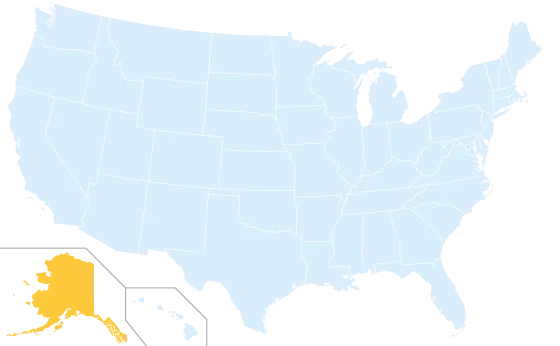
The state bird: Willow Ptarmigan
Adopted in 1955. A grouse of willow thickets and tundra, brown in summer and white in winter, that talks in low chuckles and clucks, with barking rattles from displaying males.
Recording by Richard Littauer, CC BY 4.0, via iNaturalist.
Alaska has more than 40,000 miles of coastline, regions that barely resemble each other, and a bird year packed into about three months. Southeast is dripping rainforest, where Varied Thrushes hum from the hemlocks. Southcentral, with Anchorage and the Kenai Peninsula, is spruce, birch and tidal marsh. The Interior around Fairbanks is boreal forest, silent at 40 below in January and full of thrush song at midnight in June. North and west is tundra, and out on the Bering Sea islands, seabird cliffs hold birds by the million, plus the occasional stray blown in from Asia.
Around a house in Anchorage or Juneau the cast is smaller and friendlier: chickadees, redpolls, juncos, magpies, ravens, a robin on the lawn from May, and a Steller's Jay yelling at the feeder.
The Alaska album
These are the 100 birds people report most often in Alaska, ranked by how frequently they turn up. The common and uncommon ones are shown; the rare and legendary cards stay face down until you catch them in the game.
Common 25 cards
- #002
 ?Catch it to find out
 - #004
 ?Catch it to find out
 - #005
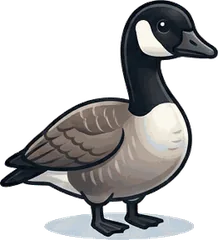 Canada Goose
Branta canadensis
Canada Goose
Branta canadensis - #007
 ?Catch it to find out
 - #009
 ?Catch it to find out
 - #010
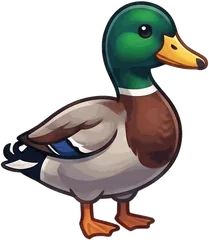 Mallard
Anas platyrhynchos
Mallard
Anas platyrhynchos - #011
 ?Catch it to find out
 - #012
 ?Catch it to find out
 - #046
 ?Catch it to find out
 - #049
 ?Catch it to find out
 - #050
 ?Catch it to find out
 - #057
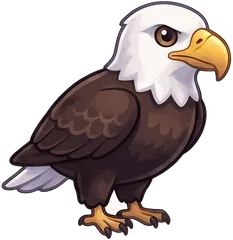 Bald Eagle
Haliaeetus leucocephalus
Bald Eagle
Haliaeetus leucocephalus - #063
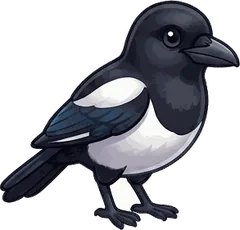 Black-billed Magpie
Pica hudsonia
Black-billed Magpie
Pica hudsonia - #065
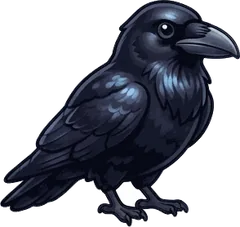 Common Raven
Corvus corax
Common Raven
Corvus corax - #066
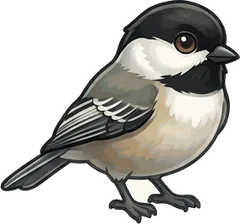 Black-capped Chickadee
Poecile atricapillus
Black-capped Chickadee
Poecile atricapillus - #074
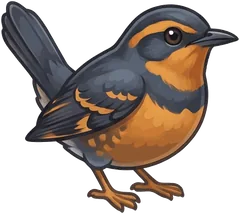 Varied Thrush
Ixoreus naevius
Varied Thrush
Ixoreus naevius - #078
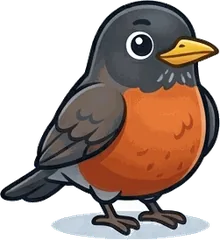 American Robin
Turdus migratorius
American Robin
Turdus migratorius - #081
 ?Catch it to find out
 - #084
 ?Catch it to find out
 - #087
 ?Catch it to find out
 - #088
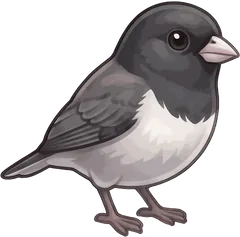 Dark-eyed Junco
Junco hyemalis
Dark-eyed Junco
Junco hyemalis - #089
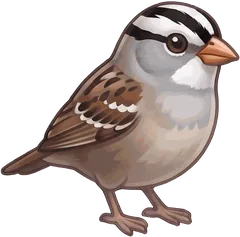 White-crowned Sparrow
Zonotrichia leucophrys
White-crowned Sparrow
Zonotrichia leucophrys - #091
 ?Catch it to find out
 - #095
 ?Catch it to find out
 - #098
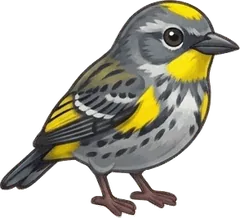 Yellow-rumped Warbler
Setophaga coronata
Yellow-rumped Warbler
Setophaga coronata
Uncommon 35 cards
- #001
 ?Catch it to find out
 - #003
 ?Catch it to find out
 - #006
 ?Catch it to find out
 - #008
 ?Catch it to find out
 - #013
 ?Catch it to find out
 - #015
 ?Catch it to find out
 - #019
 ?Catch it to find out
 - #020
 ?Catch it to find out
 - #023
 ?Catch it to find out
 - #024
 ?Catch it to find out
 - #028
 ?Catch it to find out
 - #029
 ?Catch it to find out
 - #044
 ?Catch it to find out
 - #048
 ?Catch it to find out
 - #054
 ?Catch it to find out
 - #060
 ?Catch it to find out
 - #061
 ?Catch it to find out
 - #062
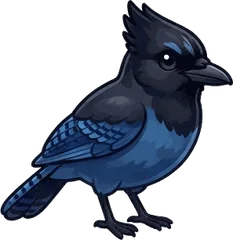 Steller's Jay
Cyanocitta stelleri
Steller's Jay
Cyanocitta stelleri - #064
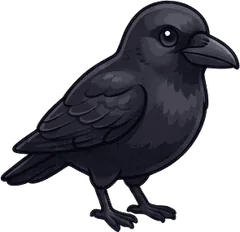 American Crow
Corvus brachyrhynchos
American Crow
Corvus brachyrhynchos - #067
 ?Catch it to find out
 - #068
 ?Catch it to find out
 - #069
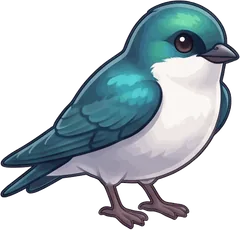 Tree Swallow
Tachycineta bicolor
Tree Swallow
Tachycineta bicolor - #071
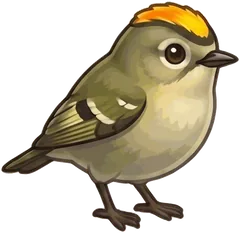 Golden-crowned Kinglet
Regulus satrapa
Golden-crowned Kinglet
Regulus satrapa - #072
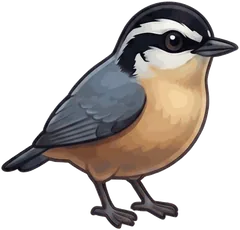 Red-breasted Nuthatch
Sitta canadensis
Red-breasted Nuthatch
Sitta canadensis - #073
 ?Catch it to find out
 - #076
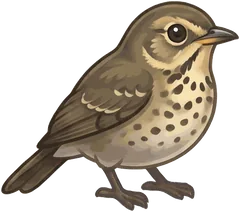 Swainson's Thrush
Catharus ustulatus
Swainson's Thrush
Catharus ustulatus - #077
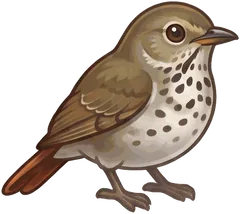 Hermit Thrush
Catharus guttatus
Hermit Thrush
Catharus guttatus - #083
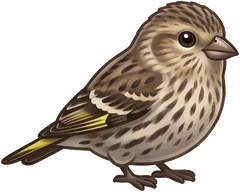 Pine Siskin
Spinus pinus
Pine Siskin
Spinus pinus - #085
 ?Catch it to find out
 - #090
 ?Catch it to find out
 - #092
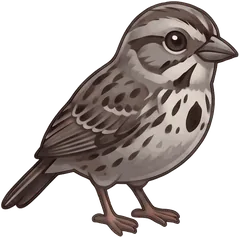 Song Sparrow
Melospiza melodia
Song Sparrow
Melospiza melodia - #093
 ?Catch it to find out
 - #094
 ?Catch it to find out
 - #096
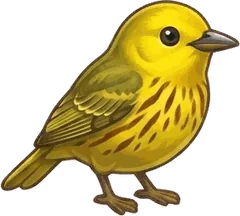 Yellow Warbler
Setophaga petechia
Yellow Warbler
Setophaga petechia - #100
 ?Catch it to find out
Rare 30 cards
- #014
 ?Catch it to find out
 - #016
 ?Catch it to find out
 - #017
 ?Catch it to find out
 - #021
 ?Catch it to find out
 - #022
 ?Catch it to find out
 - #025
 ?Catch it to reveal
 - #026?Catch it to reveal
- #027
 ?Catch it to find out
 - #030
 ?Catch it to find out
 - #031
 ?Catch it to find out
 - #032
 ?Catch it to find out
 - #033
 ?Catch it to find out
 - #034
 ?Catch it to find out
 - #036
 ?Catch it to find out
 - #037
 ?Catch it to find out
 - #042
 ?Catch it to find out
 - #043
 ?Catch it to find out
 - #045
 ?Catch it to find out
 - #047?Catch it to reveal
- #052
 ?Catch it to find out
 - #053
 ?Catch it to find out
 - #055?Catch it to reveal
- #056
 ?Catch it to find out
 - #058?Catch it to reveal
- #059?Catch it to reveal
- #070
 ?Catch it to find out
 - #075
 ?Catch it to find out
 - #082
 ?Catch it to find out
 - #086
 ?Catch it to find out
 - #099
 ?Catch it to find out
Legendary 10 cards
- #018
 ?Catch it to find out
 - #035
 ?Catch it to find out
 - #038
 ?Catch it to find out
 - #039
 ?Catch it to find out
 - #040
 ?Catch it to find out
 - #041
 ?Catch it to find out
 - #051
 ?Catch it to find out
 - #079
 ?Catch it to find out
 - #080
 ?Catch it to find out
 - #097
 ?Catch it to find out
 21 of the 100 cards are shown here. The other 79, including all 30 rare and 10 legendary birds, are yours to discover. Get Warble and start with the common ones.
Backyard birds you will hear first
The Black-capped Chickadee is the bird that keeps an Alaskan feeder company at 30 below, and its clear two-note fee-bee whistle, which starts up in February when the light comes back, is the first sign that winter will end.
The Common Raven is the winter voice of every Alaska town: croaks, knocks, bell notes and a sound like a drop of water in a bucket. The Black-billed Magpie chatters from the spruce tops around Anchorage, and redpolls and Pine Siskins arrive at the feeder in buzzy, restless flocks. The Bald Eagle counts as a backyard bird on the coast, and its thin chitter disappoints everyone who has seen a movie.
Summer flips the switch. The American Robin sings at 2 am in June because it is light at 2 am in June. The Varied Thrush gives one long, buzzing whistle from deep in the spruce, waits, then gives another on a different pitch. The Swainson's Thrush spirals upward out of the birches, and the Yellow-rumped Warbler is the warbler you will hear most.
The regions, by ear
Southeast
Rainforest, rain and tidewater. Varied Thrush and Pacific Wren from the understory, Steller's Jay scolding from the Sitka spruce, Bald Eagles nesting within sight of the harbor. Glacier Bay National Park lists about 240 species.
Southcentral
Anchorage sits between mountains and mudflats. Potter Marsh, just south of town, has a boardwalk over the wetland: Canada Geese, pintails, Arctic Terns screaming over the pools. On the Kenai Peninsula, Trumpeter Swans nest on the refuge lakes and the Common Loon calls across the canoe trails at dusk.
The Interior
Boreal forest: black spruce, birch, aspen and bog. Fairbanks has Creamer's Field, nearly 3,000 acres of former dairy pasture where Sandhill Cranes and geese land in spring and again in late summer. Denali National Park lists 167 species.
The Arctic and the Bering Sea
Tundra, ponds and no trees. Nome sees about 200 migratory species between mid May and mid June, many of them songbirds that winter in Asia. Utqiagvik on the North Slope has Snowy Owls, and the cliffs of the Pribilofs hold an estimated three million seabirds: murres, auklets, puffins, kittiwakes.
Best months to listen
May is arrival month. Shorebirds crowd the Copper River Delta from late April through May, some 12 million of them in a season, and the songbirds land in the second half of May. June is peak song, and with the sun barely dipping below the horizon the dawn chorus is more of a mood than a time: thrushes sing past midnight and robins are going again by three.
Winter is chickadees, redpolls, ravens and owls: quiet, but not silent.
Places worth the drive
- Potter Marsh, Anchorage: the boardwalk is the easiest birding in the state, best from late April through September.
- Creamer's Field, Fairbanks: Sandhill Cranes and geese on the old dairy fields in spring and again from late July.
- Copper River Delta, Cordova: the shorebird spectacle, late April into May.
- The Pribilofs, Nome and Gambell: the fly-in trips, for seabird cliffs by the million and strays from Siberia in early June.
You do not need a bush plane to fill the album. A feeder in Anchorage or Fairbanks, watched through one winter and one June, will hand you a third of it.
Listen before you go
Three of the common Alaska birds, so the first songs you hear outside already ring a bell.
Recording by Chase Harris, CC0, via iNaturalist.
Recording by Fionn Ó Marcaigh, CC BY 4.0, via iNaturalist.
Recording by lavenderdame, CC0, via iNaturalist.
Questions people ask
What is the state bird of Alaska?
The Willow Ptarmigan, adopted in 1955. It is a grouse of willow thickets and tundra that goes white in winter and brown in summer, and it sounds like nothing else in the state: guttural chuckles, clucks and, from displaying males, a barking rattle.
How many bird species are there in Alaska?
Nearly 500 according to the Alaska Department of Fish and Game. Many are strays from Asia recorded on the Bering Sea islands, so the Warble album, the 100 reported most often, is a much shorter list.
Do birds really sing all night in Alaska?
In June, yes. Around the solstice most of the state never gets properly dark, and robins and thrushes keep going well past midnight and start again before 3 am.
Nearby albums
Sources
- Alaska Department of Fish and Game: Bird Viewing in Alaska. www.adfg.alaska.gov/index.cfm?adfg=birdviewing.main
- Alaska Department of Fish and Game: Top 10 Birding Hotspots in Alaska. www.adfg.alaska.gov/index.cfm?adfg=birdviewing.hotspots
- Alaska Department of Fish and Game: Creamer's Field Migratory Waterfowl Refuge. www.adfg.alaska.gov/index.cfm?adfg=creamersfield.main
- Wikipedia: Willow ptarmigan. en.wikipedia.org/wiki/Willow_ptarmigan