 Warble
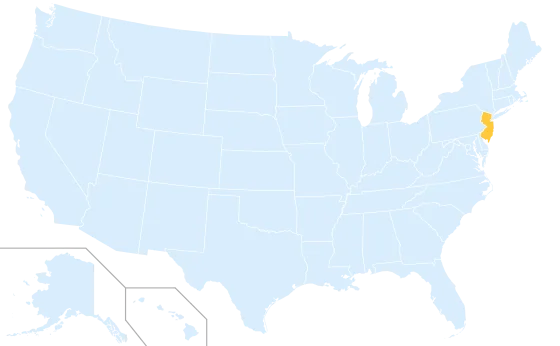
The state bird: American Goldfinch
Adopted in 1935 as the Eastern Goldfinch. A small yellow finch that sings musical warbles and twitters, calls po-ta-to-chip in bouncing flight, eats almost nothing but seeds, and waits until late July to nest.
Recording by Chase Harris, CC0, via iNaturalist.
The New Jersey Bird Records Committee had 492 species and a species pair on the state list as of March 2024. For a state this small that is remarkable, and geography explains it: a long Atlantic coast, the Delaware Bay shore, the Pine Barrens in the middle, and a peninsula at the bottom that funnels every southbound bird in the Northeast into one town.
Most people, though, live in the suburbs between New York and Philadelphia, in towns with oaks, hedges, a pond with geese and a feeder. That is cardinal, dove, robin and jay country, with a Carolina Wren shouting from the porch.
The New Jersey album
These are the 100 birds people report most often in New Jersey, ranked by how frequently they turn up. The common and uncommon ones are shown; the rare and legendary cards stay face down until you catch them in the game.
Common 25 cards
- #002
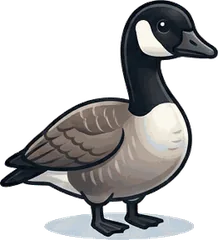 Canada Goose
Branta canadensis
Canada Goose
Branta canadensis - #007
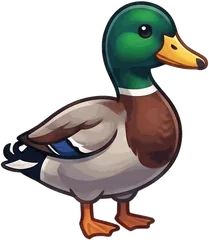 Mallard
Anas platyrhynchos
Mallard
Anas platyrhynchos - #016
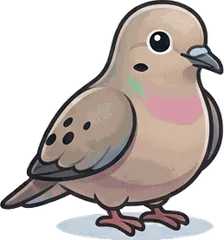 Mourning Dove
Zenaida macroura
Mourning Dove
Zenaida macroura - #027
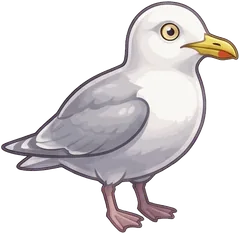 Herring Gull
Larus smithsonianus
Herring Gull
Larus smithsonianus - #033
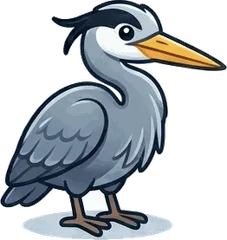 Great Blue Heron
Ardea herodias
Great Blue Heron
Ardea herodias - #035
 ?Catch it to find out
 - #042
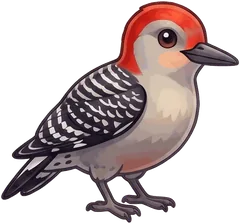 Red-bellied Woodpecker
Melanerpes carolinus
Red-bellied Woodpecker
Melanerpes carolinus - #043
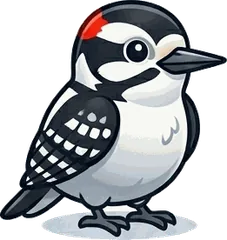 Downy Woodpecker
Dryobates pubescens
Downy Woodpecker
Dryobates pubescens - #044
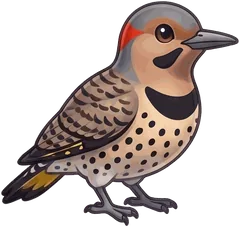 Northern Flicker
Colaptes auratus
Northern Flicker
Colaptes auratus - #052
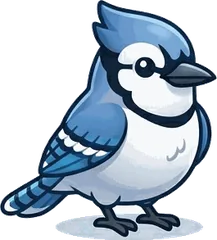 Blue Jay
Cyanocitta cristata
Blue Jay
Cyanocitta cristata - #053
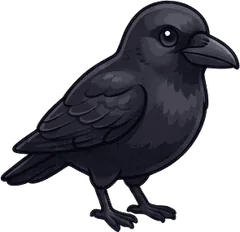 American Crow
Corvus brachyrhynchos
American Crow
Corvus brachyrhynchos - #057
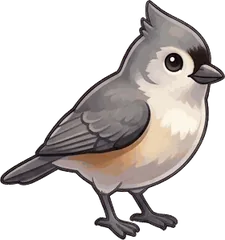 Tufted Titmouse
Baeolophus bicolor
Tufted Titmouse
Baeolophus bicolor - #066
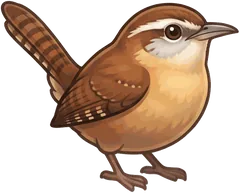 Carolina Wren
Thryothorus ludovicianus
Carolina Wren
Thryothorus ludovicianus - #067
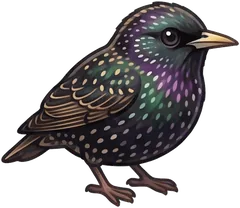 European Starling
Sturnus vulgaris
European Starling
Sturnus vulgaris - #068
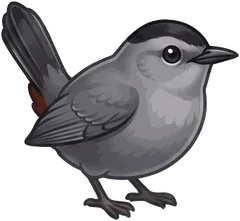 Gray Catbird
Dumetella carolinensis
Gray Catbird
Dumetella carolinensis - #070
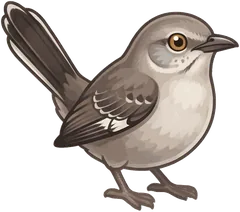 Northern Mockingbird
Mimus polyglottos
Northern Mockingbird
Mimus polyglottos - #073
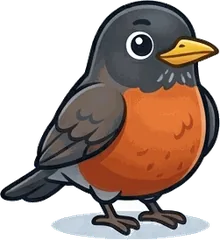 American Robin
Turdus migratorius
American Robin
Turdus migratorius - #075
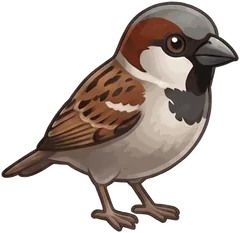 House Sparrow
Passer domesticus
House Sparrow
Passer domesticus - #076
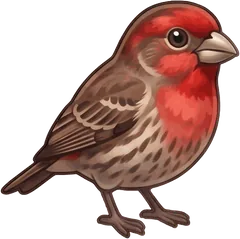 House Finch
Haemorhous mexicanus
House Finch
Haemorhous mexicanus - #077
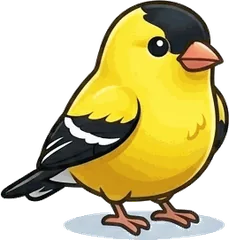 American Goldfinch
Spinus tristis
American Goldfinch
Spinus tristis - #081
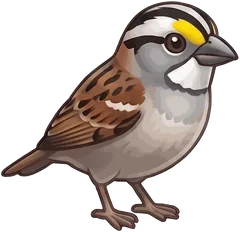 White-throated Sparrow
Zonotrichia albicollis
White-throated Sparrow
Zonotrichia albicollis - #083
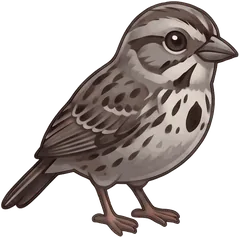 Song Sparrow
Melospiza melodia
Song Sparrow
Melospiza melodia - #087
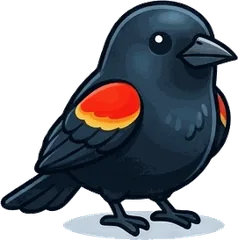 Red-winged Blackbird
Agelaius phoeniceus
Red-winged Blackbird
Agelaius phoeniceus - #089
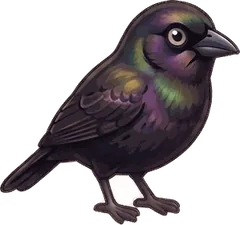 Common Grackle
Quiscalus quiscula
Common Grackle
Quiscalus quiscula - #099
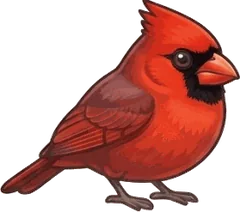 Northern Cardinal
Cardinalis cardinalis
Northern Cardinal
Cardinalis cardinalis
Uncommon 35 cards
- #003
 ?Catch it to find out
 - #008
 ?Catch it to find out
 - #011
 ?Catch it to find out
 - #015
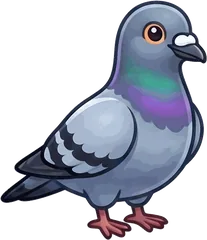 Rock Pigeon
Columba livia
Rock Pigeon
Columba livia - #020
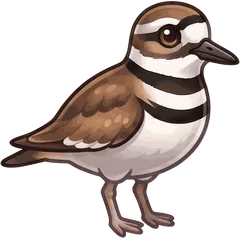 Killdeer
Charadrius vociferus
Killdeer
Charadrius vociferus - #025
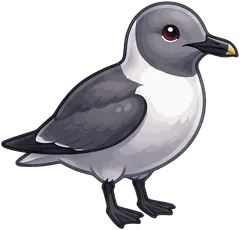 Laughing Gull
Leucophaeus atricilla
Laughing Gull
Leucophaeus atricilla - #026
 ?Catch it to find out
 - #028
 ?Catch it to find out
 - #029
 ?Catch it to find out
 - #031
 ?Catch it to find out
 - #032
 ?Catch it to find out
 - #034
 ?Catch it to find out
 - #036
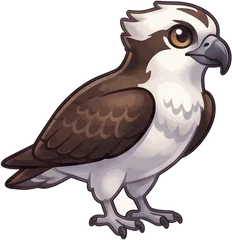 Osprey
Pandion haliaetus
Osprey
Pandion haliaetus - #039
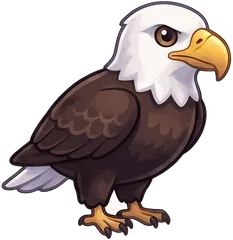 Bald Eagle
Haliaeetus leucocephalus
Bald Eagle
Haliaeetus leucocephalus - #040
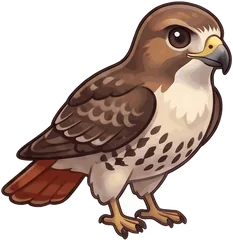 Red-tailed Hawk
Buteo jamaicensis
Red-tailed Hawk
Buteo jamaicensis - #041
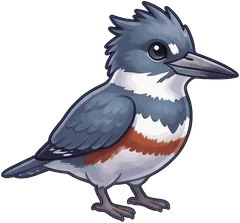 Belted Kingfisher
Megaceryle alcyon
Belted Kingfisher
Megaceryle alcyon - #048
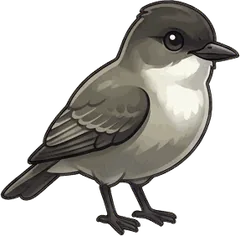 Eastern Phoebe
Sayornis phoebe
Eastern Phoebe
Sayornis phoebe - #054
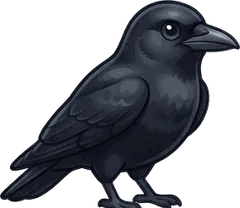 Fish Crow
Corvus ossifragus
Fish Crow
Corvus ossifragus - #055
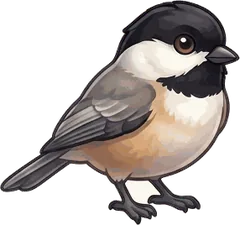 Carolina Chickadee
Poecile carolinensis
Carolina Chickadee
Poecile carolinensis - #056
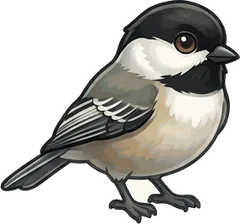 Black-capped Chickadee
Poecile atricapillus
Black-capped Chickadee
Poecile atricapillus - #058
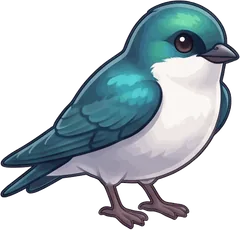 Tree Swallow
Tachycineta bicolor
Tree Swallow
Tachycineta bicolor - #061
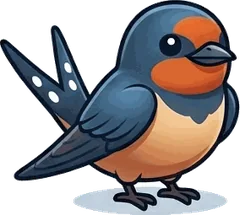 Barn Swallow
Hirundo rustica
Barn Swallow
Hirundo rustica - #063
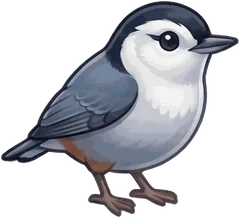 White-breasted Nuthatch
Sitta carolinensis
White-breasted Nuthatch
Sitta carolinensis - #064
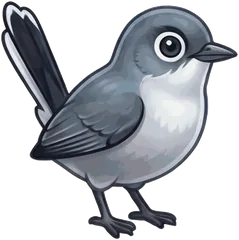 Blue-gray Gnatcatcher
Polioptila caerulea
Blue-gray Gnatcatcher
Polioptila caerulea - #065
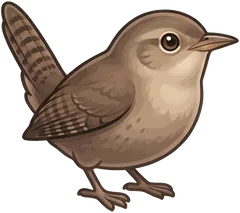 House Wren
Troglodytes aedon
House Wren
Troglodytes aedon - #071
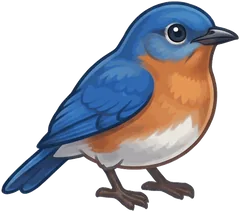 Eastern Bluebird
Sialia sialis
Eastern Bluebird
Sialia sialis - #074
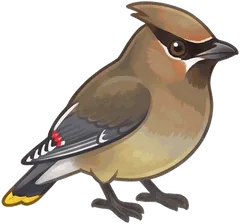 Cedar Waxwing
Bombycilla cedrorum
Cedar Waxwing
Bombycilla cedrorum - #078
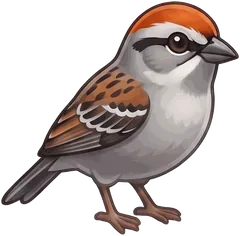 Chipping Sparrow
Spizella passerina
Chipping Sparrow
Spizella passerina - #079
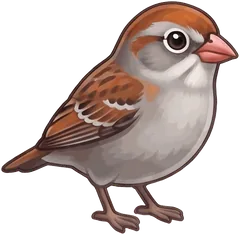 Field Sparrow
Spizella pusilla
Field Sparrow
Spizella pusilla - #080
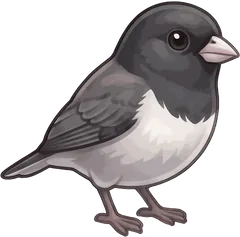 Dark-eyed Junco
Junco hyemalis
Dark-eyed Junco
Junco hyemalis - #085
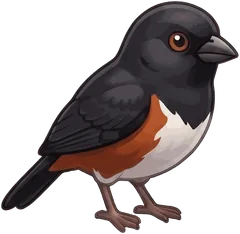 Eastern Towhee
Pipilo erythrophthalmus
Eastern Towhee
Pipilo erythrophthalmus - #088
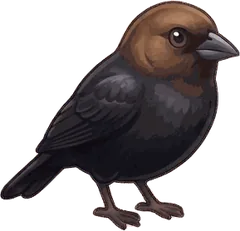 Brown-headed Cowbird
Molothrus ater
Brown-headed Cowbird
Molothrus ater - #092
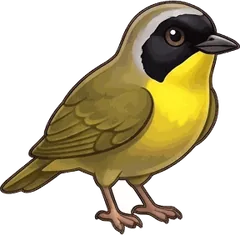 Common Yellowthroat
Geothlypis trichas
Common Yellowthroat
Geothlypis trichas - #095
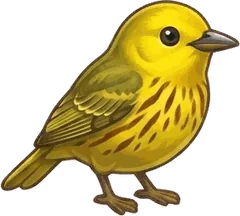 Yellow Warbler
Setophaga petechia
Yellow Warbler
Setophaga petechia - #098
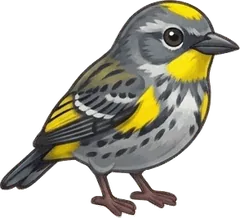 Yellow-rumped Warbler
Setophaga coronata
Yellow-rumped Warbler
Setophaga coronata
Rare 30 cards
- #001
 ?Catch it to find out
 - #004
 ?Catch it to reveal
 - #006
 ?Catch it to find out
 - #009
 ?Catch it to find out
 - #012
 ?Catch it to find out
 - #017?Catch it to reveal
- #018?Catch it to reveal
- #019
 ?Catch it to find out
 - #022
 ?Catch it to find out
 - #023
 ?Catch it to find out
 - #037
 ?Catch it to find out
 - #038
 ?Catch it to find out
 - #047?Catch it to reveal
- #049?Catch it to reveal
- #050?Catch it to reveal
- #051?Catch it to reveal
- #059?Catch it to reveal
- #062?Catch it to reveal
- #069?Catch it to reveal
- #072?Catch it to reveal
- #082
 ?Catch it to find out
 - #084
 ?Catch it to find out
 - #086?Catch it to reveal
- #090?Catch it to reveal
- #091?Catch it to reveal
- #093?Catch it to reveal
- #094?Catch it to reveal
- #096
 ?Catch it to find out
 - #097?Catch it to reveal
- #100?Catch it to reveal
Legendary 10 cards
- #005
 ?Catch it to find out
 - #010
 ?Catch it to find out
 - #013
 ?Catch it to find out
 - #014
 ?Catch it to find out
 - #021
 ?Catch it to find out
 - #024
 ?Catch it to find out
 - #030?Catch it to reveal
- #045?Catch it to reveal
- #046
 ?Catch it to find out
 - #060
 ?Catch it to find out
 50 of the 100 cards are shown here. The other 50, including all 30 rare and 10 legendary birds, are yours to discover. Get Warble and start with the common ones.
Backyard birds you will hear first
The Northern Cardinal leads the album, whistling cheer, cheer, cheer from the top of a maple as early as February. The Mourning Dove coos from the wires, the American Robin sings the dawn chorus from March through July, and the Blue Jay screams from the oaks and imitates hawks for reasons of its own.
The Carolina Wren is the loud one: teakettle, teakettle, teakettle from under the deck, all year, from a bird the size of a golf ball. The Red-bellied Woodpecker rolls a churr from the trunks, the Song Sparrow sings from the roadside brush, and the Red-winged Blackbird holds every cattail ditch from March on. Canada Geese and Mallards are on every pond, and Turkey Vultures tilt overhead all day, silent.
The regions, by ear
The suburbs and the Meadowlands
The corridor from Bergen County to Trenton is the loudest part of the state simply because it has the most yards. Great Swamp National Wildlife Refuge in Morris County, about 26 miles west of Times Square, is 7,853 acres of marsh, swamp forest and grassland set aside by Congress in 1960, with more than 244 species recorded: Wood Ducks, Wood Thrushes and Barred Owls, a short drive from the Turnpike.
The Highlands and the northwest
Ridges, reservoirs and hardwood forest along the Delaware. Scarlet Tanagers and Wood Thrushes in the oaks, and Ovenbirds shouting teacher, teacher.
The Pine Barrens
Pitch pine and sand in the middle of the state. Pine Warblers trill from the tops, Eastern Towhees call drink your tea, and whip-poor-wills go all night in June.
The Atlantic coast
Behind the barrier islands is salt marsh, and Edwin B. Forsythe National Wildlife Refuge holds more than 48,000 acres of it, running 50 miles along the back bays from Brick Township to the edge of Atlantic City. More than 360 species are on the list; American Black Ducks and Atlantic Brant winter here, Piping Plovers nest on the beaches, and the eight-mile Wildlife Drive puts you on a dike between the marsh and the casino skyline.
Cape May and the Delaware Bay
The southern tip of the state is the most famous migration spot on the East Coast. Cape May National Wildlife Refuge protects beach, bayshore, salt marsh and upland woods on the Atlantic Flyway; its five miles of Delaware Bay shore are a major spring staging area for shorebirds, second in North America only to Alaska's Copper River Delta. In fall the woods fill with warblers, kestrels stream down the peninsula, and woodcocks sit in the dunes.
Best months to listen
May is the peak for song: residents on territory and warblers moving through the parks, best at dawn. Late May on the Delaware Bay is shorebird time. June is the month for the Pine Barrens after dark. September and October are Cape May's season, when north winds push hawks, warblers and falcons down to the point; the birds are mostly quiet then, but there are more of them than at any other time. Winter is brant on the back bays and cardinals and Carolina Wrens still singing on mild days.
Places worth the drive
- Cape May: the fall migration, September to November, and Delaware Bay shorebirds in May.
- Edwin B. Forsythe National Wildlife Refuge, near Atlantic City: 48,000 acres of salt marsh, an eight-mile auto drive, brant and black ducks in winter.
- Great Swamp National Wildlife Refuge, Morris County: 7,853 acres of swamp and marsh 26 miles from Manhattan.
- The Pine Barrens: Pine Warblers by day and whip-poor-wills by night in June.
None of it is required. A yard in Montclair or Cherry Hill hands you the first 20 cards in Warble by the end of April.
Listen before you go
Three of the common New Jersey birds, so the first songs you hear outside already ring a bell.
Recording by Chase Harris, CC0, via iNaturalist.
Recording by Fionn Ó Marcaigh, CC BY 4.0, via iNaturalist.
Recording by Richard Littauer, CC BY 4.0, via iNaturalist.
Questions people ask
What is the most common bird in New Jersey?
By the reports behind the album, the Northern Cardinal, then the Mourning Dove, the American Robin, the Blue Jay and the Canada Goose.
What is the state bird of New Jersey?
The American Goldfinch, adopted in 1935 under the name Eastern Goldfinch. Iowa uses the same bird and name, and Washington calls it the Willow Goldfinch.
How many bird species are there in New Jersey?
492 species and a species pair as of March 2024, according to the New Jersey Bird Records Committee. The Warble album covers the 100 reported most often.
Nearby albums
Sources
- Wikipedia: List of birds of New Jersey. en.wikipedia.org/wiki/List_of_birds_of_New_Jersey
- Wikipedia: List of U.S. state birds. en.wikipedia.org/wiki/List_of_U.S._state_birds
- U.S. Fish and Wildlife Service: Edwin B. Forsythe National Wildlife Refuge. www.fws.gov/refuge/edwin-b-forsythe
- U.S. Fish and Wildlife Service: Great Swamp National Wildlife Refuge. www.fws.gov/refuge/great-swamp