 Warble
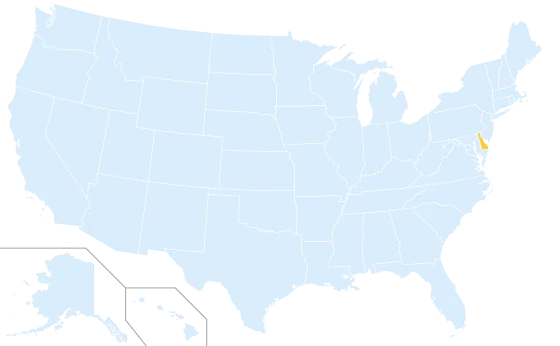
The state bird: Blue Hen Chicken
Adopted on April 14, 1939, and not a wild bird at all: the Blue Hen is a strain of blue fighting chicken, named for the game birds that a company of Revolutionary War soldiers recruited in Kent County carried with them. It is the mascot of the University of Delaware.
Delaware has three counties and two landscapes. New Castle County in the north sits on the Piedmont, with rolling hills and old hardwoods along the Brandywine, and it sounds like Pennsylvania: a Wood Thrush at dusk, a Red-eyed Vireo all afternoon, a Pileated Woodpecker somewhere down the ravine. Everything south of the fall line is Atlantic Coastal Plain, flat, sandy and in places swampy, and the further south you go the more the birds belong to the tidewater South.
The edge that defines the state, though, is Delaware Bay. Bombay Hook and Prime Hook protect one of the largest stretches of tidal salt marsh left in the mid-Atlantic, and the sound out there is geese in November, shorebirds in May, and Clapper Rails clattering from the cordgrass in between. More than 420 species have been recorded in Delaware, a big number for a state this size, and most of the surprises come off that bay.
The Delaware album
These are the 100 birds people report most often in Delaware, ranked by how frequently they turn up. The common and uncommon ones are shown; the rare and legendary cards stay face down until you catch them in the game.
Common 25 cards
- #002
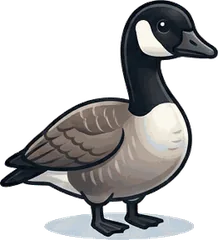 Canada Goose
Branta canadensis
Canada Goose
Branta canadensis - #006
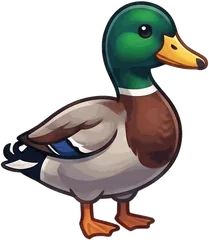 Mallard
Anas platyrhynchos
Mallard
Anas platyrhynchos - #012
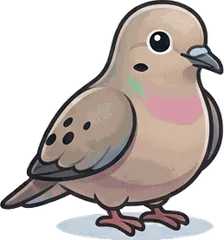 Mourning Dove
Zenaida macroura
Mourning Dove
Zenaida macroura - #028
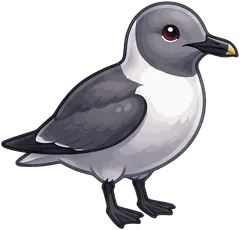 Laughing Gull
Leucophaeus atricilla
Laughing Gull
Leucophaeus atricilla - #038
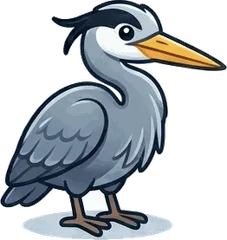 Great Blue Heron
Ardea herodias
Great Blue Heron
Ardea herodias - #040
 ?Catch it to find out
 - #043
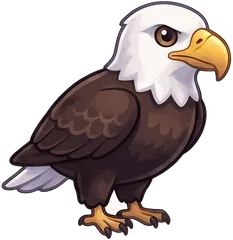 Bald Eagle
Haliaeetus leucocephalus
Bald Eagle
Haliaeetus leucocephalus - #047
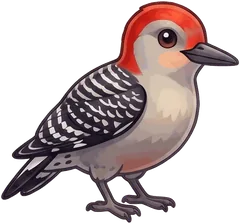 Red-bellied Woodpecker
Melanerpes carolinus
Red-bellied Woodpecker
Melanerpes carolinus - #048
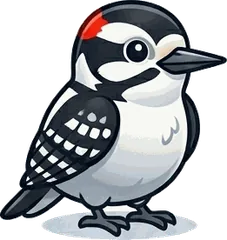 Downy Woodpecker
Dryobates pubescens
Downy Woodpecker
Dryobates pubescens - #058
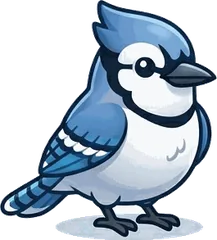 Blue Jay
Cyanocitta cristata
Blue Jay
Cyanocitta cristata - #059
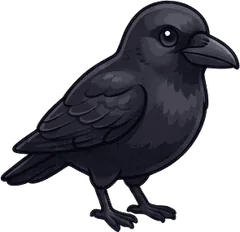 American Crow
Corvus brachyrhynchos
American Crow
Corvus brachyrhynchos - #061
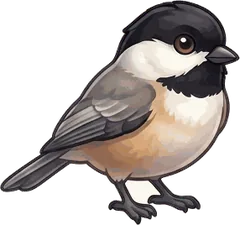 Carolina Chickadee
Poecile carolinensis
Carolina Chickadee
Poecile carolinensis - #062
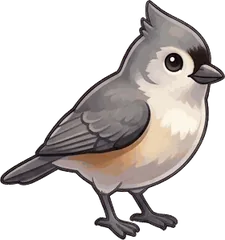 Tufted Titmouse
Baeolophus bicolor
Tufted Titmouse
Baeolophus bicolor - #070
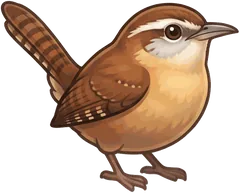 Carolina Wren
Thryothorus ludovicianus
Carolina Wren
Thryothorus ludovicianus - #071
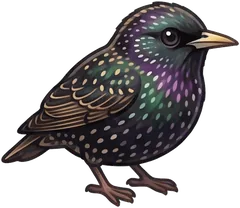 European Starling
Sturnus vulgaris
European Starling
Sturnus vulgaris - #072
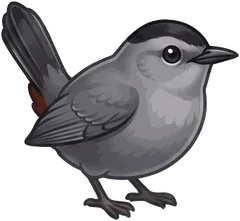 Gray Catbird
Dumetella carolinensis
Gray Catbird
Dumetella carolinensis - #074
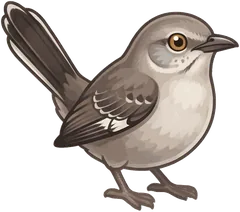 Northern Mockingbird
Mimus polyglottos
Northern Mockingbird
Mimus polyglottos - #077
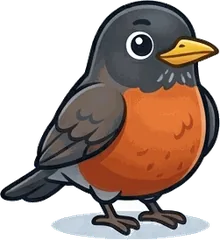 American Robin
Turdus migratorius
American Robin
Turdus migratorius - #080
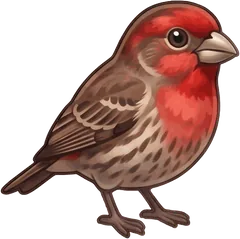 House Finch
Haemorhous mexicanus
House Finch
Haemorhous mexicanus - #081
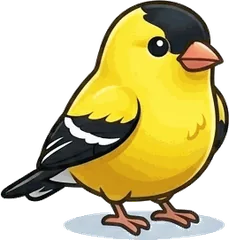 American Goldfinch
Spinus tristis
American Goldfinch
Spinus tristis - #085
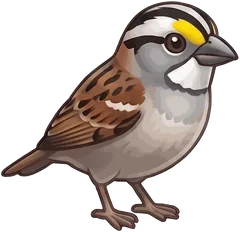 White-throated Sparrow
Zonotrichia albicollis
White-throated Sparrow
Zonotrichia albicollis - #086
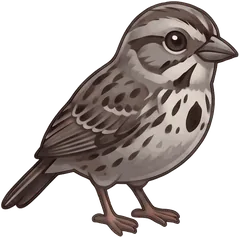 Song Sparrow
Melospiza melodia
Song Sparrow
Melospiza melodia - #089
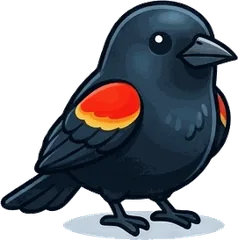 Red-winged Blackbird
Agelaius phoeniceus
Red-winged Blackbird
Agelaius phoeniceus - #091
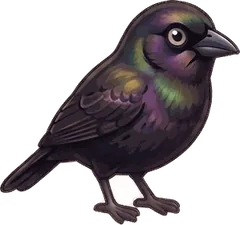 Common Grackle
Quiscalus quiscula
Common Grackle
Quiscalus quiscula - #098
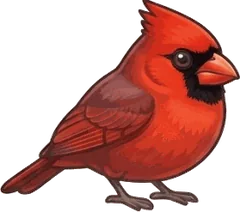 Northern Cardinal
Cardinalis cardinalis
Northern Cardinal
Cardinalis cardinalis
Uncommon 35 cards
- #007
 ?Catch it to find out
 - #022
 ?Catch it to find out
 - #024
 ?Catch it to find out
 - #027
 ?Catch it to find out
 - #029
 ?Catch it to find out
 - #030
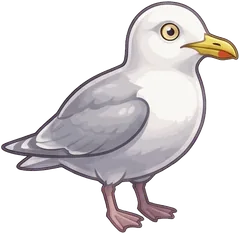 Herring Gull
Larus smithsonianus
Herring Gull
Larus smithsonianus - #031
 ?Catch it to find out
 - #033
 ?Catch it to find out
 - #035
 ?Catch it to find out
 - #037
 ?Catch it to find out
 - #039
 ?Catch it to find out
 - #041
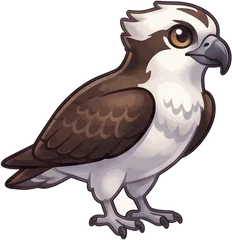 Osprey
Pandion haliaetus
Osprey
Pandion haliaetus - #042
 ?Catch it to find out
 - #045
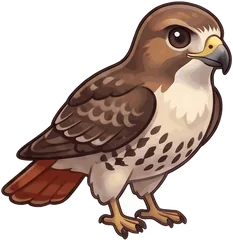 Red-tailed Hawk
Buteo jamaicensis
Red-tailed Hawk
Buteo jamaicensis - #050
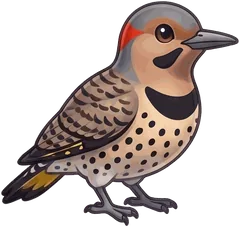 Northern Flicker
Colaptes auratus
Northern Flicker
Colaptes auratus - #052
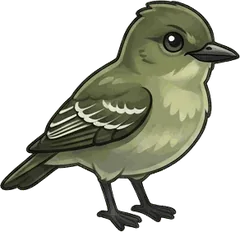 Eastern Wood-Pewee
Contopus virens
Eastern Wood-Pewee
Contopus virens - #055
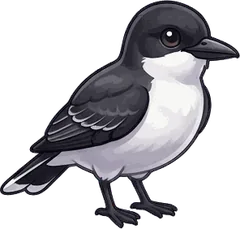 Eastern Kingbird
Tyrannus tyrannus
Eastern Kingbird
Tyrannus tyrannus - #057
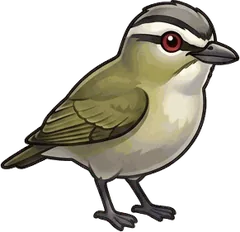 Red-eyed Vireo
Vireo olivaceus
Red-eyed Vireo
Vireo olivaceus - #060
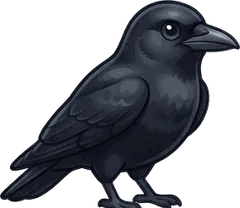 Fish Crow
Corvus ossifragus
Fish Crow
Corvus ossifragus - #063
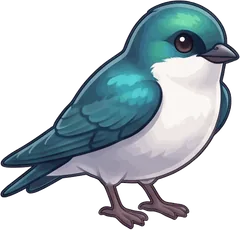 Tree Swallow
Tachycineta bicolor
Tree Swallow
Tachycineta bicolor - #064
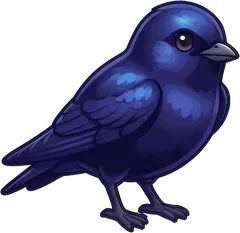 Purple Martin
Progne subis
Purple Martin
Progne subis - #065
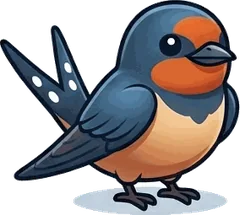 Barn Swallow
Hirundo rustica
Barn Swallow
Hirundo rustica - #066
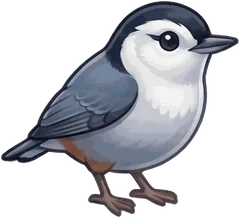 White-breasted Nuthatch
Sitta carolinensis
White-breasted Nuthatch
Sitta carolinensis - #068
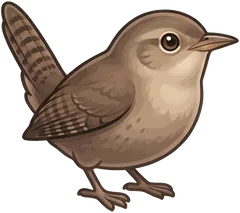 House Wren
Troglodytes aedon
House Wren
Troglodytes aedon - #075
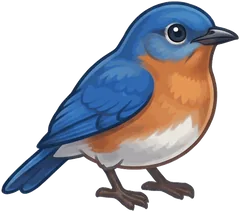 Eastern Bluebird
Sialia sialis
Eastern Bluebird
Sialia sialis - #079
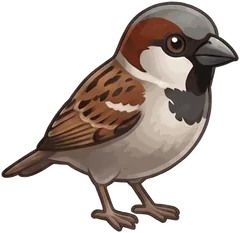 House Sparrow
Passer domesticus
House Sparrow
Passer domesticus - #082
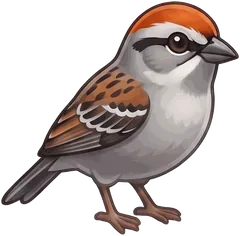 Chipping Sparrow
Spizella passerina
Chipping Sparrow
Spizella passerina - #083
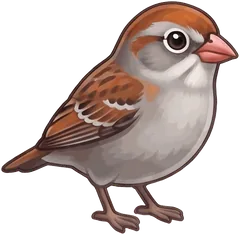 Field Sparrow
Spizella pusilla
Field Sparrow
Spizella pusilla - #084
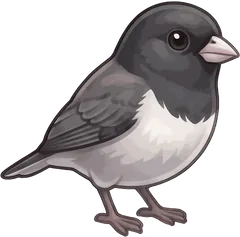 Dark-eyed Junco
Junco hyemalis
Dark-eyed Junco
Junco hyemalis - #088
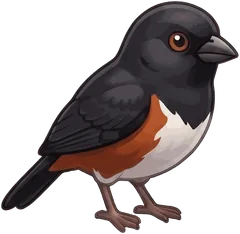 Eastern Towhee
Pipilo erythrophthalmus
Eastern Towhee
Pipilo erythrophthalmus - #090
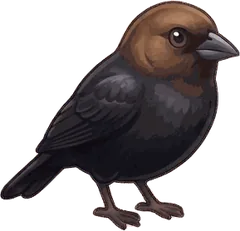 Brown-headed Cowbird
Molothrus ater
Brown-headed Cowbird
Molothrus ater - #093
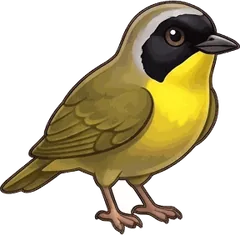 Common Yellowthroat
Geothlypis trichas
Common Yellowthroat
Geothlypis trichas - #097
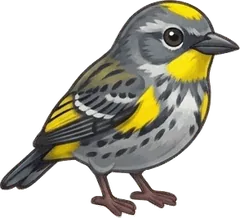 Yellow-rumped Warbler
Setophaga coronata
Yellow-rumped Warbler
Setophaga coronata - #099
 ?Catch it to find out
 - #100
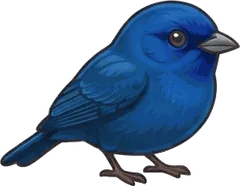 Indigo Bunting
Passerina cyanea
Indigo Bunting
Passerina cyanea
Rare 30 cards
- #001
 ?Catch it to find out
 - #003
 ?Catch it to find out
 - #004
 ?Catch it to reveal
 - #005
 ?Catch it to find out
 - #008
 ?Catch it to find out
 - #009
 ?Catch it to find out
 - #010
 ?Catch it to find out
 - #011?Catch it to reveal
- #013?Catch it to reveal
- #014?Catch it to reveal
- #017
 ?Catch it to find out
 - #018
 ?Catch it to find out
 - #019?Catch it to reveal
- #020
 ?Catch it to find out
 - #021
 ?Catch it to find out
 - #023
 ?Catch it to find out
 - #025
 ?Catch it to find out
 - #026
 ?Catch it to find out
 - #034
 ?Catch it to find out
 - #046?Catch it to reveal
- #049?Catch it to reveal
- #053?Catch it to reveal
- #054?Catch it to reveal
- #056
 ?Catch it to find out
 - #067?Catch it to reveal
- #069
 ?Catch it to find out
 - #073?Catch it to reveal
- #078?Catch it to reveal
- #087
 ?Catch it to find out
 - #096?Catch it to reveal
Legendary 10 cards
- #015
 ?Catch it to find out
 - #016
 ?Catch it to find out
 - #032
 ?Catch it to find out
 - #036
 ?Catch it to find out
 - #044?Catch it to reveal
- #051?Catch it to reveal
- #076?Catch it to reveal
- #092?Catch it to reveal
- #094?Catch it to reveal
- #095?Catch it to reveal
 47 of the 100 cards are shown here. The other 53, including all 30 rare and 10 legendary birds, are yours to discover. Get Warble and start with the common ones.
Backyard birds you will hear first
The Northern Cardinal is the most reported bird in the state, and the Carolina Wren is right behind it, shouting teakettle from the woodpile in every month of the year. Add the Mourning Dove, the American Robin, the Carolina Chickadee and the Blue Jay and you have the morning in most Delaware neighborhoods.
Two sounds tell you the coast is near. The Fish Crow says a nasal uh-uh instead of the American Crow's clean caw, and the Laughing Gull laughs over parking lots from Wilmington to Rehoboth once the weather warms. Overhead, the nearly silent Turkey Vulture is the second most reported bird in the state.
The Red-winged Blackbird is the fourth. Its conk-la-ree from a cattail ditch is one of the first spring songs in the state, and in the bay marshes it never really stops.
The regions, by ear
The Piedmont, north of Wilmington
Hills, rock and mature woods along the Brandywine. This is forest-bird country: Wood Thrush, Ovenbird, Eastern Wood-Pewee, Pileated Woodpecker, Great Crested Flycatcher.
The Bayshore
From the Delaware River down to Lewes, the marshes of Bombay Hook and Prime Hook. Snow Geese and Canada Geese in fall and winter, Bald Eagles on their nests by January, herons, egrets and ibis in summer, and the shorebird arrival in May, when Red Knots and other sandpipers land thin, gorge on horseshoe crab eggs and fly on to the Arctic. Between all that, the Clapper Rail clatters from the cordgrass and the Osprey whistles from a platform.
The Atlantic coast and Sussex County
Pine-covered dunes at Cape Henlopen near Lewes, where Piping Plovers, Least Terns and Black Skimmers nest on protected beach. Inland, Trap Pond's bald cypress, the northernmost park stand in North America, hold herons, owls and Pileated Woodpeckers.
Best months to listen
May is the month. Shorebirds peak on the bay in the middle of it, the woods are full of migrants, and every resident is singing at once. April and June are close behind. Summer mornings stay busy until the heat arrives, and the marshes are loud with wading birds. Fall migration runs from August into November, when waterfowl peak at Bombay Hook, and October is the best month there for American Avocets. Winter belongs to geese, ducks and Bald Eagles, with sparrows and juncos in the hedgerows.
In any season, the first hour after sunrise carries most of the song.
Places worth the drive
- Bombay Hook National Wildlife Refuge, on Delaware Bay: a 12-mile wildlife drive with three observation towers, geese in November, shorebirds in May, eagles all winter.
- Prime Hook National Wildlife Refuge, near Milton: more than 10,000 acres, four fifths of it wetland, over 245 species and a Horseshoe Crab Festival every May.
- Cape Henlopen State Park, Lewes: pine dunes, nesting terns, plovers and skimmers.
- Trap Pond State Park, near Laurel: bald cypress with herons, owls and woodpeckers, best from a canoe.
- Brandywine Park, Wilmington: Piedmont woods inside the city.
None of them are required. A yard with a feeder and a hedge will give you the first 30 cards of the Warble album in a season; the marshes are for the rare ones.
Listen before you go
Three of the common Delaware birds, so the first songs you hear outside already ring a bell.
Recording by Chase Harris, CC0, via iNaturalist.
Recording by Fionn Ó Marcaigh, CC BY 4.0, via iNaturalist.
Recording by Chase Harris, CC0, via iNaturalist.
Questions people ask
What is the most common bird in Delaware?
By the number of reports behind the album, the Northern Cardinal, followed by the Turkey Vulture, the Carolina Wren, the Red-winged Blackbird, the Mourning Dove and the American Robin.
What is the state bird of Delaware?
The Blue Hen Chicken, adopted on April 14, 1939. It is a strain of blue gamecock, not a wild species, named after the fighting chickens carried by Delaware soldiers in the Revolutionary War.
How many bird species have been recorded in Delaware?
427 species as of August 2021, according to the list kept by the Delaware Bird Records Committee. About 100 of those are accidentals, most of them found on or near Delaware Bay.
Nearby albums
Sources
- State of Delaware: Delaware Facts and Symbols. delaware.gov/guides/facts/
- U.S. Fish and Wildlife Service: Bombay Hook National Wildlife Refuge, species and seasons. www.fws.gov/refuge/bombay-hook/species
- U.S. Fish and Wildlife Service: Prime Hook National Wildlife Refuge. www.fws.gov/refuge/prime-hook
- Wikipedia: List of birds of Delaware. en.wikipedia.org/wiki/List_of_birds_of_Delaware