 Warble
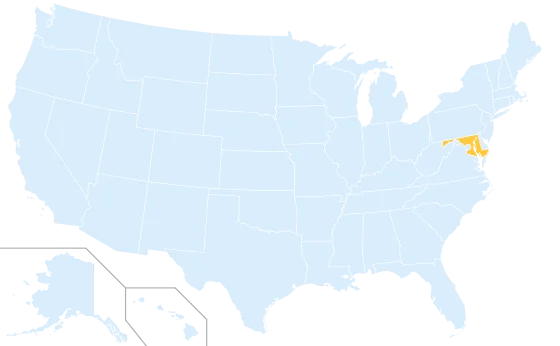
The state bird: Baltimore Oriole
Adopted in 1947. The male's black and orange match the colors of the Calvert family, the Lords Baltimore, which is how the bird got its name. It whistles a short, rich, slightly hesitant song from the tops of the sycamores from late April to June.
Recording by Emma Glaser, CC0, via iNaturalist.
Maryland runs from the Appalachian ridges of Garrett County to the Atlantic beach at Ocean City, with the Chesapeake Bay splitting the middle. The Maryland Ornithological Society's records committee accepts 456 species on the official list as of 2022, a long list for a state this size, and the range of habitats explains it: northern birds on the mountains, southern birds in the swamps of the lower Eastern Shore, seabirds off Assateague, and a bay full of waterfowl in winter.
Most Marylanders live in the corridor between Baltimore and Washington, and that corridor is a very good backyard. Cardinal, Carolina Wren, crow, jay and dove lead the album, with robin, chickadee, woodpecker and titmouse right behind.
The Maryland album
These are the 100 birds people report most often in Maryland, ranked by how frequently they turn up. The common and uncommon ones are shown; the rare and legendary cards stay face down until you catch them in the game.
Common 25 cards
- #001
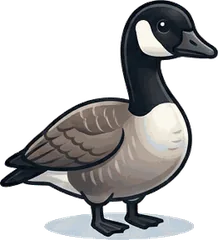 Canada Goose
Branta canadensis
Canada Goose
Branta canadensis - #004
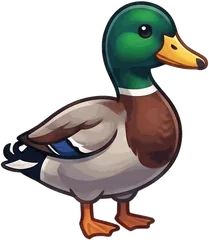 Mallard
Anas platyrhynchos
Mallard
Anas platyrhynchos - #012
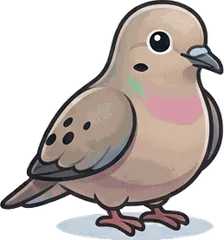 Mourning Dove
Zenaida macroura
Mourning Dove
Zenaida macroura - #024
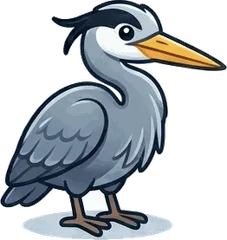 Great Blue Heron
Ardea herodias
Great Blue Heron
Ardea herodias - #026
 ?Catch it to find out
 - #034
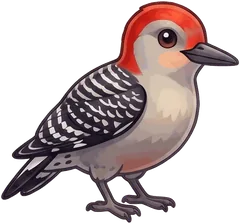 Red-bellied Woodpecker
Melanerpes carolinus
Red-bellied Woodpecker
Melanerpes carolinus - #035
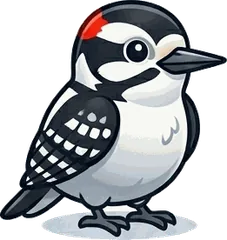 Downy Woodpecker
Dryobates pubescens
Downy Woodpecker
Dryobates pubescens - #037
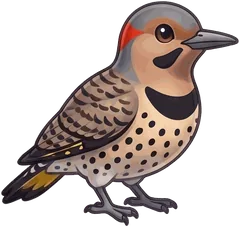 Northern Flicker
Colaptes auratus
Northern Flicker
Colaptes auratus - #046
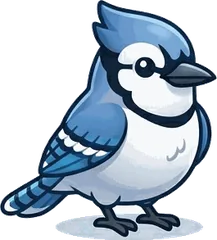 Blue Jay
Cyanocitta cristata
Blue Jay
Cyanocitta cristata - #047
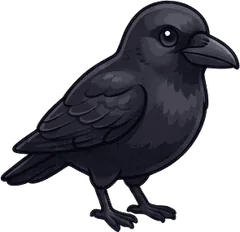 American Crow
Corvus brachyrhynchos
American Crow
Corvus brachyrhynchos - #050
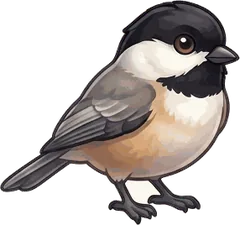 Carolina Chickadee
Poecile carolinensis
Carolina Chickadee
Poecile carolinensis - #051
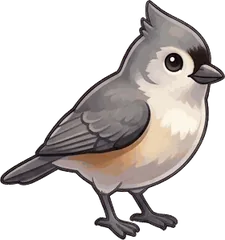 Tufted Titmouse
Baeolophus bicolor
Tufted Titmouse
Baeolophus bicolor - #057
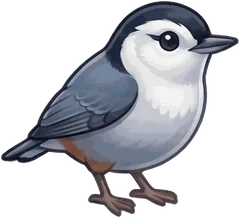 White-breasted Nuthatch
Sitta carolinensis
White-breasted Nuthatch
Sitta carolinensis - #062
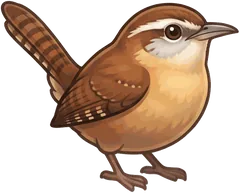 Carolina Wren
Thryothorus ludovicianus
Carolina Wren
Thryothorus ludovicianus - #063
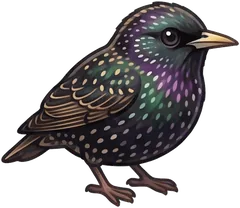 European Starling
Sturnus vulgaris
European Starling
Sturnus vulgaris - #066
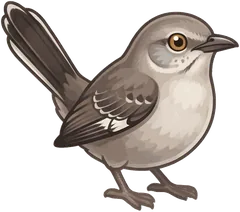 Northern Mockingbird
Mimus polyglottos
Northern Mockingbird
Mimus polyglottos - #067
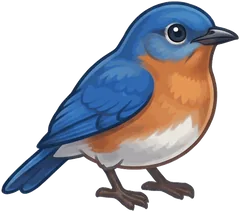 Eastern Bluebird
Sialia sialis
Eastern Bluebird
Sialia sialis - #070
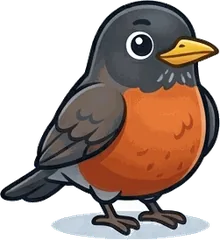 American Robin
Turdus migratorius
American Robin
Turdus migratorius - #072
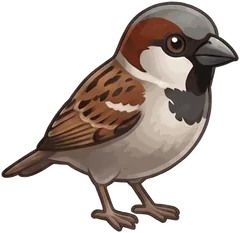 House Sparrow
Passer domesticus
House Sparrow
Passer domesticus - #073
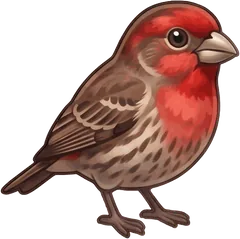 House Finch
Haemorhous mexicanus
House Finch
Haemorhous mexicanus - #074
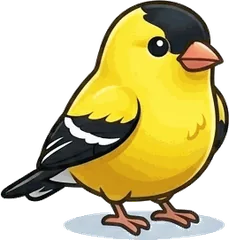 American Goldfinch
Spinus tristis
American Goldfinch
Spinus tristis - #078
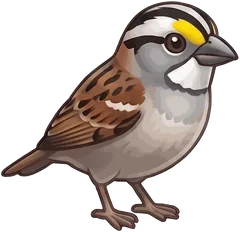 White-throated Sparrow
Zonotrichia albicollis
White-throated Sparrow
Zonotrichia albicollis - #080
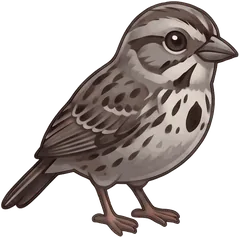 Song Sparrow
Melospiza melodia
Song Sparrow
Melospiza melodia - #085
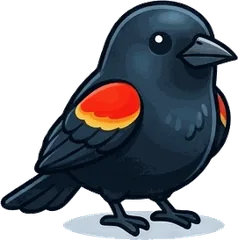 Red-winged Blackbird
Agelaius phoeniceus
Red-winged Blackbird
Agelaius phoeniceus - #098
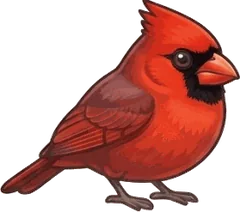 Northern Cardinal
Cardinalis cardinalis
Northern Cardinal
Cardinalis cardinalis
Uncommon 35 cards
- #002
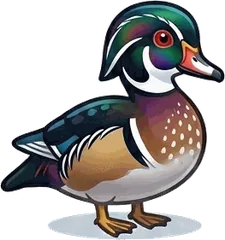 Wood Duck
Aix sponsa
Wood Duck
Aix sponsa - #007
 ?Catch it to find out
 - #014
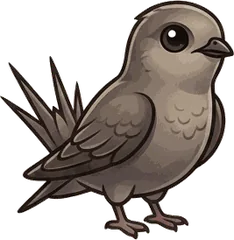 Chimney Swift
Chaetura pelagica
Chimney Swift
Chaetura pelagica - #016
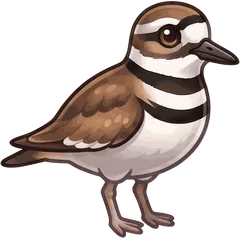 Killdeer
Charadrius vociferus
Killdeer
Charadrius vociferus - #018
 ?Catch it to find out
 - #019
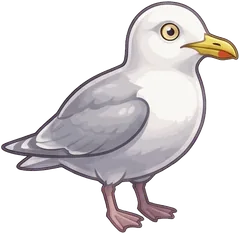 Herring Gull
Larus smithsonianus
Herring Gull
Larus smithsonianus - #025
 ?Catch it to find out
 - #027
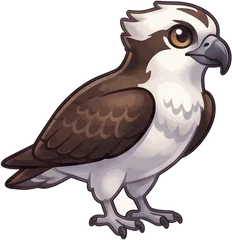 Osprey
Pandion haliaetus
Osprey
Pandion haliaetus - #029
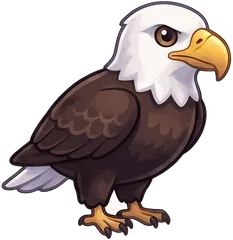 Bald Eagle
Haliaeetus leucocephalus
Bald Eagle
Haliaeetus leucocephalus - #030
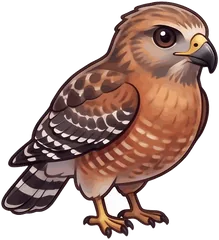 Red-shouldered Hawk
Buteo lineatus
Red-shouldered Hawk
Buteo lineatus - #031
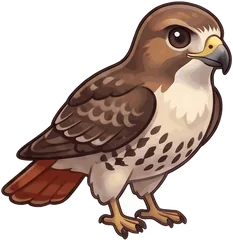 Red-tailed Hawk
Buteo jamaicensis
Red-tailed Hawk
Buteo jamaicensis - #032
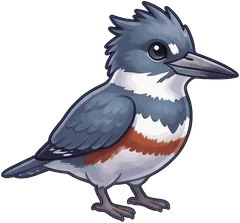 Belted Kingfisher
Megaceryle alcyon
Belted Kingfisher
Megaceryle alcyon - #036
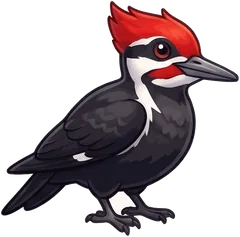 Pileated Woodpecker
Dryocopus pileatus
Pileated Woodpecker
Dryocopus pileatus - #039
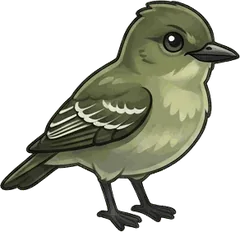 Eastern Wood-Pewee
Contopus virens
Eastern Wood-Pewee
Contopus virens - #041
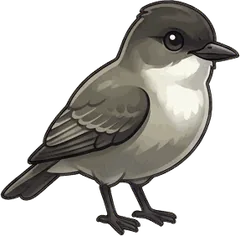 Eastern Phoebe
Sayornis phoebe
Eastern Phoebe
Sayornis phoebe - #042
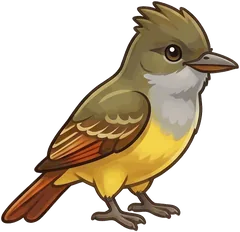 Great Crested Flycatcher
Myiarchus crinitus
Great Crested Flycatcher
Myiarchus crinitus - #043
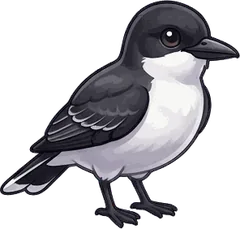 Eastern Kingbird
Tyrannus tyrannus
Eastern Kingbird
Tyrannus tyrannus - #045
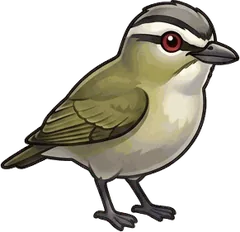 Red-eyed Vireo
Vireo olivaceus
Red-eyed Vireo
Vireo olivaceus - #048
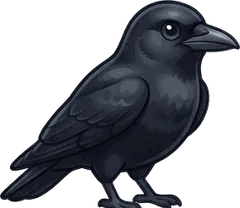 Fish Crow
Corvus ossifragus
Fish Crow
Corvus ossifragus - #052
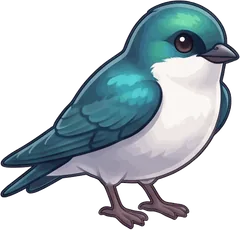 Tree Swallow
Tachycineta bicolor
Tree Swallow
Tachycineta bicolor - #055
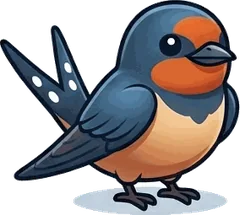 Barn Swallow
Hirundo rustica
Barn Swallow
Hirundo rustica - #059
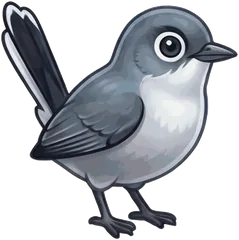 Blue-gray Gnatcatcher
Polioptila caerulea
Blue-gray Gnatcatcher
Polioptila caerulea - #060
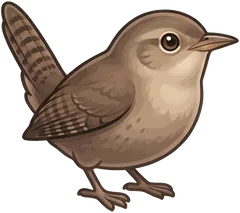 House Wren
Troglodytes aedon
House Wren
Troglodytes aedon - #064
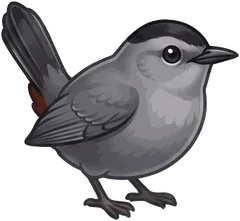 Gray Catbird
Dumetella carolinensis
Gray Catbird
Dumetella carolinensis - #065
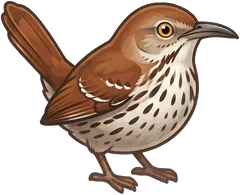 Brown Thrasher
Toxostoma rufum
Brown Thrasher
Toxostoma rufum - #071
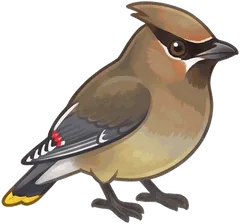 Cedar Waxwing
Bombycilla cedrorum
Cedar Waxwing
Bombycilla cedrorum - #075
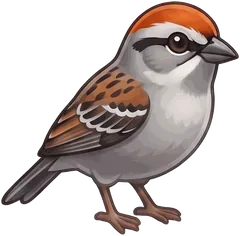 Chipping Sparrow
Spizella passerina
Chipping Sparrow
Spizella passerina - #076
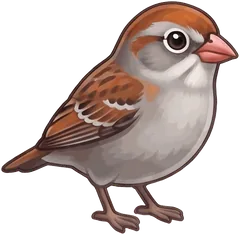 Field Sparrow
Spizella pusilla
Field Sparrow
Spizella pusilla - #077
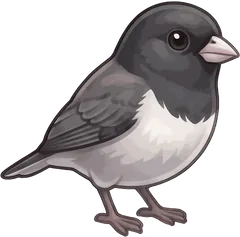 Dark-eyed Junco
Junco hyemalis
Dark-eyed Junco
Junco hyemalis - #082
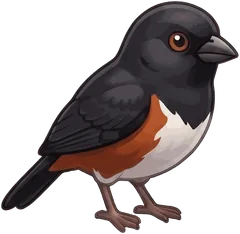 Eastern Towhee
Pipilo erythrophthalmus
Eastern Towhee
Pipilo erythrophthalmus - #086
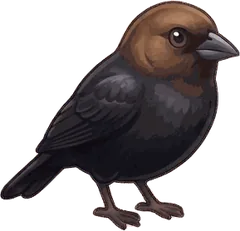 Brown-headed Cowbird
Molothrus ater
Brown-headed Cowbird
Molothrus ater - #087
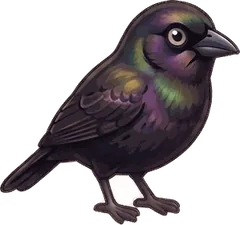 Common Grackle
Quiscalus quiscula
Common Grackle
Quiscalus quiscula - #090
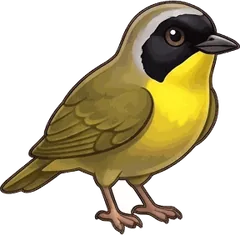 Common Yellowthroat
Geothlypis trichas
Common Yellowthroat
Geothlypis trichas - #096
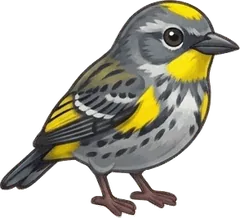 Yellow-rumped Warbler
Setophaga coronata
Yellow-rumped Warbler
Setophaga coronata - #100
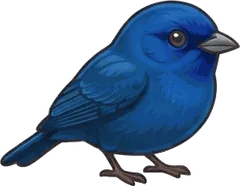 Indigo Bunting
Passerina cyanea
Indigo Bunting
Passerina cyanea
Rare 30 cards
- #005
 ?Catch it to find out
 - #006
 ?Catch it to find out
 - #008
 ?Catch it to find out
 - #010
 ?Catch it to find out
 - #011
 ?Catch it to reveal
 - #013
 ?Catch it to find out
 - #015?Catch it to reveal
- #017?Catch it to reveal
- #020
 ?Catch it to find out
 - #021
 ?Catch it to find out
 - #022
 ?Catch it to find out
 - #023
 ?Catch it to find out
 - #033?Catch it to reveal
- #040
 ?Catch it to find out
 - #044
 ?Catch it to find out
 - #053?Catch it to reveal
- #054
 ?Catch it to find out
 - #056?Catch it to reveal
- #068?Catch it to reveal
- #069?Catch it to reveal
- #081
 ?Catch it to find out
 - #083
 ?Catch it to find out
 - #084?Catch it to reveal
- #088?Catch it to reveal
- #089?Catch it to reveal
- #091?Catch it to reveal
- #092?Catch it to reveal
- #095?Catch it to reveal
- #097?Catch it to reveal
- #099
 ?Catch it to find out
Legendary 10 cards
- #003
 ?Catch it to find out
 - #009
 ?Catch it to find out
 - #028
 ?Catch it to find out
 - #038?Catch it to reveal
- #049?Catch it to reveal
- #058?Catch it to reveal
- #061
 ?Catch it to find out
 - #079
 ?Catch it to find out
 - #093
 ?Catch it to find out
 - #094?Catch it to reveal
 56 of the 100 cards are shown here. The other 44, including all 30 rare and 10 legendary birds, are yours to discover. Get Warble and start with the common ones.
Backyard birds you will hear first
The Northern Cardinal is the most reported bird in Maryland, whistling cheer, cheer, cheer from the dogwood in February and chipping from the hedge at dusk. The Carolina Wren is second, which surprises people who have never seen one: a small brown bird that shouts teakettle, teakettle, teakettle from the deck rail in every month, loud enough to hear through a closed window. The crow caws from the oaks, the Blue Jay screams, and the Mourning Dove coos from the gutter.
The Carolina Chickadee gives its quick four-note fee-bee, fee-bay from the feeder, the Tufted Titmouse whistles peter, peter, peter, and the Red-bellied Woodpecker rolls a churr from the trunk. The Canada Goose honks from every pond and ball field, and in May the Baltimore Oriole itself arrives, whistling from the tallest tree on the street and weaving a hanging nest at the tip of a branch.
The regions, by ear
The Eastern Shore and the Chesapeake
Flat farmland, loblolly pine and tidal marsh. Blackwater National Wildlife Refuge, 12 miles south of Cambridge, holds a third of Maryland's tidal wetlands in more than 20,000 acres, and it has the largest breeding population of Bald Eagles on the East Coast north of Florida. It is one of the main wintering grounds for Canada Geese on the Atlantic Flyway, and from September through January the marsh is loud with them at dawn and dusk. Ospreys come back to their platforms in March, Red-winged Blackbirds pour through in spring, and herons and egrets pile up in late summer.
The Atlantic coast
Assateague Island is a barrier beach on the Atlantic flyway with dune, marsh and pine forest behind it. Piping Plovers arrive in early spring to nest on the sand and leave by late August. Great Egrets, Clapper Rails and Red-winged Blackbirds work the summer marsh, Northern Harriers hunt low over it in winter, and Brown Pelicans fish the surf in summer. In the pines, Great Horned Owls and Saw-whet Owls call after dark, and flocks of Brant winter on the bay, which rarely freezes.
The Piedmont and the suburbs
Rolling hills, stream valleys and a lot of houses between Baltimore and Washington. Patuxent Research Refuge, 13,000 acres of forest, meadow and wetland set aside in 1936, is the only refuge in the country created for wildlife research, and its unbroken tree cover holds deep-forest singers that the subdivisions have lost: the Scarlet Tanager singing hoarsely from the canopy, the Wood Thrush fluting from the ravines at dusk, and Ovenbirds shouting from the leaf litter.
The western mountains
Garrett and Allegany counties are Appalachian ridges, hemlock ravines and high meadows. The chickadee here is the Black-capped, not the Carolina, and in June the ridges add Veeries, Hermit Thrushes and warblers that otherwise belong to Pennsylvania and New England.
Best months to listen
Late April through May is the peak, when the residents are on territory, the oriole and the tanager are back, and warblers move through the stream valleys and along the Shore. June is nesting season, still loud at dawn. Fall is long and quiet for songbirds, and the geese arrive on the Eastern Shore from September on. Winter is the wren and the cardinal in the yard, geese and swans on the bay, and eagles standing on the ice at Blackwater. In every month, the first two hours after sunrise carry most of the song.
Places worth the drive
- Blackwater National Wildlife Refuge, south of Cambridge: nesting Bald Eagles, wintering geese from September to January, a 3.6-mile wildlife drive.
- Assateague Island National Seashore, near Ocean City: Piping Plovers in summer, Brant and harriers in winter, owls in the pines.
- Patuxent Research Refuge, between Baltimore and Washington: deep-forest songbirds, a visitor center on the South Tract and 25 miles of trails on the North Tract.
- Garrett County, the far west: mountain thrushes and warblers in June.
None of them is required. A yard with an oak, a deck rail and a feeder gives you the first 25 cards of the Warble album by May.
Listen before you go
Three of the common Maryland birds, so the first songs you hear outside already ring a bell.
Recording by Chase Harris, CC0, via iNaturalist.
Recording by Chase Harris, CC0, via iNaturalist.
Recording by Fionn Ó Marcaigh, CC BY 4.0, via iNaturalist.
Questions people ask
What is the most common bird in Maryland?
By the reports behind the album, the Northern Cardinal, then the Carolina Wren, the American Crow, the Blue Jay and the Mourning Dove. The state bird, the Baltimore Oriole, is a summer visitor from late April to September.
What is the state bird of Maryland?
The Baltimore Oriole, adopted in 1947. It was named for the black and orange of the Calvert family, the Lords Baltimore, whose colors are also on the state flag.
How many bird species are there in Maryland?
456 officially accepted species as of 2022, according to the Maryland/District of Columbia Records Committee of the Maryland Ornithological Society, 121 of them rare anywhere in the state. The Warble album covers the 100 reported most often.
Nearby albums
Sources
- Wikipedia: List of birds of Maryland. en.wikipedia.org/wiki/List_of_birds_of_Maryland
- Wikipedia: List of Maryland state symbols. en.wikipedia.org/wiki/List_of_Maryland_state_symbols
- U.S. Fish and Wildlife Service: Blackwater National Wildlife Refuge. www.fws.gov/refuge/blackwater
- National Park Service: Birds of Assateague Island National Seashore. www.nps.gov/asis/learn/nature/birds.htm