 Warble
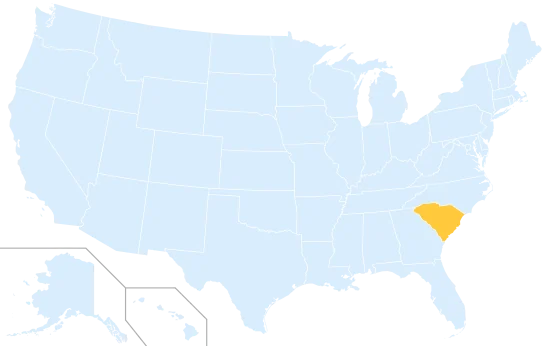
The state bird: Carolina Wren
Adopted in 1948, after the legislature had picked the mockingbird in 1939 and thought better of it nine years later. Only the male sings, but he knows at least twenty different phrases, and the loud teakettle, teakettle, teakettle carries farther than a bird that size has any right to.
Recording by Moira S., CC0, via iNaturalist.
The South Carolina Bird Records Committee of the Carolina Bird Club counted 446 species definitively on the state list as of mid-2021, with 114 of them rare anywhere in the state and another 34 rare away from the coast. That last number is the shape of the place: the state tilts from the Blue Ridge corner in the northwest, through the red-clay Piedmont and the sandhills, down across the flat coastal plain to barrier islands, and the closer you get to the water the more species pile on.
For a beginner the first birds are the same from Greenville to Beaufort: cardinal, wren, chickadee, titmouse, dove, crow. They are all year-round residents, which is why South Carolina never really goes quiet.
The South Carolina album
These are the 100 birds people report most often in South Carolina, ranked by how frequently they turn up. The common and uncommon ones are shown; the rare and legendary cards stay face down until you catch them in the game.
Common 25 cards
- #006
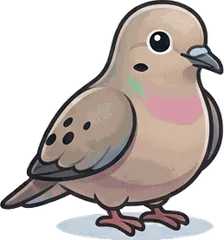 Mourning Dove
Zenaida macroura
Mourning Dove
Zenaida macroura - #029
 ?Catch it to find out
 - #031
 ?Catch it to find out
 - #032
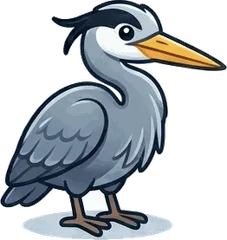 Great Blue Heron
Ardea herodias
Great Blue Heron
Ardea herodias - #035
 ?Catch it to find out
 - #043
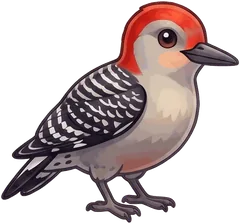 Red-bellied Woodpecker
Melanerpes carolinus
Red-bellied Woodpecker
Melanerpes carolinus - #044
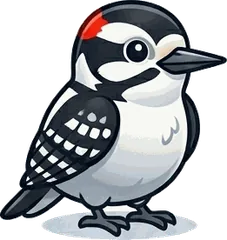 Downy Woodpecker
Dryobates pubescens
Downy Woodpecker
Dryobates pubescens - #048
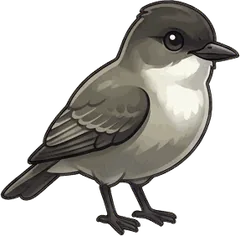 Eastern Phoebe
Sayornis phoebe
Eastern Phoebe
Sayornis phoebe - #053
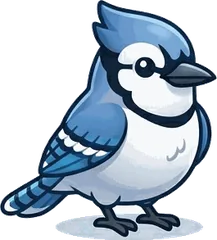 Blue Jay
Cyanocitta cristata
Blue Jay
Cyanocitta cristata - #054
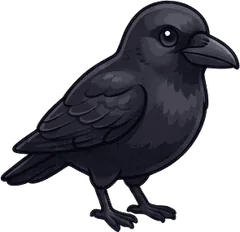 American Crow
Corvus brachyrhynchos
American Crow
Corvus brachyrhynchos - #056
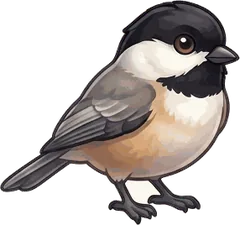 Carolina Chickadee
Poecile carolinensis
Carolina Chickadee
Poecile carolinensis - #057
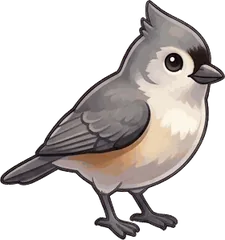 Tufted Titmouse
Baeolophus bicolor
Tufted Titmouse
Baeolophus bicolor - #065
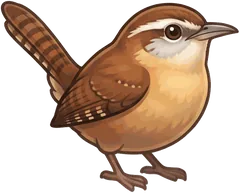 Carolina Wren
Thryothorus ludovicianus
Carolina Wren
Thryothorus ludovicianus - #068
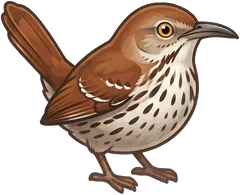 Brown Thrasher
Toxostoma rufum
Brown Thrasher
Toxostoma rufum - #069
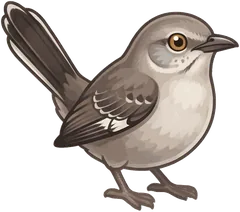 Northern Mockingbird
Mimus polyglottos
Northern Mockingbird
Mimus polyglottos - #070
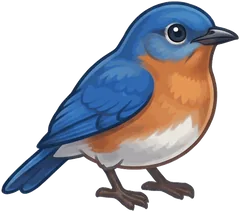 Eastern Bluebird
Sialia sialis
Eastern Bluebird
Sialia sialis - #072
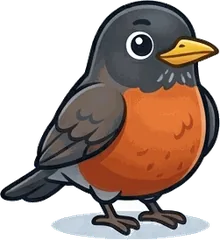 American Robin
Turdus migratorius
American Robin
Turdus migratorius - #075
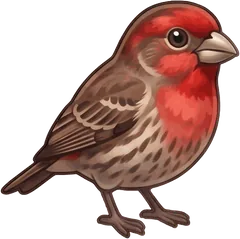 House Finch
Haemorhous mexicanus
House Finch
Haemorhous mexicanus - #076
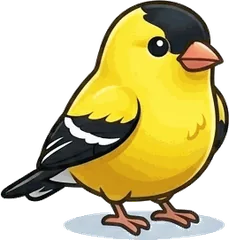 American Goldfinch
Spinus tristis
American Goldfinch
Spinus tristis - #077
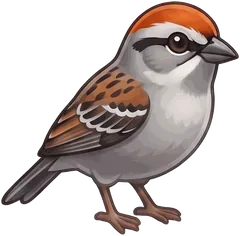 Chipping Sparrow
Spizella passerina
Chipping Sparrow
Spizella passerina - #083
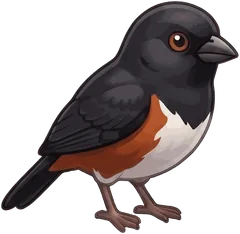 Eastern Towhee
Pipilo erythrophthalmus
Eastern Towhee
Pipilo erythrophthalmus - #084
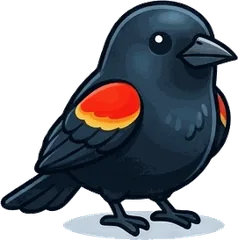 Red-winged Blackbird
Agelaius phoeniceus
Red-winged Blackbird
Agelaius phoeniceus - #093
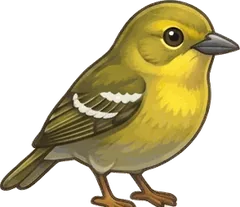 Pine Warbler
Setophaga pinus
Pine Warbler
Setophaga pinus - #094
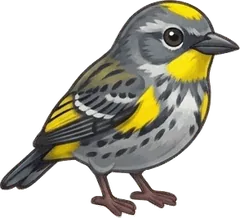 Yellow-rumped Warbler
Setophaga coronata
Yellow-rumped Warbler
Setophaga coronata - #097
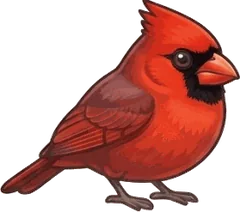 Northern Cardinal
Cardinalis cardinalis
Northern Cardinal
Cardinalis cardinalis
Uncommon 35 cards
- #001
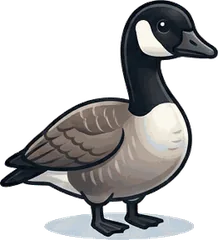 Canada Goose
Branta canadensis
Canada Goose
Branta canadensis - #009
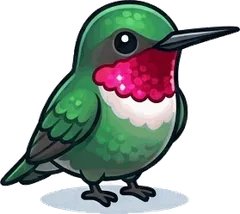 Ruby-throated Hummingbird
Archilochus colubris
Ruby-throated Hummingbird
Archilochus colubris - #014
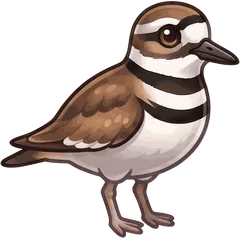 Killdeer
Charadrius vociferus
Killdeer
Charadrius vociferus - #019
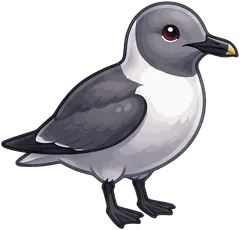 Laughing Gull
Leucophaeus atricilla
Laughing Gull
Leucophaeus atricilla - #020
 ?Catch it to find out
 - #023
 ?Catch it to find out
 - #025
 ?Catch it to find out
 - #026
 ?Catch it to find out
 - #027
 ?Catch it to find out
 - #028
 ?Catch it to find out
 - #033
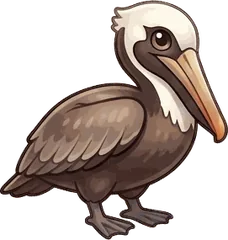 Brown Pelican
Pelecanus occidentalis
Brown Pelican
Pelecanus occidentalis - #034
 ?Catch it to find out
 - #036
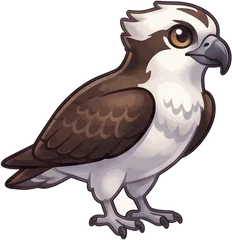 Osprey
Pandion haliaetus
Osprey
Pandion haliaetus - #037
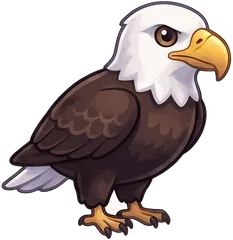 Bald Eagle
Haliaeetus leucocephalus
Bald Eagle
Haliaeetus leucocephalus - #038
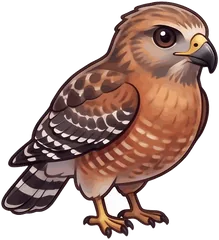 Red-shouldered Hawk
Buteo lineatus
Red-shouldered Hawk
Buteo lineatus - #039
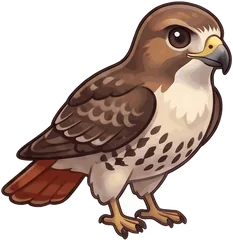 Red-tailed Hawk
Buteo jamaicensis
Red-tailed Hawk
Buteo jamaicensis - #040
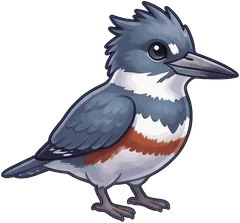 Belted Kingfisher
Megaceryle alcyon
Belted Kingfisher
Megaceryle alcyon - #041
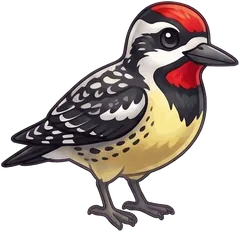 Yellow-bellied Sapsucker
Sphyrapicus varius
Yellow-bellied Sapsucker
Sphyrapicus varius - #045
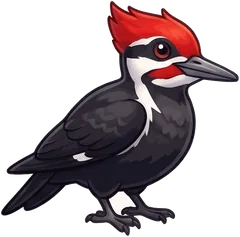 Pileated Woodpecker
Dryocopus pileatus
Pileated Woodpecker
Dryocopus pileatus - #046
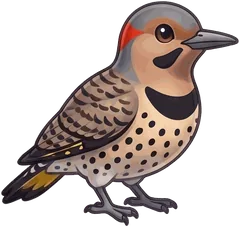 Northern Flicker
Colaptes auratus
Northern Flicker
Colaptes auratus - #049
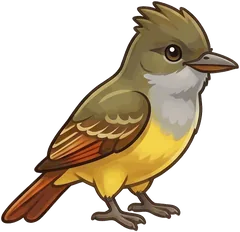 Great Crested Flycatcher
Myiarchus crinitus
Great Crested Flycatcher
Myiarchus crinitus - #051
 ?Catch it to find out
 - #055
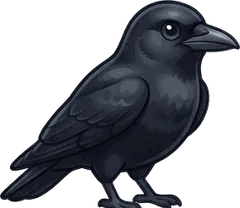 Fish Crow
Corvus ossifragus
Fish Crow
Corvus ossifragus - #061
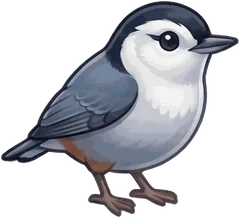 White-breasted Nuthatch
Sitta carolinensis
White-breasted Nuthatch
Sitta carolinensis - #062
 ?Catch it to find out
 - #063
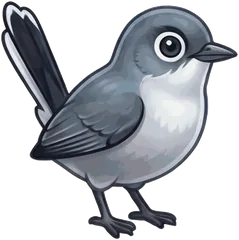 Blue-gray Gnatcatcher
Polioptila caerulea
Blue-gray Gnatcatcher
Polioptila caerulea - #066
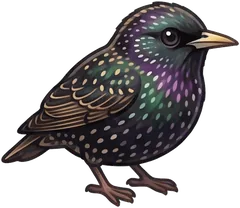 European Starling
Sturnus vulgaris
European Starling
Sturnus vulgaris - #067
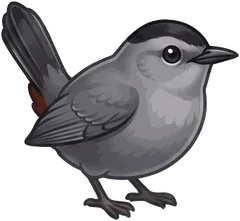 Gray Catbird
Dumetella carolinensis
Gray Catbird
Dumetella carolinensis - #079
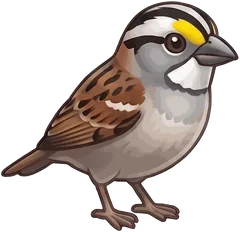 White-throated Sparrow
Zonotrichia albicollis
White-throated Sparrow
Zonotrichia albicollis - #081
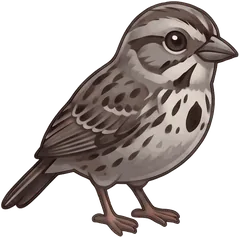 Song Sparrow
Melospiza melodia
Song Sparrow
Melospiza melodia - #085
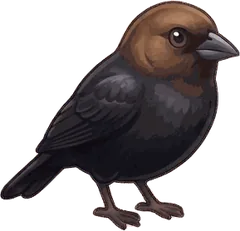 Brown-headed Cowbird
Molothrus ater
Brown-headed Cowbird
Molothrus ater - #086
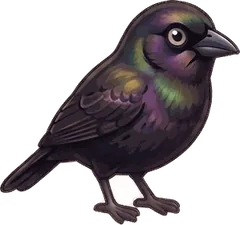 Common Grackle
Quiscalus quiscula
Common Grackle
Quiscalus quiscula - #087
 ?Catch it to find out
 - #089
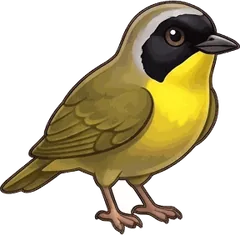 Common Yellowthroat
Geothlypis trichas
Common Yellowthroat
Geothlypis trichas - #091
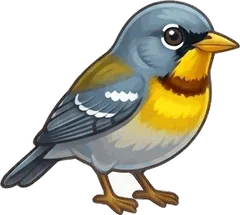 Northern Parula
Setophaga americana
Northern Parula
Setophaga americana
Rare 30 cards
- #002
 ?Catch it to reveal
 - #003?Catch it to reveal
- #004
 ?Catch it to find out
 - #005?Catch it to reveal
- #008?Catch it to reveal
- #010
 ?Catch it to find out
 - #011
 ?Catch it to find out
 - #012
 ?Catch it to find out
 - #016
 ?Catch it to find out
 - #021
 ?Catch it to find out
 - #022
 ?Catch it to find out
 - #024
 ?Catch it to find out
 - #030
 ?Catch it to find out
 - #042?Catch it to reveal
- #047?Catch it to reveal
- #050?Catch it to reveal
- #052?Catch it to reveal
- #058?Catch it to reveal
- #059?Catch it to reveal
- #060?Catch it to reveal
- #071?Catch it to reveal
- #073?Catch it to reveal
- #074?Catch it to reveal
- #082
 ?Catch it to find out
 - #088?Catch it to reveal
- #092
 ?Catch it to find out
 - #095
 ?Catch it to find out
 - #096?Catch it to reveal
- #099?Catch it to reveal
- #100?Catch it to reveal
Legendary 10 cards
- #007
 ?Catch it to find out
 - #013
 ?Catch it to find out
 - #015
 ?Catch it to find out
 - #017
 ?Catch it to find out
 - #018
 ?Catch it to find out
 - #064?Catch it to reveal
- #078?Catch it to reveal
- #080
 ?Catch it to find out
 - #090?Catch it to reveal
- #098
 ?Catch it to find out
 47 of the 100 cards are shown here. The other 53, including all 30 rare and 10 legendary birds, are yours to discover. Get Warble and start with the common ones.
Backyard birds you will hear first
The Northern Cardinal leads the album and starts singing in January here, cheer, cheer, cheer from a crape myrtle. The Carolina Wren is second and the loudest bird in any yard: teakettle from the woodpile, from under the porch. The Carolina Chickadee gives a quick, high four-note whistle and the Tufted Titmouse a clear peter, peter, peter, usually from the same feeder within the same minute.
The Mourning Dove coos from the wires and the American Crow caws over everything. The Red-bellied Woodpecker rolls its churr from the pines, the Northern Mockingbird sings from the highest point on the block and runs through every other bird on this page, the Blue Jay screams, and the Eastern Bluebird warbles softly from a fence post or a nest box by the road. The Turkey Vulture makes the top twelve without a sound, tilting on the thermals over every highway.
The regions, by ear
The Lowcountry coast
Cape Romain National Wildlife Refuge, along the coast between McClellanville and Awendaw north of Charleston, was established in 1932 for migratory waterfowl and has recorded more than 293 bird species across its barrier islands, maritime forest, brackish ponds and salt marsh. It holds the largest wintering population of American Oystercatchers on the Atlantic and Gulf coasts, plus Black Skimmers, Wilson's Plovers and Red Knots. Clapper Rails clatter in the marsh, Willets scream, and Brown Pelicans glide in lines just off the sand.
The pine flatwoods
Francis Marion National Forest, north of Charleston, is longleaf pine country: Pine Warbler trills, Brown-headed Nuthatches squeaking like rubber ducks in the crowns, Bachman's Sparrows singing from the wiregrass, Red-cockaded Woodpeckers in the old pines, and Chuck-will's-widows calling their names on spring nights.
The Congaree
Congaree National Park, about 18 miles southeast of Columbia, protects the largest tract of old-growth bottomland hardwood forest left in the United States, 26,692 acres of it, with one of the tallest temperate deciduous canopies in the world. It became a national park on November 10, 2003. On the boardwalk you hear Prothonotary Warblers ringing sweet, sweet, sweet over the sloughs, Pileated Woodpeckers laughing, and Barred Owls calling in broad daylight.
The Upstate
The Blue Ridge corner around Caesars Head and the Jocassee Gorges is a different state: Wood Thrush, Ovenbird, Black-throated Green Warbler and Scarlet Tanager in the hardwood coves, Ravens croaking over the cliffs.
Best months to listen
April is the peak: the residents have been singing for two months, the Prothonotaries and the Chuck-will's-widows are back, and the migrant warblers are moving through the coastal live oaks and the Upstate coves. March is the month to hear the pines before the heat. Summer mornings are loud until about nine, then cicadas take over, so start at dawn. September brings the hawks over Caesars Head and the shorebirds to the beaches, and winter is the best time for the coast, with oystercatchers and ducks at Cape Romain and the same wren shouting through it all.
Places worth the drive
- Cape Romain National Wildlife Refuge, near McClellanville: oystercatchers, skimmers, plovers on the barrier islands.
- Congaree National Park, southeast of Columbia: old-growth swamp forest, Prothonotary Warblers and daytime Barred Owls.
- Francis Marion National Forest, north of Charleston: longleaf pine, Bachman's Sparrow and Red-cockaded Woodpecker.
None of it is required. A porch in Columbia with a live oak and a bluebird box gives you the first 20 cards in Warble in a week, and the wren will make sure you hear it.
Listen before you go
Three of the common South Carolina birds, so the first songs you hear outside already ring a bell.
Recording by Chase Harris, CC0, via iNaturalist.
Recording by Chase Harris, CC0, via iNaturalist.
Recording by Chase Harris, CC0, via iNaturalist.
Questions people ask
What is the most common bird in South Carolina?
By the reports behind the album, the Northern Cardinal, then the Carolina Wren, the Carolina Chickadee, the Tufted Titmouse, the Mourning Dove and the American Crow.
What is the state bird of South Carolina?
The Carolina Wren, adopted in 1948. The legislature had named the Northern Mockingbird in 1939 and repealed that choice nine years later in favor of the wren.
How many bird species are there in South Carolina?
446 species definitively on the list as of mid-2021, according to the South Carolina Bird Records Committee of the Carolina Bird Club. The Warble album covers the 100 reported most often.
Nearby albums
Sources
- Wikipedia: List of birds of South Carolina. en.wikipedia.org/wiki/List_of_birds_of_South_Carolina
- Wikipedia: Carolina wren. en.wikipedia.org/wiki/Carolina_wren
- U.S. Fish and Wildlife Service: Cape Romain National Wildlife Refuge. www.fws.gov/refuge/cape-romain
- Wikipedia: Congaree National Park. en.wikipedia.org/wiki/Congaree_National_Park