 Warble
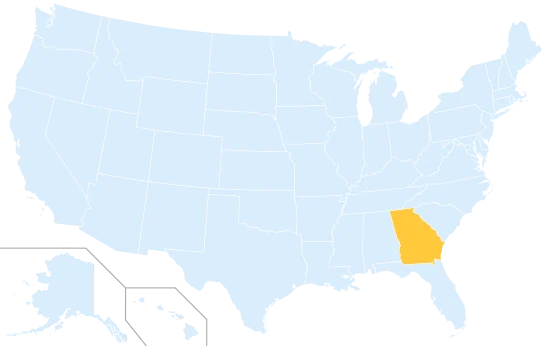
The state bird: Brown Thrasher
Proclaimed the state bird by the governor in 1935 and written into law by the legislature in 1970. A rusty, long-tailed mimic with one of the largest song repertoires of any bird, more than a thousand song types, each phrase sung two or three times before it moves on.
Recording by Chase Harris, CC0, via iNaturalist.
Georgia runs from the Blue Ridge to the barrier islands, and the birds change with the ground. The mountains in the north hold Veeries, Black-throated Blue Warblers and Ruffed Grouse at the southern end of their range. The Piedmont, where Atlanta and most Georgians live, is oak, pine and suburb, and it is the loudest backyard in the country: wren, titmouse, chickadee, cardinal, thrasher, towhee, all at once. The Coastal Plain south of the fall line is longleaf pine and blackwater swamp, and the coast is salt marsh, live oak and rookery islands.
The Georgia Ornithological Society's records committee counted 427 species on the official list as of August 2020, plus seven provisional.
The Georgia album
These are the 100 birds people report most often in Georgia, ranked by how frequently they turn up. The common and uncommon ones are shown; the rare and legendary cards stay face down until you catch them in the game.
Common 25 cards
- #001
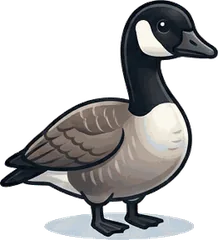 Canada Goose
Branta canadensis
Canada Goose
Branta canadensis - #007
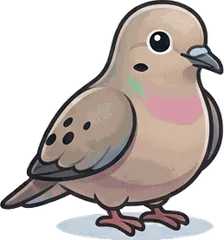 Mourning Dove
Zenaida macroura
Mourning Dove
Zenaida macroura - #025
 ?Catch it to find out
 - #034
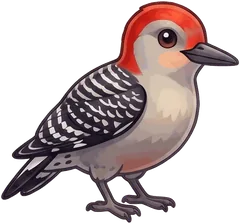 Red-bellied Woodpecker
Melanerpes carolinus
Red-bellied Woodpecker
Melanerpes carolinus - #035
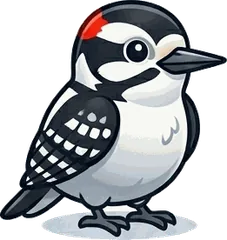 Downy Woodpecker
Dryobates pubescens
Downy Woodpecker
Dryobates pubescens - #040
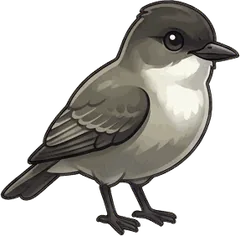 Eastern Phoebe
Sayornis phoebe
Eastern Phoebe
Sayornis phoebe - #047
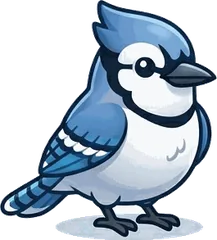 Blue Jay
Cyanocitta cristata
Blue Jay
Cyanocitta cristata - #048
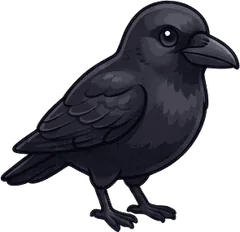 American Crow
Corvus brachyrhynchos
American Crow
Corvus brachyrhynchos - #050
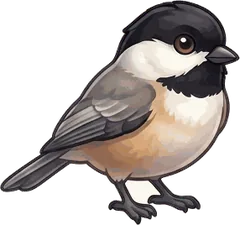 Carolina Chickadee
Poecile carolinensis
Carolina Chickadee
Poecile carolinensis - #051
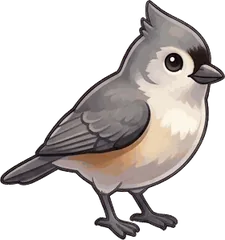 Tufted Titmouse
Baeolophus bicolor
Tufted Titmouse
Baeolophus bicolor - #056
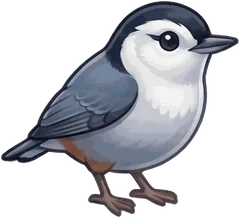 White-breasted Nuthatch
Sitta carolinensis
White-breasted Nuthatch
Sitta carolinensis - #057
 ?Catch it to find out
 - #060
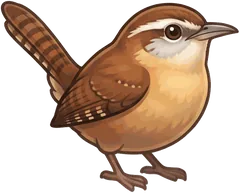 Carolina Wren
Thryothorus ludovicianus
Carolina Wren
Thryothorus ludovicianus - #063
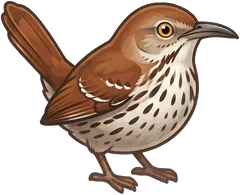 Brown Thrasher
Toxostoma rufum
Brown Thrasher
Toxostoma rufum - #064
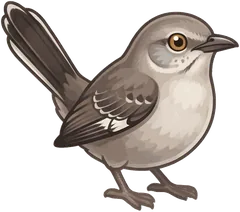 Northern Mockingbird
Mimus polyglottos
Northern Mockingbird
Mimus polyglottos - #065
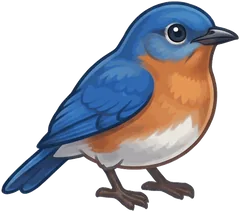 Eastern Bluebird
Sialia sialis
Eastern Bluebird
Sialia sialis - #068
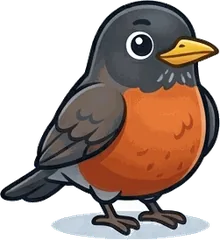 American Robin
Turdus migratorius
American Robin
Turdus migratorius - #071
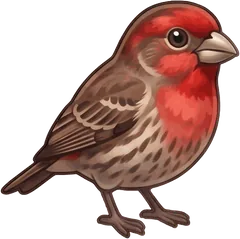 House Finch
Haemorhous mexicanus
House Finch
Haemorhous mexicanus - #073
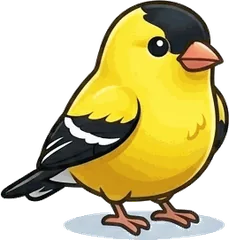 American Goldfinch
Spinus tristis
American Goldfinch
Spinus tristis - #074
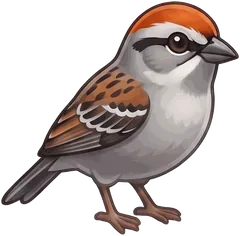 Chipping Sparrow
Spizella passerina
Chipping Sparrow
Spizella passerina - #079
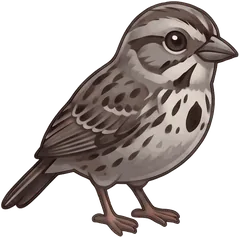 Song Sparrow
Melospiza melodia
Song Sparrow
Melospiza melodia - #081
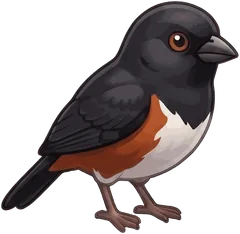 Eastern Towhee
Pipilo erythrophthalmus
Eastern Towhee
Pipilo erythrophthalmus - #093
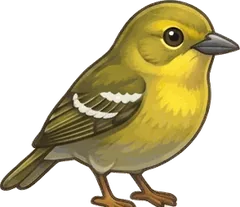 Pine Warbler
Setophaga pinus
Pine Warbler
Setophaga pinus - #094
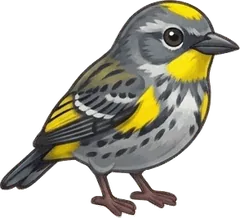 Yellow-rumped Warbler
Setophaga coronata
Yellow-rumped Warbler
Setophaga coronata - #098
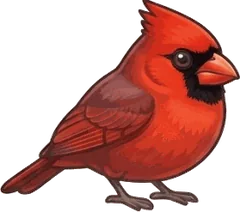 Northern Cardinal
Cardinalis cardinalis
Northern Cardinal
Cardinalis cardinalis
Uncommon 35 cards
- #003
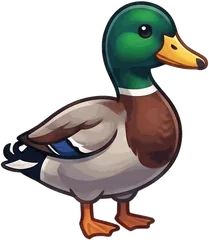 Mallard
Anas platyrhynchos
Mallard
Anas platyrhynchos - #005
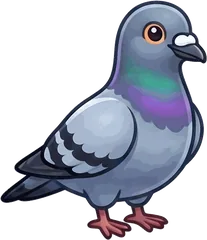 Rock Pigeon
Columba livia
Rock Pigeon
Columba livia - #009
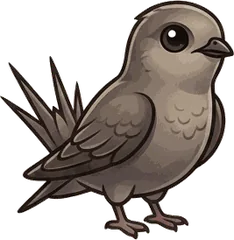 Chimney Swift
Chaetura pelagica
Chimney Swift
Chaetura pelagica - #010
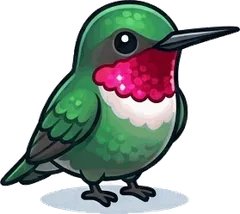 Ruby-throated Hummingbird
Archilochus colubris
Ruby-throated Hummingbird
Archilochus colubris - #011
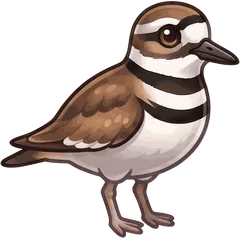 Killdeer
Charadrius vociferus
Killdeer
Charadrius vociferus - #021
 ?Catch it to find out
 - #022
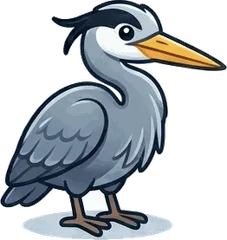 Great Blue Heron
Ardea herodias
Great Blue Heron
Ardea herodias - #024
 ?Catch it to find out
 - #028
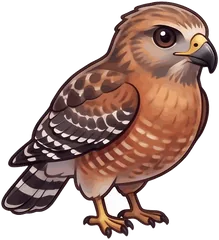 Red-shouldered Hawk
Buteo lineatus
Red-shouldered Hawk
Buteo lineatus - #029
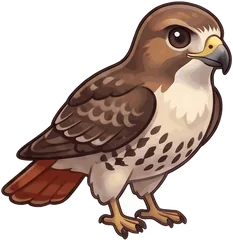 Red-tailed Hawk
Buteo jamaicensis
Red-tailed Hawk
Buteo jamaicensis - #031
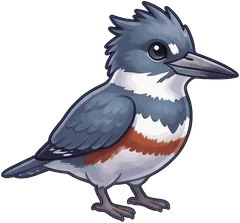 Belted Kingfisher
Megaceryle alcyon
Belted Kingfisher
Megaceryle alcyon - #032
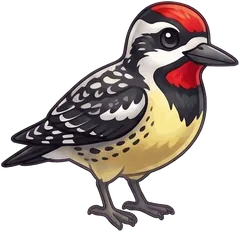 Yellow-bellied Sapsucker
Sphyrapicus varius
Yellow-bellied Sapsucker
Sphyrapicus varius - #033
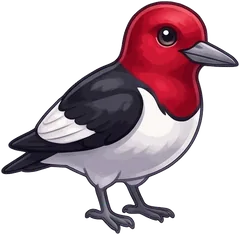 Red-headed Woodpecker
Melanerpes erythrocephalus
Red-headed Woodpecker
Melanerpes erythrocephalus - #036
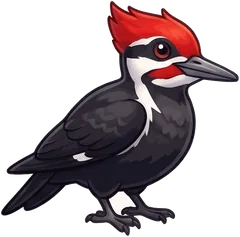 Pileated Woodpecker
Dryocopus pileatus
Pileated Woodpecker
Dryocopus pileatus - #037
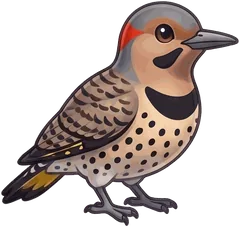 Northern Flicker
Colaptes auratus
Northern Flicker
Colaptes auratus - #041
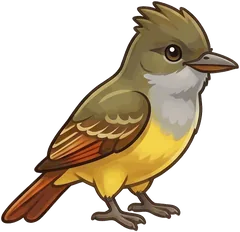 Great Crested Flycatcher
Myiarchus crinitus
Great Crested Flycatcher
Myiarchus crinitus - #043
 ?Catch it to find out
 - #046
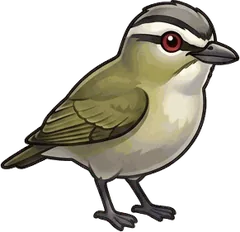 Red-eyed Vireo
Vireo olivaceus
Red-eyed Vireo
Vireo olivaceus - #049
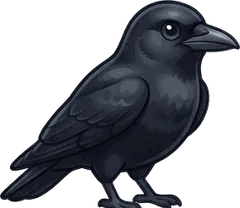 Fish Crow
Corvus ossifragus
Fish Crow
Corvus ossifragus - #053
 ?Catch it to find out
 - #054
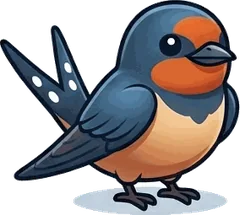 Barn Swallow
Hirundo rustica
Barn Swallow
Hirundo rustica - #055
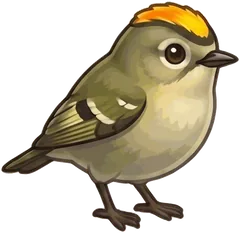 Golden-crowned Kinglet
Regulus satrapa
Golden-crowned Kinglet
Regulus satrapa - #058
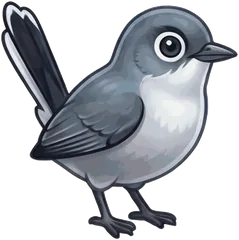 Blue-gray Gnatcatcher
Polioptila caerulea
Blue-gray Gnatcatcher
Polioptila caerulea - #061
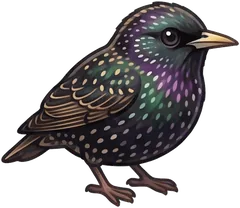 European Starling
Sturnus vulgaris
European Starling
Sturnus vulgaris - #062
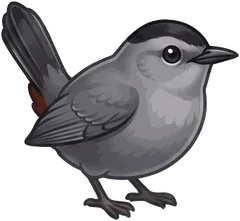 Gray Catbird
Dumetella carolinensis
Gray Catbird
Dumetella carolinensis - #069
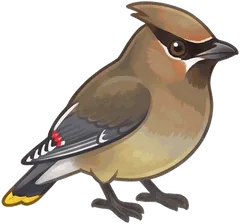 Cedar Waxwing
Bombycilla cedrorum
Cedar Waxwing
Bombycilla cedrorum - #077
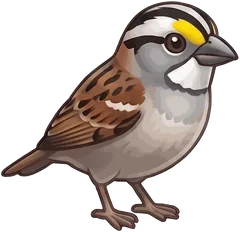 White-throated Sparrow
Zonotrichia albicollis
White-throated Sparrow
Zonotrichia albicollis - #083
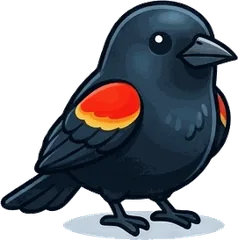 Red-winged Blackbird
Agelaius phoeniceus
Red-winged Blackbird
Agelaius phoeniceus - #084
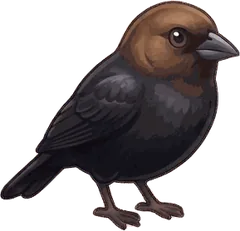 Brown-headed Cowbird
Molothrus ater
Brown-headed Cowbird
Molothrus ater - #085
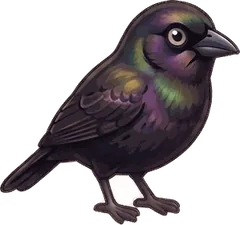 Common Grackle
Quiscalus quiscula
Common Grackle
Quiscalus quiscula - #088
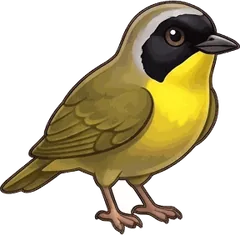 Common Yellowthroat
Geothlypis trichas
Common Yellowthroat
Geothlypis trichas - #091
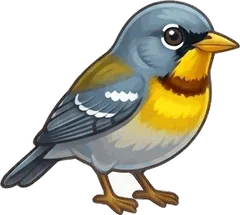 Northern Parula
Setophaga americana
Northern Parula
Setophaga americana - #092
 ?Catch it to find out
 - #096
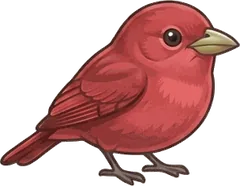 Summer Tanager
Piranga rubra
Summer Tanager
Piranga rubra - #100
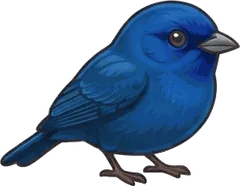 Indigo Bunting
Passerina cyanea
Indigo Bunting
Passerina cyanea
Rare 30 cards
- #002
 ?Catch it to reveal
 - #012?Catch it to reveal
- #013
 ?Catch it to find out
 - #014
 ?Catch it to find out
 - #016
 ?Catch it to find out
 - #017
 ?Catch it to find out
 - #018
 ?Catch it to find out
 - #019
 ?Catch it to find out
 - #020
 ?Catch it to find out
 - #026?Catch it to reveal
- #027?Catch it to reveal
- #030?Catch it to reveal
- #039?Catch it to reveal
- #042?Catch it to reveal
- #044
 ?Catch it to find out
 - #052?Catch it to reveal
- #059?Catch it to reveal
- #066?Catch it to reveal
- #067?Catch it to reveal
- #070?Catch it to reveal
- #075?Catch it to reveal
- #076?Catch it to reveal
- #080
 ?Catch it to find out
 - #082?Catch it to reveal
- #086
 ?Catch it to find out
 - #087?Catch it to reveal
- #089
 ?Catch it to find out
 - #090?Catch it to reveal
- #095
 ?Catch it to find out
 - #099
 ?Catch it to find out
Legendary 10 cards
- #004
 ?Catch it to find out
 - #006?Catch it to reveal
- #008
 ?Catch it to find out
 - #015
 ?Catch it to find out
 - #023?Catch it to reveal
- #038?Catch it to reveal
- #045
 ?Catch it to find out
 - #072?Catch it to reveal
- #078
 ?Catch it to find out
 - #097?Catch it to reveal
 53 of the 100 cards are shown here. The other 47, including all 30 rare and 10 legendary birds, are yours to discover. Get Warble and start with the common ones.
Backyard birds you will hear first
The Northern Cardinal leads the album, but the Carolina Wren is the one you will notice, shouting teakettle, teakettle from the porch rail at a volume that seems impossible for its size, in every month of the year. The Tufted Titmouse whistles peter, peter, peter, the Carolina Chickadee gives a four-note fee-bee, fee-bay, and the Red-bellied Woodpecker rolls a churr from the pines.
Then the mimics. The Brown Thrasher sings from the top of a shrub in March and April, each phrase doubled, and the Northern Mockingbird sings from the roof, each phrase repeated more times than that, sometimes at night. Under the hedge the Eastern Towhee scratches in the leaves and sings drink your tea, and in the evening a Chuck-will's-widow starts up at the edge of town.
The regions, by ear
The mountains
Cove hardwood and rhododendron above 3,000 feet. This is where Georgia gets northern birds: the Veery's spiraling song at dusk, Black-throated Blue and Canada Warblers, Dark-eyed Juncos nesting on the high ridges, and a Ruffed Grouse drumming somewhere in the laurel. Late April through June is the season.
The Piedmont
Atlanta, Athens, Macon and the suburbs between them. Oak and loblolly pine with the full backyard chorus, Pine Warblers trilling from the pines, Summer Tanagers and Great Crested Flycatchers in the canopy, and Red-shouldered Hawks screaming over the creek bottoms.
The Coastal Plain and the Okefenokee
Longleaf pine, wiregrass and blackwater swamp. Brown-headed Nuthatches squeak from the pine tops, Bachman's Sparrows sing a sweet, buzzy song from the wiregrass, and Red-cockaded Woodpeckers nest in the old pines. The Okefenokee refuge, 353,981 acres of wilderness at the head of the Suwannee and St. Marys rivers, has Sandhill Cranes bugling over the prairies, Prothonotary Warblers in the cypress, Swallow-tailed Kites overhead in summer and Barred Owls calling across the water at dusk.
The coast
Salt marsh, tidal creeks and barrier islands. Clapper Rails clatter from the cordgrass, Painted Buntings sing from the wax myrtle, and Harris Neck refuge, with nearly 350 species recorded, has a large Wood Stork colony on Woody Pond.
Best months to listen
April is the month. Residents are singing at full strength, the thrasher and the towhee are on the hedge tops, and migrants move through the Piedmont woods from the first week of April to the middle of May. The mountains run a few weeks later, into June. Summer mornings are busy until the heat arrives, then quiet except for the pewee and the towhee. Fall migration is long and quiet, September into November, with the coast best for it. Winter brings sparrows, kinglets and Yellow-rumped Warblers to the yards and Sandhill Cranes to the Okefenokee. In every season, the first hour after sunrise carries the song.
Places worth the drive
- Okefenokee National Wildlife Refuge, near Folkston: cranes, Prothonotary Warblers, Barred Owls and Red-cockaded Woodpeckers in a swamp the size of a small state.
- Harris Neck National Wildlife Refuge, south of Savannah: nearly 350 species, Wood Storks on Woody Pond and Painted Buntings in summer.
- Any Blue Ridge trail above 3,000 feet, north of Dahlonega: Veeries, warblers and grouse from late April.
None of them is required. A yard in the Atlanta suburbs hands you the first 30 cards of the Warble album by April; the swamp and the coast are for the rest.
Listen before you go
Three of the common Georgia birds, so the first songs you hear outside already ring a bell.
Recording by Chase Harris, CC0, via iNaturalist.
Recording by Fionn Ó Marcaigh, CC BY 4.0, via iNaturalist.
Recording by Richard Littauer, CC BY 4.0, via iNaturalist.
Questions people ask
What is the most common bird in Georgia?
By the reports behind the album, the Northern Cardinal, followed by the Carolina Wren, the Tufted Titmouse, the Carolina Chickadee and the Red-bellied Woodpecker. The Northern Mockingbird and the state bird, the Brown Thrasher, are both in the top twenty.
What is the state bird of Georgia?
The Brown Thrasher, proclaimed by the governor in 1935 and formally adopted by the legislature in 1970. The Bobwhite Quail became the state game bird the same year.
How many bird species are there in Georgia?
427 species on the official list as of August 2020, plus seven provisional species, according to the Georgia Ornithological Society's checklist committee. The Warble album covers the 100 reported most often.
Nearby albums
Sources
- Wikipedia: List of Georgia state symbols. en.wikipedia.org/wiki/List_of_Georgia_state_symbols
- U.S. Fish and Wildlife Service: Okefenokee National Wildlife Refuge. www.fws.gov/refuge/okefenokee
- U.S. Fish and Wildlife Service: Harris Neck National Wildlife Refuge. www.fws.gov/refuge/harris-neck
- Wikipedia: List of birds of Georgia (U.S. state). en.wikipedia.org/wiki/List_of_birds_of_Georgia_(U.S._state)