 Warble
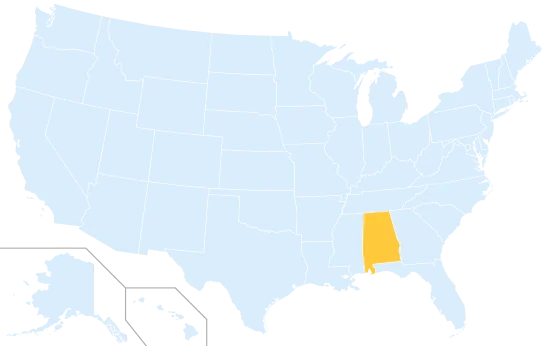
The state bird: Northern Flicker
Adopted in 1927. The yellowhammer is the yellow-shafted Northern Flicker, a woodpecker that feeds on lawns more than trunks, with a long laughing call that carries across a block in spring.
Recording by jbyggdin, CC0, via iNaturalist.
Alabama runs from the last ridges of the Appalachians in the northeast down to the Gulf, and the birds shift as you go. The Tennessee River valley across the north is winter crane country. The middle mixes pine, hardwood bottomland and open pasture where meadowlarks whistle from the fence posts. The coast is only two counties wide, but every April birders from all over the country go there, because songbirds that have flown across the Gulf all night drop into the first live oaks they see.
For a beginner none of that matters yet. The birds in an Alabama yard are the same from Huntsville to Mobile: cardinal, Carolina Wren, mockingbird, Blue Jay, titmouse, chickadee, Mourning Dove, and a flicker on the lawn.
The Alabama album
These are the 100 birds people report most often in Alabama, ranked by how frequently they turn up. The common and uncommon ones are shown; the rare and legendary cards stay face down until you catch them in the game.
Common 25 cards
- #006
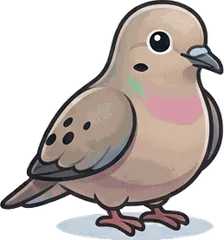 Mourning Dove
Zenaida macroura
Mourning Dove
Zenaida macroura - #022
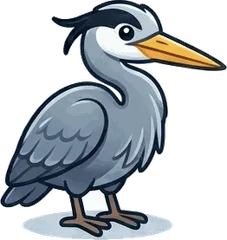 Great Blue Heron
Ardea herodias
Great Blue Heron
Ardea herodias - #025
 ?Catch it to find out
 - #033
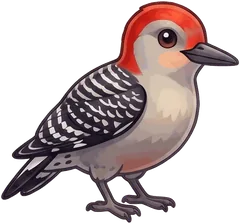 Red-bellied Woodpecker
Melanerpes carolinus
Red-bellied Woodpecker
Melanerpes carolinus - #034
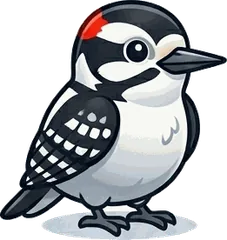 Downy Woodpecker
Dryobates pubescens
Downy Woodpecker
Dryobates pubescens - #039
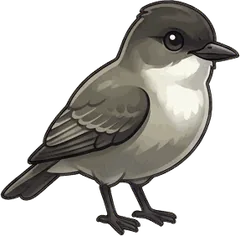 Eastern Phoebe
Sayornis phoebe
Eastern Phoebe
Sayornis phoebe - #042
 ?Catch it to find out
 - #046
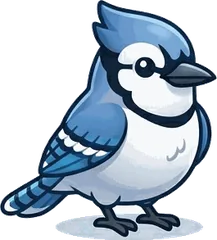 Blue Jay
Cyanocitta cristata
Blue Jay
Cyanocitta cristata - #047
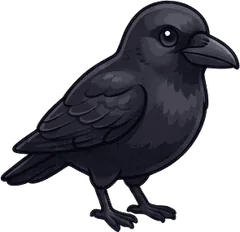 American Crow
Corvus brachyrhynchos
American Crow
Corvus brachyrhynchos - #049
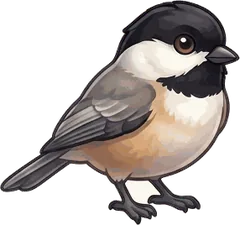 Carolina Chickadee
Poecile carolinensis
Carolina Chickadee
Poecile carolinensis - #050
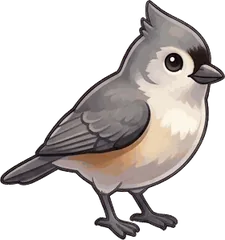 Tufted Titmouse
Baeolophus bicolor
Tufted Titmouse
Baeolophus bicolor - #060
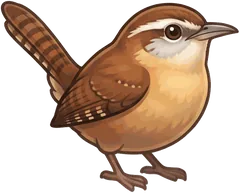 Carolina Wren
Thryothorus ludovicianus
Carolina Wren
Thryothorus ludovicianus - #061
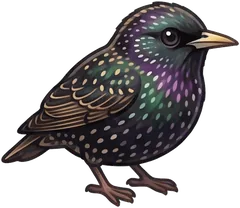 European Starling
Sturnus vulgaris
European Starling
Sturnus vulgaris - #063
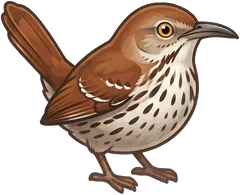 Brown Thrasher
Toxostoma rufum
Brown Thrasher
Toxostoma rufum - #064
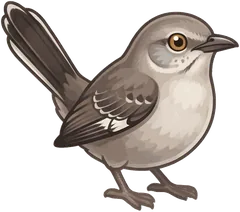 Northern Mockingbird
Mimus polyglottos
Northern Mockingbird
Mimus polyglottos - #065
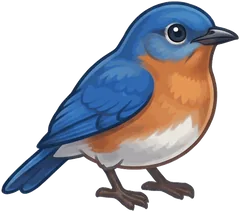 Eastern Bluebird
Sialia sialis
Eastern Bluebird
Sialia sialis - #068
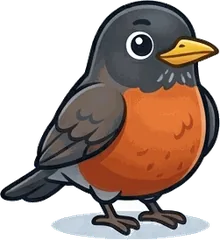 American Robin
Turdus migratorius
American Robin
Turdus migratorius - #071
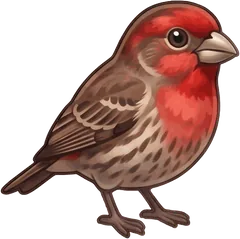 House Finch
Haemorhous mexicanus
House Finch
Haemorhous mexicanus - #072
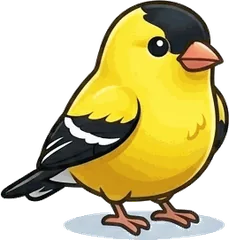 American Goldfinch
Spinus tristis
American Goldfinch
Spinus tristis - #073
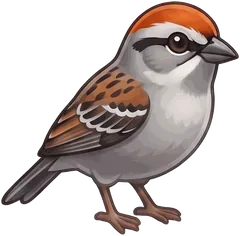 Chipping Sparrow
Spizella passerina
Chipping Sparrow
Spizella passerina - #080
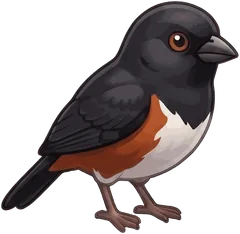 Eastern Towhee
Pipilo erythrophthalmus
Eastern Towhee
Pipilo erythrophthalmus - #084
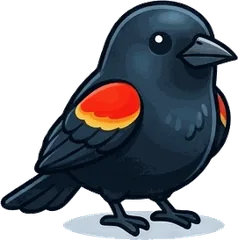 Red-winged Blackbird
Agelaius phoeniceus
Red-winged Blackbird
Agelaius phoeniceus - #094
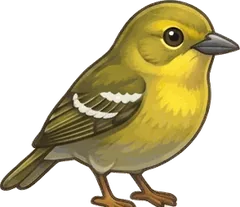 Pine Warbler
Setophaga pinus
Pine Warbler
Setophaga pinus - #095
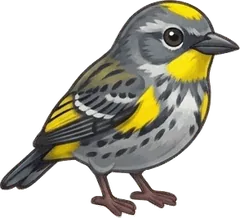 Yellow-rumped Warbler
Setophaga coronata
Yellow-rumped Warbler
Setophaga coronata - #097
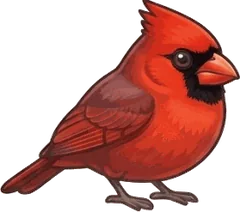 Northern Cardinal
Cardinalis cardinalis
Northern Cardinal
Cardinalis cardinalis
Uncommon 35 cards
- #001
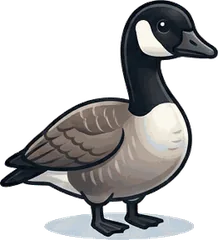 Canada Goose
Branta canadensis
Canada Goose
Branta canadensis - #003
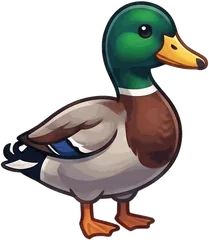 Mallard
Anas platyrhynchos
Mallard
Anas platyrhynchos - #008
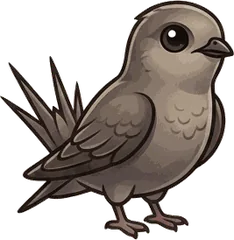 Chimney Swift
Chaetura pelagica
Chimney Swift
Chaetura pelagica - #009
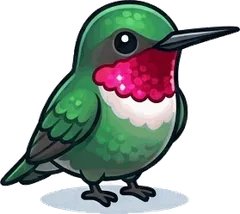 Ruby-throated Hummingbird
Archilochus colubris
Ruby-throated Hummingbird
Archilochus colubris - #011
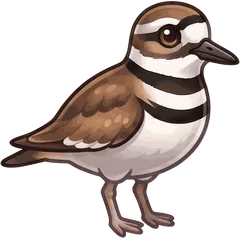 Killdeer
Charadrius vociferus
Killdeer
Charadrius vociferus - #013
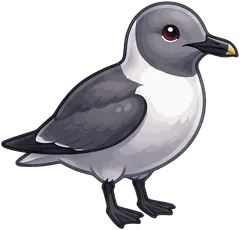 Laughing Gull
Leucophaeus atricilla
Laughing Gull
Leucophaeus atricilla - #021
 ?Catch it to find out
 - #023
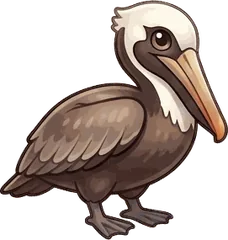 Brown Pelican
Pelecanus occidentalis
Brown Pelican
Pelecanus occidentalis - #024
 ?Catch it to find out
 - #026
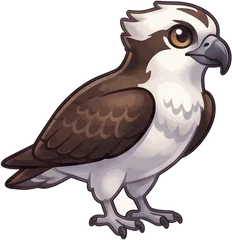 Osprey
Pandion haliaetus
Osprey
Pandion haliaetus - #028
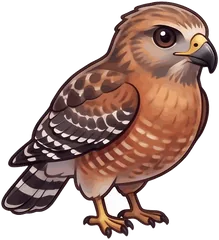 Red-shouldered Hawk
Buteo lineatus
Red-shouldered Hawk
Buteo lineatus - #029
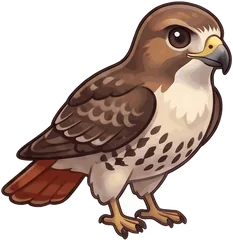 Red-tailed Hawk
Buteo jamaicensis
Red-tailed Hawk
Buteo jamaicensis - #030
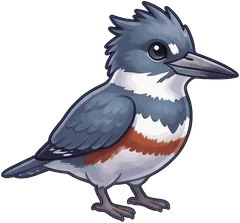 Belted Kingfisher
Megaceryle alcyon
Belted Kingfisher
Megaceryle alcyon - #032
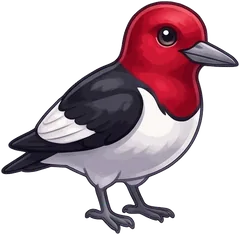 Red-headed Woodpecker
Melanerpes erythrocephalus
Red-headed Woodpecker
Melanerpes erythrocephalus - #035
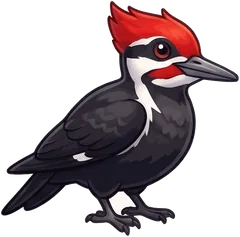 Pileated Woodpecker
Dryocopus pileatus
Pileated Woodpecker
Dryocopus pileatus - #036
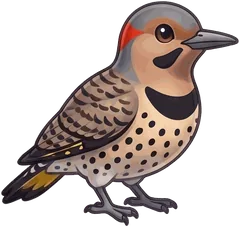 Northern Flicker
Colaptes auratus
Northern Flicker
Colaptes auratus - #040
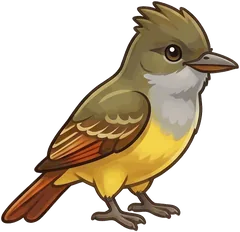 Great Crested Flycatcher
Myiarchus crinitus
Great Crested Flycatcher
Myiarchus crinitus - #041
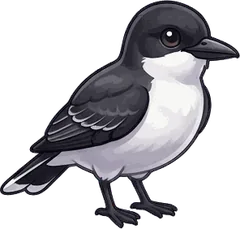 Eastern Kingbird
Tyrannus tyrannus
Eastern Kingbird
Tyrannus tyrannus - #044
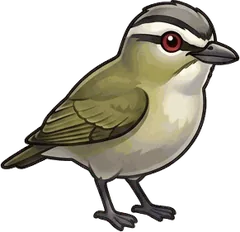 Red-eyed Vireo
Vireo olivaceus
Red-eyed Vireo
Vireo olivaceus - #048
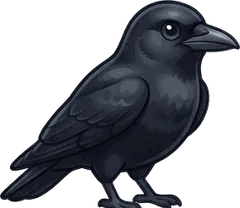 Fish Crow
Corvus ossifragus
Fish Crow
Corvus ossifragus - #054
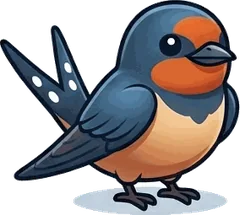 Barn Swallow
Hirundo rustica
Barn Swallow
Hirundo rustica - #056
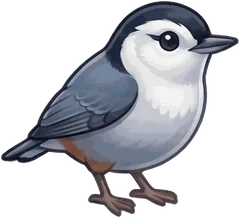 White-breasted Nuthatch
Sitta carolinensis
White-breasted Nuthatch
Sitta carolinensis - #057
 ?Catch it to find out
 - #058
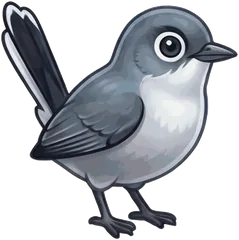 Blue-gray Gnatcatcher
Polioptila caerulea
Blue-gray Gnatcatcher
Polioptila caerulea - #062
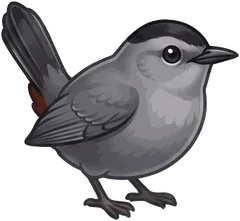 Gray Catbird
Dumetella carolinensis
Gray Catbird
Dumetella carolinensis - #069
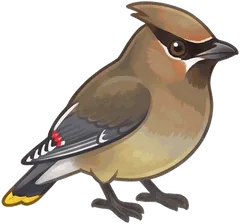 Cedar Waxwing
Bombycilla cedrorum
Cedar Waxwing
Bombycilla cedrorum - #070
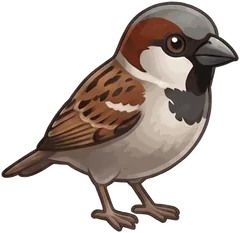 House Sparrow
Passer domesticus
House Sparrow
Passer domesticus - #076
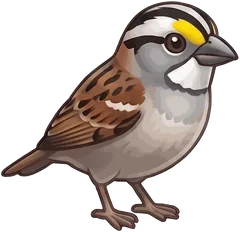 White-throated Sparrow
Zonotrichia albicollis
White-throated Sparrow
Zonotrichia albicollis - #078
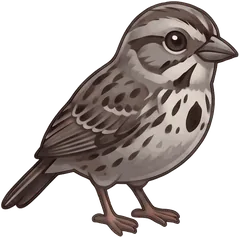 Song Sparrow
Melospiza melodia
Song Sparrow
Melospiza melodia - #085
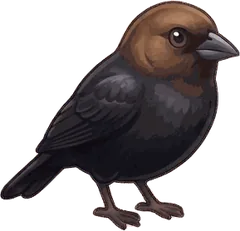 Brown-headed Cowbird
Molothrus ater
Brown-headed Cowbird
Molothrus ater - #086
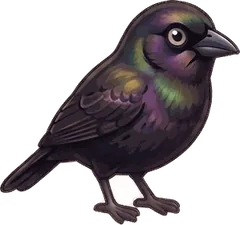 Common Grackle
Quiscalus quiscula
Common Grackle
Quiscalus quiscula - #089
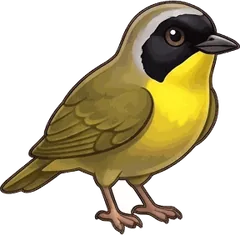 Common Yellowthroat
Geothlypis trichas
Common Yellowthroat
Geothlypis trichas - #092
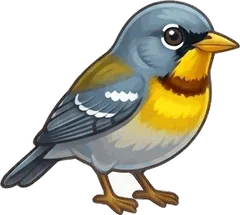 Northern Parula
Setophaga americana
Northern Parula
Setophaga americana - #096
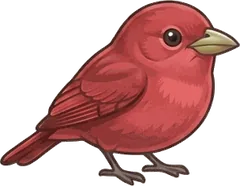 Summer Tanager
Piranga rubra
Summer Tanager
Piranga rubra - #100
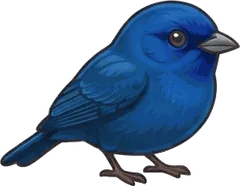 Indigo Bunting
Passerina cyanea
Indigo Bunting
Passerina cyanea
Rare 30 cards
- #002
 ?Catch it to reveal
 - #004?Catch it to reveal
- #005?Catch it to reveal
- #007
 ?Catch it to find out
 - #010
 ?Catch it to find out
 - #014
 ?Catch it to find out
 - #016
 ?Catch it to find out
 - #017
 ?Catch it to find out
 - #019
 ?Catch it to find out
 - #020
 ?Catch it to find out
 - #027?Catch it to reveal
- #031?Catch it to reveal
- #037?Catch it to reveal
- #038?Catch it to reveal
- #043
 ?Catch it to find out
 - #052?Catch it to reveal
- #053
 ?Catch it to find out
 - #055?Catch it to reveal
- #067?Catch it to reveal
- #074?Catch it to reveal
- #075?Catch it to reveal
- #077
 ?Catch it to find out
 - #079
 ?Catch it to find out
 - #082?Catch it to reveal
- #083
 ?Catch it to find out
 - #087?Catch it to reveal
- #090
 ?Catch it to find out
 - #093
 ?Catch it to find out
 - #098?Catch it to reveal
- #099
 ?Catch it to find out
Legendary 10 cards
- #012
 ?Catch it to find out
 - #015
 ?Catch it to find out
 - #018
 ?Catch it to find out
 - #045
 ?Catch it to find out
 - #051?Catch it to reveal
- #059?Catch it to reveal
- #066?Catch it to reveal
- #081
 ?Catch it to find out
 - #088?Catch it to reveal
- #091?Catch it to reveal
 55 of the 100 cards are shown here. The other 45, including all 30 rare and 10 legendary birds, are yours to discover. Get Warble and start with the common ones.
Backyard birds you will hear first
The Northern Cardinal opens the year. By late January a male is whistling cheer, cheer, cheer from the top of a crepe myrtle, and it keeps at it until August. The Carolina Wren is the loud one for its size: teakettle, teakettle, teakettle from under the porch, in every month of the year.
The Northern Mockingbird runs through its borrowed phrases from the highest perch it can find, and in spring an unpaired male will do it under a streetlight at midnight. The Tufted Titmouse whistles peter, peter, peter, and the Red-bellied Woodpecker rolls out a churring kwirr from the oaks.
Then there is the state bird. Look for the Northern Flicker on the ground, not the trunk: it is the one woodpecker that regularly feeds on lawns, breaking into ant nests. The call is a long, even, laughing series, and in March the males drum on gutters and chimney caps because metal is louder than wood.
The regions, by ear
The Appalachian foothills and the Tennessee Valley
The northeast has the state's only real ridges, and its forests sound like the mountains farther north: Wood Thrush at dusk, Ovenbird shouting teacher, teacher from the leaf litter, the wild laugh of the Pileated Woodpecker. Along the Tennessee River, Wheeler National Wildlife Refuge was set aside in 1938 for wintering waterfowl, and each winter thousands of Sandhill Cranes bugle over its fields, with a few endangered Whooping Cranes among them since 2004.
The Black Belt
A band of open country across the middle of the state. This is fence-post listening: Eastern Meadowlark whistling from a post and Northern Bobwhite calling its own name from the field edge.
The Piney Woods and the Wiregrass
Southern Alabama is longleaf and loblolly pine. The Pine Warbler trills from the canopy in nearly every month, Brown-headed Nuthatches squeak like rubber ducks in the crowns, and after dark, from April on, the Chuck-will's-widow repeats its name from the forest edge.
The Gulf Coast
Brown Pelicans and Laughing Gulls are the sound of the beach, herons and Clapper Rails the sound of the marsh, and in April the woods on Dauphin Island fill with warblers, buntings and orioles that have just made the crossing.
Best months to listen
Late March to early May is the peak, with residents singing for territory while migrants pass through, and on the coast the second half of April is what people plan vacations around. Summer is hot by 9 am and the singing stops with the heat, so start at first light. Fall migration, August into November, is quieter, more chips than songs.
Winter brings White-throated Sparrows to the brush, ducks to the river and the cranes to Wheeler, while the cardinal, the wren and the mockingbird keep singing through the short cold.
Places worth the drive
- Dauphin Island, south of Mobile: the first land many northbound migrants touch, with a 164-acre Audubon Bird Sanctuary at the center of it. April is the month.
- Bon Secour National Wildlife Refuge, near Gulf Shores: dunes and pine-oak woods where migrants rest and refuel in spring and fall.
- Wheeler National Wildlife Refuge, Decatur: Sandhill and Whooping Cranes in winter, ducks on the Tennessee River backwaters.
- The Alabama Birding Trails: eight regional trails with 280 public sites, so there is a marked stop within a short drive of almost anyone.
None of that is required to fill the album. A yard with a feeder and a birdbath will hand you a quarter of the 100 by June.
Listen before you go
Three of the common Alabama birds, so the first songs you hear outside already ring a bell.
Recording by Chase Harris, CC0, via iNaturalist.
Recording by Fionn Ó Marcaigh, CC BY 4.0, via iNaturalist.
Recording by Chase Harris, CC0, via iNaturalist.
Questions people ask
What is the state bird of Alabama?
The yellowhammer, which is the Northern Flicker, a large brown woodpecker with yellow under the wings and tail. Alabama adopted it in 1927.
How many bird species are there in Alabama?
More than 430 species have been documented in Alabama according to the Alabama Birding Trails. The Warble album covers the 100 reported most often.
When is the best time to see migrating birds on the Alabama coast?
April. Dauphin Island and the Bon Secour refuge are the first land many songbirds reach after crossing the Gulf, and the second half of the month is the peak. Fall migration is spread out and quieter.
Nearby albums
Sources
- Alabama Birding Trails: Birding in Alabama, from the mountains to the Gulf. alabamabirdingtrails.com/
- U.S. Fish and Wildlife Service: Wheeler National Wildlife Refuge. www.fws.gov/refuge/wheeler
- Wikipedia: Dauphin Island, Alabama. en.wikipedia.org/wiki/Dauphin_Island,_Alabama
- Wikipedia: List of U.S. state birds. en.wikipedia.org/wiki/List_of_U.S._state_birds