 Warble
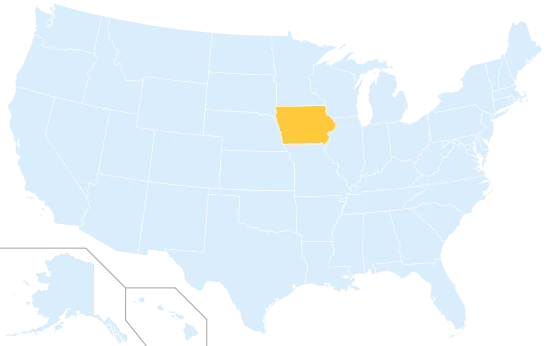
The state bird: American Goldfinch
Adopted in 1933 under the name Eastern Goldfinch, which Iowans still use. A yellow bird that bounces over the bean field calling po-ta-to-chip and waits until July to nest, when the thistles go to seed.
Recording by Chase Harris, CC0, via iNaturalist.
Iowa sits between the Mississippi and the Missouri, and almost everything between them was once tallgrass prairie. Less than a tenth of one percent of that prairie is left, so the state now sounds like what replaced it: farm fields, shelterbelts, small towns full of maples, and creek bottoms with cottonwoods. The Iowa Ornithologists' Union counts 432 species on the state list, a long list for a place with no coast and no mountain.
The everyday birds live in yards and hedgerows. Cardinal, robin, jay, chickadee and goose lead the album, and the blackbird in the roadside ditch is never far behind.
The Iowa album
These are the 100 birds people report most often in Iowa, ranked by how frequently they turn up. The common and uncommon ones are shown; the rare and legendary cards stay face down until you catch them in the game.
Common 25 cards
- #002
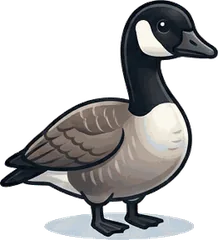 Canada Goose
Branta canadensis
Canada Goose
Branta canadensis - #008
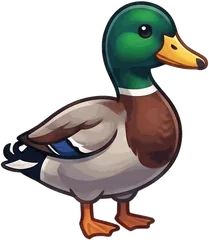 Mallard
Anas platyrhynchos
Mallard
Anas platyrhynchos - #020
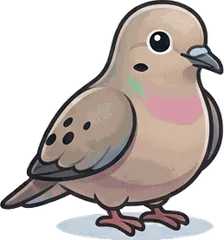 Mourning Dove
Zenaida macroura
Mourning Dove
Zenaida macroura - #024
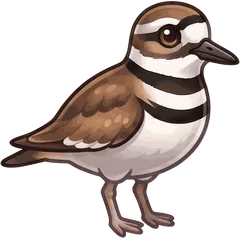 Killdeer
Charadrius vociferus
Killdeer
Charadrius vociferus - #033
 ?Catch it to find out
 - #035
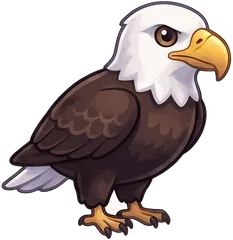 Bald Eagle
Haliaeetus leucocephalus
Bald Eagle
Haliaeetus leucocephalus - #036
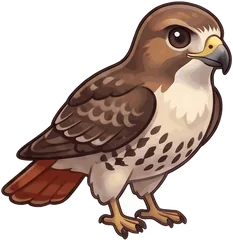 Red-tailed Hawk
Buteo jamaicensis
Red-tailed Hawk
Buteo jamaicensis - #040
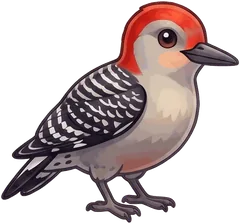 Red-bellied Woodpecker
Melanerpes carolinus
Red-bellied Woodpecker
Melanerpes carolinus - #041
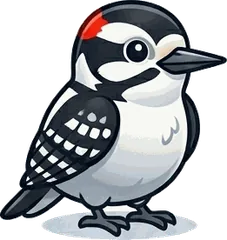 Downy Woodpecker
Dryobates pubescens
Downy Woodpecker
Dryobates pubescens - #052
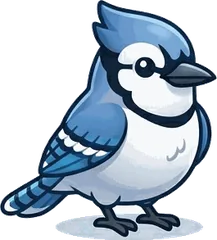 Blue Jay
Cyanocitta cristata
Blue Jay
Cyanocitta cristata - #053
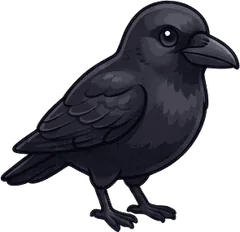 American Crow
Corvus brachyrhynchos
American Crow
Corvus brachyrhynchos - #054
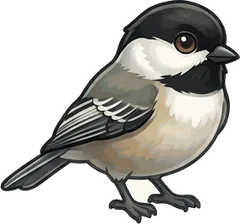 Black-capped Chickadee
Poecile atricapillus
Black-capped Chickadee
Poecile atricapillus - #060
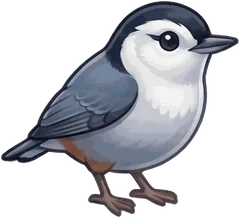 White-breasted Nuthatch
Sitta carolinensis
White-breasted Nuthatch
Sitta carolinensis - #062
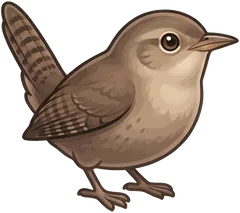 House Wren
Troglodytes aedon
House Wren
Troglodytes aedon - #064
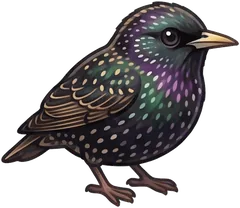 European Starling
Sturnus vulgaris
European Starling
Sturnus vulgaris - #065
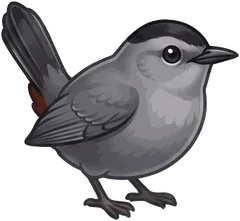 Gray Catbird
Dumetella carolinensis
Gray Catbird
Dumetella carolinensis - #069
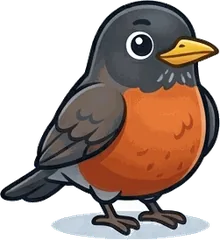 American Robin
Turdus migratorius
American Robin
Turdus migratorius - #071
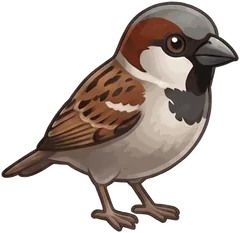 House Sparrow
Passer domesticus
House Sparrow
Passer domesticus - #073
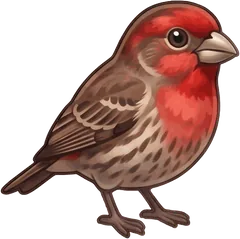 House Finch
Haemorhous mexicanus
House Finch
Haemorhous mexicanus - #074
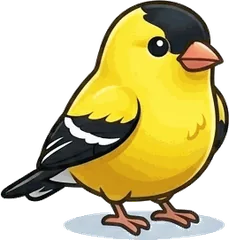 American Goldfinch
Spinus tristis
American Goldfinch
Spinus tristis - #078
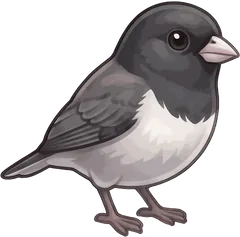 Dark-eyed Junco
Junco hyemalis
Dark-eyed Junco
Junco hyemalis - #081
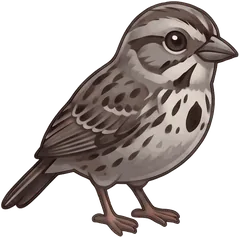 Song Sparrow
Melospiza melodia
Song Sparrow
Melospiza melodia - #087
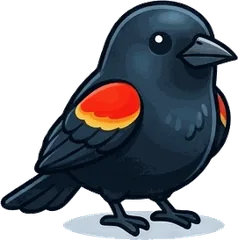 Red-winged Blackbird
Agelaius phoeniceus
Red-winged Blackbird
Agelaius phoeniceus - #089
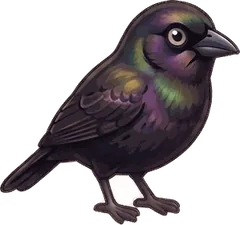 Common Grackle
Quiscalus quiscula
Common Grackle
Quiscalus quiscula - #097
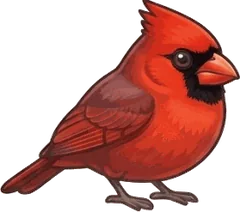 Northern Cardinal
Cardinalis cardinalis
Northern Cardinal
Cardinalis cardinalis
Uncommon 35 cards
- #004
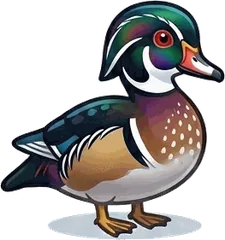 Wood Duck
Aix sponsa
Wood Duck
Aix sponsa - #005
 ?Catch it to find out
 - #006
 ?Catch it to find out
 - #017
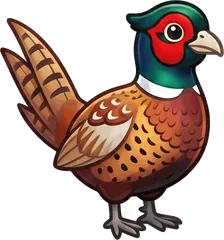 Ring-necked Pheasant
Phasianus colchicus
Ring-necked Pheasant
Phasianus colchicus - #018
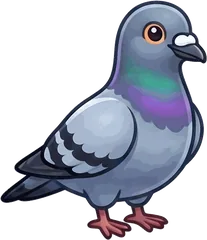 Rock Pigeon
Columba livia
Rock Pigeon
Columba livia - #022
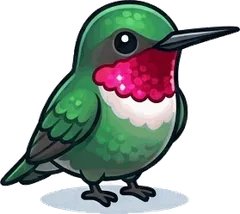 Ruby-throated Hummingbird
Archilochus colubris
Ruby-throated Hummingbird
Archilochus colubris - #023
 ?Catch it to find out
 - #028
 ?Catch it to find out
 - #031
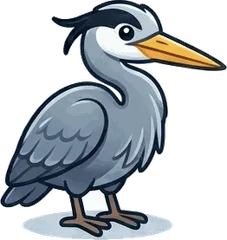 Great Blue Heron
Ardea herodias
Great Blue Heron
Ardea herodias - #032
 ?Catch it to find out
 - #039
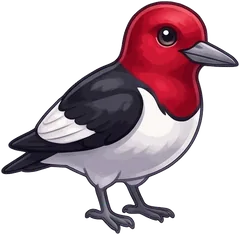 Red-headed Woodpecker
Melanerpes erythrocephalus
Red-headed Woodpecker
Melanerpes erythrocephalus - #043
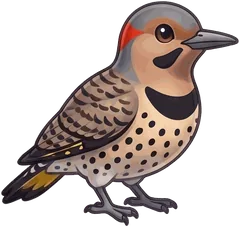 Northern Flicker
Colaptes auratus
Northern Flicker
Colaptes auratus - #045
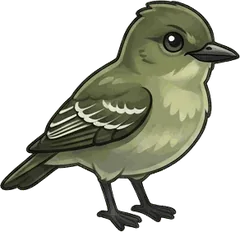 Eastern Wood-Pewee
Contopus virens
Eastern Wood-Pewee
Contopus virens - #046
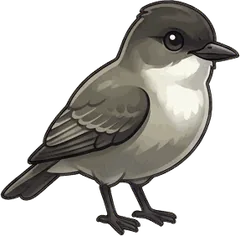 Eastern Phoebe
Sayornis phoebe
Eastern Phoebe
Sayornis phoebe - #047
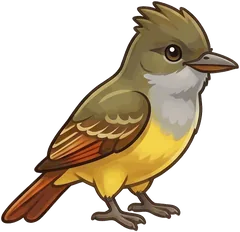 Great Crested Flycatcher
Myiarchus crinitus
Great Crested Flycatcher
Myiarchus crinitus - #048
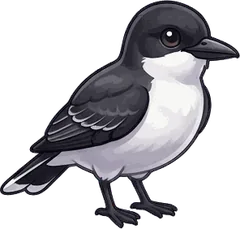 Eastern Kingbird
Tyrannus tyrannus
Eastern Kingbird
Tyrannus tyrannus - #050
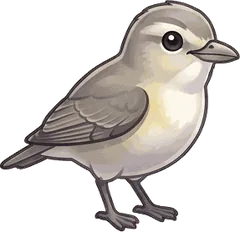 Warbling Vireo
Vireo gilvus
Warbling Vireo
Vireo gilvus - #055
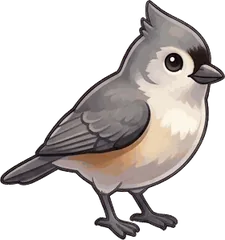 Tufted Titmouse
Baeolophus bicolor
Tufted Titmouse
Baeolophus bicolor - #056
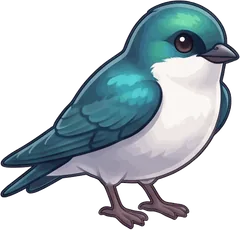 Tree Swallow
Tachycineta bicolor
Tree Swallow
Tachycineta bicolor - #058
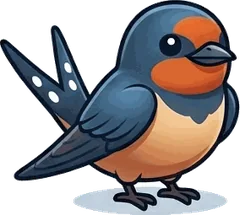 Barn Swallow
Hirundo rustica
Barn Swallow
Hirundo rustica - #067
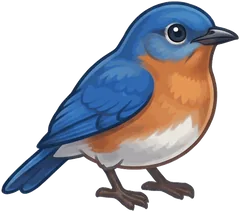 Eastern Bluebird
Sialia sialis
Eastern Bluebird
Sialia sialis - #070
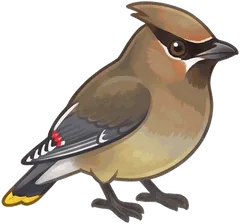 Cedar Waxwing
Bombycilla cedrorum
Cedar Waxwing
Bombycilla cedrorum - #075
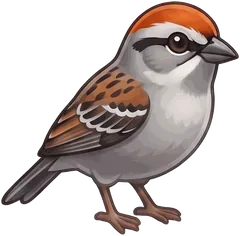 Chipping Sparrow
Spizella passerina
Chipping Sparrow
Spizella passerina - #077
 ?Catch it to find out
 - #080
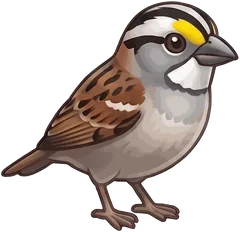 White-throated Sparrow
Zonotrichia albicollis
White-throated Sparrow
Zonotrichia albicollis - #084
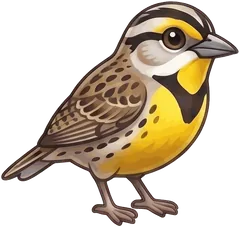 Eastern Meadowlark
Sturnella magna
Eastern Meadowlark
Sturnella magna - #086
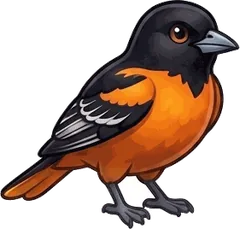 Baltimore Oriole
Icterus galbula
Baltimore Oriole
Icterus galbula - #088
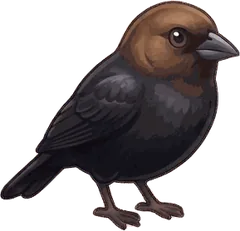 Brown-headed Cowbird
Molothrus ater
Brown-headed Cowbird
Molothrus ater - #093
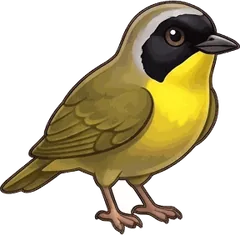 Common Yellowthroat
Geothlypis trichas
Common Yellowthroat
Geothlypis trichas - #094
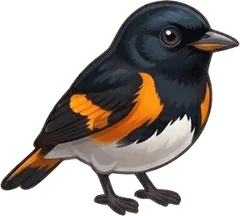 American Redstart
Setophaga ruticilla
American Redstart
Setophaga ruticilla - #095
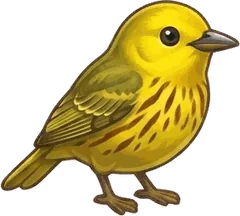 Yellow Warbler
Setophaga petechia
Yellow Warbler
Setophaga petechia - #096
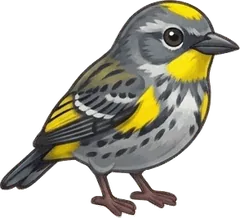 Yellow-rumped Warbler
Setophaga coronata
Yellow-rumped Warbler
Setophaga coronata - #098
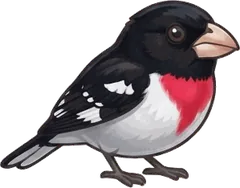 Rose-breasted Grosbeak
Pheucticus ludovicianus
Rose-breasted Grosbeak
Pheucticus ludovicianus - #099
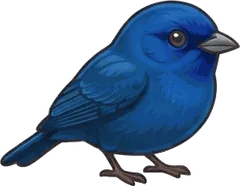 Indigo Bunting
Passerina cyanea
Indigo Bunting
Passerina cyanea - #100
 ?Catch it to find out
Rare 30 cards
- #003
 ?Catch it to find out
 - #007
 ?Catch it to find out
 - #009
 ?Catch it to find out
 - #010
 ?Catch it to find out
 - #011
 ?Catch it to find out
 - #012
 ?Catch it to find out
 - #014
 ?Catch it to find out
 - #016
 ?Catch it to reveal
 - #019?Catch it to reveal
- #021?Catch it to reveal
- #025
 ?Catch it to find out
 - #026
 ?Catch it to find out
 - #029
 ?Catch it to find out
 - #030
 ?Catch it to find out
 - #037?Catch it to reveal
- #038?Catch it to reveal
- #042?Catch it to reveal
- #044?Catch it to reveal
- #049
 ?Catch it to find out
 - #051?Catch it to reveal
- #057
 ?Catch it to find out
 - #059
 ?Catch it to find out
 - #061?Catch it to reveal
- #066?Catch it to reveal
- #072
 ?Catch it to find out
 - #076?Catch it to reveal
- #082
 ?Catch it to find out
 - #083?Catch it to reveal
- #091
 ?Catch it to find out
 - #092
 ?Catch it to find out
Legendary 10 cards
- #001
 ?Catch it to find out
 - #013
 ?Catch it to find out
 - #015
 ?Catch it to find out
 - #027
 ?Catch it to find out
 - #034
 ?Catch it to find out
 - #063?Catch it to reveal
- #068?Catch it to reveal
- #079?Catch it to reveal
- #085
 ?Catch it to find out
 - #090?Catch it to reveal
 52 of the 100 cards are shown here. The other 48, including all 30 rare and 10 legendary birds, are yours to discover. Get Warble and start with the common ones.
Backyard birds you will hear first
The Northern Cardinal is the most reported bird in Iowa, whistling cheer, cheer, cheer from the top of a spruce in February when everything else is quiet. The American Robin starts before dawn from April into July, and the Blue Jay screams from the oaks. The Black-capped Chickadee is the fourth most reported bird and the first one most children learn, because it says its own name and then whistles a clean two-note fee-bee from January on.
The Red-winged Blackbird sings conk-la-ree from every cattail ditch along every gravel road from March to July. The Downy Woodpecker whinnies, the Red-bellied Woodpecker rolls a churr, the crow argues, and the American Goldfinch dips overhead in July with its four-syllable flight call. The Canada Goose complains from every farm pond and retention basin, and in fall the whole flock argues overhead at night.
The regions, by ear
The Missouri River and the Loess Hills
Western Iowa has a strange landscape: a 200-mile ridge of wind-blown silt, the Loess Hills, running along the Missouri with some of the last prairie in the region on its slopes. The river valley is a raptor highway, and hawk watchers at Hitchcock Nature Center have counted 20 species of raptor in one season and a record 16,000 birds in 2005. On the floodplain, DeSoto National Wildlife Refuge, 8,365 acres of bottomland forest, prairie and wetland on both sides of the state line, has Dickcissels buzzing, orioles whistling from the cottonwoods, Yellow-headed Blackbirds squawking in the marsh, and thousands of migrants along the river in spring and fall.
The prairie remnants and the Des Moines lobe
Central Iowa is flat, wet and farmed, but Neal Smith National Wildlife Refuge, 6,000 acres set aside in 1990, has replanted about 4,000 acres of tallgrass prairie, oak savanna and sedge meadow from local seed, with bison and elk grazing it. It sounds like the state used to: meadowlarks whistling from the fence line, Bobolinks bubbling over the grass in June, and Dickcissels saying their name from the bluestem.
The Mississippi bluffs
The east edge of the state is limestone bluffs, backwater sloughs and floodplain forest along the Mississippi. Bald Eagles sit in the cottonwoods below the locks and dams in winter, Pileated Woodpeckers laugh from the bluff woods, and in May the ravines fill with warblers moving up the river.
Farm country
Everywhere else: corn, soybeans, a windbreak and a farmhouse. Horned Larks tinkle over bare fields in March, Killdeer cry from the gravel, and Barn Swallows chatter in every machine shed.
Best months to listen
Late April through early June is the peak, when residents are on territory and warblers are moving up both rivers. June is prairie month: the grassland birds at Neal Smith sing hardest in the first hours of light. July belongs to the goldfinch. Fall is long and quieter, with hawks over the Loess Hills from September into November and geese overhead at night. Winter is eagles along the rivers and chickadees, nuthatches and juncos at the feeder.
Places worth the drive
- Neal Smith National Wildlife Refuge, central Iowa: 6,000 acres of restored prairie and savanna, bison, and grassland birds in June, with walking trails and a five-mile auto tour.
- DeSoto National Wildlife Refuge, on the Missouri near the Nebraska line: an oxbow lake, bottomland forest, migrating waterbirds and Bald Eagles.
- The Loess Hills, western Iowa: prairie ridges over the Missouri valley and a fall hawk watch at Hitchcock Nature Center.
- The Mississippi bluffs, eastern Iowa: eagles in winter, warblers in May.
None of them is required. A yard with a spruce, a feeder and a ditch full of cattails hands you the first 25 cards of the Warble album by June.
Listen before you go
Three of the common Iowa birds, so the first songs you hear outside already ring a bell.
Recording by Chase Harris, CC0, via iNaturalist.
Recording by Chase Harris, CC0, via iNaturalist.
Recording by Fionn Ó Marcaigh, CC BY 4.0, via iNaturalist.
Questions people ask
What is the most common bird in Iowa?
By the reports behind the album, the Northern Cardinal, then the American Robin, the Blue Jay, the Black-capped Chickadee and the Canada Goose. The state bird, the goldfinch, is ninth.
What is the state bird of Iowa?
The American Goldfinch, adopted in 1933 under the name Eastern Goldfinch, which is still what most Iowans call it.
How many bird species are there in Iowa?
432 species on the official list kept by the Iowa Ornithologists' Union, 97 of them accidental and 23 casual. The Warble album covers the 100 reported most often.
Nearby albums
Sources
- Wikipedia: List of birds of Iowa. en.wikipedia.org/wiki/List_of_birds_of_Iowa
- Wikipedia: List of Iowa state symbols. en.wikipedia.org/wiki/List_of_Iowa_state_symbols
- U.S. Fish and Wildlife Service: Neal Smith National Wildlife Refuge. www.fws.gov/refuge/neal-smith
- U.S. Fish and Wildlife Service: DeSoto National Wildlife Refuge. www.fws.gov/refuge/desoto