 Warble
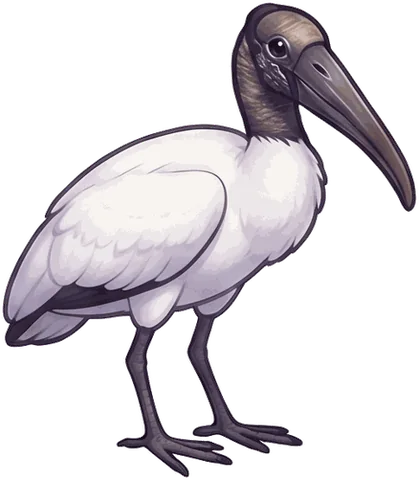
An adult Wood Stork barely makes a sound. Away from the nest it is usually silent, and the most you will hear is a dull croak, a hiss or the clatter of its heavy bill. The noise belongs to the young: in a nesting colony the chicks keep up loud begging calls and clatter their bills, so a cypress rookery in Florida, Georgia or South Carolina can be busy with sound while the adults add little more than hisses. If a huge white wader feeds beside you without a peep, it may well be a stork.
What it sounds like: very little
For a bird this size, the Wood Stork says remarkably little. Audubon's field guide describes adults as almost silent, and the only voice it lists is a dull croak. There is no song, and away from the nest the bird is usually silent. A wading flock can be quieter than the water it splashes through.
What adults do produce, mostly around the nest, are two sounds that are not really calls at all: a hiss, and a clatter made with the heavy bill. For a listener, the silence is itself a clue. Ibises honk as they fly over; the stork just flaps off without comment.
At the colony: hissing adults, noisy chicks
The one place worth listening to a Wood Stork is the nesting colony, and most of the noise there comes from the young. Chicks give noisy begging calls and also clatter their bills. Add the adults' hissing and bill clapping and a rookery has a dry, rattling soundtrack.
Colonies sit mainly in tall cypress, sometimes in mangroves or dead trees standing in flooded impoundments. Nests are flimsy stick platforms, 10 to 15 feet above the water in mangroves or 80 feet or more up a cypress. Usually three or four whitish eggs are laid, both parents incubate for about four weeks, and one parent stands guard for roughly the first five weeks, because unmated storks wandering the colony will attack an unguarded nest. Young make short flights at about eight weeks but keep coming back to be fed until about 11 weeks old.
When and where you hear it
This is the only native stork in North America. In the United States it nests in Florida, Georgia and South Carolina, in cypress swamps, marshes, ponds and lagoons, and feeds mostly in fresh water: shallow marshes, flooded farm fields, ponds and ditches. In Florida nesting runs through winter and spring, and the timing depends on water levels. In poor years some pairs do not nest at all.
Storks are not strict migrants, but after nesting they spread out. Florida birds wander well north through the eastern states, flocks from eastern Mexico show up along the Texas coast in summer, and birds from western Mexico reach the Salton Sea and other spots in the Southwest. On warm days flocks soar very high, silent specks against the sky. For a Warble player the stork is a bird to catch at the colony, where the chicks are doing the talking.
The fastest bill in the swamp
A Wood Stork does not need to see its prey. It wades through shallow, often muddy water with its head down and its bill partly open, feeling for fish. The National Park Service calls this tactolocation. When the bill touches something, it snaps shut in about 25 milliseconds, a reflex the park describes as reportedly the fastest known among vertebrates.
The method works best when fish are crowded together, which is why storks favor places where the water is falling. In dry winters the Everglades shrink into pools packed with small fish, and the storks time their nesting to that bounty. A breeding pair needs about 440 pounds of fish over a season. Most of the diet is minnows, killifish and mullet, plus crayfish, frogs, snakes and even baby alligators.
What it looks like
A huge, long-legged wader that stands more than 3 feet tall, with a wingspan of about 5 feet. The body is white, the head is bare and dark, and the thick bill looks almost too heavy for the bird. In flight the black and white wings show clearly and the wingbeats are slow. Young birds have a yellow bill and a dusky head.
The National Park Service estimates 5,000 to 15,000 pairs nested in the Everglades in the 1930s; after 1960s water-control projects the number fell, and by 1995 fewer than 500 pairs nested in Everglades National Park and Big Cypress. The species was listed as endangered in 1984 and moved to threatened in June 2014. Meanwhile many storks have shifted to north Florida, Georgia and South Carolina.
Birds that sound similar
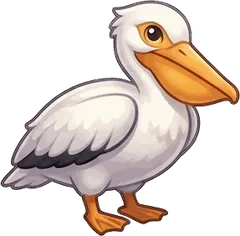 American White Pelican
Also usually silent, with only grunts or croaks at the nesting grounds, so a high soaring flock gives your ears nothing. Both show white bodies and black flight feathers; the pelican is far bigger, with an 8 to 9.5 foot wingspan and a huge bill.
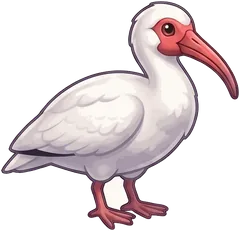 White Ibis
es feed in the same flocks and honk a hoarse hunk, hunk in flight and when disturbed. A white wader that honks is the ibis, smaller with a red-orange curved bill; the stork stays silent.
Where the Wood Stork card lives
In Warble the same bird can be an easy card in one state and a prized one in another, because each album ranks its birds by how often people really report them there. The Wood Stork appears in 3 state albums:
 Heard one? Open Warble, tap the green button while it sings, and the Wood Stork card flips into your album. Get the app free.
Questions people ask
Do wood storks make noise?
Very little. Adults are usually silent away from the nest, with only a dull croak, hissing and bill clattering. The young are the loud ones: chicks give noisy begging calls and clatter their bills in the colony.
How does a wood stork catch fish without seeing them?
By touch. It wades with its bill partly open in shallow water and snaps it shut in about 25 milliseconds when it brushes a fish, one of the fastest reflexes known in vertebrates, according to the National Park Service.
Is the wood stork endangered?
It is now listed as threatened rather than endangered. The United States listed it as endangered in 1984 and downlisted it in June 2014. Everglades nesting fell sharply after water-control projects, while many storks shifted to north Florida, Georgia and South Carolina.
Sources
- National Audubon Society, Guide to North American Birds: Wood Stork. www.audubon.org/field-guide/bird/wood-stork
- National Park Service, Everglades National Park: Wood Stork (feeding, population, listing). www.nps.gov/ever/learn/nature/woodstork.htm
- National Audubon Society, Guide to North American Birds: American White Pelican (voice, size, flight). www.audubon.org/field-guide/bird/american-white-pelican
- Wikipedia: American white ibis (calls, size, mixed flocks with Wood Storks). en.wikipedia.org/wiki/American_white_ibis