 Warble


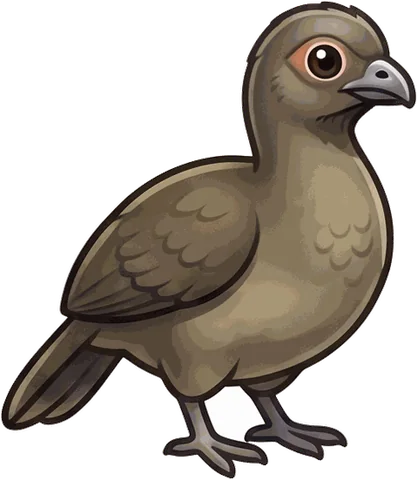
A Plain Chachalaca sounds like an argument breaking out in the treetops. Several birds shout a loud, harsh, rhythmic cha-cha-LAW-ka or RAW-pa-haw together, the males lower than the females. The chorus goes up from tall trees at dawn and again at dusk. In the United States you hear it only in far southern Texas, in the lower Rio Grande Valley, where chachalacas live all year.
What the chorus sounds like
A chachalaca chorus is less a song than a shouting match with a beat. The call is loud and harsh, written as cha-cha-LAW-ka or RAW-pa-haw, with the stress landing hard on one syllable, and it is often a group effort. Several birds join in and the calls fall into a rhythm. Audubon describes it as a loud, messy chorus of cha-cha-lac calls; some listeners compare it to a group of men arguing.
Listen for two pitches. Males call lower than females, so a mixed group calls in two registers, one deep and one higher. The pattern of each phrase is simple and falls or stays flat rather than rising.
The best time is the first light of morning and the last hour of the evening. Those are the hours when chachalacas are most active, and they gather high in tall trees to call. In the heat of midday they are mostly inactive, so a woodland that was loud at sunrise can seem empty at noon.
Other calls
Away from the big chorus, chachalacas make softer sounds that are easy to overlook: peeping whistles and cackles. They travel in groups of up to 15 birds and are furtive and wary for such large animals. When something alarms them they tend to run fast along the ground or leap and glide through the tangles rather than fly any distance.
At night the group stays together. Pairs or families roost in trees, often lined up on one branch, touching, all facing the same way.
When and where you hear it
The Plain Chachalaca is the only member of its tropical family that lives in the United States, and here it is a permanent resident of a small area of southern Texas, the lower Rio Grande Valley. Beyond the border it ranges down the eastern coast of Mexico and the Yucatan Peninsula through Belize, Guatemala and Honduras to Nicaragua, with a small separate population on Costa Rica's Nicoya Peninsula. People have also introduced it to three coastal islands in Georgia, Sapelo, Blackbeard and Little St. Simons, and in parts of its introduced range it is considered invasive.
In South Texas it stays near water, around ponds, resacas and riverbanks, in native woods of ebony, hackberry, huisache and mesquite, and it also uses overgrown orchard edges and wooded suburbs in the Valley. Numbers in Texas are probably stable, with good populations in protected parks and refuges, and in some parks the birds have learned to eat birdseed, popcorn and bread. They are mostly vegetarian, eating berries, seeds, leaves, buds and flowers; one South Texas study found small pigeon-berry fruits and buds were their most frequent food, and they are sometimes a pest in tomato and cucumber fields.
Chachalacas usually breed in the early part of the wet season. Both sexes build a flimsy platform nest of twigs in thick vegetation, the female lays two to four rough-shelled eggs, and the young can fly into the brush at two to three weeks. In Warble it is an uncommon card.
What it looks like
A big, slim, long-tailed bird about the size of a pheasant, roughly 20 inches long or a little more, with a long neck and a surprisingly small head. It is plain indeed: dull olive-brown on the body and wings, grayer on the head and neck, paler buff on the belly, with a long, broad blackish tail tipped in buffy white. The one splash of color is a patch of bare skin on the throat that turns deep red in both sexes in the breeding season. Males and females look alike, and size will not tell them apart. In the trees chachalacas clamber along surprisingly thin branches to reach fruit and buds.
Birds that sound similar
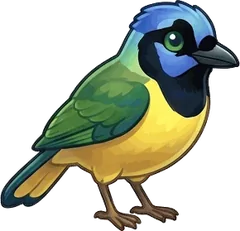 Green Jay
s share the same native ebony and hackberry woods and have a big vocabulary of their own, but their calls are rattles, screams and a repeated shink, shink, shink, not a rhythmic cha-cha-lac chant shouted by several birds together.
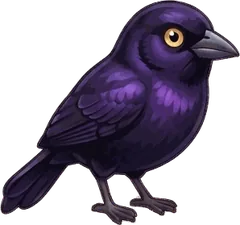 Great-tailed Grackle
A Great-tailed Grackle roost in town park trees can be very noisy at night, but it is a jumble of whistles, clucks and hissing notes. Chachalacas chant in rhythm, low male voices against higher female ones.
Where the Plain Chachalaca card lives
The Plain Chachalaca is not in the top 100 of any single state album, so it lives in the national album of all 800 birds, where it counts as uncommon. Catching one anywhere in the country adds it there.
 Heard one? Open Warble, tap the green button while it sings, and the Plain Chachalaca card flips into your album. Get the app free.
Questions people ask
What bird is so loud at dawn in South Texas?
If it is a rhythmic, chanting cha-cha-LAW-ka from several birds at once, it is the Plain Chachalaca. Groups call from tall trees at first light and again at dusk in the lower Rio Grande Valley.
Why do chachalacas call at dawn and dusk?
Those are the hours when they are most active. Chachalacas are busiest in the cool of the morning and evening and mostly rest through the midday heat, so the choruses cluster at the start and end of the day, when groups gather high in tall trees.
Where can I see plain chachalacas?
In the lower Rio Grande Valley of Texas, in native woods near ponds, resacas and the river, and in wooded Valley suburbs. Protected parks and refuges hold good populations, and in some parks the birds are used to people. Outside Texas, they live in Mexico and Central America.
Are there chachalacas in Georgia?
Yes, on a few islands. Plain Chachalacas were introduced to three Georgia coastal islands, Sapelo, Blackbeard and Little St. Simons, and in parts of that introduced range they are considered invasive. They are not native anywhere in the United States except far southern Texas.
Sources
- National Audubon Society, Guide to North American Birds: Plain Chachalaca. www.audubon.org/field-guide/bird/plain-chachalaca
- Wikipedia: Plain chachalaca (calls, range, introductions, behavior, diet). en.wikipedia.org/wiki/Plain_chachalaca
- National Audubon Society, Guide to North American Birds: Green Jay. www.audubon.org/field-guide/bird/green-jay
- National Audubon Society, Guide to North American Birds: Great-tailed Grackle. www.audubon.org/field-guide/bird/great-tailed-grackle