 Warble


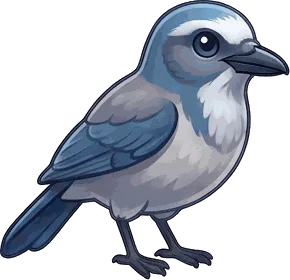
A Florida Scrub-Jay sounds harsh and scratchy, never sweet. The main call is a loud, rasping shreep, and a family on alert adds alarm calls, one kind for hawks and another for snakes. Females have a call of their own, a dry rattle, and young birds practice it. There is a song, a run of trills and high warbles, but the scolding is what you will remember. You can only hear it in Florida, in low oak scrub on sandy soil.
What the song sounds like
The Florida Scrub-Jay does have a song, though it is not what the bird is known for. Audubon describes it as a mix of trills and high warbles. The calls, by contrast, are harsh and scratchy rather than melodious.
What fills the scrub instead is talk. Florida Scrub-Jays live in family groups, usually a breeding pair plus one to six helpers, typically their own grown offspring from earlier years, so a group holds two to eight birds, foraging together on the ground and in the low oaks. Vocal signals are how the family shares information and warns of predators.
The calls: shreep, scold and rattle
The standard call is a loud, harsh shreep, and Audubon magazine sums up the voice as harsh and scratchy rather than melodious.
Females have a sound of their own. Audubon magazine describes it as a dry rattle, and young jays often imitate it while they are learning to vocalize. Animal Diversity Web describes the female's call as a hiccup, given when she interacts with other jays; when an intruder comes near the nest, the breeding female bobs her head, hiccups at it and chases it off. Head bobbing also turns up in territorial encounters between families.
When and where you hear it
Only in Florida. The Florida Scrub-Jay is the only bird species found nowhere else but Florida, and it is a habitat specialist of the peninsula's scrub: short, scrubby oaks on sandy soil, with sand live oak, Chapman oak, myrtle oak and scrub oak, plus sand pine thickets, recently burned ground and thickets on coastal dunes. Some birds live in suburban areas. The jays are extremely sedentary and rarely leave their home patch, so once you find a family, you can usually find it again.
They are around all year. Nesting runs from early March to late June, with the nest low in a shrubby oak, sand live oak being the favorite. The female incubates for about 17 to 18 days while the male brings her food, and the helpers pitch in feeding the young. Fledglings depend on the adults for about ten weeks. Acorns are a major food in most seasons: the jays gather large numbers, bury them and come back for them later.
The bird is federally listed as threatened and rated Vulnerable worldwide. By the early 1990s its numbers had fallen by more than 90 percent from the original population. Oak scrub needs occasional fire to stay healthy, and fire suppression, development, citrus groves and pastures have taken much of it. In Warble it is one of the rare cards.
Sentinels and alarm calls
The scrub-jay's most famous sound comes with a job attached. While the family forages, one bird perches on a high point and watches for predators, and the birds take turns at this lookout post. When the sentinel spots a dangerous hawk, it gives an alarm call and everyone dives for cover. A different call warns of snakes and other predators on the ground, and that one brings the whole family in to mob the intruder. If the scrub suddenly erupts in alarm calls, look up for a hawk or down for a snake.
What it looks like
A robin-sized jay, about 2.3 to 3.5 ounces, with broad, rounded wings and a long, rounded tail, and no crest. The head, nape, wings and tail are pale blue, the back and belly pale gray, and the white throat and chest are bordered by a blue-gray bib. Males and females look alike, though males are slightly larger. Young birds have dull, dark brown upperparts. Where people feed them, the jays can become very tame and will land on a hand, an arm or even a head for food.
Birds that sound similar
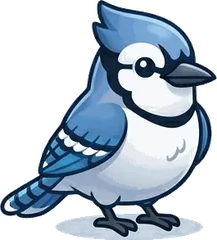 Blue Jay
The Blue Jay's raucous jay-jay and harsh cries are familiar in oak and pine woods and suburbs across the East, Florida included. A scrub-jay's main call is a single harsh shreep from low scrub. The Blue Jay has a crest and white on the wings and tail; the scrub-jay has neither.
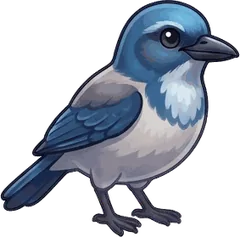 California Scrub-Jay
The two were once treated as one species and look nearly identical, though the Florida bird has a paler forehead. You will not need to separate them by ear: the Florida Scrub-Jay lives only in Florida and rarely leaves its patch of scrub.
Where the Florida Scrub-Jay card lives
The Florida Scrub-Jay is not in the top 100 of any single state album, so it lives in the national album of all 800 birds, where it counts as rare. Catching one anywhere in the country adds it there.
 Heard one? Open Warble, tap the green button while it sings, and the Florida Scrub-Jay card flips into your album. Get the app free.
Questions people ask
Why is a scrub-jay calling from the top of a bush?
It is probably the family's sentinel. One jay perches on a high point and watches for predators while the others forage. A hawk gets one alarm call and sends the family diving for cover; a snake gets a different call that brings the whole group in to mob it.
Where can you hear a Florida scrub-jay?
Only in Florida, in patches of low oak scrub on sandy soil across the peninsula, including sand pine thickets, recently burned scrub and dune thickets.
Why are Florida scrub-jays so tame?
Because people have fed them. When they are not persecuted, and especially when they are given food, Florida Scrub-Jays become very tame and will perch on a person's hand, arm or head. The species is federally threatened, so treat that trust with care.
Is the Florida scrub-jay endangered?
It is listed as threatened in the United States and Vulnerable worldwide. By the early 1990s it had lost more than 90 percent of its original numbers, mainly because the fire-dependent oak scrub it needs was cleared for development, groves and pasture or overgrown without fire.
Sources
- National Audubon Society, Guide to North American Birds: Florida Scrub-Jay. www.audubon.org/field-guide/bird/florida-scrub-jay
- Animal Diversity Web (University of Michigan): Aphelocoma coerulescens. animaldiversity.org/accounts/Aphelocoma_coerulescens/
- Audubon magazine: Bird Quiz, Florida Scrub-Jay (sentinels, calls, tameness). www.audubon.org/news/bird-quiz-florida-scrub-jay
- National Audubon Society, Guide to North American Birds: Blue Jay. www.audubon.org/field-guide/bird/blue-jay