 Warble


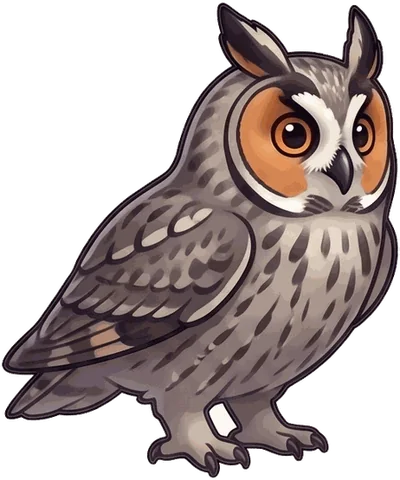
A Long-eared Owl sounds like a single, deep, soft hooo, given once and then repeated after a pause of several seconds, over and over, like someone blowing slowly across a bottle. That is the male's song, heard mostly on calm nights around the nesting season in early spring. The rest of the year these owls are usually silent, even in winter roosts that may hold a dozen birds or more. Begging young add a squeal compared to a rusty gate hinge.
What the hoot sounds like
The male's song is about as simple as an owl call gets: one long, low hooo or whoop, then silence for several seconds, then another identical note. There is no rhythm or phrase like a Barred Owl's, and no run of quick notes like a saw-whet's. Each series starts with a few hoots slightly lower in pitch before the bird reaches full volume. The note is soft rather than booming, but on calm nights it can carry one to two kilometers, so patience matters more than proximity.
Females answer with a weaker, higher, nasal note that you can hear only at close range. During courtship and while choosing a nest, a pair may duet, the female calling as often as every two to eight seconds at times of the night. The Missouri Department of Conservation sums up the main call simply as a long, repeated hooo, which is the best description to carry into the field.
The other calls: barks, meows and a rusty gate
Long-eared Owls have a surprisingly large vocabulary for a bird people rarely hear; one study in Michigan recorded twenty-three different sounds. Both sexes give a hoarse, cat-like jaiow and high yip-yip notes, and observers also describe doglike barks, whistles, whines, shrieks and squeals. Parents disturbed near their young give a tinny watt-watt-watt-watt, and owls of every age hiss and snap their bills when threatened.
Two sounds are worth knowing by name. In early spring the displaying male flies zigzags around the nest area and claps his wings together below his body, sometimes up to twenty times in a display. And in summer the fledglings beg with high, drawn-out feek and peeyee notes, a sound compared to a gate swinging on a rusty hinge. If a dark grove creaks like that, look up.
When and where you hear it
Calls are seldom heard outside the breeding season, which is the main reason this widespread owl is so poorly known. Nesting begins in March and April, and that is when to listen. In the United States the owl breeds widely in the West, including Washington, Montana, North Dakota, much of California, Arizona and the western parts of Colorado and New Mexico; breeding in the East is very rare. It likes dense trees, often conifers, for roosting and nesting, next to meadows, prairie, farmland or desert scrub for hunting, and it avoids unbroken forest.
In winter many northern birds move south, spreading across most of the Midwest, Texas and much of the East Coast; at Cape May, New Jersey, more than 90 percent of fall migrants pass between mid-October and late November. In Missouri the owl is an uncommon winter resident from mid-November to mid-April and is usually silent there. Winter birds gather in roosts of six to fifty in dense evergreens, willows or mesquites. Since they rarely call, your best chance to hear one, and to let Warble hear it too, is a calm spring night near a western breeding grove.
What it looks like
A slim, crow-sized owl about 15 inches long with a wingspan of around three feet, like a smaller, slimmer Great Horned Owl. The long ear tufts sit close together near the middle of the head, the facial disk is rusty orange, the eyes yellow to orange, and the belly is streaked lengthwise rather than barred, with no white throat. In flight it shows a buff patch on the upper wing. Disturbed at a roost, it stretches into a tall, thin pose with tufts raised and eyes narrowed to slits.
It hunts at night, flying slowly a few feet above fields and woodland edges and finding voles and mice mostly by sound. It builds no nest, instead laying usually four to six eggs in an old crow, raven, magpie or hawk nest. The female incubates for about four weeks, and the young clamber onto branches at about three weeks and make short flights at about five.
Birds that sound similar
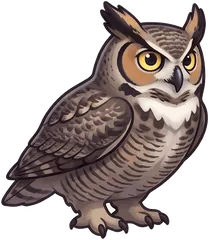 Great Horned Owl
 pairs duet in hoots, the male deeper and the female higher. A Long-eared male gives one soft hoot at a time, seconds apart, and the female's reply is a weak nasal note audible only up close.
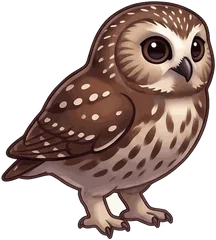 Northern Saw-whet Owl
The Northern Saw-whet Owl repeats short, whistled toots on one pitch, quickly and steadily, for minutes on end. The Long-eared Owl's notes are lower, longer and spaced several seconds apart.
Where the Long-eared Owl card lives
The Long-eared Owl is not in the top 100 of any single state album, so it lives in the national album of all 800 birds, where it counts as legendary. Catching one anywhere in the country adds it there.
 Heard one? Open Warble, tap the green button while it sings, and the Long-eared Owl card flips into your album. Get the app free.
Questions people ask
What owl gives a single long hoot every few seconds?
Very likely a male Long-eared Owl. Its song is one deep, soft hooo, repeated after a pause of several seconds, mostly on calm nights in late winter and spring. It can carry one to two kilometers, so the owl may be well off in a distant grove.
Do Long-eared Owls call in winter?
Rarely. Calls are seldom heard outside the breeding season, and wintering owls, including those sitting together in communal roosts, are usually silent. Spring, when nesting starts, is the time to listen.
What owl sounds like a rusty gate?
A young Long-eared Owl begging for food. Fledglings give high, drawn-out notes, written feek or peeyee, that have been compared to a gate swinging on a rusty hinge.
How do you find a Long-eared Owl roost?
Look under dense evergreens, willows or other thick trees for pellets and droppings. Winter roosts can hold six to fifty owls, sitting upright against the trunk. Keep your distance: disturbed owls stretch tall and thin, then fly off.
Sources
- National Audubon Society, Guide to North American Birds: Long-eared Owl. www.audubon.org/field-guide/bird/long-eared-owl
- Wikipedia: Long-eared owl (vocalizations, range, roosts, migration). en.wikipedia.org/wiki/Long-eared_owl
- Missouri Department of Conservation, Field Guide: Long-eared Owl. mdc.mo.gov/discover-nature/field-guide/long-eared-owl
- Buffalo Bill Center of the West, Draper Natural History Museum: Owl sounds, not just hooters. centerofthewest.org/2022/02/09/owl-sounds-not-just-hooters/