 Warble


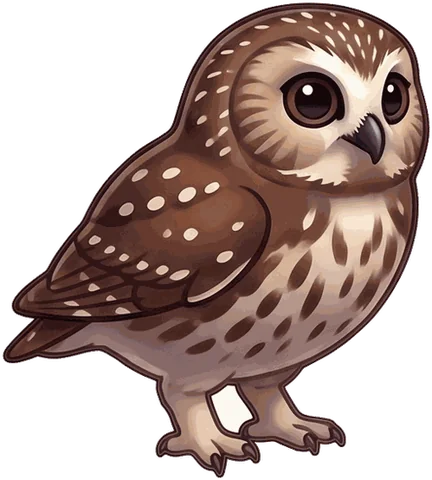
A Northern Saw-whet Owl sounds like a truck backing up in the woods at night: a long, steady series of short whistled toots, too, too, too, too, all on one pitch and repeated for minutes on end. The singer is a robin-sized male owl, calling mostly late at night from late winter into spring, sometimes for hours. The rest of the year it is usually silent, apart from a rasping squeal once compared to a saw being sharpened.
What the song sounds like
The song is the simplest sound in the owl world: one short, clear, whistled toot, then another, then another, at an even pace and on a single pitch. There is no phrase and no flourish at the end. It just goes on, sometimes for several minutes and, from a male defending a territory, sometimes through most of the night. In forest the toots carry up to about 300 meters, roughly a fifth of a mile, so the bird is often farther off than it sounds.
The comparison everyone reaches for is a commercial truck backing up. The tone is high, mechanical and patient, like a reverse warning beeper heard across a parking lot, which is why the owl so often gets blamed on a delivery truck.
Males sing to claim a territory and attract a mate, often from the tree cavity they are offering as a nest, and they may stock that cavity with stored food to sweeten the deal.
The other calls: the squeal behind the name
The name is old. In John James Audubon's day, people in Massachusetts already called it the saw-whet, comparing its calls to a saw blade being sharpened on a whetstone. Sources differ on which sound they meant: the Missouri Department of Conservation points to a rasping squeal, the Audubon guide to the tooting song. The owl has at least eleven described sounds, including a whine, a sharp ksew, a hissing tssst, squeaks, a guttural chuck, and a twittering call a little like an American Woodcock's. Adults and young also snap their bills as a warning.
When and where you hear it
Listen on still nights from January into spring, when calling peaks; it tapers off by early July, and outside the breeding season saw-whets are mostly silent. The singing comes late at night rather than at dusk. The Missouri Department of Conservation calls the saw-whet the most nocturnal of the state's owls, and it hunts almost entirely in the dark, finding mice and voles by sound alone thanks to lopsided ears.
They breed across most of North America south of the boreal forest: southern Canada, the northern and western United States and the mountains of central Mexico. Most nest in dense conifer forest near wetlands, including spruce-fir woods, open pine and white cedar swamps, and in some dry regions in oak woodland or streamside groves. In the East there are two outposts that stay all year, one on the Allegheny Plateau along the West Virginia border and one in the southern Appalachians above 4,000 feet, where nesting in boxes was documented in 2014.
Some birds stay put all winter and others move south or downhill, traveling at night. In Missouri the saw-whet is a rare winter visitor in the north, usually from late October to mid-March, and is rarely heard there because it saves its song for the breeding grounds. By day a wintering bird hides in dense evergreens, vine tangles or a tree hole. If you hear steady tooting on a March night, a short recording with Warble is a quick way to check whether it is an owl or a truck.
What it looks like
A tiny owl, about seven inches long and roughly the weight of an American Robin, with a big round head, no ear tufts, yellow eyes and a dark bill. The face is pale and streaked, the forehead brown with fine white streaks, the back brown with white spots, and the white underparts heavily streaked with reddish brown. Females are larger than males but look the same. Young birds in summer look very different: chocolate brown with a tawny belly and a white Y between the eyes.
Saw-whets nest in old woodpecker holes, especially those of Northern Flickers and Pileated Woodpeckers, and also use nest boxes. The female incubates for about four weeks while the male brings food, and the young leave the nest at around a month old. Larger hawks and owls prey on saw-whets of every age.
Birds that sound similar
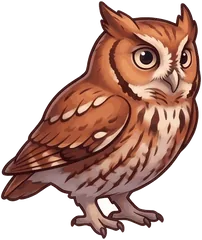 Eastern Screech-Owl
An Eastern Screech-Owl's toots run together into a descending trill like a tiny horse whinny, or into a smooth whistled trill on one pitch. A saw-whet's notes stay separate and evenly spaced, on and on.
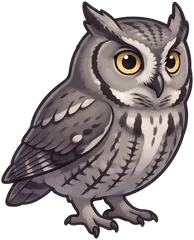 Western Screech-Owl
The Western Screech-Owl also toots on one pitch, but its notes speed up toward the end like a dropped ping-pong ball bouncing to rest. The saw-whet keeps the same steady pace for minutes at a time.
Where the Northern Saw-whet Owl card lives
The Northern Saw-whet Owl is not in the top 100 of any single state album, so it lives in the national album of all 800 birds, where it counts as rare. Catching one anywhere in the country adds it there.
 Heard one? Open Warble, tap the green button while it sings, and the Northern Saw-whet Owl card flips into your album. Get the app free.
More about the Northern Saw-whet Owl on this site
- What bird beeps at night?
- What bird sounds like a smoke alarm chirp?
- What bird sounds like dripping water?
Questions people ask
What bird sounds like a truck backing up at night?
Most likely a Northern Saw-whet Owl. The male gives a long series of short, whistled toots on one pitch, repeated for minutes or hours, mostly late at night from late winter through spring.
Why is it called a saw-whet owl?
Because people compared its calls to a saw being sharpened on a whetstone. The name was already in use in Massachusetts in John James Audubon's time. Sources disagree on which call inspired it, the rasping squeal or the tooting song.
When do saw-whet owls call?
Mostly from January into spring, late at night, tapering off by early July. Males defending territories may sing for hours with few breaks. The rest of the year saw-whets are usually silent.
How big is a saw-whet owl?
About seven inches long and roughly the weight of an American Robin, around 2.8 ounces on average. Females are bigger than males. It is the smallest owl in Missouri.
Sources
- National Audubon Society, Guide to North American Birds: Northern Saw-whet Owl. www.audubon.org/field-guide/bird/northern-saw-whet-owl
- Wikipedia: Northern saw-whet owl (vocalizations, range, diet, name). en.wikipedia.org/wiki/Northern_saw-whet_owl
- Missouri Department of Conservation, Field Guide: Northern Saw-whet Owl. mdc.mo.gov/discover-nature/field-guide/northern-saw-whet-owl
- Buffalo Bill Center of the West, Draper Natural History Museum: Owl sounds, not just hooters. centerofthewest.org/2022/02/09/owl-sounds-not-just-hooters/