 Warble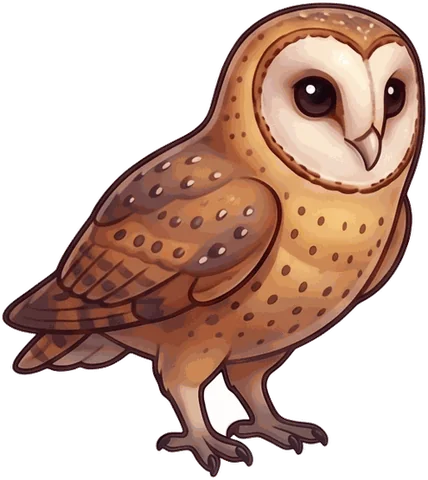
A Barn Owl does not hoot. It screams: a long, harsh, rasping shriek that lasts a few seconds and sounds more like something being torn than like any owl you have heard on television. Most often it comes from a bird flying overhead in the dark, high above a field or a marsh. Close to a nest you may also hear hisses, bill snapping and, from the young, a raspy snoring beg. It is strictly a night bird, loudest while breeding, in any month where open country meets an old barn or hollow tree.
What the scream sounds like
There is no song, and there is no hoot. The Barn Owl's best-known call is a drawn-out, gargling scream, a harsh rasping shriek that lasts a few seconds and then stops. Audubon lists the repertoire as hissing notes, screams, guttural grunts and bill snapping, and the Missouri Department of Conservation states it plainly: they do not hoot. Wait for a soft hoo and you will wait all night.
The scream is the advertising call, the Barn Owl's equivalent of a song, and the sound males use to attract a mate. Both sexes screech in courtship chases, the male higher and tremulous, the female lower and harsher. The bird is often heard calling as it flies high over farmland or marshes, so the scream you hear is usually moving. A series of screams is a distress call, and an explosive yell is aimed at a mammal that has come too close.
The other calls: hisses, snores and bill snaps
Get near a nest and the sound changes. An adult defending eggs or young hisses and snaps its bill, spreading its wings and swaying its head as a threat. The young are noisier than the parents. Newly hatched chicks chitter; that soon turns into a raspy, drawn-out food call known as the snore, given with wings raised whenever an adult approaches. Young birds also give rapid clicks that Audubon compares to a grackle.
When and where you hear it
The Barn Owl is highly nocturnal, hunting at night and seldom by day, so the screams come in full darkness, most often while the birds are courting and raising young, and they are much less vocal the rest of the year. Across North America nesting is concentrated from March to June, but it can happen in any month, and pairs may raise two or even three broods in a good rodent year. The female incubates about five white eggs for around a month, and the young take roughly two months to fly, then keep coming back to the nest to roost and beg, so the snoring at a nest site can run from late winter into fall.
Look for open lowland country: farmland, marsh, prairie and desert. Barn Owls use caves, hollow trees and cliff crevices, but they earned their name on artificial sites: barn lofts, grain elevators, church steeples, abandoned houses, dry wells, bridges and nest boxes. They hunt in low, slow flight over the grass, and thanks to ears set at different heights on the skull they can locate a vole by sound alone and strike in total darkness; no animal tested locates sound more precisely. Serrated wing feathers make the flight silent. Voles are the main food, shrews second, and rodents make up around 95 percent of the diet in the United States. The bird is found on six continents, and in this country from California to the Northeast; in Missouri it is a rare permanent resident. A Barn Owl scream on a Warble recording is an uncommon catch.
What it looks like
A medium-sized, pale, long-legged owl, 13 to 16 inches long with a wingspan of three to four feet and a weight of a little over a pound, females heavier and darker than males. The face is the giveaway: a white, heart-shaped disc with black eyes and no ear tufts, which earned it the old name of monkey-faced owl. The upperparts are cinnamon and gray with small black spots, the underparts white to buff. Most wild Barn Owls survive only a year or two, and the Great Horned Owl is among the things that eat them. The American birds were separated from the Old World Barn Owl on DNA evidence and now carry the name Tyto furcata.
Birds that sound similar
 Eastern Screech-Owl
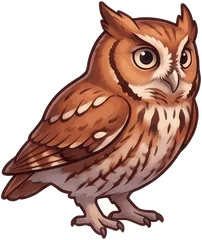
The Eastern Screech-Owl gets blamed for screams, but its real voice is a descending whinny and a soft, even trill, quiet and from a tree. The Barn Owl's shriek is longer, louder and harsher, and usually comes from a bird in flight.
 Great Horned Owl
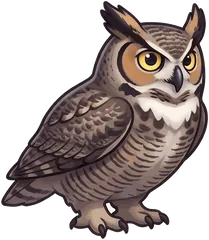
An adult Great Horned Owl hoots, deep and soft, nothing like a scream. Its begging young, however, give a raspy screech on summer nights that can pass for a Barn Owl. The Barn Owl's shriek is a drawn-out rasp, most often heard moving overhead rather than from a perch.
Where the Barn Owl card lives
In Warble the same bird can be an easy card in one state and a prized one in another, because each album ranks its birds by how often people really report them there. The Barn Owl appears in 1 state albums:
 Heard one? Open Warble, tap the green button while it sings, and the Barn Owl card flips into your album. Get the app free.
Questions people ask
Do Barn Owls hoot?
No. Their main call is a long, harsh, rasping scream lasting a few seconds, and around the nest they hiss, snap their bills and give a raspy snoring beg. If you hear a hoot, it is a different owl.
What is the screaming sound at night on a farm?
Very possibly a Barn Owl, especially if it came from overhead and the farm has an old barn or hollow tree; the bird often calls while flying high over fields. A steady snoring rasp from inside a building is the young begging for food.
What time of year do Barn Owls call?
Most in the breeding season, centered on March to June in North America but possible in any month, with two or three broods in a good rodent year. They are much quieter when not nesting, so a silent barn in winter may still hold owls.
Why does a Barn Owl look white at night?
It is pale overall, white to buff below with a bright white heart-shaped face, so a bird caught in headlights or moonlight glows. The back is actually cinnamon and gray with small dark spots.
Sources
- National Audubon Society, Guide to North American Birds: American Barn Owl. www.audubon.org/field-guide/bird/american-barn-owl
- Wikipedia: American barn owl (courtship calls, chick snore, breeding season, diet, taxonomy). en.wikipedia.org/wiki/American_barn_owl
- Missouri Department of Conservation, Field Guide: Barn Owl. mdc.mo.gov/discover-nature/field-guide/barn-owl
- Animal Diversity Web: Tyto alba, barn owl (call types and their uses, hearing, nesting). animaldiversity.org/accounts/Tyto_alba/