 Warble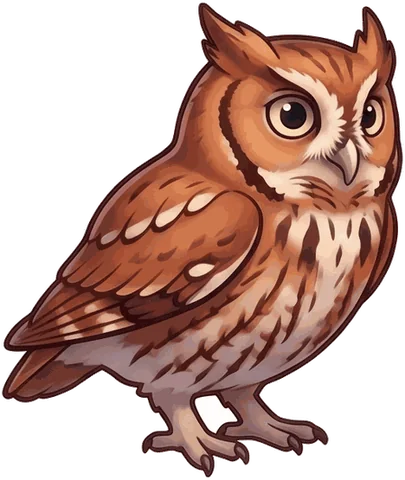
An Eastern Screech-Owl does not screech. It sounds like a very small horse whinnying in the dark: a quavering wail that starts high and slides downward over a second or two. Its other song is a soft, even trill on one pitch, a purring tremolo that lasts three to five seconds and is easy to mistake for a toad. Both are quiet for an owl. You hear them at night, all year but most of all in spring, in wooded yards, parks and river bottoms across the eastern United States.
What the whinny and the trill sound like
There are two songs. The first is the whinny: a tremulous, descending wail, the sound Wikipedia compares to a miniature horse. It begins on a high note and wobbles its way down the scale, thin and eerie rather than loud. The second is the trill, also called the tremolo: a soft series of notes all on one pitch, purring along for three to five seconds, then stopping. Audubon sums up the voice as whinnies and soft trills, and adds the line that belongs on the bird's business card: screech-owls do not screech.
The two songs do different jobs. The whinny is the territorial call, the one a male uses to tell the neighbors the woodlot is taken. The trill is the family voice: pairs use it to advertise a nest hole, to court, when one bird arrives with food, and to coax the young out of the hole on fledging night. Both sexes trill, mates crouch and trill at each other when one returns, and pairs sing duets. In the North the main song ends in that tremulous whinny; southern birds mostly leave it off.
The other calls: barks, hoots and the actual screech
Beyond the two songs there are hoots, rasps, chuckle-rattles, barks and, yes, screeches, and nearly all of them mean the bird is alarmed. A screech-owl with a raccoon at its nest hole may bark and screech and even fly at the intruder. Nestlings and the brooding female call softly from inside the cavity.
When and where you hear it
Eastern Screech-Owls are permanent residents, so the whinny is a year-round possibility, but they call most on spring nights in the breeding season. Almost everywhere in the range the first egg is laid in April. The female sits on four or five white eggs for about 26 days, the young leave the cavity about four weeks after hatching, and they stay with the parents until they are eight to ten weeks old, so late spring and early summer bring a second wave of soft trilling as the adults call the fledglings out and keep track of them. The birds are active mainly at night, occasionally at dawn and dusk, and rarely in daylight.
The place to listen is anywhere with old trees and holes in them: deciduous and mixed woods, farm groves, streamside timber, city parks and, above all, wooded suburbs. Of all North American owls this one copes best with people, nesting in tree cavities and nest boxes 10 to 30 feet up in heavily built neighborhoods. Its range covers the East from southern Canada to Florida and south Texas, west to the Rockies. A screech-owl in the yard often goes unnoticed for years; in Ohio, Tennessee and most eastern states it is an owl card Warble players catch from their own back step.
What it looks like
A stocky, short-tailed owl about the size of a robin, 6.5 to 10 inches long with a wingspan of 18 to 24 inches and a weight of four to eight ounces, females larger. It has yellow eyes, a yellowish bill and ear tufts that can be raised into points or flattened until the head looks round. Color comes in morphs: gray, which dominates in the North and hides beautifully against hardwood bark, and rufous red, commoner southward and reaching about three quarters of birds in Tennessee and Illinois. A rare brown morph turns up in Florida. The pale green-yellow base of the bill separates it from the black-billed Western Screech-Owl where the two meet. It eats the most varied menu of any North American owl: big moths and beetles in summer, mice and shrews in winter, plus crayfish, frogs, small birds and bats. The Great Horned Owl is its main predator.
Birds that sound similar
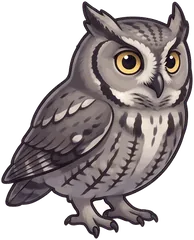 Western Screech-Owl
The Western Screech-Owl does not whinny. Its song is a series of short whistles that speed up like a bouncing ball, or a short trill followed by a longer one. The Eastern's trill holds one steady tempo. Where the ranges touch, voice is the only sure way to tell them apart.
- ?Northern Saw-whet Owl
The saw-whet gives a monotonous series of tooting whistles in late winter and spring, sometimes for hours. The toots are separate notes at a walking pace; the screech-owl's trill is a continuous purr, and the whinny slides downward.
Where the Eastern Screech-Owl card lives
The Eastern Screech-Owl is not in the top 100 of any single state album, so it lives in the national album of all 800 birds, where it counts as uncommon. Catching one anywhere in the country adds it there.
 Heard one? Open Warble, tap the green button while it sings, and the Eastern Screech-Owl card flips into your album. Get the app free.
Questions people ask
Do Eastern Screech-Owls actually screech?
Rarely. The everyday sounds are a descending whinny and a soft, even trill. A real screech, along with barks and rasps, only comes out when the owl is alarmed, for example when a predator gets too close to the nest.
What is the sound like a horse whinnying at night?
Very likely an Eastern Screech-Owl. Its territorial call is a quavering wail that starts high and drops, and the comparison to a tiny horse is the standard description. It is quiet for an owl, so the bird is usually close by.
What time of year do screech-owls call the most?
Spring. They stay all year and can call in any month, but courtship and territory defense peak before eggs are laid in April, and the trill picks up again in late spring when adults coax fledglings out of the nest hole.
Is the trilling sound in my yard a frog or an owl?
Listen to the pitch. The Eastern Screech-Owl's trill stays on exactly one note for three to five seconds and comes from up in a tree, usually paired at some point with a descending whinny. Frogs and toads call from the ground or water.
Sources
- National Audubon Society, Guide to North American Birds: Eastern Screech-Owl. www.audubon.org/field-guide/bird/eastern-screech-owl
- Wikipedia: Eastern screech owl (vocalizations, color morphs, size, habitat, nesting, predators). en.wikipedia.org/wiki/Eastern_screech_owl
- Animal Diversity Web: Otus asio, eastern screech owl (calls and their uses, breeding). animaldiversity.org/accounts/Otus_asio/
- National Audubon Society, Guide to North American Birds: Northern Saw-whet Owl. www.audubon.org/field-guide/bird/northern-saw-whet-owl