 Warble
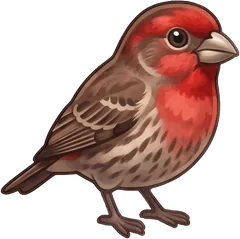
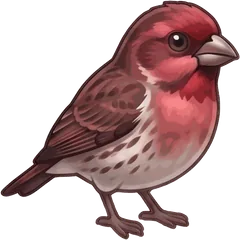
Listen to how the song ends. A House Finch runs through a long, twittering warble and finishes on a harsh, buzzy note, while a Purple Finch's warble is richer and stays musical to the end. The calls settle it even faster: a House Finch gives a rising two-note queet and sparrow-like chirps, a Purple Finch a soft, flat pick and a sharp tick in flight. By eye, check a red male's sides (streaked on a House Finch, clean on a Purple) and a brown female's face (plain on a House Finch, boldly marked on a Purple).
Side by side
| House Finch | Purple Finch | |
|---|---|---|
| Song | A long, twittering warble ending on a harsh zeee or down-slurred cheer | A rich, bubbly warble with no harsh note at the end |
| Call | A rising two-note tooit or queet; chirps like a young House Sparrow | A soft, dry pick; a sharp tick in flight |
| Male | Red forehead, eyebrow, throat and chest; brown streaks on the sides; sometimes orange or yellow | Washed in raspberry red over the head and front, with little or no streaking on the sides |
| Female | Plain brown face, blurry streaks below | Broad whitish eyebrow, dark whisker mark, heavy streaks |
| Shape | Slimmer, with a longer tail that is square or barely notched | Chunkier, with a shorter, deeply notched tail |
| Where and when | All year in towns, suburbs and farms across most of North America | Breeds in northern and Pacific coast woods; a winter visitor elsewhere (October to April in Missouri) |
By ear: listen for the last note
Both finches warble. The House Finch's song is a long string of quick, twittering notes, cheerful in a canary sort of way but without a canary's trills and rolls, and a male will keep it going for long stretches from a treetop, a TV antenna or a post. The clue is the final note. The phrase usually closes on something harsh: Audubon writes it as a buzzy zeee, the Missouri Department of Conservation as a down-slurred cheer.
The Purple Finch sings the same kind of song, done more smoothly: an energetic, bubbly warble that keeps its musical quality all the way through and simply stops. Missouri's field guide calls the House Finch song similar to the Purple Finch's apart from that harsh closing note. If a warble sounds fuller and rounder and never turns sour at the end, think Purple.
The calls are easier still. A House Finch flock keeps up a steady chirping that sounds a lot like young House Sparrows, mixed with a rising, two-note tooit or queet. A Purple Finch says a soft, dry pick, a single syllable, and in flight gives a sharp tick that Audubon singles out as distinctive. Two notes going up versus one flat note: that alone sorts most birds at a feeder, and it works on finches passing overhead.
By sight: the flanks and the face
Both males are red, laid on differently. A male House Finch has red on the forehead, eyebrow, throat and upper chest, set off against a brown cap, and his whitish sides and belly carry obvious brown streaks. Some males are orange or even yellow instead of red. A male Purple Finch looks evenly washed in raspberry red over the head and the front of the body, often with a purplish cast that male House Finches usually lack, and he shows little or no brown streaking on the sides. Streaky sides mean House Finch.
The brown females are easier than people expect. A female House Finch has a plain brown face with no real pattern and blurry streaks across pale underparts. A female Purple Finch wears a face: a broad whitish eyebrow, a dark whisker mark and a heavy dark streak along the side of the throat. If the brown bird looks like it has eyebrows, it is a Purple Finch.
Shape helps too. Purple Finches look chunkier and shorter-tailed, with a clear notch at the tail tip. A House Finch's tail is square or only slightly notched.
Where you will meet each one
The House Finch is the one you live with. Native to the Southwest, it is now common across most of North America in cities, suburbs, farms and canyons, anywhere with lawns, weeds, trees and buildings, and it avoids unbroken forest and open grassland. The eastern birds descend from cage birds that New York pet shop owners, who had been selling them illegally, turned loose in 1940 to avoid prosecution. About 50 years later their descendants met the western population on the Great Plains.
The Purple Finch is a bird of the woods. It breeds in coniferous and mixed forest in Canada, New England and around the Great Lakes, and in oak woodland and streamside trees along the Pacific coast. It is very rare across much of the Rocky Mountains, where Audubon points to Cassin's Finch as the red finch to compare instead. In winter, flocks spread into forests, suburbs, swamps and overgrown fields, and often onto feeders.
Away from those woods, the calendar helps. In Missouri the Purple Finch is present from October through April, so a reddish finch at a Missouri feeder between May and September is probably a House Finch. Where the two meet, the newcomer tends to come out ahead: Audubon notes that House Finches may compete with Purple Finches in parts of the East, and Missouri names that competition as a major factor in a Purple Finch decline of about 32 percent since 1966.
 Still not sure which one is outside? Warble listens while it sings and tells you, then adds the card to your album. Get the app free.
Questions people ask
How can you tell a house finch from a purple finch by sound?
Listen for the ending and the call. The House Finch's warble finishes on a harsh zeee or cheer, and its call is a rising two-note queet. The Purple Finch's warble is richer and ends cleanly, and it calls a soft pick or a sharp tick in flight.
Is a red finch at my feeder in summer a house finch or a purple finch?
Usually a House Finch, unless you live near the Purple Finch's northern or Pacific coast breeding woods. In Missouri, for example, Purple Finches are present only from October through April.
Can a house finch be orange or yellow?
Yes. Some male House Finches are orange or yellow instead of red. The brown streaks on the sides and the harsh last note of the song stay the same.
Sources
- National Audubon Society, Guide to North American Birds: House Finch. www.audubon.org/field-guide/bird/house-finch
- National Audubon Society, Guide to North American Birds: Purple Finch. www.audubon.org/field-guide/bird/purple-finch
- Missouri Department of Conservation, Field Guide: House Finch. mdc.mo.gov/discover-nature/field-guide/house-finch
- Missouri Department of Conservation, Field Guide: Purple Finch. mdc.mo.gov/discover-nature/field-guide/purple-finch