 Warble
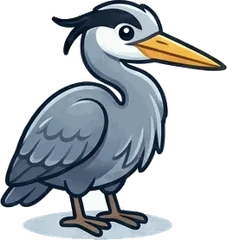
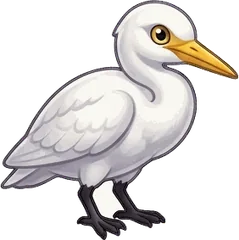
Your ears will only get you partway. Both are quiet birds that croak when flushed: the Great Blue Heron gives a harsh squawk, the Great Egret a low, guttural croak, and neither sings. So look. A Great Blue Heron is blue-gray, with a whitish face crossed by a black stripe. A Great Egret is pure white, with a yellow bill and black legs. The one real trap is in south Florida, home to an all-white form of the Great Blue Heron. There, check the legs: pale legs mean the heron, black legs the egret.
Side by side
| Great Blue Heron | Great Egret | |
|---|---|---|
| Voice | A harsh squawk or kraak when flushed; a long fraunk near the nest | A low, hoarse, guttural croak when disturbed; loud cuk cuk cuk and squawks at colonies |
| Color | Blue-gray, whitish face with a black stripe ending in plumes; massive yellowish bill | White all over; yellow bill |
| Legs | Yellowish green to dark gray | Black, with black feet |
| Size | 38 to 54 inches long; wingspan up to 6 feet 7 inches | 35 to 41 inches long; wingspan about 4 feet 7 inches |
| White form | The Great White Heron of south Florida and the Keys: all white, pale legs, larger than an egret | None: every Great Egret is white |
| Where and when | Almost any shallow water, coast to coast; northern birds east of the Rockies go south in winter | Marshes, ponds, shores, mudflats; common in the South, leaves frozen country in winter |
By ear: two croakers
Neither of these birds sings, and both spend most of the day in silence. The sound you will usually hear is the one a bird makes when you surprise it. A Great Blue Heron lifts off with a harsh squawk, a rough kraak. A Great Egret flushed from a ditch gives a low, hoarse croak that Audubon calls guttural. Written down they look much alike, so one call from a bird you cannot see is weak evidence.
Each bird has a few more sounds, mostly at the nesting colony. Animal Diversity Web credits the Great Blue Heron with up to seven calls, among them a fraunk that a bird disturbed near its nest can keep up for about 20 seconds, and a quiet ar used to greet other herons; courting pairs also snap their bills together. At an egret colony the adults give a loud cuk cuk cuk and higher squawks. Away from the colony, trust your eyes.
By sight: gray or white, then the legs
Most of the time color does the job. The Great Blue Heron is blue-gray above, with long, thin plumes on its back and often reddish or black patches on the flanks and thighs. Its throat and crown are white, and a thick blackish stripe along the side of the crown runs back into long plumes. The bill is massive and mostly yellow, and the legs run from yellowish green to dark gray. A Great Egret is white from bill tip to tail, with a yellow bill and black legs and feet; in breeding season it grows delicate plumes on its back.
Size points the same way, though less than you might expect. The heron is 38 to 54 inches long with a wingspan of up to 6 feet 7 inches; the egret is 35 to 41 inches long with a wingspan around 4 feet 7 inches. Both fly slowly with the neck pulled back, and both hunt by standing still or wading slowly, then stabbing.
The Florida exception: the Great White Heron
In south Florida there is a large white wading bird that is not an egret at all. The Great White Heron is an all-white form of the Great Blue Heron, found mostly in salt water along the Florida coast and in the Keys. Audubon describes it as white overall with a yellow bill and pale legs, and Animal Diversity Web adds that it averages about 10 percent larger than the dark birds and has much shorter plumes.
That makes it the bird most often mistaken for a Great Egret, and the legs are the quickest test. The egret's legs are black; the white heron's are pale, a buffy gray. The heron is also bigger and heavier-billed. Where the white and dark forms overlap, mostly in southern Florida and the Keys, you can also find Wurdemann's Heron, an in-between bird with a blue-gray body and an all-white head and neck.
Where you will meet each one
The Great Blue Heron lives across most of North America, from Alaska to Florida, in marshes, swamps, river edges, lake shores and tide flats, and it hunts in grassland too. Northern birds east of the Rockies migrate south for winter, while Pacific Coast herons may stay all year as far north as southeastern Alaska. It nests in colonies, usually 20 to 60 feet up in trees near water.
The Great Egret breeds across much of the country and is common in the South. It hunts lake edges, marshes, coastal lagoons, estuaries and wooded riverbanks, and catches grasshoppers and rodents in fields. In winter it stays only where water remains open, but in late summer birds often wander far north of where they nested, and its breeding range has crept north into southern Canada.
The two hunt the same kinds of water and can nest in the same mixed colonies, so a gray bird and a white one fishing a few yards apart is a good chance to compare their shapes.
 Still not sure which one is outside? Warble listens while it sings and tells you, then adds the card to your album. Get the app free.
Questions people ask
Is a Great White Heron the same as a Great Egret?
No. The Great White Heron is an all-white form of the Great Blue Heron that lives in south Florida and the Keys, mostly around salt water. It is larger than a Great Egret, with a heavier bill and pale legs; the egret's legs are black.
What sound does a Great Egret make?
Usually none. A Great Egret is normally quiet and gives a low, hoarse croak when disturbed. At nesting colonies the adults are noisier, with a loud cuk cuk cuk and higher squawks.
Which is bigger, a Great Blue Heron or a Great Egret?
The Great Blue Heron: 38 to 54 inches long with a wingspan up to 6 feet 7 inches, against 35 to 41 inches and about 4 feet 7 inches for the egret. Standing side by side, though, the egret is only slightly shorter.
Sources
- National Audubon Society, Guide to North American Birds: Great Blue Heron. www.audubon.org/field-guide/bird/great-blue-heron
- National Audubon Society, Guide to North American Birds: Great Egret. www.audubon.org/field-guide/bird/great-egret
- Animal Diversity Web (University of Michigan): Ardea herodias (calls, white morph, description). animaldiversity.org/accounts/Ardea_herodias/
- Wikipedia: Great egret (voice, plumage, flight, confusion with the white Great Blue Heron). en.wikipedia.org/wiki/Great_egret